

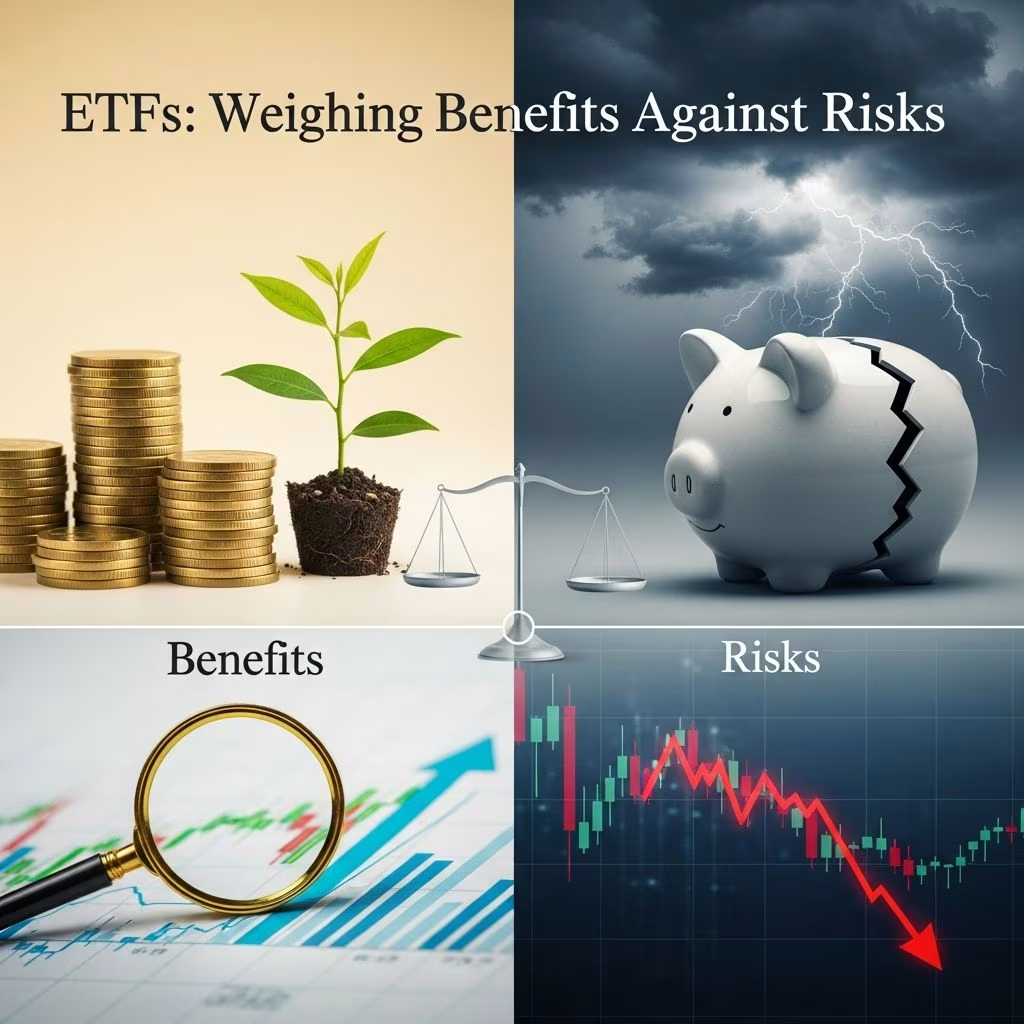
Exchange-traded funds (ETFs) have transformed modern investing by combining the diversification of mutual funds with the tradability of stocks. These versatile instruments allow investors to access broad market exposure efficiently. However, like any investment vehicle, they carry both strengths and limitations that require careful consideration.
Understanding ETFs in Today’s Market
ETFs are baskets of securities, such as stocks, bonds, or commodities, that trade on stock exchanges throughout the day. Unlike mutual funds, which settle at end-of-day prices, ETFs offer real-time pricing and execution. This structure appeals to both novice and seasoned investors seeking simplicity and performance.
With thousands of ETFs available globally, they span equities, fixed income, commodities, and even niche themes like clean energy or artificial intelligence. This variety enables tailored strategies without the need to pick individual assets.
Key Advantages of ETF Investments
ETFs stand out for their ability to deliver value through multiple channels, making them a cornerstone of diversified portfolios.
Broad Diversification with Minimal Effort
One share of an ETF provides exposure to hundreds or thousands of underlying assets, instantly spreading risk across sectors, geographies, or asset classes. This built-in diversification mitigates the impact of any single poor performer, stabilizing returns over time.
- Equity ETFs track major indices like the S&P 500, balancing growth and stability.
- Bond ETFs offer fixed-income exposure without managing individual coupons.
- Commodity ETFs, such as those for gold, hedge against inflation.
For beginners, this means entering complex markets without deep research.
Cost Efficiency for Long-Term Growth
Most ETFs are passively managed, mirroring indices rather than relying on expensive stock pickers. Expense ratios often range from 0.03% to 0.50%, far below the 1%+ typical of active mutual funds. These savings compound significantly over decades.
| Fund Type | Average Expense Ratio | 10-Year Cost Savings (on $10,000) |
|---|---|---|
| Passive ETF | 0.10% | $1,000+ |
| Active Mutual Fund | 0.90% | $8,000+ |
Lower overhead stems from automated tracking and minimal trading activity.
Trading Flexibility and Liquidity
ETFs trade like stocks, enabling intraday buys and sells with tools like limit orders. High liquidity in popular funds ensures tight bid-ask spreads, facilitating quick portfolio adjustments amid volatility.
Investors can react to news, economic data, or personal needs without waiting for mutual fund cutoffs. This is crucial during turbulent markets.
Tax Advantages and Transparency
ETFs minimize capital gains distributions through in-kind redemptions, where shares are swapped rather than sold. Holdings are disclosed daily, unlike mutual funds’ quarterly reports, aiding informed decisions.
Strategic Versatility Across Goals
From buy-and-hold core holdings to tactical sector bets, ETFs support diverse approaches. A classic 60/40 allocation—60% equities, 40% bonds—can be implemented with just two funds.
Potential Drawbacks and Hidden Pitfalls
Despite their appeal, ETFs are not without challenges. Awareness of these can prevent costly mistakes.
Tracking Errors and Performance Gaps
ETFs aim to replicate benchmarks but often fall short due to fees, cash drag, or rebalancing costs. For instance, dividend timing mismatches or administrative cash holdings create discrepancies.
Niche or international ETFs amplify these errors, eroding expected returns.
Expenses in Specialized Funds
While broad-market ETFs are cheap, thematic or leveraged ones charge 0.50%-1.50% or more. These fees compound, especially in underperforming sectors.
Liquidity Risks in Niche Markets
Popular ETFs boast high volume, but obscure ones suffer wide spreads and volatility. During stress, even mainstream funds can premium/discount to net asset value (NAV).
Dangers of Leveraged and Inverse Products
Leveraged ETFs (2x, 3x) amplify daily moves but decay over time due to compounding. A sideways market erodes value; example: +10% then -10% yields -4% net on a 2x fund versus 0% on the index.
Short ETFs bet against markets but suffer similarly in volatile conditions. These suit short-term traders, not buy-and-hold investors.
Lack of Customization and Overtrading Temptation
Passive nature ignores personal risk profiles or ethical preferences. Easy trading encourages frequent moves, incurring commissions and taxes that diminish gains.
Counterparty and Complexity Risks
Some ETFs use derivatives, exposing investors to issuer default. Complex strategies in ‘smart beta’ or volatility funds demand expertise.
Comparing ETFs to Alternatives
| Feature | ETFs | Mutual Funds | Individual Stocks |
|---|---|---|---|
| Diversification | High (instant) | High (end-of-day) | Low (manual) |
| Costs | Low | Higher | Variable |
| Trading | Intraday | End-of-day | Intraday |
| Minimum Investment | One share | Often $1,000+ | One share |
| Tax Efficiency | High | Lower | High (control) |
ETFs bridge mutual fund stability and stock flexibility but lack individual control.
Strategies for Successful ETF Investing
To harness benefits while minimizing risks:
- Focus on core holdings: Use low-cost, broad index ETFs for 80% of portfolio.
- Avoid leverage for long-term: Reserve for tactical, short horizons with strict stops.
- Check liquidity metrics: Prioritize average daily volume > 100,000 shares.
- Review expense ratios: Compare via prospectuses.
- Rebalance annually: Maintain target allocations.
Asset location matters—place tax-inefficient bonds in retirement accounts.
Who Should Consider ETFs?
Ideal for passive investors, retirement savers, or those building wealth steadily. Active traders may prefer stocks; high-net-worth individuals might opt for separate accounts. Assess risk tolerance and goals first.
Frequently Asked Questions (FAQs)
What is the best ETF for beginners?
Broad-market funds like total stock market or S&P 500 trackers offer simple, low-cost entry.
Are ETFs safer than stocks?
Yes, due to diversification, but not risk-free—market downturns affect all.
How do ETF fees impact returns?
A 0.5% fee on $100,000 reduces returns by $500/year, compounding to thousands over time.
Can ETFs lose money?
Absolutely, especially leveraged ones or during bear markets. Diversify and hold long-term.
ETFs vs. index mutual funds?
ETFs win on trading flexibility and taxes; mutual funds suit automatic investing.
References
- Pros and Cons of Investing with ETFs: A Comprehensive Guide — Stockgeist.ai. 2023. https://www.stockgeist.ai/pros-cons-investing-with-etfs/
- Benefits of ETFs — Pros & Cons in Investment Portfolio — SoFi. 2024-01-15. https://www.sofi.com/learn/content/benefits-of-ETFs/
- The Pros and Cons of ETFs — AMG National Trust. 2023-05-10. https://www.amgnational.com/the-pros-and-cons-of-etfs/
- ETF Drawbacks — Fidelity Investments. 2025-02-20. https://www.fidelity.com/learning-center/investment-products/etf/drawbacks-of-etfs
- ETF Benefits – Strengthening Your Portfolio — Charles Schwab. 2024-11-05. https://www.schwab.com/etfs/benefits
- Best Investment for Beginners? The Pros and Cons of ETFs — YouTube (Video). 2023-07-12. https://www.youtube.com/watch?v=yrKxS64il58
- ETFs vs. Mutual Funds: Which To Choose — Vanguard. 2025-03-01. https://investor.vanguard.com/investor-resources-education/etfs/etf-vs-mutual-fund
This article is general information, not personal financial advice. Consider your own situation, or speak with a licensed adviser, before acting on it.


