

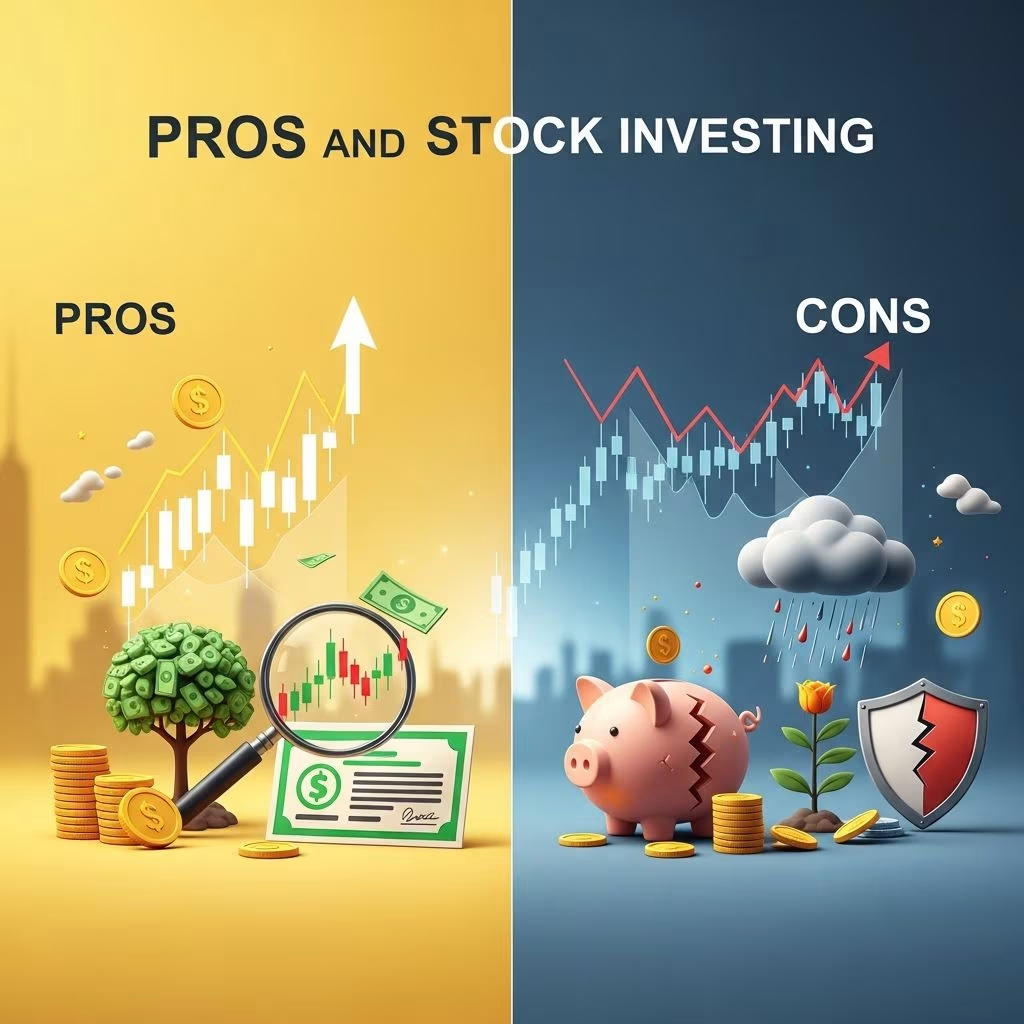
Investing in stocks offers individuals the chance to participate in the growth of companies worldwide, but it comes with significant risks that require careful consideration. Understanding both the rewards and pitfalls helps build a balanced portfolio aligned with personal financial goals.
Understanding Stock Ownership Basics
Stocks represent partial ownership in a publicly traded company, allowing investors to benefit from its success through price appreciation and dividends. When you purchase shares, you gain a stake in the company’s assets and future earnings potential.
The stock market operates as a marketplace where buyers and sellers exchange shares via brokers or online platforms. Transactions match bids and offers electronically or on exchanges like the New York Stock Exchange, determining share prices based on supply and demand.
Key Advantages of Investing in Stocks
Stocks have historically outperformed other asset classes over long periods, providing compelling reasons for inclusion in diversified portfolios.
- Potential for Substantial Returns: Equities can deliver high growth, especially during economic expansions. For instance, broad market indices like the S&P 500 have averaged around 10% annual returns historically, far exceeding savings accounts or bonds.
- Dividends as Passive Income: Many established companies distribute a portion of profits to shareholders quarterly, creating a steady income stream that can be reinvested for compounding growth.
- Liquidity and Accessibility: Shares can be bought or sold quickly during market hours through discount brokerages with minimal fees, making it easy to access funds when needed.
- Ownership Perks: Shareholders may vote on corporate matters and benefit from stock splits or special dividends, fostering a sense of involvement in business decisions.
- Inflation Hedge: Stocks tend to rise with inflation, preserving purchasing power better than fixed-income investments over time.
Major Drawbacks and Risks Involved
While rewarding, stock investing exposes capital to uncertainties that can lead to losses, demanding discipline and patience.
- High Volatility: Share prices fluctuate daily due to news, earnings reports, or economic data, potentially causing rapid value drops.
- Risk of Capital Loss: Unlike bank deposits insured by the government, stocks have no principal guarantee; investments can decline significantly during downturns.
- Emotional Stress: Market swings often trigger fear or greed, leading to poor decisions like panic selling at lows or buying highs.
- Time and Research Demands: Successful investing requires ongoing analysis of financial statements, industry trends, and metrics like P/E ratios, which can overwhelm beginners.
- Fees and Taxes: Trading commissions, though low, add up; short-term gains face higher tax rates than long-term holdings.
Comparing Stocks to Other Investments
To contextualize stocks’ role, evaluate them against alternatives using key metrics. The table below highlights differences based on risk, return, and suitability.
| Investment Type | Avg. Annual Return | Risk Level | Liquidity | Best For |
|---|---|---|---|---|
| Stocks | 7-10% | High | High | Long-term growth |
| Bonds | 3-5% | Low-Medium | Medium | Income, preservation |
| Savings Accounts | 0.5-2% | Very Low | High | Emergency funds |
| Real Estate | 5-8% | Medium-High | Low | Appreciation, rental income |
Data drawn from historical averages; actual returns vary. Stocks excel in growth but lag in stability compared to bonds or cash equivalents.
Steps to Start Investing Wisely
Beginners should follow a structured approach to mitigate risks while capitalizing on stocks’ benefits.
- Define Objectives: Clarify goals like retirement or home purchase, setting timelines and target returns.
- Assess Risk Tolerance: Conservative profiles favor stable blue-chip stocks; aggressive ones may pursue growth sectors.
- Build a Budget: Invest only disposable income after covering essentials and emergency savings.
- Select a Brokerage: Opt for user-friendly platforms with low fees, research tools, and mobile apps.
- Diversify Holdings: Spread investments across sectors like tech, healthcare, and energy to reduce single-stock risk.
- Research Thoroughly: Analyze fundamentals (EPS, revenue) and technicals (moving averages) before buying.
- Monitor and Adjust: Track performance regularly without overreacting to short-term changes.
Strategies to Maximize Pros and Minimize Cons
Employ proven tactics to enhance outcomes. Dollar-cost averaging involves investing fixed amounts regularly, buying more shares when prices dip. Index funds tracking markets like the S&P 500 offer broad exposure with lower risk than individual picks. Long-term holding leverages compounding and tax advantages, avoiding frequent trading pitfalls.
Fundamental analysis compares P/E ratios against peers; for example, undervalued stocks with strong EPS growth signal buys. Technical tools like 30-day moving averages help time entries during uptrends.
Common Mistakes to Avoid
- Chasing hot tips without due diligence, leading to overvalued purchases.
- Timing the market, which studies show underperforms buy-and-hold strategies.
- Neglecting diversification, amplifying losses from sector slumps.
- Ignoring fees, which erode returns over time.
- Letting emotions drive sales during volatility.
Tax Implications and Account Types
Regular brokerage accounts tax gains annually; retirement plans like 401(k)s defer taxes, enhancing compounding. Consult advisors for personalized strategies, as rules vary by jurisdiction.
FAQs
Are stocks suitable for beginners?
Yes, via low-cost index funds, but start small and educate yourself on risks.
How much should I invest initially?
Only what you can afford to lose; many platforms have no minimums.
What’s the best time to buy stocks?
Time in the market beats timing the market; invest consistently.
Can I lose all my money in stocks?
Possible with individual stocks, less likely with diversified portfolios.
Do I need a financial advisor?
Helpful for complex needs, but self-directed tools suffice for many.
Building Long-Term Wealth
Stocks form the growth engine of most portfolios when balanced with other assets. Patience and discipline turn volatility into opportunity, as compounding magnifies returns over decades. Start with workplace plans for employer matches, then expand to individual accounts.
References
- Understanding the Stock Market: A Beginner’s Guide — NEAMB. 2023. https://www.neamb.com/retirement-planning/understanding-the-stock-market-a-beginners-guide
- A beginner’s guide to investing in stocks — TD Bank. 2024. https://www.td.com/ca/en/investing/direct-investing/articles/investing-in-stocks-for-beginners
- Stock Investment Tips for Beginners — Charles Schwab. 2024. https://www.schwab.com/learn/story/stock-investment-tips-beginners
- Ex-Banker Explains: How to Invest for Beginners in 2026 — YouTube. 2026. https://www.youtube.com/watch?v=gMyVHBhDvz4
- Investing 101: A Beginner’s Guide — Morgan Stanley. 2024. https://www.morganstanley.com/atwork/employees/learning-center/articles/investing-101-beginners-guide
- Introduction to Investing — Investor.gov (U.S. SEC). 2025. https://www.investor.gov/introduction-investing
This article is general information, not personal financial advice. Consider your own situation, or speak with a licensed adviser, before acting on it.


