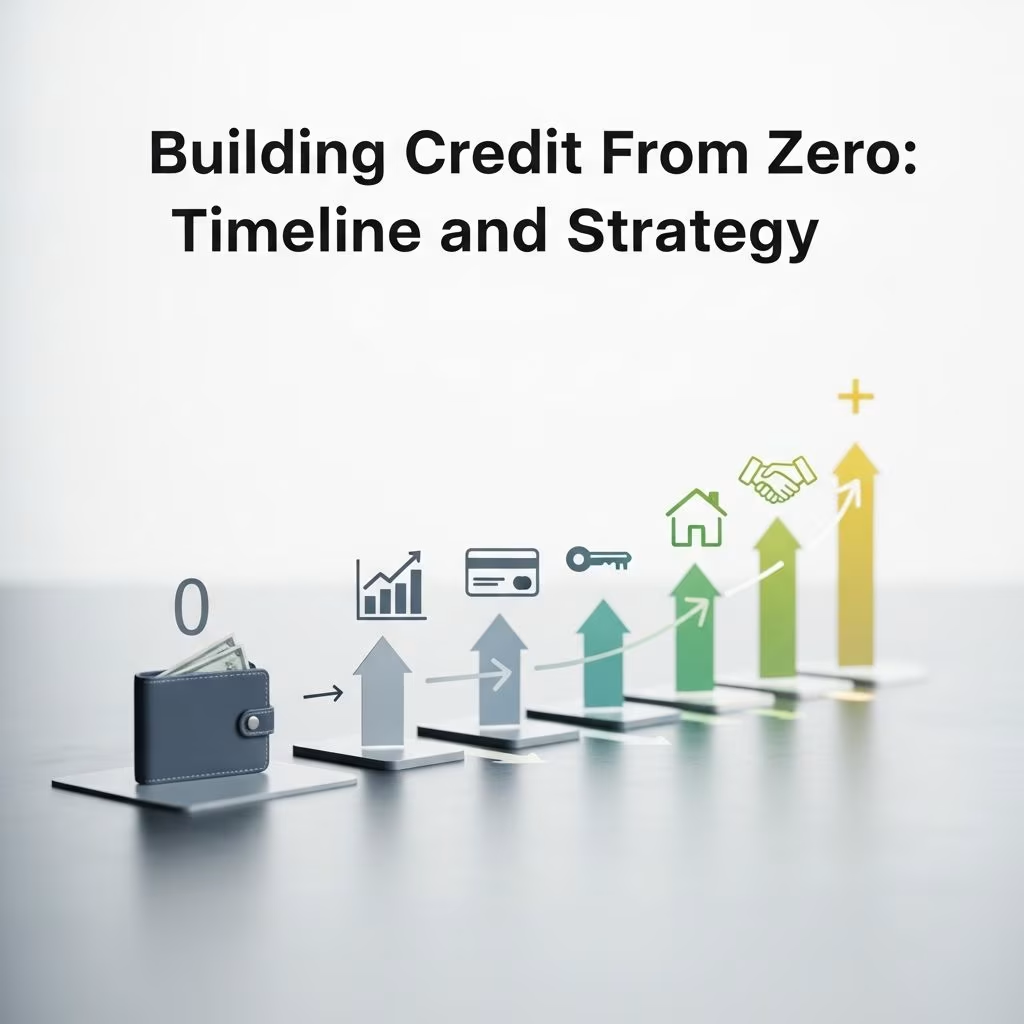
Establishing credit from the ground up is a critical financial milestone that opens doors to favorable loan rates, credit cards, and other lending opportunities. However, many people underestimate how long this process actually takes. Unlike building a house brick by brick, credit establishment follows a specific timeline determined by credit bureaus and lenders. Understanding this timeline helps you set realistic expectations and plan your financial future more effectively.
The Foundational Timeline: How Long Credit Takes to Establish
The journey to establishing your first credit score depends largely on which credit scoring model lenders use. The two primary models—FICO and VantageScore—have different requirements and timelines. For FICO scores, which are used by the vast majority of financial institutions, you’ll need at least six months of credit history before your first score appears. This means opening a credit account and maintaining it responsibly for half a year before you’ll even receive your initial score. VantageScore, created by the three major credit bureaus in 2006, operates differently. This alternative model can provide you with a score much faster—potentially within your first month of establishing credit, since it has no minimum history requirement.
Once you receive your first score, reaching \”good\” credit territory requires considerably more time. Most experts recommend expecting at least one year or longer to transition from having no credit history to achieving a credit score in the good range, depending on your financial behaviors and starting circumstances. This extended timeline reflects the reality that credit bureaus need time to observe your payment patterns, debt management, and overall financial responsibility.
Understanding Credit Score Ranges and Milestones
Credit scores operate on a standardized scale that helps lenders quickly assess risk. FICO scores range from 300 to 850, with higher numbers indicating a stronger ability to repay borrowed money. Breaking down this scale provides clarity on what different score ranges mean:
- Poor credit: 300-669 range typically indicates higher lending risk
- Fair credit: 670-739 range shows moderate creditworthiness
- Good credit: 740-799 range demonstrates solid payment history and responsible management
- Excellent credit: 800-850 range reflects exceptional financial discipline and minimal risk
When you’re building from zero, your initial FICO score will likely fall in the lower-to-middle range. The critical milestone isn’t reaching 850 or even the 800s—it’s breaking into the \”good\” range around 740 and above, which typically qualifies you for better interest rates and more favorable lending terms.
The Requirements for Your First Credit Score
Before any score appears, specific criteria must be met. For FICO calculation, your credit file needs at least one account that has been open for six months or longer, and at least one account that has reported activity to credit bureaus within the past six months. This dual requirement explains why simply opening an account isn’t enough—consistent reporting of your account activity is equally important. Many credit accounts don’t immediately report to bureaus, so selecting the right accounts matters significantly.
VantageScore removes the waiting period entirely by requiring only that you have a credit account on file with a bureau, meaning a score could emerge within weeks rather than months. However, even with this faster initial score, building to \”good\” credit still requires demonstrating responsible behavior over an extended period.
Key Factors That Influence Your Credit-Building Timeline
Several interconnected elements affect how quickly you progress from no credit to good credit:
Payment History and Consistency
Your payment history carries the most weight in credit calculations. Making on-time payments every single month demonstrates reliability to lenders. Missing even one payment can significantly slow your progress, while consistently late payments may extend your timeline by months or years. This factor alone can compress or extend your credit-building journey considerably.
Credit Utilization Ratio
How much of your available credit you actually use influences your score trajectory. Using less than 30 percent of your available credit shows you’re not overly dependent on borrowed money. If you have a $500 credit limit, keeping your balance under $150 demonstrates healthier borrowing habits than maxing out the card.
Diversity of Credit Accounts
Credit bureaus favor borrowers who can manage different credit types responsibly. A mix of credit cards, installment loans, and other accounts builds faster than relying on a single account type. However, this doesn’t mean you should open multiple accounts simultaneously—that can harm your score. Strategic diversification over time strengthens your profile.
New Account Applications
Each credit application triggers an inquiry that temporarily impacts your score. Multiple applications within a short timeframe signal desperation for credit, which lenders view negatively. Spacing out applications strategically helps minimize this negative effect.
Realistic Milestones in Your Credit Journey
Understanding what to expect at each stage helps maintain motivation and prevents discouragement:
| Timeline Period | Credit Status | Expected Outcomes |
|---|---|---|
| Months 1-3 | Pre-Score | Credit account opened; activity beginning to report; no FICO score yet |
| Months 4-6 | Initial Score | First FICO score appears; likely in lower range; VantageScore available earlier |
| Months 7-12 | Improvement Phase | Consistent payments boost score; positive trajectory visible |
| 1-2 Years | Good Credit Range | Score reaches 740+; access to better rates and terms; broader lending options |
Accelerating Your Credit-Building Process
While time is required, strategic actions can optimize your progress:
- Become an authorized user: Adding yourself to someone else’s established credit account can provide history, though results vary by creditor
- Use a secured credit card: These cards require a cash deposit but report to all three bureaus, accelerating history building
- Set up automatic payments: Automating minimum payments ensures you never miss deadlines, protecting your most important credit factor
- Monitor credit reports: Checking for errors allows you to dispute inaccuracies that might slow your progress
- Keep old accounts open: Account age matters in calculations, so maintaining older accounts boosts your profile
Common Misconceptions About Credit-Building Timelines
Several myths circulate about credit establishment that can mislead borrowers:
Myth 1: Your score will improve immediately after opening an account. Reality: Credit bureaus need evidence of responsible behavior over time before significant improvement occurs. Patience is essential.
Myth 2: You can build good credit in three months. Reality: While VantageScore appears quickly, reaching good FICO credit typically requires a year minimum of responsible account management.
Myth 3: Opening multiple accounts simultaneously speeds up the process. Reality: Multiple hard inquiries and new accounts can temporarily harm your score, actually slowing progress.
Myth 4: Paying off an account immediately stops credit building. Reality: Closed accounts still contribute to your history. Active, responsibly managed accounts do more for your score than closed ones.
The Long-Term Perspective on Credit Building
Reaching good credit represents a significant achievement, but the work doesn’t stop there. Maintaining good credit requires continued vigilance. Negative information like late payments or collections can erase years of progress relatively quickly, while positive information builds slowly. This asymmetry means protecting your credit score becomes increasingly important as you build it.
The timeline for credit establishment—six months to two years—reflects the fundamental principle underlying credit scoring: lenders need sufficient evidence of your financial behavior before trusting you with larger amounts of money at favorable rates. This isn’t arbitrary; it protects both borrowers and lenders by ensuring credit matches genuine ability to repay.
Frequently Asked Questions
Can I get a credit score in one month?
VantageScore can appear within your first month, but FICO scores, used by most lenders, require six months minimum.
What if I have no credit history at all?
Start with a secured credit card, become an authorized user, or obtain a credit builder loan to establish initial history.
Does paying off my balance early hurt my score?
No, paying early is beneficial. Paying regularly and keeping utilization low supports score growth.
How long does negative information stay on my credit report?
Most negative items remain seven years; bankruptcy can appear for ten years.
Should I apply for multiple credit cards to build credit faster?
No, multiple applications create hard inquiries that temporarily harm your score and signal desperation.
References
- When Were Credit Scores Invented? A Complete History of Credit Scores — Pocket Guard. https://pocketguard.com/blog/when-were-credit-scores-invented-a-complete-history-of-credit-scoring/
- How Long Does It Take to Build Credit? — Experian. https://www.experian.com/blogs/ask-experian/how-long-does-it-take-to-build-credit/
This article is general information, not personal financial advice. Consider your own situation, or speak with a licensed adviser, before acting on it.