

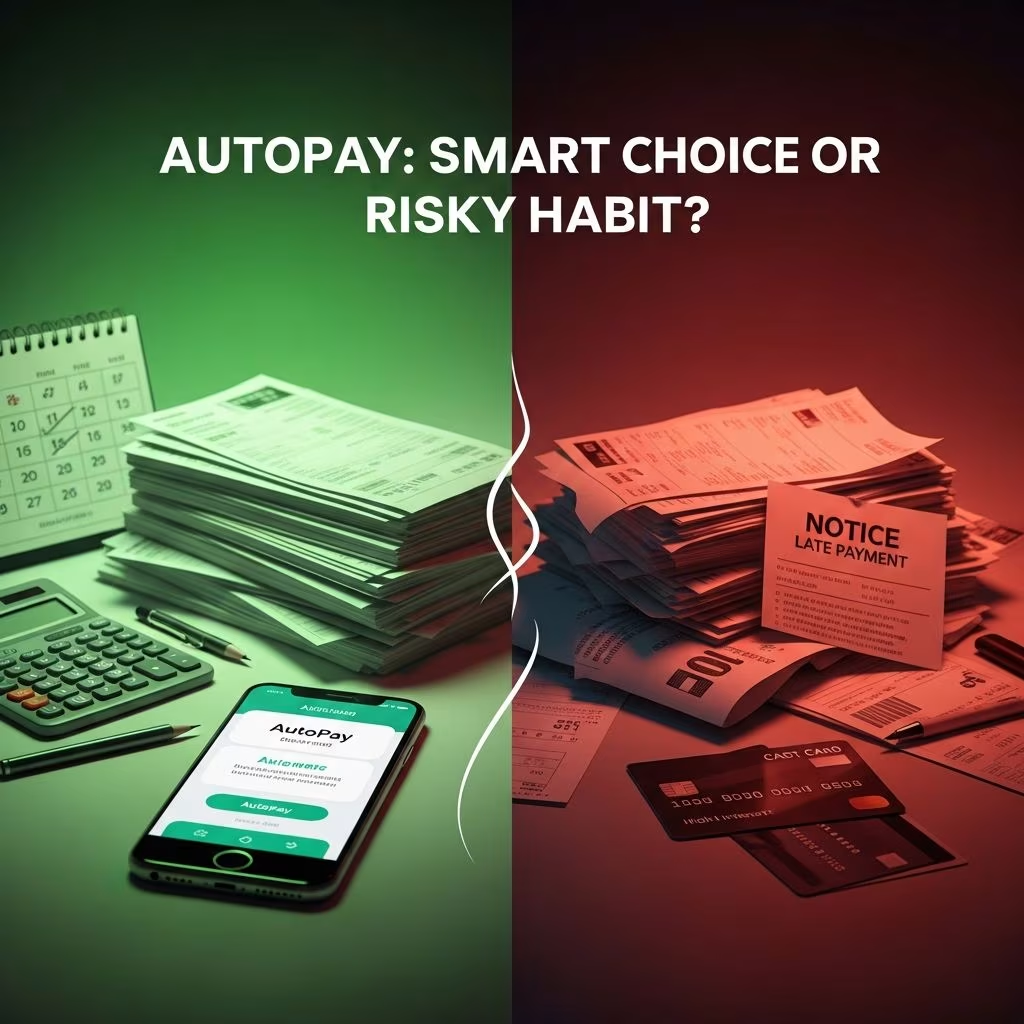
Automatic payments, or autopay, have revolutionized how individuals handle recurring bills. By authorizing creditors to deduct funds directly from bank accounts or credit cards, autopay promises a hands-off approach to financial obligations. But is it always a wise decision? This article delves into the advantages, potential drawbacks, best practices, and strategic considerations to help you determine if autopay aligns with your financial goals.
Why Autopay Appeals to Modern Budgeters
In an era of busy schedules and digital banking, autopay offers undeniable appeal. It eliminates the need to remember due dates or manually initiate transactions, freeing up mental energy for other priorities. Financial experts note that consistent payments through autopay can foster better money habits by embedding bills into your routine seamlessly.
Consider the average person juggling utilities, loans, subscriptions, and insurance—tracking them all manually can lead to oversights. Autopay acts as a safety net, ensuring obligations are met without constant vigilance.
Key Advantages of Enrolling in Autopay
Autopay delivers tangible benefits that extend beyond mere convenience. Here’s a breakdown of its primary upsides:
- Time Savings and Reduced Effort: No more logging into multiple portals or writing checks. Everything happens automatically, streamlining your financial workflow.
- Elimination of Late Fees: On-time payments are guaranteed, dodging penalties that can add up quickly—often $25 to $40 per incident.
- Credit Score Protection: Payment history comprises 35% of your FICO score. Consistent autopay builds a positive record, potentially unlocking better loan terms.
- Cost Discounts and Incentives: Many providers, like student loan servicers and phone carriers, offer rate reductions or credits for autopay users.
- Enhanced Security: Going paperless reduces risks of mail theft containing sensitive data.
- Budget Predictability: Knowing exact deduction dates aids in cash flow planning, preventing surprises.
These perks make autopay especially valuable for fixed expenses like mortgages, car loans, and utilities, where predictability reigns.
Potential Downsides You Can’t Ignore
Despite its strengths, autopay isn’t foolproof. Over-reliance can lead to unforeseen issues if not managed properly.
| Drawback | Impact | Mitigation Strategy |
|---|---|---|
| Overdraft Risks | Insufficient funds trigger fees up to $35 per transaction | Enable low-balance alerts and maintain buffers |
| Unmonitored Charges | Forgotten subscriptions or rate hikes go unnoticed | Review statements monthly |
| Less Spending Control | Can’t easily adjust for variable income months | Use for fixed bills only |
| Payment Errors | Unauthorized or duplicate deductions | Monitor accounts and dispute promptly |
| Reduced Discipline | May pay less on credit cards vs. manual reviews | Combine with budgeting apps |
Studies show credit card users on autopay sometimes pay 8-17% less of their balance monthly compared to manual payers, highlighting a discipline gap. Overdrafts remain a top concern, especially with variable expenses.
Financial Scenarios Where Autopay Shines
Not all bills suit autopay equally. Prioritize based on stability and amount:
- Ideal for Fixed, Essential Bills: Rent, utilities, insurance, and minimum debt payments—low variability minimizes risks.
- Great for Credit Builders: Loans and cards where on-time history boosts scores.
- Handy for Recurring Services: Streaming, gym memberships with alerts enabled.
Avoid autopay for variable or discretionary items like credit cards exceeding minimums, groceries via apps, or one-off purchases. Reserve manual control for flexibility.
Step-by-Step Guide to Setting Up Autopay Safely
- Assess Your Cash Flow: Review 3 months of statements to confirm sufficient funds post-deductions.
- Choose Payment Source: Link checking for ACH (free) or credit for rewards, mindful of interest.
- Select Providers: Start with 2-3 trusted ones; verify secure portals.
- Schedule Strategically: Align with payday; set minimums for variable bills.
- Activate Notifications: Bank apps, email alerts for balances and payments.
- Test Run: Monitor first cycle closely.
Tools like bank dashboards centralize oversight, flagging issues early.
Advanced Tips for Autopay Mastery
Elevate your setup with these pro strategies:
- Layer with Budgeting Software: Apps like Mint or YNAB categorize autopay flows.
- Build Emergency Buffers: Keep 1-2 months of bills in checking.
- Annual Audits: Cancel unused subs; renegotiate rates.
- Use Credit Wisely: Autopay minimums on cards, pay off manually for optimization.
- Hybrid Approach: Autopay essentials, manual discretionary spends.
For businesses, autopay ensures steady inflows, cuts admin time, and boosts client satisfaction.
Real-Life Impact on Credit and Savings
Autopay’s credit benefits are profound: a single 30-day late mark lingers 7 years, tanking scores by 60-110 points. Consistent use counters this, with discounts compounding savings—e.g., 0.25% off student loans saves thousands over life. Environmentally, it slashes paper use, aligning with eco-conscious finance.
Yet, freedom from manual checks can erode vigilance. Pair autopay with habits like weekly logins to balance automation and awareness.
Frequently Asked Questions
Does autopay hurt your credit score?
No, it typically helps by ensuring on-time payments, the biggest FICO factor.
Can autopay cause overdrafts?
Yes, if funds are low. Mitigate with alerts and padding.
Is autopay safe from fraud?
Generally yes via secure ACH, but monitor for errors.
Should I autopay credit cards?
Minimums yes for credit; full balance manually to avoid interest and underpayment.
How do I cancel autopay?
Contact provider and bank; revoke ACH authorization in writing.
Final Thoughts on Balancing Automation and Control
Autopay excels for disciplined users with stable incomes, delivering convenience, savings, and credit gains. However, it demands ongoing oversight to sidestep pitfalls like overdrafts or creep. Test selectively, monitor rigorously, and adjust as life changes—this hybrid vigilance maximizes rewards while minimizing risks.
References
- Pros and Cons of Setting Up Auto-Pay — State Farm. 2023. https://www.statefarm.com/simple-insights/financial/pros-and-cons-of-setting-up-auto-pay
- The Pros and Cons of Putting Your Bills on Auto-Pay — Northwestern Mutual. 2023. https://www.northwesternmutual.com/life-and-money/the-pros-and-cons-of-putting-your-bills-on-auto-pay/
- 4 Pros and 4 Cons of Automatic Payments — Crown Bank. 2023. https://crown-bank.com/4-pros-and-4-cons-of-automatic-payments/
- How Automatic Payments Can Benefit Your Small Business — Stearns Bank. 2023. https://www.stearnsbank.com/resources/blog/how-automatic-payments-can-benefit-your-small-business
- Pros and Cons of Automatic Bill Payment — SoFi. 2023. https://www.sofi.com/learn/content/automatic-bill-payment-benefits/
- Automatic Bill Payment – How It Works and Advantages — Corporate Finance Institute. 2023. https://corporatefinanceinstitute.com/resources/wealth-management/automatic-bill-payment/
- Automatic Payments: Pros, Cons & Other Considerations — PNC Bank. 2023. https://www.pnc.com/insights/personal-finance/spend/automatic-payments-what-to-know.html
This article is general information, not personal financial advice. Consider your own situation, or speak with a licensed adviser, before acting on it.


