

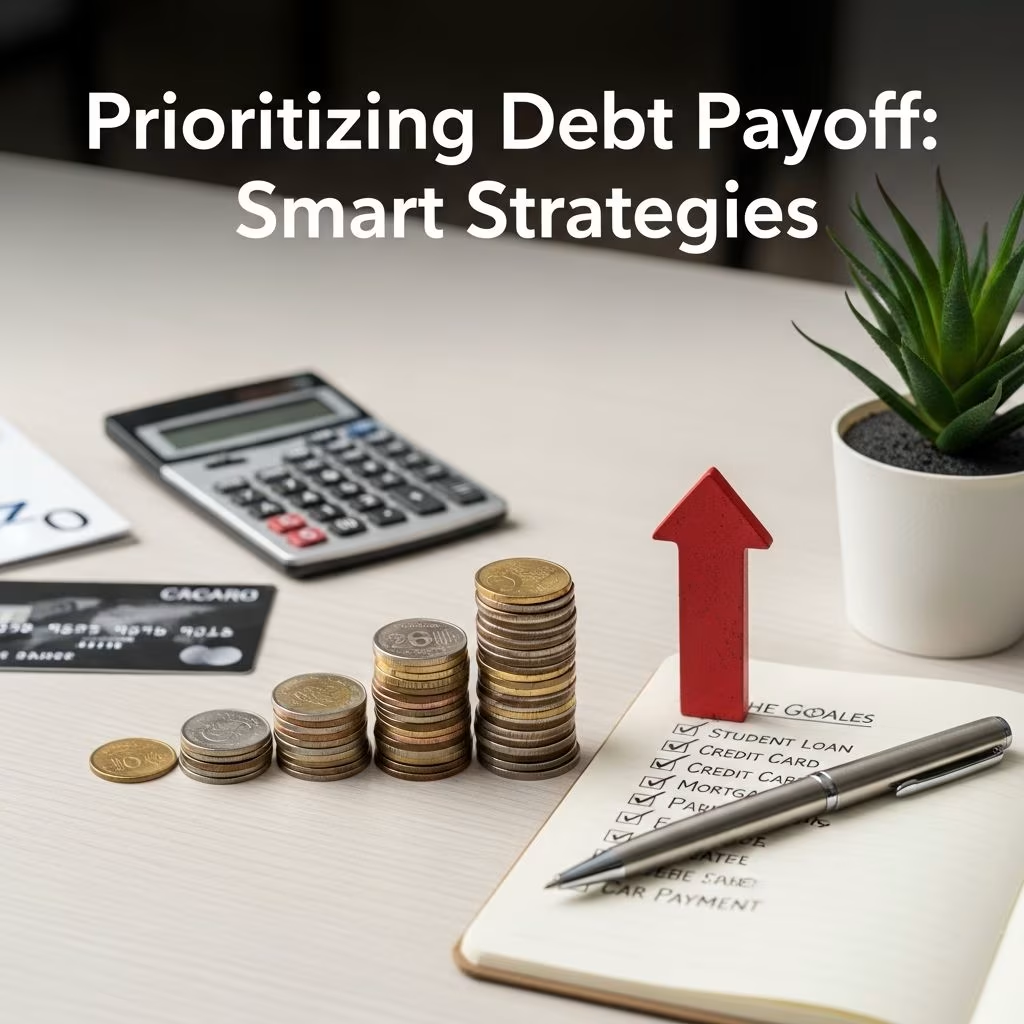
Managing multiple debts can feel overwhelming, but a structured approach to repayment turns chaos into progress. By focusing on high-impact debts first, you minimize interest costs and gain momentum toward financial stability. This guide explores practical steps to list your obligations, select optimal repayment tactics, and accelerate your journey to being debt-free.
Understanding Your Debt Landscape
The foundation of effective repayment begins with clarity. Compile a complete inventory of what you owe to make informed decisions.
- Gather all account details: Include credit cards, personal loans, auto financing, student debt, and mortgages.
- Record key metrics: Note balances, annual percentage rates (APRs), minimum payments, and due dates for each.
- Assess total exposure: Sum everything to grasp the full scope and calculate your debt-to-income ratio.
This exercise reveals patterns, such as which loans accrue the most interest daily. For instance, credit card APRs often exceed 20%, dwarfing typical auto loan rates around 6%.13
Core Principles for Ranking Debts
Not all debts deserve equal attention. Prioritize based on cost, risk, and psychological factors to optimize outcomes.
| Debt Type | Typical APR Range | Priority Level | Reason |
|---|---|---|---|
| Credit Cards | 15-25% | High | Compounds daily, erodes equity fast |
| Payday Loans | 300%+ | Critical | Predatory rates lead to spirals |
| Personal Loans | 10-20% | Medium-High | Unsecured, variable terms |
| Auto Loans | 4-8% | Medium | Collateral risk if defaulted |
| Student Loans | 4-7% | Low-Medium | Federal protections, income-driven plans |
| Mortgage | 3-6% | Low | Tax benefits, long term |
Use this framework to categorize your debts. High-priority items demand aggressive action due to their financial drain.56
Popular Repayment Methods Compared
Two dominant strategies dominate discussions: the debt snowball and avalanche. Each suits different mindsets and goals.
The Debt Snowball: Building Momentum
This technique, championed by experts, orders debts from smallest to largest balance, ignoring rates. Pay minimums on all, then funnel extras to the tiniest one. Once cleared, roll that payment into the next.14
- Psychological boost: Quick wins sustain motivation.
- Ideal for: Beginners or those with many small balances.
- Drawback: May cost more in interest long-term.
Example: $500 card, $2,000 loan, $10,000 auto. Eliminate the $500 first for an early victory.
The Debt Avalanche: Minimizing Costs
Target highest-interest debts first while maintaining minimums elsewhere. This mathematically superior method slashes total interest paid.237
- List debts by descending APR.
- Direct surplus funds to the top.
- Advance to the next upon payoff.
Benefits: Saves money; faster for high-rate burdens. If rates tie, pick smallest balance next for dual gains.
Hybrid and Alternative Approaches
Blend methods for customization. Some start with non-negotiables like overdue amounts to avoid fees, then pivot to snowball or avalanche.2
- Balance Transfer Cards: Shift high-APR balances to 0% intro offers (12-21 months). Pay principal aggressively before promo ends.16
- Debt Consolidation: Combine into one lower-rate loan. Simplifies tracking but requires discipline.4
- Extra Income Streams: Side gigs or budget trims supercharge any plan.
Step-by-Step Action Plan
Implement with this roadmap:
- Secure basics: Build $1,000 emergency fund to prevent new debt.1
- Maximize payments: Exceed minimums; even $50 extra accelerates payoff.6
- Negotiate terms: Contact lenders for hardship plans or rate reductions.2
- Track monthly: Use apps or spreadsheets to monitor progress.
- Automate: Set recurring payments to avoid misses.
Incorporate the 50/30/20 rule: 50% needs, 30% wants, 20% debt/savings for balance.3
Real-World Scenarios and Tools
Consider a profile: $15,000 credit card at 22% APR, $8,000 auto at 5%, $3,000 store card at 28%.
- Avalanche: Hits store card first, saves ~$2,500 interest over 3 years.
- Snowball: Clears any micro-debts for morale, potentially slower financially.
Free calculators simulate outcomes. Input details to compare timelines and costs.1
Common Pitfalls to Avoid
Steer clear of these traps:
- Ignoring minimums, risking scores and collections.
- Chasing low rates over high ones initially.
- Lifestyle inflation during progress.
- Skipping professional advice for complex cases like bankruptcy risks.
Prioritize high-interest over low-rate savings investments, as 20% APR outpaces typical returns.4
Long-Term Financial Health
Beyond payoff, cultivate habits: Boost credit utilization under 30%, diversify income, and invest freed funds. Debt freedom unlocks retirement contributions and peace of mind.
Frequently Asked Questions
Should I pay off debt or save first?
High-interest debt (>7%) trumps saving; low-rate debt allows parallel emergency funds.34
What’s better, snowball or avalanche?
Avalanche saves money; snowball builds habits. Test with your numbers.15
Can balance transfers hurt my score?
Temporarily yes, via inquiries/hard pulls, but payoff improves it long-term.6
How much extra should I pay monthly?
Start small, scale up. Consistency compounds results.6
What if I can’t afford minimums?
Contact creditors early for options like deferrals.27
References
- How to prioritize debt repayment: 7 strategies that work — Dupaco. 2025-02-14. https://www.dupaco.com/2025/02/14/how-to-prioritize-debt-repayment-7-strategies-that-work/
- How to prioritize debt repayments — University of Wisconsin Farm Management (farms.extension.wisc.edu). Accessed 2026. https://farms.extension.wisc.edu/articles/how-to-prioritize-debt-repayments/
- How should I prioritize paying off my debts? — Vanguard. Accessed 2026. https://ownyourfuture.vanguard.com/content/en/learn/financial-planning/how-should-i-prioritize-paying-off-my-debt.html
- Strategies for Debt Repayment — UMassFive Co-operative Credit Union. Accessed 2026. https://umassfive.coop/its-money-thing/strategies-debt-repayment
- How to Pay Off Debt Faster — Wells Fargo. Accessed 2026. https://www.wellsfargo.com/goals-credit/smarter-credit/manage-your-debt/pay-off-debt-faster/
- 5 Debt Repayment Strategies That Could Change Your Life — Navy Federal Credit Union. Accessed 2026. https://www.navyfederal.org/makingcents/credit-debt/debt-repayment-strategies.html
- Three Steps to Managing and Getting Out of Debt — California Department of Financial Protection and Innovation (DFPI). Accessed 2026. https://dfpi.ca.gov/news/insights/three-steps-to-managing-and-getting-out-of-debt/
This article is general information, not personal financial advice. Consider your own situation, or speak with a licensed adviser, before acting on it.


