

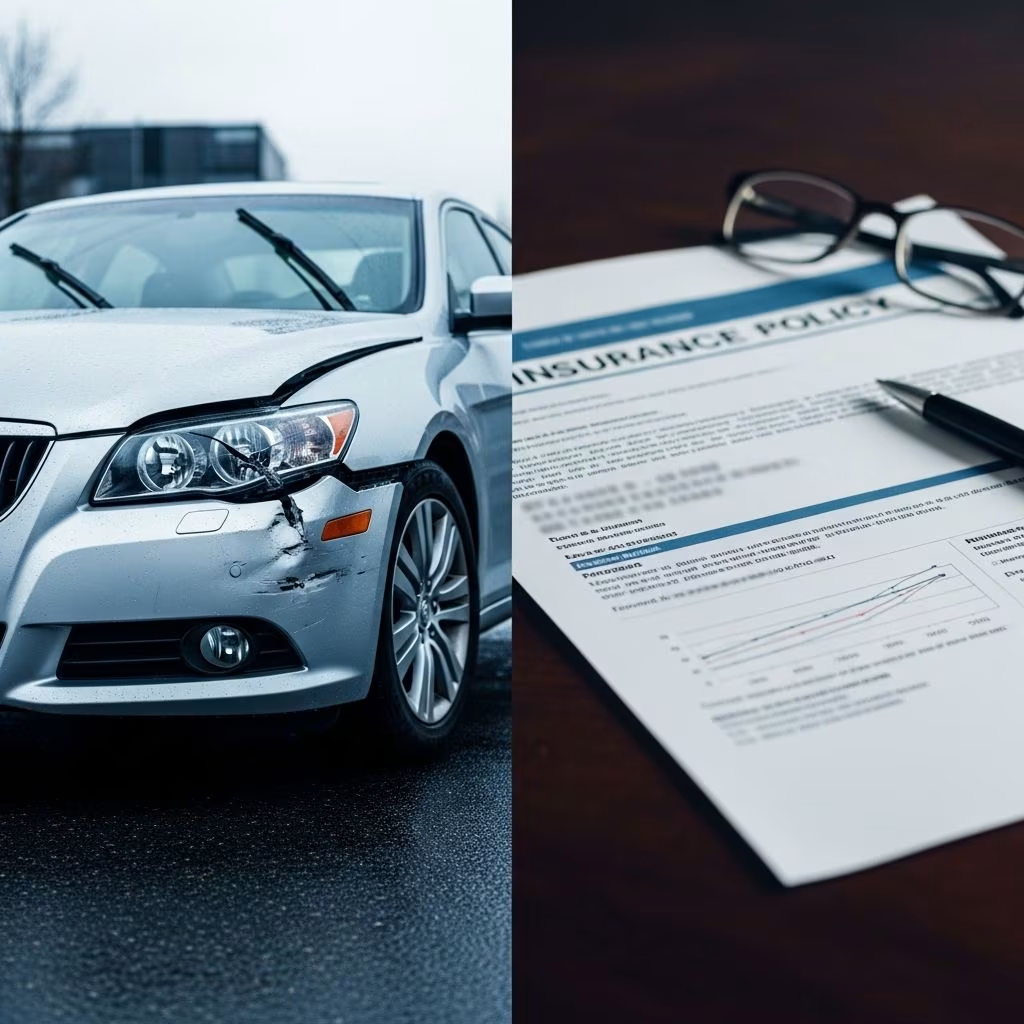
Car accidents generally remain on your insurance record for **3 to 5 years**, though this duration varies by state laws, insurer policies, accident severity, and fault determination. This period directly influences premium calculations as insurers view recent incidents as higher risk. Understanding these timelines empowers drivers to plan financially and rebuild their driving profile effectively.
Driving Records vs. Insurance Records: Key Differences
Government-maintained driving records, often called motor vehicle reports (MVRs), differ from private insurance company records. State Departments of Motor Vehicles (DMVs) track accidents for licensing purposes, while insurers maintain separate databases for underwriting and pricing.
- Driving Record (DMV): Typically holds at-fault accidents for 3 years in states like Texas; serious incidents up to 5 years or more.
- Insurance Record: Insurers review 3-5 years of history, sometimes extending to 7 years for major claims.
- Lifetime Records: Some states keep permanent logs of severe crashes, but insurers focus on recent 3-5 year windows.
Insurers pull your MVR but supplement it with their claims data, creating a comprehensive risk profile. A clean MVR helps, but filed claims linger independently.
Factors Determining How Long Accidents Stay Visible
Several elements dictate an accident’s lifespan on records:
| Factor | Typical Duration | Impact on Premiums |
|---|---|---|
| Minor Fender Bender (No Claims) | 3 years | Minimal (0-10% increase) |
| At-Fault with Property Damage | 3-5 years | 20-50% hike |
| Injury-Involved Crash | 5+ years | 50-100%+ increase |
| DUI/Reckless Driving Accident | 7-10 years | 100%+ or policy non-renewal |
Fault Assessment: At-fault incidents carry heavier weight; not-at-fault may still note but less penalty. Severity: Crashes with injuries or fatalities extend visibility. State Variations: Texas DPS holds most at-faults for 3 years; New York up to 4 years.
State-Specific Timelines for Accident Reporting
Laws differ nationwide:
- Texas: 3 years for standard at-fault; 5+ for serious violations via DPS.
- New York: 4 years (accident year-end + 3 years); lifetime for severe cases, but insurers check short-form.
- New Jersey: Generally 3 years per state guidelines.
- California: 3 years for minor; 10 years for DUI-related (insurer lookback).
Always verify with your state’s DMV, as periods start from crash date, not claim filing.
Premium Impacts: What to Expect Post-Accident
An at-fault accident often raises rates 35-50% initially, persisting 3-5 years. Not-at-fault crashes may still increase costs 10-20% if claims filed, signaling risk exposure.
- First accident: Moderate hike if clean prior record.
- Multiple incidents: Exponential increases, potential non-renewal.
- Commercial/CDL drivers: Stricter, longer impacts on livelihood.
Rates normalize post-drop-off, but rebuilding via safe driving accelerates recovery.
Accident Forgiveness: A Premium Add-On Worth Considering
Many insurers offer **accident forgiveness**, waiving surcharges after your first at-fault crash.
- Earned Forgiveness: Maintain clean record 3-5 years to qualify free.
- Paid Add-On: $20-50/year extra prevents first-incident hikes.
- Limitations: Excludes DUI/major violations; resets after use.
Progressive, State Farm, and Geico provide variants—shop policies accordingly.
Steps to Remove or Mitigate Accident Records Early
While timelines are fixed, actions help:
- Challenge Fault: Dispute insurer/DMV findings with evidence; attorneys aid in errors.
- Avoid Claims: Pay minor repairs out-of-pocket to skip claims history.
- Shop Insurers: Some overlook aged incidents or offer better post-accident rates.
- Discounts: Defensive driving courses, bundling reduce offsets (10-20%).
- Usage-Based Insurance: Telematics prove safe habits for lower rates.
Court/police records may seal via legal petition in rare cases, but DMV entries persist.
Long-Term Strategies for Insurance Cost Control
Beyond waiting:
- Increase deductibles to lower premiums immediately.
- Maintain continuous coverage to avoid lapses signaling risk.
- Compare quotes annually—post-accident shoppers save 20-30%.
Track your record via annual MVR requests ($5-10) to monitor accuracy.
FAQs: Common Questions on Accident Records
Does a not-at-fault accident affect insurance?
Yes, mildly—recorded and may raise rates 10-20% if claimed.
Can I get an accident removed early?
Rarely; only via successful disputes or errors. Standard drop-off applies.
How much do premiums rise after an accident?
20-50% average for at-fault; varies by profile.
Do all insurers check the same history period?
No, 3-5 years typical, but some extend to 7.
Is accident forgiveness available everywhere?
Common but insurer-specific; check policy options.
Protecting Your Record: Proactive Driving Tips
Prevent future issues:
- Enroll in defensive driving pre-emptively.
- Use apps for safe following distances.
- Regular vehicle maintenance reduces fault risk.
Post-accident, focus on consistency—rates drop yearly with no new incidents.
References
- When Does a Car Accident Fall Off Your Insurance Record? — Folkman Law. 2025-04. https://folkmanlaw.com/2025/04/when-does-a-car-accident-fall-off-your-insurance-record/
- How Long Does an Accident Stay on Your Insurance? — MDSW Legal. N/A. https://mdswlegal.com/faqs/how-long-does-an-accident-stay-on-your-insurance/
- How Long Does an Accident Stay on Your Record? — Bankrate. N/A. https://www.bankrate.com/insurance/car/accidents/
- How Long Does an At Fault Accident Stay on Your Record in Texas? — Austin Accident Lawyer. N/A. https://austinaccidentlawyer.com/accidents/how-long-does-an-at-fault-accident-stay-on-your-record-in-texas/
- How Long Does a Car Accident Stay on Your Record in Texas? — Feizy Law. N/A. https://feizylaw.com/how-long-does-a-car-accident-stay-on-your-record-texas/
- How Long Does an Accident Stay on Your Record in Texas? — Joel Lopez Law. N/A. https://www.joelopezlaw.com/how-long-does-an-accident-stay-on-your-record-in-texas/
- How Long Does a Car Accident Stay on Record in Texas? — Reyes Law. N/A. https://www.reyeslaw.com/blog/how-long-does-a-car-accident-stay-on-record-in-texas/
This article is general information, not personal financial advice. Consider your own situation, or speak with a licensed adviser, before acting on it.


