

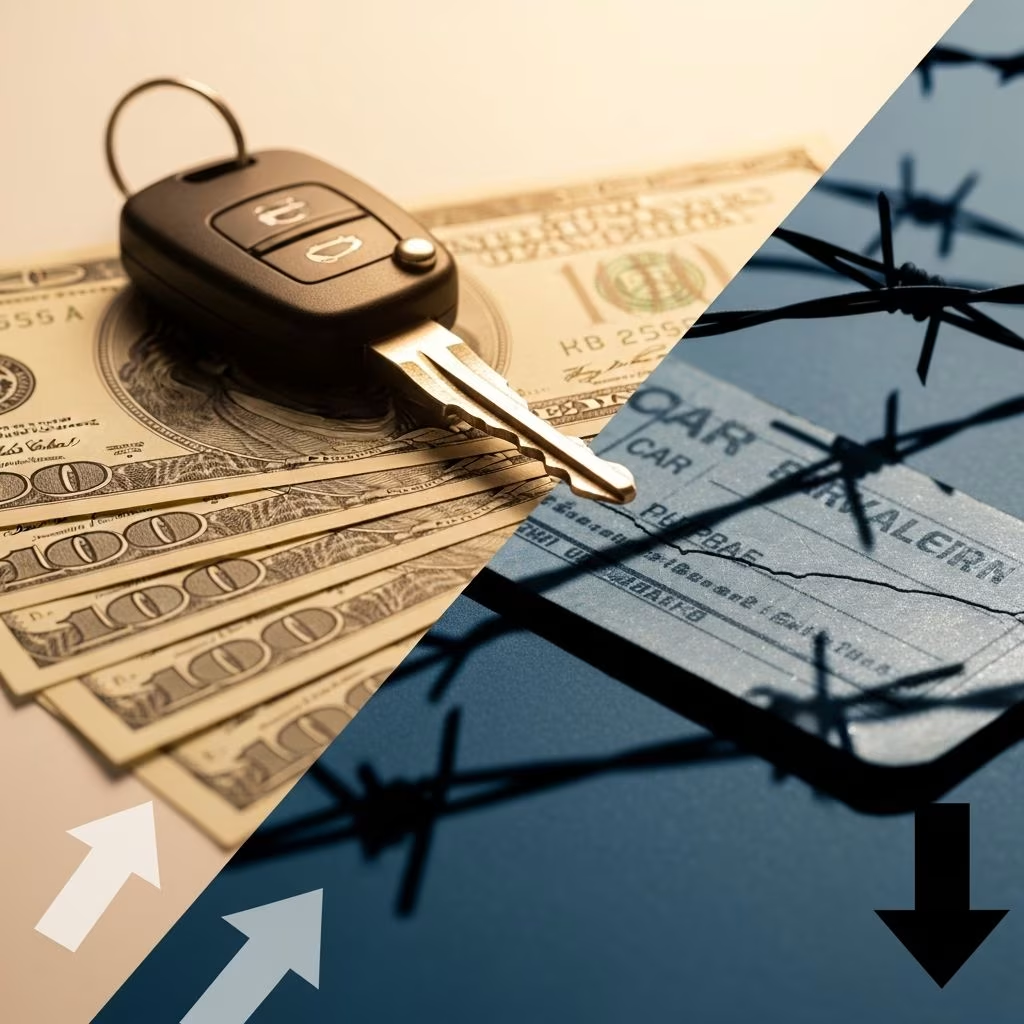
Car title loans promise fast money by using your vehicle’s title as security, appealing to those in urgent need despite poor credit. However, their steep costs and severe consequences often turn them into a financial nightmare rather than a solution.
Understanding the Basics of Vehicle Collateral Lending
These loans allow borrowers to access funds quickly by pledging their car title. Lenders typically advance 25% to 50% of the vehicle’s appraised value, with terms lasting 15 to 30 days. You retain use of the car during repayment, but the lender holds the title until the debt is cleared. This setup suits individuals facing credit hurdles, as approvals bypass traditional checks.
The process starts with a vehicle evaluation. For a $5,000 car, you might secure $1,000 to $2,500. Funds arrive same-day or next business day, ideal for emergencies. Yet, this convenience masks underlying perils, especially for those already struggling financially.
Key Advantages for Quick Cash Needs
Despite drawbacks, certain benefits draw borrowers:
- Speedy Access: Approvals happen fast without credit pulls, perfect for immediate crises.
- Bad Credit Friendly: No history review means options for subprime borrowers.
- Vehicle Retention: Drive your car while repaying, unlike pawnshops.
- Flexible Extensions: Some rollovers available, though fees accumulate.
These perks shine in dire situations, but weigh them against total expenses.
Major Drawbacks and Hidden Dangers
The primary threat is repossession: default means losing your car, crippling transport for work or essentials. Lenders recover losses by selling it, potentially pocketing surplus without refund.
High costs amplify issues. Monthly fees hit 25%, equating to 300%+ APR—far above personal loan averages of 12.64%. Additional charges include origination, processing, and insurance mandates, inflating totals.
| Fee Type | Description | Typical Cost |
|---|---|---|
| Finance Charge | Monthly interest equivalent | 25% of loan |
| Origination Fee | Setup processing | $25–$100+ |
| Document Fee | Paperwork handling | $10–$50 |
| Roadside Plan | Mandatory add-on | $20–$50/month |
| Prepayment Penalty | Early payoff charge | Varies, often none |
Short terms pressure lump-sum repayment, fostering rollovers that deepen debt cycles.
Real Cost Breakdown with Examples
Consider borrowing $1,000 on a 30-day term at 25% fee: repay $1,250. That’s $250 interest, or 300% APR. Renewing adds another $250, doubling costs quickly. Over months, a small loan balloons unaffordably.
State laws vary: California caps under $10,000 but allows unlimited rates above. Unregulated areas exacerbate exploitation. Compare to secured personal loans at 35.99% max APR over 2–5 years—far more manageable.
Who Typically Seeks These Loans?
Borrowers often have low income, bad credit, or urgent bills like medical or repairs. Lenders target these groups with lax standards, but statistics show 20% default rate leading to repossessions. Without alternatives, vulnerability rises.
Legal Protections and State Variations
Federal oversight is limited; FTC warns of predatory practices. Some states ban or cap rates, others permit freely. Always verify local rules—review contracts for hidden clauses on fees, repossession, and refunds.
- Check lender licensing.
- Understand default procedures.
- Confirm insurance requirements.
Smarter Alternatives to Avoid Collateral Risks
Better options exist:
- Personal Loans: Unsecured, fixed payments, lower APRs (12–36%).
- Credit Union PALs: Payday alternatives at 28% max, longer terms.
- Credit Cards: Balance transfers or cash advances cheaper than 300% APR.
- Salary Advances: Employer programs fee-free.
- Negotiate Bills: Payment plans from utilities/creditors.
Build emergency funds or improve credit for sustainable borrowing.
Steps to Take If Considering a Title Loan
- Calculate full repayment ability.
- Compare APRs across lenders.
- Explore non-collateral options first.
- Read all terms; avoid rollovers.
- Document vehicle value independently.
Shop reputable providers, but prioritize alternatives.
Frequently Asked Questions
Can I get a title loan with a co-signer?
Rarely; focus is collateral, not relationships. Lenders prefer outright ownership.
What if I can’t repay on time?
Expect fees, rollover options (costly), or repossession. Negotiate extensions early.
Are online title loans safe?
Stick to licensed lenders; scams abound. Verify state compliance.
How much can I borrow?
25–50% of car value, $100 minimum, up to thousands based on model.
Do title loans build credit?
Usually no reporting; positive payoff won’t help scores.
Long-Term Strategies for Financial Stability
Avoid title loans by budgeting, saving 3–6 months’ expenses, and using credit wisely. Debt counseling from nonprofits aids consolidation. Track expenses to prevent crises.
In summary, while tempting for speed, car title loans’ risks outweigh rewards for most. Opt for lower-cost paths to safeguard assets and future.
References
- Title loan pros and cons: Everything you need to know before you … — Achieve. 2025. https://www.achieve.com/learn/debt-basics/title-loan
- How Do Title Loans Work, And Are They Worth The Risk? – Bankrate — Bankrate. 2025. https://www.bankrate.com/loans/auto-loans/car-title-loans/
- How Title Loans Work: Potential Pros, Cons, and Alternatives — Capital One. 2025. https://www.capitalone.com/cars/learn/managing-your-money-wisely/how-title-loans-work-potential-pros-cons-and-alternatives/1480
- What Is a Title Loan and How Does It Work? – OneMain Financial — OneMain Financial. 2025. https://www.onemainfinancial.com/resources/loan-basics/what-is-a-title-loan-and-how-does-it-work
- Car Title Loans: What You Need to Know | Navy Federal Credit Union — Navy Federal Credit Union. 2025. https://www.navyfederal.org/makingcents/auto/car-title-loans.html
- What To Know About Payday and Car Title Loans | Consumer Advice — Federal Trade Commission (FTC). 2023-10-21. https://consumer.ftc.gov/articles/what-know-about-payday-and-car-title-loans
- Automobile Title Loans: What Consumers Need to Know – DFPI — California Department of Financial Protection and Innovation (DFPI). 2024. https://dfpi.ca.gov/news/insights/automobile-title-loans-what-consumers-need-to-know/
This article is general information, not personal financial advice. Consider your own situation, or speak with a licensed adviser, before acting on it.


