

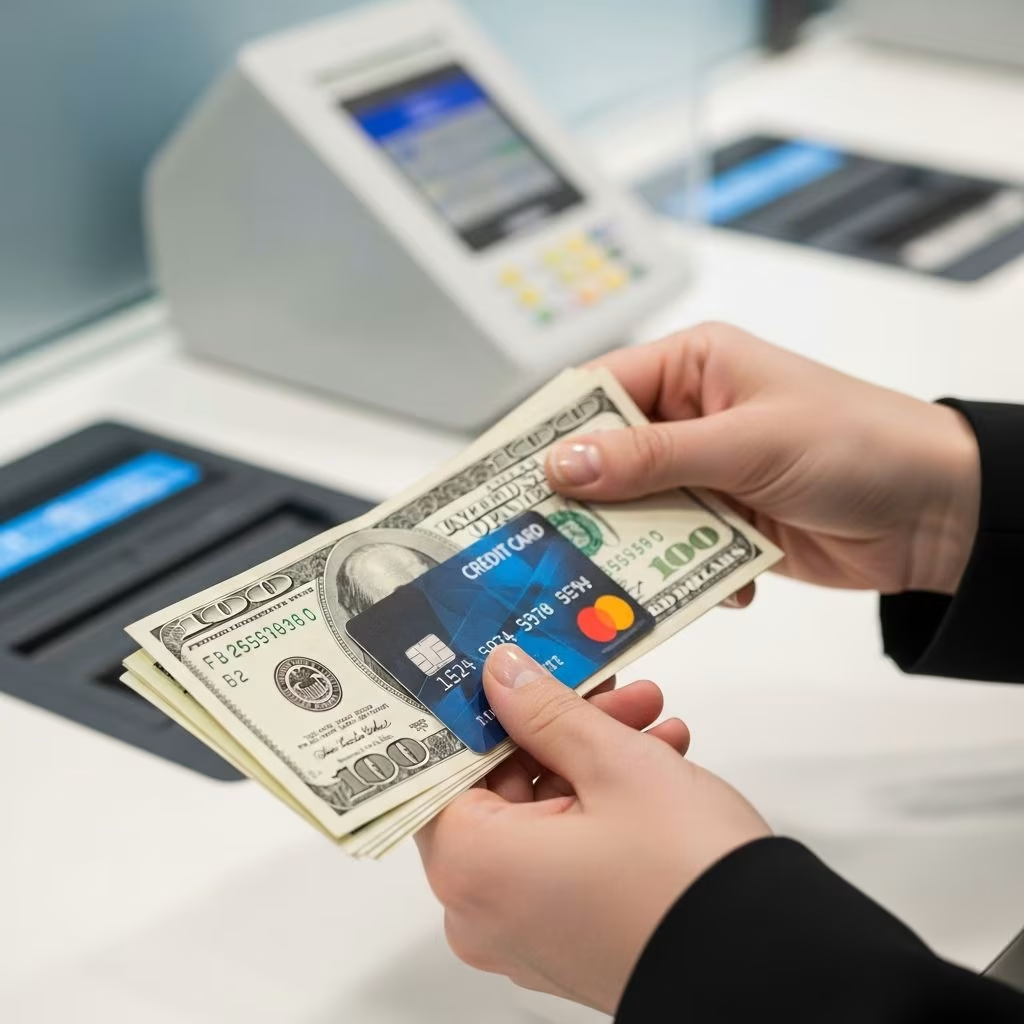
Credit card payments typically occur through electronic transfers, checks, or online platforms, but cash remains a viable option for many issuers. This method suits those without bank accounts, facing digital access issues, or preferring tangible transactions. Major providers like Chase, Capital One, and Bank of America allow cash deposits at branches or ATMs, while money orders offer a mailed alternative.
Why Consider Cash for Credit Card Payments?
In a digital era, cash payments provide reliability for specific scenarios. Individuals without checking accounts—estimated at 4.5% of U.S. households per Federal Reserve data—rely on this to avoid late fees impacting credit scores. Payment history constitutes 35% of FICO scores, making on-time payments essential. Emergencies like internet outages or travel also necessitate cash options, ensuring bills post by due dates.
Cash avoids overdraft risks tied to linked bank accounts and offers immediate proof via receipts. However, it demands proximity to issuer facilities and vigilance against counting errors at machines.
Primary Methods to Pay with Cash
Several established channels enable cash payments, each with procedural nuances.
Branch Office Deposits
Visit your issuer’s physical location, such as a Chase or Wells Fargo branch. Inform the teller of your intent, present your credit card account details, and hand over cash. They process it instantly, issuing a receipt. This suits precise control, as staff verify amounts on-site. Availability depends on issuer branch networks; online locators help find nearby spots.
ATM Cash Deposits
Use an issuer-affiliated ATM, like those from Citibank or Discover. Insert your credit card, navigate to the payment menu, and deposit bills as prompted. Confirm the machine’s tally before finalizing—discrepancies can delay credits. Not universal; Capital One and U.S. Bank support this, but verify via app or site.
- Locate issuer ATMs via mobile apps or websites.
- Carry ID and account number as backup.
- Retain receipts for 30+ days to track posting.
Money Orders as a Mailed Solution
Avoid mailing raw cash due to theft risks and non-recoverability. Instead, buy a money order at post offices, Walmart, or grocery stores using cash. Fees range from $0.70-$3 based on amount—U.S. Postal Service charges $2.10 up to $500. Endorse and mail to the issuer’s payment address listed on statements.
Track via certified mail; uncashed orders can be refunded if lost.
Retail and Third-Party Payment Services
Beyond issuer networks, services like Green Dot Network let you pay at retailers (e.g., 7-Eleven, Walmart) for Visa, Mastercard, or Amex bills. Fees around $3.95 apply; payments post next business day if before 6 PM EST. Scan your card barcode, pay cash, and receive a confirmation number. Useful for widespread access but costlier than direct methods.
Pros and Cons of Cash Payments
Weigh these factors before choosing cash.
| Aspect | Advantages | Disadvantages |
|---|---|---|
| Accessibility | Ideal for unbanked or no-internet situations | Limited to issuer locations or retailers |
| Cost | No overdraft fees; low/no branch fees | ATM errors, money order fees ($1-$5) |
| Security | Receipts prove payment immediately | Risk of loss in mail (mitigated by money orders) |
| Convenience | Tangible for cash-heavy users | Travel required; posting delays possible |
Cash excels for certainty but lags digital speed.
Fees, Processing Times, and Credit Impact
Branch/ATM payments often post same-day; money orders take 5-7 days. Late arrivals trigger fees ($25-$40) and score dings. Retail services add flat fees but post promptly. Always confirm via account portal post-payment.
For cards without branches (e.g., online-only issuers), cash options dwindle—favor prepaid cards or digital wallets instead.
Choosing Credit Cards That Accept Cash Easily
Prioritize issuers with dense networks if cash is key. Bank of America (4,600+ branches), Chase (4,700+), and Wells Fargo suit urban dwellers. Use comparison tools to match rewards (1.5x-3x points) with access. Avoid if digital payments suffice, as they offer autopay perks.
Alternatives to Cash for Smarter Payments
Digital trumps cash for efficiency:
- Online/Autopay: Free, automatic from bank; prevents misses.
- Debit/Check: Links directly, tracks easily.
- Apps: Venmo/PayPal for P2P, but not direct bills (fees 3% if using credit).
Build habits like paying twice monthly to manage utilization under 30%.
Frequently Asked Questions
Which credit cards allow cash payments?
Issuers with branches/ATMs: Chase, Capital One, Citi, Discover, Bank of America, Wells Fargo, U.S. Bank.
Is paying cash at any ATM possible?
No—only issuer-owned ATMs; insert card, select pay, deposit cash.
Can I mail cash to my card issuer?
Never; use money orders to protect funds.
How long for cash payments to post?
Branches/ATMs: same/next day; money orders: 5-10 days.
Does cash payment build credit?
Yes, if on-time; history is 35% of score.
What if no branches nearby?
Retail pay services or money orders.
Best Practices for Reliable Payments
Plan ahead: Locate facilities weekly, set reminders 3 days pre-due date. Hybrid approach—autopay minimums, cash balance—minimizes risks. Monitor statements for posting; dispute errors promptly. For unbanked, pair with secured cards to build history.
In 2026, fintech evolves, but cash persists for 5-6% of adults per FDIC surveys. Stay informed via issuer apps.
References
- Can I Pay My Credit Card Bill With Cash? — Experian. 2023-2024. https://www.experian.com/blogs/ask-experian/can-i-pay-credit-card-bill-with-cash/
- How to Pay a Credit Card Bill With Cash — SoFi. 2024-05-15. https://www.sofi.com/learn/content/pay-credit-card-with-cash/
- Can you pay credit card bill with cash? — CardRatings. 2024-03-20. https://www.cardratings.com/financial-literacy/can-you-pay-credit-card-with-cash.html
- Are You Able to Pay Off a Credit Card With Cash? — Chase. 2024-06-10. https://www.chase.com/personal/credit-cards/education/basics/pay-credit-card-with-cash
- Pay your credit card bill at a retailer — Green Dot Network. 2024. https://www.greendotnetwork.com/help/creditcardbillpay
This article is general information, not personal financial advice. Consider your own situation, or speak with a licensed adviser, before acting on it.


