

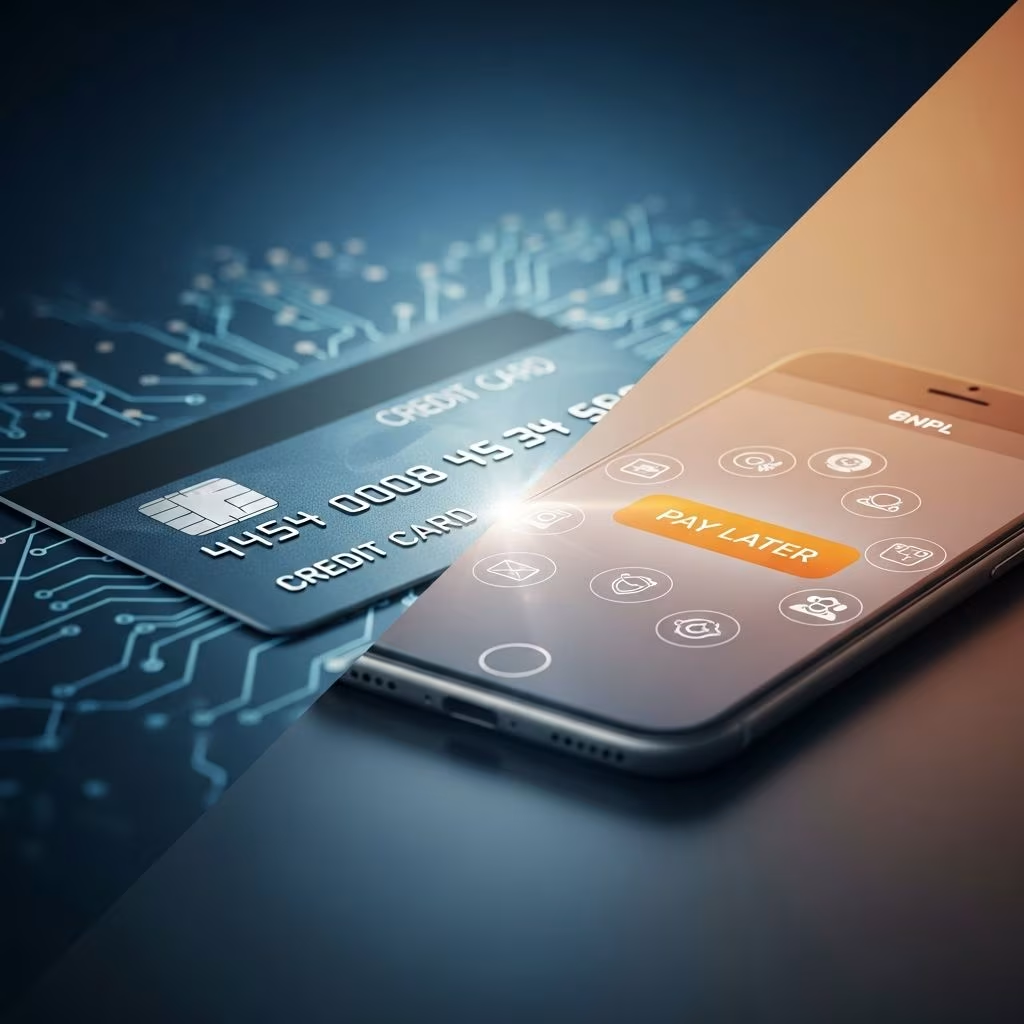
Modern shoppers face a growing array of payment methods, with Buy Now Pay Later (BNPL) services challenging the dominance of traditional credit cards. BNPL allows splitting purchases into manageable installments, often without interest, while credit cards provide revolving credit with rewards and protections. Understanding their differences helps consumers select the best tool for specific needs, balancing convenience, cost, and long-term financial health.
Understanding Buy Now Pay Later Services
BNPL emerged as a flexible financing option for online and in-store purchases, enabling buyers to acquire items immediately by deferring full payment. Providers like Affirm, Klarna, and Afterpay partner with retailers to offer these plans at checkout. Typically, a purchase is divided into four equal payments over six weeks, with the first often due upfront.12
For example, a $400 laptop might require $100 down, followed by three $100 biweekly payments. Many plans advertise zero interest if paid on time, as providers earn fees from merchants rather than consumers. However, longer-term options may include interest rates up to 36% APR.14
- Instant approval via soft credit checks, accessible to those with limited credit history.
- Fixed schedules promote disciplined repayment.
- Limited to participating merchants, reducing versatility.
How Credit Cards Function as Payment Tools
Credit cards extend a reusable line of credit, approved after a hard credit inquiry assessing income, age (minimum 18), and score. Users draw up to a limit, with minimum monthly payments required.13
A grace period of about 21-25 days lets cardholders avoid interest by paying balances in full. Revolving balances accrue high APRs, averaging 20-30%, compounded daily. Cards shine in broad acceptance worldwide via networks like Visa and Mastercard.23
- Flexible spending limits for varied transactions.
- Statement consolidation simplifies tracking.
- Potential for introductory 0% APR promotions.
Key Differences in Costs and Fees
Cost structures vary significantly, impacting overall expense.
| Aspect | BNPL | Credit Cards |
|---|---|---|
| Interest | Often 0% for short plans; possible on longer terms | High APR on carried balances; grace period avoids it |
| Fees | Late fees ($7-10), possible processing charges | Annual, late ($30-40), foreign transaction (3%) |
| Approval | Instant, soft pull | Days, hard pull |
BNPL avoids interest traps for on-time payers but penalizes delays rigidly. Credit cards offer grace but compound debt quickly if unpaid.12
Building Credit: Impacts Compared
Credit cards reliably report activity to bureaus, fostering history through on-time payments and utilization management. BNPL reporting is inconsistent; some like Affirm report to Experian, but many do not, limiting credit-building potential.1
Hard inquiries from cards temporarily ding scores, while BNPL soft pulls do not. Overuse of either can signal risk to lenders.4
Rewards and Consumer Protections
Credit cards excel here, offering cash back (1-5%), points, or miles, plus perks like extended warranties, purchase protection, and zero fraud liability. BNPL rarely provides rewards and offers weaker dispute resolution, complicating returns.23
- Cards: Fraud protection, travel insurance.
- BNPL: Merchant-dependent policies.
Pros and Cons Breakdown
Advantages of BNPL
- No interest on standard four-payment plans.
- Budget-friendly for one-off large buys.
- Accessible without strong credit.15
Drawbacks of BNPL
- No rewards or protections.
- Multiple payment streams complicate budgeting.
- Potential debt accumulation across plans.3
Advantages of Credit Cards
- Universal acceptance and rewards.
- Builds credit effectively.
- Flexible payments and protections.24
Drawbacks of Credit Cards
- High interest if not paid off.
- Temptation to overspend.
- Requires good credit for best terms.
When to Choose BNPL Over Cards
Opt for BNPL on interest-free plans for purchases you can afford incrementally, like electronics or furniture from partnered stores. Ideal if avoiding credit inquiries or lacking card access.15
When Credit Cards Are Superior
Use cards for rewards-eligible spending, travel, or anywhere protections matter. Pay in full to sidestep interest, leveraging grace periods.3
Hybrid Strategies for Maximum Benefit
Combine both: Use cards for rewards and everyday buys, BNPL for big-ticket interest-free splits. Some cards now integrate BNPL-like installment plans.4
Frequently Asked Questions
Does BNPL affect my credit score?
Some providers report payments, potentially helping scores; others don’t. Late payments hurt if reported.1
Are BNPL plans safer than credit cards?
Credit cards offer stronger federal protections; BNPL varies by provider.2
Can I use BNPL everywhere?
No, limited to supported merchants unlike ubiquitous cards.3
Which builds credit better?
Credit cards, due to consistent bureau reporting.4
Is BNPL free of fees?
Often yes upfront, but late fees apply.5
Final Thoughts on Payment Decisions
Neither BNPL nor credit cards are universally superior; match them to your habits. Disciplined users thrive with cards’ perks; budgeters benefit from BNPL structure. Monitor usage to avoid debt cycles.
References
- Buy Now, Pay Later vs. Credit Card: Which is Right for You? — Discover. 2024. https://www.discover.com/credit-cards/card-smarts/buy-now-pay-later-vs-credit-cards/
- Pros and Cons: Credit card vs. Buy Now Pay Later? — Fulton Bank. 2024. https://www.fultonbank.com/Education-Center/Managing-Credit-and-Debt/Should-you-use-a-credit-card-or-buy-now-pay-later
- Buy Now Pay Later vs. credit cards — First Tech Federal Credit Union. 2024. https://www.firsttechfed.com/articles/bnpl-vs-credit-cards
- Using Buy Now, Pay Later (BNPL) vs. Credit Cards for Your Purchases — Chase. 2024. https://www.chase.com/personal/credit-cards/education/basics/buy-now-pay-later-vs-credit-cards
- When to use buy now, pay later vs. a credit card — Bankrate. 2024. https://www.bankrate.com/credit-cards/advice/buy-now-pay-later-vs-credit-card/
This article is general information, not personal financial advice. Consider your own situation, or speak with a licensed adviser, before acting on it.


