

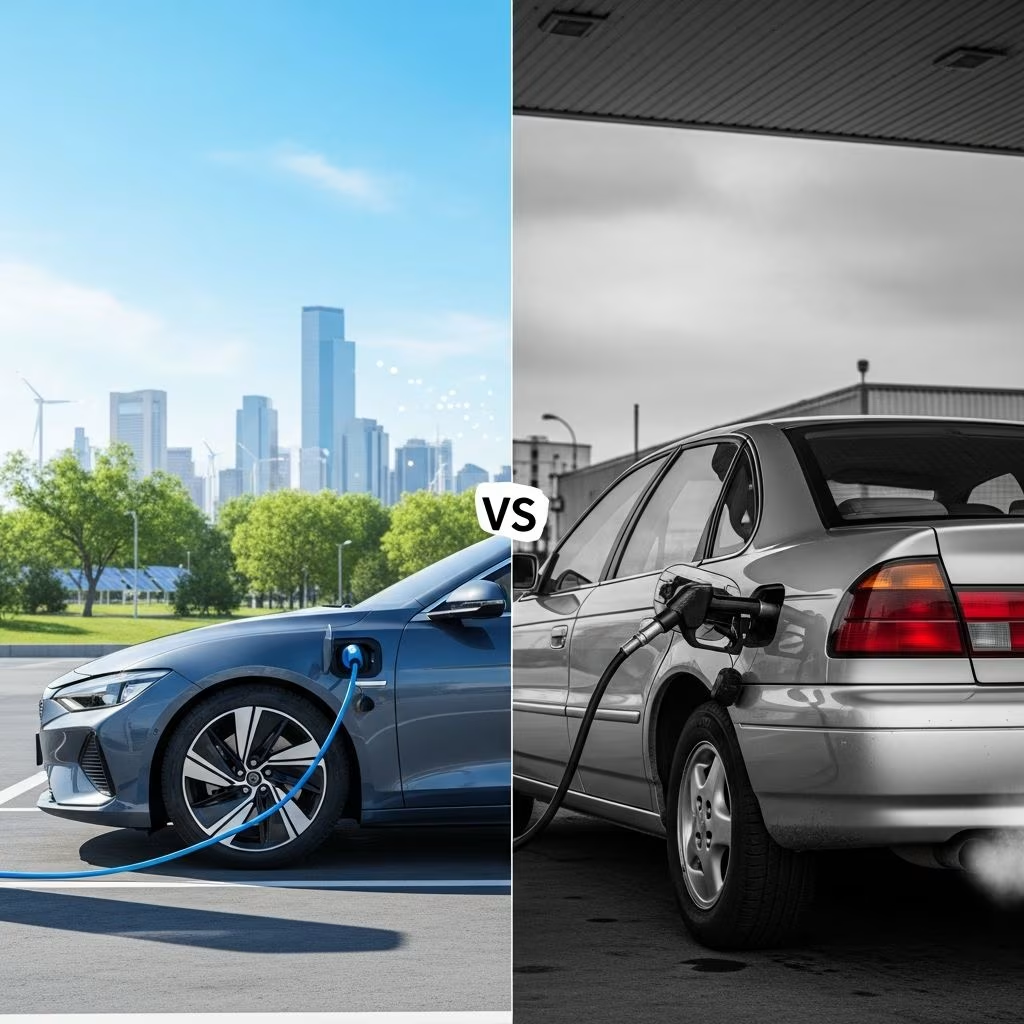
Electric vehicles (EVs) represent a transformative shift in personal transportation, offering innovative solutions to longstanding issues in mobility while presenting unique hurdles for prospective owners. As battery technology advances and charging infrastructure expands, more drivers are weighing whether an EV aligns with their lifestyle and finances. This article delves into the core strengths and limitations of electric cars, drawing on current market data to help you navigate this decision.
Why Electric Vehicles Are Gaining Traction
The appeal of EVs stems from their ability to deliver efficient, clean, and engaging driving experiences. Unlike traditional gasoline-powered cars, EVs rely on electric motors and large battery packs, which enable instant torque and smooth acceleration. For urban commuters and families alike, these vehicles promise reduced reliance on fossil fuels and lower long-term expenses.
- Environmental Superiority: EVs produce zero tailpipe emissions, significantly cutting urban air pollution and greenhouse gases when charged from renewable sources.
- Performance Edge: Electric motors provide immediate power, making even entry-level models feel responsive and fun to drive.
- Quiet Operation: The absence of engine noise creates a serene cabin environment, enhancing comfort on daily drives.
Financial Upsides of EV Ownership
One of the most compelling reasons to consider an electric car is the potential for substantial savings over time. While initial costs can be steep, operational expenses are markedly lower, making EVs attractive for budget-conscious buyers who plan to keep their vehicle for several years.
| Cost Category | Gas Car (Annual Avg.) | EV (Annual Avg.) | Savings Potential |
|---|---|---|---|
| Fuel/Energy | $1,500–$2,000 | $400–$600 | 60–75% |
| Maintenance | $900 | $300–$500 | 45–65% |
| Incentives | None | Up to $7,500 federal credit | Significant upfront reduction |
Electricity rates are generally one-third the cost of gasoline per mile, and EVs require far less maintenance due to fewer moving parts—no oil changes, spark plugs, or exhaust systems. Federal tax credits remain a key incentive, potentially slashing thousands from the purchase price for qualifying models.
Superior Driving Dynamics and Comfort
EVs excel in delivering a refined driving experience. The low center of gravity from underfloor battery placement enhances handling stability, while regenerative braking recaptures energy during deceleration, extending range and reducing brake wear. Models like the 2026 Hyundai Ioniq 5 offer EPA ranges of 245–318 miles with base prices around $36,600, combining practicality with sporty performance.
Inside, EVs often feature minimalist dashboards with large digital displays and over-the-air software updates, keeping technology current without dealership visits. Premium options like the 2026 Cadillac Lyriq provide luxury touches, including 285–314 miles of range and advanced driver aids, at $60,995 starting.
Environmental and Health Advantages
Switching to an EV contributes to broader sustainability goals. Lifecycle analyses show EVs emit less CO2 than gas cars, even accounting for battery production, especially as grids incorporate more renewables. Health benefits include cleaner air in cities, reducing respiratory issues from exhaust fumes.
Challenges in Upfront Costs and Availability
Despite the positives, EVs demand a higher initial investment. Average prices hover between $35,000 and $60,000, compared to sub-$30,000 for many gas sedans. Battery packs account for much of this premium, though prices are declining with scale.
- Limited Model Variety: While options grow, three-row family haulers or heavy-duty trucks remain scarce in the EV space.
- Supply Constraints: High-demand models like the Tesla Model 3 ($38,630 base, 309–363 miles range) often face waitlists.
Range Limitations and Real-World Factors
Range anxiety persists for some, though most 2026 EVs achieve 250–350 miles per charge. Cold weather can reduce this by 20–40%, and highway speeds further impact efficiency. Urban drivers averaging under 40 miles daily thrive with 150–220-mile options like the Nissan Leaf ($31,495 base, 256–303 miles).
Suburban commuters need 230–280 miles, suiting crossovers, while highway users require 280+ miles with fast-charging capability.
Charging Infrastructure Hurdles
Home charging is ideal—overnight Level 2 units add 20–60 miles per hour—but not everyone has garage access. Public networks are expanding, with NACS adoption enabling access to Tesla Superchargers. However, rural areas lag, and fast-charging sessions (150–350 kW) take 20–40 minutes for 80% capacity.
Battery Longevity and Replacement Concerns
Modern batteries retain 70–80% capacity after 100,000–200,000 miles, backed by 8-year warranties. Replacement costs $10,000–$20,000, but degradation is gradual. Used EVs demand battery health checks; air-cooled packs in hot climates warrant caution.
Insurance and Resale Value Considerations
EV insurance premiums run 10–20% higher due to repair costs for batteries and tech. Resale holds strong for popular models but dips for older tech like early Leafs. Total ownership costs still favor EVs over 5–7 years.
Choosing the Right EV for Your Needs
Match your profile to vehicle type:
- City Dwellers: Compact hatches (e.g., Nissan Leaf) for short trips and easy parking.
- Family Haulers: Midsize crossovers (e.g., Kia EV9, 230–304 miles, $56,545) with space and safety.
- Long-Distance Drivers: Long-range sedans (e.g., Tesla Model 3) with 800V charging.
New vs. Used EV: A Strategic Comparison
| Factor | New EV | Used EV |
|---|---|---|
| Price | $35K–$70K | $20K–$40K |
| Warranty | Full, 8-yr battery | Remaining or none |
| Range | Latest tech | Check health |
| Tech | Current | May be dated |
New EVs offer peace of mind; used ones provide value if vetted properly.
Future Outlook for Electric Mobility
By 2026, solid-state batteries and denser packs promise 400+ mile ranges and 10-minute charges. Incentives, infrastructure, and falling prices will accelerate adoption, making EVs viable for nearly all drivers.
Frequently Asked Questions
How long does it take to charge an EV?
Home Level 2: 4–10 hours full; DC fast: 20–40 minutes to 80%.
Are EVs cheaper to own than gas cars?
Yes, over time, due to energy and maintenance savings.
Can EVs handle cold weather?
Range drops, but preconditioning and heated batteries mitigate this.
What incentives are available?
Federal credits up to $7,500; state rebates vary.
Is home charging necessary?
Preferred, but public options suffice for many.
References
- First Electric Car Buying Guide 2026: Step-by-Step Tips — Recharged. 2026. https://recharged.com/articles/first-electric-car-buying-guide-2026
- Best Electric Cars for the Money in 2026 — Road & Track. 2026. https://www.roadandtrack.com/rankings/g43906365/best-electric-cars-for-the-money/
- Best Electric Vehicles for 2026, Tested — Car and Driver. 2026. https://www.caranddriver.com/rankings/best-electric-cars
This article is general information, not personal financial advice. Consider your own situation, or speak with a licensed adviser, before acting on it.


