

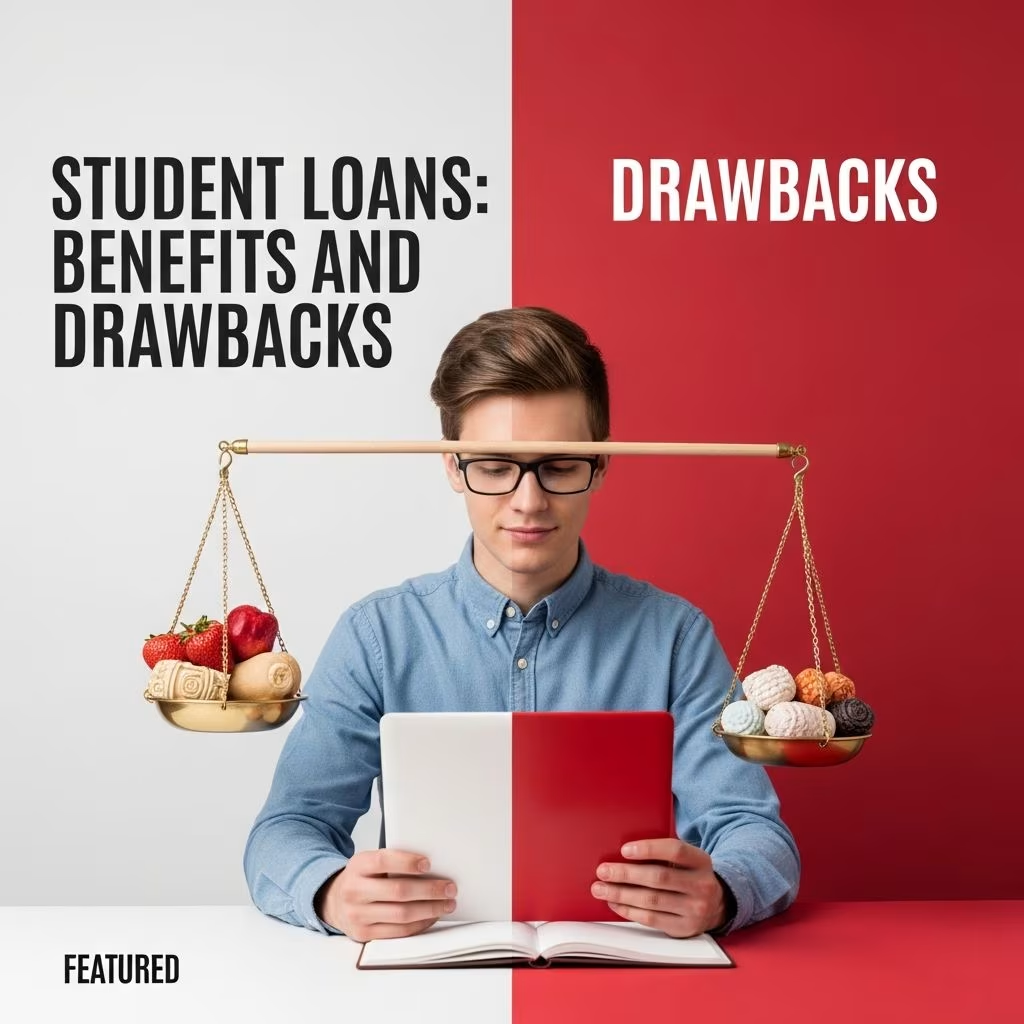
Financing higher education often requires borrowing money, and student loans remain a primary tool for many. While they enable access to degrees that boost earning potential, they also carry financial obligations that demand careful consideration. This article delves into the positive and negative aspects of student loans, highlighting federal and private varieties, recent policy shifts, and practical advice for borrowers.
Why Student Loans Matter for Your Future
Higher education correlates strongly with improved career prospects. Graduates typically earn more over their lifetimes compared to those without degrees. Loans bridge the gap between tuition costs and available savings, allowing students to invest in skills and credentials. However, the total U.S. student debt exceeds $1.7 trillion, underscoring the need to weigh options thoroughly.
Federal loans dominate the market due to their accessibility and protections, but private loans fill gaps for those needing more funds. Understanding both types helps in crafting a sustainable repayment plan.
Advantages of Federal Student Loans
Federal loans, issued by the U.S. Department of Education, offer several borrower-friendly features not matched by private alternatives.
- Lower Fixed Interest Rates: As of 2026, undergraduate Direct Subsidized and Unsubsidized Loans carry a 6.39% rate, graduate Unsubsidized at 7.94%, and PLUS Loans at 8.94%. These fixed rates provide predictability, unlike variable private rates that can rise.
- No Credit Check Required: Eligibility relies on financial aid applications, not credit scores, making them available to most students without cosigners.
- Interest Subsidies: Direct Subsidized Loans have government-paid interest during school, grace periods, and deferments, reducing overall costs significantly.
- Multiple Repayment Options: Plans include Standard (10 years), Graduated (increasing payments), Extended (up to 25 years for larger debts), and income-driven plans capping payments at 5-20% of discretionary income, with forgiveness after 10-25 years.
These features make federal loans a foundational choice for funding education.
Key Benefits of Private Student Loans
When federal limits are exhausted, private loans from banks or lenders step in.
- Higher Borrowing Limits: No strict caps allow covering full costs of attendance, ideal for expensive programs.
- Potentially Competitive Rates: Borrowers with excellent credit (720+) can secure rates around 6.77% for 10-year fixed terms, sometimes lower than federal PLUS loans.
- Flexible Terms: Options for student as primary borrower with parent cosigner, or customizable repayment schedules.
Private loans suit those with strong credit profiles or needing extra funds beyond federal caps.
Challenges and Risks of Federal Student Loans
Despite advantages, federal loans have limitations.
- Origination Fees: Fees of 1.057% for Direct Loans and 4.228% for PLUS Loans increase the borrowed amount.
- Borrowing Caps: Annual limits like $5,500-$7,500 for freshmen and lifetime aggregates restrict coverage for high-cost schools.
- Upcoming 2026 Changes: Under the One Big Beautiful Bill Act, starting July 1, 2026: Grad PLUS loans eliminated; new Parent PLUS caps at $20,000/year, $65,000 lifetime; graduate unsubsidized limits drop to $100,000; repayment limited to Standard or Repayment Assistance Plan (RAP).
These reforms aim to curb debt growth but may push more borrowers toward private options.
Drawbacks of Private Student Loans
Private loans lack federal protections, introducing risks.
| Aspect | Federal Loans | Private Loans |
|---|---|---|
| Interest Rates | Fixed, lower average | Variable possible, higher for poor credit |
| Repayment Plans | Multiple, income-based | Lender-specific, less flexible |
| Forgiveness | Available | Not offered |
| Credit Requirement | None | Strict, often needs cosigner |
- Credit Dependency: Poor credit leads to high rates or denial; cosigners share liability.
- No Forgiveness: Lacks income-driven relief or public service discharge.
- Variable Rates Risk: Payments can increase with market shifts.
Navigating Repayment Strategies
Effective repayment minimizes long-term impact. Prioritize subsidized loans first, then unsubsidized, before private. Use grace periods (6 months post-graduation) to prepare. Automate payments for discounts. Consider refinancing private loans if rates drop, but avoid for federal to preserve benefits.
For Parent PLUS Loans: Pros include high limits ($20,000/year pre-2026 changes) and deferment; cons are high rates (2.55% above Direct) and parental liability.
2026 Policy Shifts: What Borrowers Need to Know
The One Big Beautiful Bill Act reshapes federal aid:
- Repayment: Only Standard (10-30 years) or RAP (income-based).
- PLUS Reforms: Parent caps introduced; Grad PLUS gone for new borrowers.
- Loan Limits: Tighter for graduates/professionals.
- New Incentives: Workforce Pell Grants for short training.
Prospective students should apply early and explore scholarships to offset changes.
Alternatives to Traditional Student Loans
- Scholarships/Grants: Free money based on merit or need.
- Work-Study: Earn while studying.
- Home Equity: Lower rates but risks foreclosure.
- Employer Tuition Aid: Company-sponsored education.
Tips for Responsible Borrowing
- Complete FAFSA annually for max aid.
- Borrow only what you need.
- Compare rates across lenders.
- Build credit early for better private terms.
- Track loans via Federal Student Aid portal.
Frequently Asked Questions
Are federal student loans better than private ones?
Yes, for most due to protections, low rates, and forgiveness, though private may offer more funds or better rates for top credit.
What changes hit federal loans in 2026?
Elimination of Grad PLUS, new caps on Parent PLUS, revised repayment to Standard/RAP, and lower grad limits.
Can I avoid interest accrual in school?
Only with Direct Subsidized Loans; unsubsidized accrues immediately.
Should parents cosign private loans?
Only if prepared for full responsibility; it improves rates but ties family finances.
Is student loan forgiveness reliable?
Available for federal via IDR/public service, but 2026 limits options; track eligibility.
Final Thoughts on Balancing Education Costs
Student loans empower educational access but require strategic use. Federal options provide safeguards, while private fill gaps with caveats. Stay informed on 2026 changes and prioritize free aid. With planning, loans become tools for growth, not burdens.
References
- 6 Big Advantages of Federal Student Loans in 2026 — Credible. 2026. https://www.credible.com/student-loans/federal-student-loan-benefits
- The Best Student Loan Options for 2026-27 — Taming The High Cost of College. 2026. https://tamingthehighcostofcollege.com/best-student-loan-options-for-2026-27/
- Federal Student Loans in 2026: What the One Big Beautiful Bill Act … — Citizens Bank. 2026. https://www.citizensbank.com/learning/how-the-one-big-beautiful-bill-act-affects-students.aspx
- Student Loans in 2026: What Borrowers Need to Know — NerdWallet. 2026. https://www.nerdwallet.com/student-loans/news/student-loan-changes-2026
This article is general information, not personal financial advice. Consider your own situation, or speak with a licensed adviser, before acting on it.


