

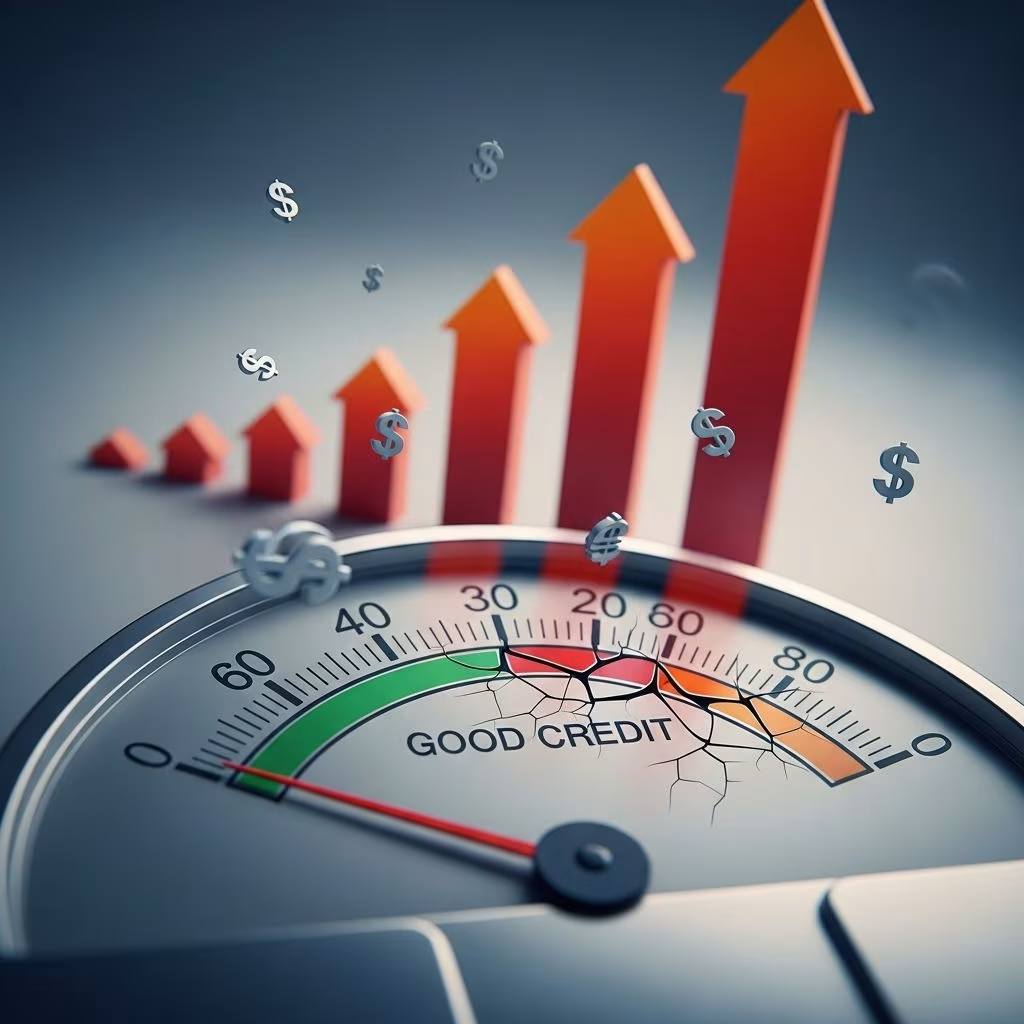
Rising interest rates do not directly lower your credit score, but they can create financial pressures that indirectly harm it through missed payments or increased debt levels. Understanding this dynamic is essential for maintaining financial stability during economic shifts.
The Mechanics of Credit Scoring in a High-Rate World
Credit scores measure your reliability as a borrower based on factors like payment history, credit utilization, and debt amounts—not prevailing interest rates. Major bureaus such as Equifax, Experian, and others use algorithms that prioritize behavioral data over market conditions.
When central banks raise benchmark rates, like the Federal Reserve’s federal funds rate or Australia’s cash rate, variable-rate products adjust upward. This increases monthly obligations on mortgages, credit cards, and lines of credit, potentially straining budgets.
- Payment History (35% of FICO score): Late payments remain the top detractor.
- Credit Utilization (30%): Higher minimum payments can force reliance on available credit.
- Debt Levels: Accumulating balances signals risk to lenders.
Fixed-rate loans, such as certain auto financing, stay insulated, highlighting why product type matters.
Indirect Pathways: How Rate Hikes Ripple Through Finances
The chain reaction starts with elevated costs. For a household with $5,221 in average credit card debt, a 0.75% APR jump adds over $10 daily in interest, per Experian data cited in analyses. Minimum payments rise, leaving less room for error.
Mortgage stress emerges when repayments exceed 30% of income—a threshold lenders monitor closely. In Australia, recent 2026 cash rate hikes have amplified this for variable home loans, though scores reflect outcomes like delinquencies, not the rate itself.
| Credit Score Range | Typical Mortgage Rate | Monthly Payment (30-yr, $300k loan) | Total Extra Cost vs. Top Tier |
|---|---|---|---|
| 760+ | 3.00% | $1,265 | $0 |
| 740-759 | 3.25% | $1,305 | $14,880 |
| 680-699 | 4.50% | $1,520 | $46,080 |
This table illustrates rate-score interplay; drops from optimal tiers compound long-term expenses dramatically.
Your Credit Profile: What Lenders Really See
Bureaus compile reports from diverse data: credit card limits, loan counts, repayment patterns, and public records like judgments. Proprietary models, such as Equifax’s, weigh these without rate inputs.
Credit cards often tie APRs to the prime rate, which tracks federal funds. Thus, Fed hikes in 2022 (e.g., 0.75% in June) directly lifted card costs, but scores track usage and timeliness.
Subprime borrowers (scores <660) face persistently high rates, yet stable account shares since 2015 haven't eased averages, per CFPB observations.
Proactive Defense: Shielding Your Score from Rate Pressures
Maintain resilience with these steps:
- Prioritize Payments: Automate to avoid lates, the biggest score killer.
- Reduce Utilization: Aim below 30% by paying balances aggressively.
- Refinance Strategically: Lock fixed rates where possible before hikes.
- Build Buffers: Emergency funds cover 3-6 months of essentials.
- Monitor Reports: Check weekly via official portals for errors.
Improving scores unlocks better rates: higher FICO® levels qualify for lower APRs on new credit. Timely habits and low utilization elevate profiles quickly.
The Bidirectional Bond: Scores Dictate Your Rates
Strong scores (e.g., 700+) signal low risk, yielding preferential rates—vital as markets tighten. Lenders assess full reports beyond scores, factoring income and history.
A 20-point drop from 760 to 740 might nudge mortgage rates up 0.25%, adding thousands over decades. Conversely, excellence secures 0% promo periods and prime offers.
Real-World Scenarios: Rate Rises in Action
Consider a variable mortgage holder: post-hike, payments surge 10-20%. Missing one drops scores 100+ points, hiking future rates further—a vicious cycle.
Credit card users with revolving debt face compounded interest. At 20% APR (common for average scores), balances grow if only minima paid, utilization spikes, scores suffer.
Long-Term Resilience: Beyond the Current Cycle
Rate environments fluctuate; scores endure. Focus on timeless factors: diversify credit mix without overextending, limit inquiries, and age accounts.
Economic policies like 2022-2026 hikes combat inflation but test discipline. Those adapting thrive with lower future costs.
Frequently Asked Questions
Do interest rate changes appear on my credit report?
No, reports log accounts and behaviors, not market rates.
Can I negotiate lower card APRs during hikes?
Yes, good history strengthens requests; scores aid leverage.
How quickly do score drops from lates recover?
Typically 1-3 months with perfect subsequent behavior.
Are fixed-rate products immune to hikes?
Yes, until renewal, preserving payment stability.
What’s the top way to boost scores amid pressures?
Pay on time and reduce balances—core to 65% of models.
References
- How interest rate rises can impact your credit score — Equifax Australia. 2026-02. https://www.equifax.com.au/personal/how-interest-rate-rises-can-impact-credit-score
- How Does My Credit Score Impact My Mortgage Interest Rate? — Sun American Mortgage. 2023. https://sunamerican.com/mortgage-interest-rate-impact/
- Will Rising Interest Rates Affect Your Credit Card? — myFICO. 2022-06. https://www.myfico.com/credit-education/blog/rising-rates-credit-card
- Why Do Credit Card Interest Rates Vary Based on Credit Score? — CRIF High Mark. 2024. https://www.crifhighmark.com/blog/credit-card-interest-rates-based-on-credit-score
- Examining the factors driving high credit card interest rates — Consumer Financial Protection Bureau. 2023. https://www.consumerfinance.gov/about-us/blog/examining-the-factors-driving-high-credit-card-interest-rates/
- The Link Between Credit Score And Interest Rates — Loqbox. 2024. https://www.loqbox.com/en-gb/blog/the-link-between-credit-score-and-interest-rates
This article is general information, not personal financial advice. Consider your own situation, or speak with a licensed adviser, before acting on it.


