

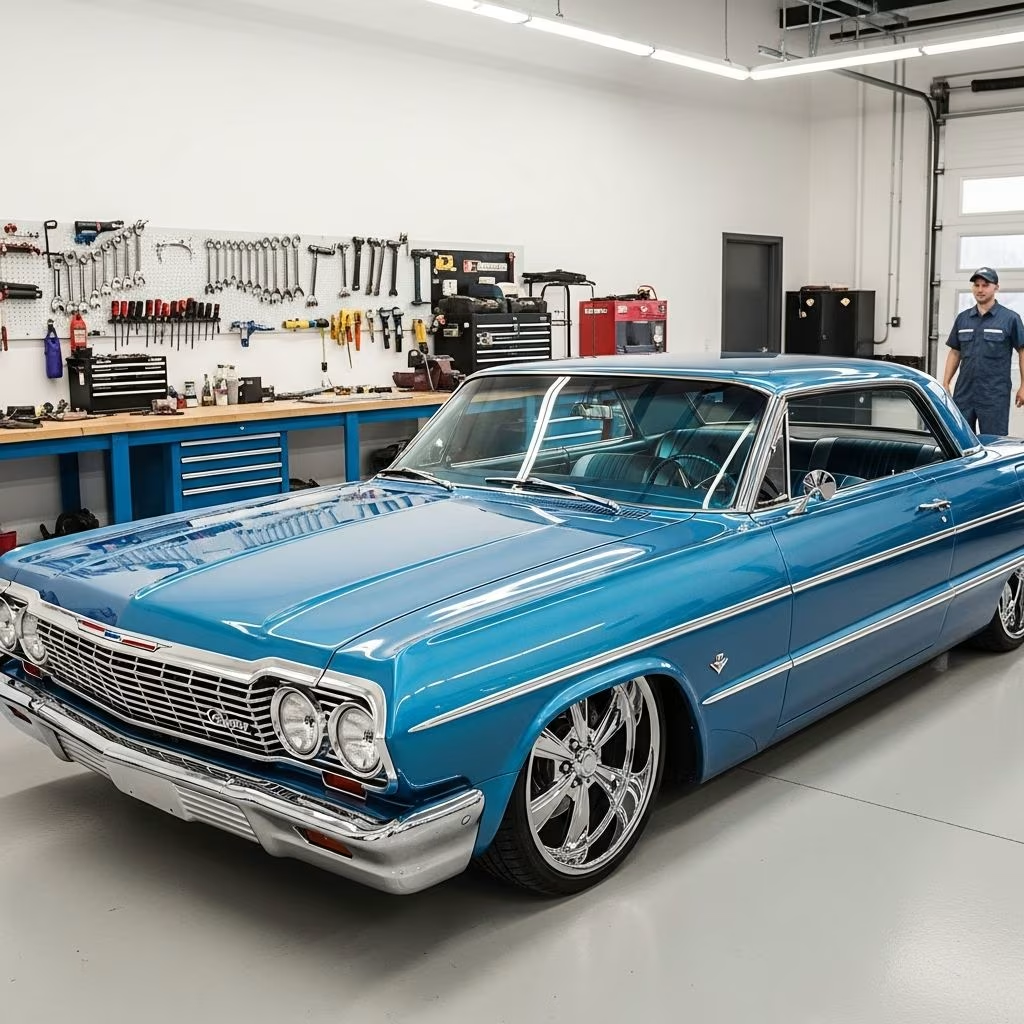
Customizing your car with aftermarket parts boosts performance, style, or functionality, but it also demands specialized insurance to match. Standard policies typically reimburse based on factory specifications, leaving owners exposed to significant out-of-pocket costs for upgrades. This guide breaks down everything you need to know about protecting modified rides effectively.
Why Standard Auto Insurance Falls Short for Mods
Most conventional car insurance plans are built around original manufacturer equipment. When you add non-factory components, claims payouts reflect stock replacement values rather than the true expense of custom items. For instance, if upgraded rims or a turbocharger get damaged, you might receive compensation only for basic equivalents, creating a coverage gap that could run into thousands.
This mismatch arises because insurers assess risk and value using the vehicle’s base model data. Performance tweaks that increase speed or handling potential can elevate accident likelihood, prompting carriers to limit liability unless informed. Failing to address this leaves enthusiasts vulnerable during collisions, theft, or vandalism.
Defining Vehicle Modifications
Not every tweak qualifies as a modification requiring extra coverage, but broadly, it’s any post-factory alteration. Insurers categorize these into types that influence policy adjustments:
- Aesthetic enhancements: Custom wraps, LED lighting arrays, alloy wheel sets, or chrome accents that personalize appearance without altering mechanics.
- Performance boosts: Exhaust systems for better flow, suspension lifts for off-road capability, or forced induction kits like superchargers that amp up horsepower.
- Functional additions: Advanced sound systems, accessibility aids such as hand controls, or security upgrades beyond factory anti-theft.
- Structural changes: Body kits, reinforced frames, or brake overhauls that modify the car’s foundational design.
Even subtle changes like window tinting or stereos can trigger disclosure rules. If prior owners installed undisclosed mods, buyers must verify and report them to prevent fraud accusations.
Risks of Non-Disclosure
Withholding modification details from your provider isn’t just oversight—it’s a high-stakes gamble. Undisclosed upgrades can lead to claim rejections, partial payouts, or full policy cancellation. In extreme scenarios, this constitutes material misrepresentation, exposing you to total financial responsibility for damages.
Legal repercussions compound the issue. Federally, emissions tampering voids coverage and invites fines. State inspections scrutinize altered exhausts for noise compliance, while safety standard deviations may bar roadworthiness certification. A documented case from industry reports shows a driver losing a $20,000 claim after hidden engine work surfaced post-accident.
| Risk | Potential Consequence | Example |
|---|---|---|
| Claim Denial | Modified parts excluded | Custom exhaust not reimbursed |
| Policy Void | Entire coverage canceled | Undisclosed turbocharger discovered |
| Legal Penalties | Fines or inspection failure | Emissions non-compliance |
| Financial Loss | Full repair costs borne by owner | $5K wheel set replacement |
Available Coverage Solutions
Several insurance products bridge the gap for customized vehicles. Start by contacting your current carrier to explore add-ons before shopping elsewhere.
Custom Parts Endorsements
These policy riders extend standard comprehensive and collision to cover aftermarket additions, often up to $5,000. They’re straightforward for moderate upgrades like wheels or audio. Providers like Allstate and Progressive frequently offer them, with premiums scaling to mod value.
Agreed Value Policies
For high-end builds, agreed value sets a pre-negotiated total loss amount via professional appraisal. This ensures payouts match your investment, ideal for extensive restorations or performance monsters. Hagerty specializes here, requiring driver experience proofs for high-horsepower setups over 650 HP.
Specialty Modified Policies
Dedicated insurers like 21st Century or Elephant craft full policies for mod-heavy cars, factoring in unique risks. These may demand mechanic inspections for quality and regulatory adherence, providing replacement-cost basis without depreciation hits.
Pro tip: Document everything—receipts, photos, install invoices—to streamline appraisals and claims.
Steps to Insure Your Modified Car Properly
Securing adequate protection follows a clear process:
- Inventory mods: List all changes with costs and installation dates.
- Inspect compliance: Have a certified mechanic confirm safety and emissions standards.
- Notify insurer: Disclose details upfront; request quotes for endorsements or switches.
- Appraise value: Engage specialists for agreed value documentation.
- Compare options: Shop multiple quotes, noting coverage caps and exclusions.
- Update annually: Reassess as mods evolve or values shift.
Buying a pre-modified vehicle? Demand full mod history and verify with the seller’s policy records.
Cost Factors Influencing Premiums
Modified insurance isn’t cheap—expect 20-50% hikes over standard rates, driven by:
- Mod type and expense: Performance edges out cosmetics in risk.
- Vehicle value: Higher totals mean pricier policies.
- Driver profile: Experience with modded cars can qualify discounts.
- Location: Urban areas or strict states amplify costs.
Conversely, safety mods like advanced brakes may trim bills. Recent 2026 data from MoneyGeek shows average annual premiums at $1,800 for mid-level custom coverage versus $1,200 standard.
Top Providers for Modified Coverage
| Provider | Key Offering | Min. Coverage | Special Notes |
|---|---|---|---|
| Progressive | Custom endorsements | $1,000 parts | Appraisal required for totals |
| Allstate | CPE add-ons | Up to $5,000 | Classic mod support |
| Hagerty | Agreed value | $15,000 vehicle | 10+ years experience needed |
| 21st Century | Full custom policies | Varies | Compliance inspections |
| Elephant | Performance focus | Customizable | Rate comparisons easy |
Legal and Safety Considerations
Beyond insurance, mods must align with regulations. U.S. Federal Motor Vehicle Safety Standards (FMVSS) govern many changes; non-compliance risks tickets or impoundment. States enforce unique rules—e.g., California’s strict emissions, Texas’ lift height caps. Always cross-check with DMV resources post-install.
Quality matters: Subpar work heightens failure odds, voiding warranties and coverage. Opt for certified shops to maintain insurability.
Frequently Asked Questions
Do minor changes like tint need reporting?
Yes, if they deviate from factory specs, as they can impact claims or legality.
Can mods lower my rates?
Safety features often do; performance rarely.
What if my modded car gets totaled?
Agreed value ensures fair payout; standard may undervalue.
How much extra coverage do I need?
Match your mod investment—aim for full replacement cost.
Will all insurers cover my build?
No; extreme mods may require specialists.
Protecting Your Custom Build Long-Term
Investing in proper insurance preserves your customized vehicle’s worth and peace of mind. By disclosing mods, choosing tailored coverage, and staying compliant, you sidestep pitfalls while enjoying your unique ride. Regularly review policies as upgrades accumulate to keep protection current.
References
- Car Modifications and Insurance: What You Need to Know — QuoteGuy. 2025. https://www.quoteguy.com/blog/car-modifications-and-insurance-what-you-need-to-know/
- What Is Modified Car Insurance? — Experian. 2025-10-15. https://www.experian.com/blogs/ask-experian/do-i-need-special-insurance-for-my-modified-car/
- Modified Car Insurance (2026 Guide) — MoneyGeek. 2026-01-01. https://www.moneygeek.com/insurance/auto/modified-car-insurance/
- Does Insurance Cover Modified Cars? — Progressive. 2025. https://www.progressive.com/answers/insurance-for-modified-cars/
- Modified Vehicles — Hagerty. 2025. https://www.hagertyagent.com/insurance/classic-car-insurance/modified-vehicles
- Modified Car Insurance: Everything You Need to Know — Car and Driver. 2025. https://www.caranddriver.com/car-insurance/a36144747/modified-car-insurance-1618583709/
- Insuring Modified or Classic Cars with Aftermarket Parts — Allstate. 2025. https://www.allstate.com/resources/car-insurance/insuring-modified-classic-cars
This article is general information, not personal financial advice. Consider your own situation, or speak with a licensed adviser, before acting on it.


