

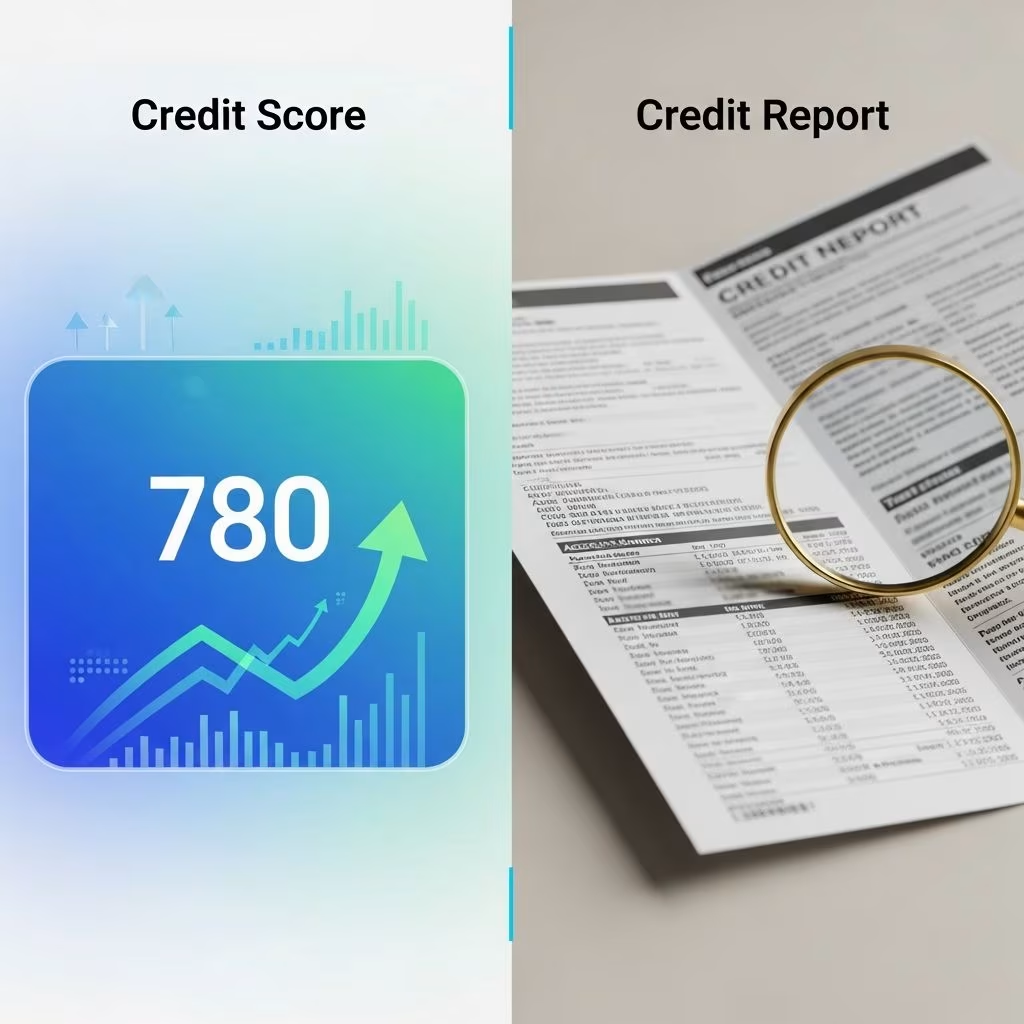
Your **credit report** serves as a detailed record of your financial behavior, while your **credit score** distills that data into a single number predicting your likelihood of repaying debt. Grasping these distinctions empowers you to manage your credit effectively and access favorable financial products.
Understanding Your Credit Report: The Foundation of Financial History
A credit report acts as a comprehensive dossier compiled by major credit bureaus from data supplied by lenders, banks, and public records. It chronicles your credit activities over the past 7 to 10 years, including payment records, account statuses, and inquiries.
Key sections typically include:
- Personal details: Name, addresses, date of birth, and employment history to verify identity.
- Account summaries: Open, closed, and collection accounts with balances, limits, and payment patterns for credit cards, loans, and mortgages.
- Public records: Bankruptcies, foreclosures, liens, or judgments that impact creditworthiness.
- Inquiry log: Recent requests for your report by lenders or yourself, distinguishing hard (credit applications) from soft (pre-approvals) inquiries.
Three primary bureaus—Equifax, Experian, and TransUnion—maintain these reports, which may vary slightly due to differing creditor reporting. By law, you can obtain one free report annually from each via AnnualCreditReport.com, authorized by the Consumer Financial Protection Bureau.
What Exactly Is a Credit Score?
A credit score translates the raw data in your report into a three-digit number, usually ranging from 300 to 850, signaling your credit risk to lenders. Higher scores indicate responsible habits, unlocking lower interest rates and better terms.
Prominent models include FICO and VantageScore, each with versions tailored to specific needs like mortgages or auto loans. These scores dynamically update with your financial actions.
How Credit Scores Are Calculated from Reports
Credit scoring algorithms analyze report data using weighted factors:
| Factor | Weight (FICO) | Description |
|---|---|---|
| Payment History | 35% | On-time payments vs. delinquencies, defaults. |
| Amounts Owed | 30% | Credit utilization ratio (ideal under 30%). |
| Length of History | 15% | Average age of accounts and oldest account. |
| New Credit | 10% | Recent inquiries and new accounts. |
| Credit Mix | 10% | Diversity of revolving (cards) vs. installment (loans) credit. |
FICO weights emphasize these elements, while VantageScore adjusts slightly for broader data inclusion. Changes like paying down balances boost scores; late payments harm them.
Comparing Credit Reports and Scores Side-by-Side
The table below highlights core distinctions:
| Aspect | Credit Report | Credit Score |
|---|---|---|
| Format | Multi-page document | Single 3-digit number |
| Creators | Equifax, Experian, TransUnion | FICO, VantageScore |
| Source Data | Creditor reports, public records | Credit report info |
| Cost | Free weekly via AnnualCreditReport.com | Often paid, some free via banks |
| Purpose | Detailed history review | Quick risk assessment |
Reports provide depth for error disputes; scores offer snapshots for decisions.
Why Both Matter for Your Financial Future
Lenders scrutinize reports for full context and scores for efficiency. A strong score (670+) signals reliability, aiding approvals for mortgages, cards, or rentals. Weak scores elevate costs; reports reveal fixable issues like errors.
Regular checks prevent fraud—identity theft affects millions yearly—and ensure accuracy under the Fair Credit Reporting Act.
Accessing Your Credit Information for Free
Federal law mandates free weekly reports from each bureau post-2020 changes, extending pandemic-era access. Scores are available free via banks, credit cards, or bureau sites (sometimes limited models).
- Visit AnnualCreditReport.com for reports.
- Check scores through issuer apps or Credit Karma (VantageScore).
- Monitor via apps for alerts on changes.
Common Myths About Credit Reports and Scores
- Myth: One score/report suffices. Fact: Variations exist across bureaus/models.
- Myth: Scores include income. Fact: Only credit data; income is separate.
- Myth: Checks hurt scores. Fact: Soft pulls don’t; limit hard inquiries.
Steps to Improve and Maintain Strong Credit
Target report accuracy first, then optimize habits:
- Review reports quarterly: Dispute errors online or by mail within 30 days.
- Pay on time: Set autopay; even one late payment lingers 7 years.
- Lower utilization: Keep balances below 30% of limits; pay multiple times monthly.
- Build history: Keep old accounts open; become authorized user if needed.
- Diversify wisely: Mix types without overapplying.
Positive changes reflect in 1-2 months.
Disputing Errors and Protecting Your Credit
Found inaccuracies? Bureaus must investigate free within 30 days. Document everything; creditors verify data. Freezing your report prevents unauthorized access amid rising fraud.
FAQs: Credit Score and Report Essentials
How often should I check my credit report?
Weekly for free; monthly for vigilance against errors or fraud.
Does checking my score lower it?
No—soft inquiries don’t affect it.
What’s a good credit score range?
670-739 (good), 740-799 (very good), 800+ (excellent) per FICO.
Can I have different scores from each bureau?
Yes, due to varying data.
How long do negatives stay on reports?
Most 7 years; bankruptcies up to 10.
Advanced Tips for Credit Mastery
For renters or gig workers, specialized reports matter. Use secured cards to build history if thin-file. Track via apps integrating all bureaus for holistic views. Consistent habits yield compounding benefits, like rate savings of thousands on loans.
References
- Credit score vs. credit report: what’s the difference? — NerdWallet. 2023-10-15. https://www.nerdwallet.com/finance/learn/credit-score-vs-credit-report-whats-difference
- Credit Report vs Credit Score — University of Wisconsin Extension (finances.extension.wisc.edu). 2024-02-20. https://finances.extension.wisc.edu/articles/credit-report-vs-score/
- Credit Score vs. Credit Report: What’s the Difference? — Experian. 2025-01-10. https://www.experian.com/blogs/ask-experian/credit-score-vs-credit-report-whats-the-difference/
- What is the Difference Between a Credit Score and a Credit Report — Equifax. 2024-11-05. https://www.equifax.com/personal/education/credit/report/articles/-/learn/difference-between-credit-score-vs-credit-report/
- Credit Score vs Credit Report — Discover. 2024-08-12. https://www.discover.com/credit-cards/card-smarts/credit-score-vs-credit-report/
- What is the difference between a credit report and a credit score? — Consumer Financial Protection Bureau (.gov). 2023-05-18. https://www.consumerfinance.gov/ask-cfpb/what-is-the-difference-between-a-credit-report-and-a-credit-score-en-2069/
This article is general information, not personal financial advice. Consider your own situation, or speak with a licensed adviser, before acting on it.


