

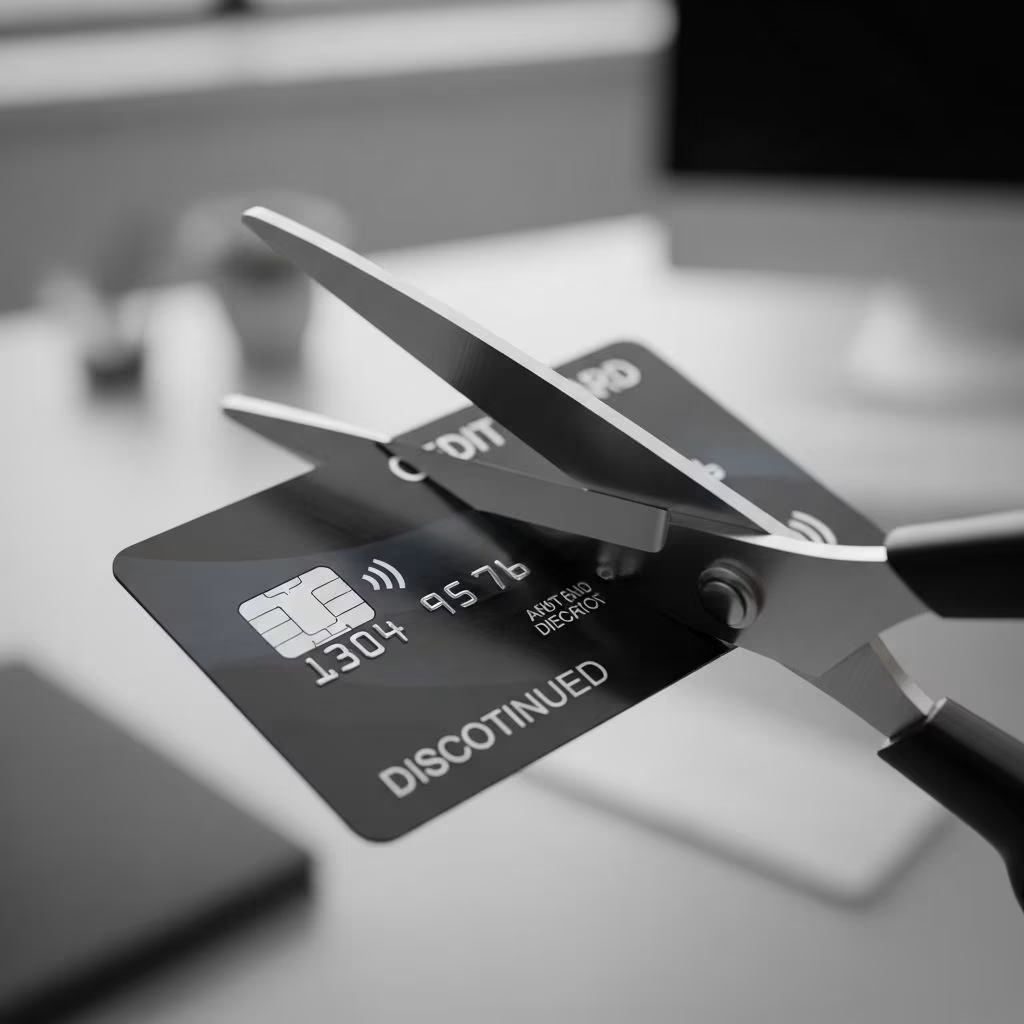
Your credit card issuer may discontinue a product line for various reasons, leaving you to navigate the transition. This guide outlines practical steps to manage the situation effectively, preserve your credit standing, and secure alternative financing options.
Reasons Credit Card Products Get Discontinued
Issuers periodically phase out cards due to shifting market demands, regulatory changes, or internal strategies. For instance, low usage or high maintenance costs can prompt closures, as seen when banks consolidate portfolios to focus on profitable offerings. Economic pressures, like rising delinquency rates amid inflation, also influence decisions to streamline products.
In some cases, inactivity triggers automatic shutdowns. Cards unused for 12 to 24 months may be closed to reduce issuer risk, impacting even responsible users who maintain them as backups.
Immediate Steps After Notification
Upon receiving notice of discontinuation—typically 30 to 90 days in advance—prioritize these actions:
- Review your balance and terms: Confirm the payoff amount, interest accrual, and closure date to avoid surprises.
- Update automatic payments: Switch recurring charges to another card or bank account to prevent failed transactions and additional fees.
- Contact the issuer: Inquire about replacement offers, balance transfer promotions, or retention incentives that might extend similar benefits.
Paying off the balance promptly prevents interest buildup, especially if the account closes with debt, which could lead to charge-offs after 180 days of non-payment.
Impact on Your Credit Profile
Discontinuations often close accounts in good standing, but they still affect key credit factors. Credit utilization rises as available credit shrinks; for example, closing a $2,000 limit card with $1,000 debt across accounts can push utilization from 20% to 33%, weighing 30% on FICO scores.
Length of credit history shortens over time, as closed accounts age off reports after 10 years if positive. Credit mix may suffer if it was your sole revolving account. Positive histories linger beneficially, but sudden closures signal risk to lenders, potentially prompting limit reductions elsewhere.
| Credit Factor | Potential Impact | Mitigation Strategy |
|---|---|---|
| Utilization Ratio | Increases (e.g., 20% to 50%) | Pay down debts; request limit increases |
| Account Age | Shortens average | Keep older accounts open |
| Payment History | Preserved if positive | Close in good standing |
| Credit Mix | Reduced variety | Maintain diverse accounts |
Options for Replacement Cards
Seek comparable products from the same or rival issuers. Prioritize cards matching rewards, rates, and limits. Pre-qualify online to gauge approvals without inquiries. If offered a product change by the issuer, evaluate fees and perks carefully—waived annual fees or bonus points can ease transitions.
For those with inactivity closures, rebuild by adding small recurring charges before applying anew. Secured cards serve as bridges for score recovery.
Strategic Decisions: Keep or Close Remaining Cards
Avoid knee-jerk closures of unused cards, as they buffer utilization. Pros of keeping include sustained limits and history; cons involve fees or temptation. If annual costs outweigh benefits, redeem rewards first, then close via phone and written confirmation.
Monitor reports post-closure: Positive accounts stay 10 years, negatives 7. Inactivity risks persist, so use minimally.
Recovering from Negative Closures
If discontinued due to delinquency, expect charge-offs after 60-180 days, collection pursuits, and score drops from multiple delinquencies. Rebuild with secured cards, credit-builder loans, or on-time payments elsewhere. Lenders may tighten terms temporarily, but consistent habits restore access.
Frequently Asked Questions
Can I close a card with an outstanding balance?
Yes, but responsibility remains; interest accrues until paid. Avoid charge-offs by settling promptly.
How long do closed accounts affect my score?
Positive ones aid for 10 years; negatives harm for 7. Utilization changes hit immediately.
Will discontinuation hurt future approvals?
Possibly short-term via higher utilization or perceived risk, but recovery is feasible.
Should I accept a product change offer?
Weigh new terms against alternatives; negotiate improvements if possible.
What if closed for inactivity?
Utilization spikes; prevent by occasional use or alerts for low activity.
Long-Term Financial Wellness Tips
Maintain utilization under 30%, diversify accounts, and review reports quarterly via AnnualCreditReport.com. Budget to curb debt, and use tools like balance transfers for high-interest rollovers. Professional counseling aids severe cases.
Discontinuations, while disruptive, offer reset opportunities. Proactive management minimizes damage and positions you for better products.
References
- What happens if your credit cards are closed due to non-payment? — CBS News. 2023-10-01. https://www.cbsnews.com/news/what-happens-if-your-credit-cards-are-closed-due-to-non-payment/
- Here’s how closing your credit card affects your credit score — Scotiabank. 2024-05-15. https://www.scotiabank.com/ca/en/personal/advice-plus/features/posts.how-closing-your-credit-card-affects-your-credit-score.html
- Canceling a Credit Card? Here’s How to Do It Without Hurting Your Credit — U.S. Senate Federal Credit Union. 2023-11-20. https://www.ussfcu.org/media-center/senate-cents-a-financial-wellness-blog/blog-detail.html?title=canceling-a-credit-card-here-s-how-to-do-it-without-hurting-your-credit
- Credit Card Closed for Inactivity? What You Need to Know — NerdWallet. 2024-02-10. https://www.nerdwallet.com/credit-cards/learn/credit-card-cancelled-due-inactivity
- Does Closing a Credit Card Hurt Your Credit? — Citi. 2024-01-05. https://www.citi.com/credit-cards/understanding-credit-cards/does-closing-a-credit-card-hurt-your-credit
This article is general information, not personal financial advice. Consider your own situation, or speak with a licensed adviser, before acting on it.


