

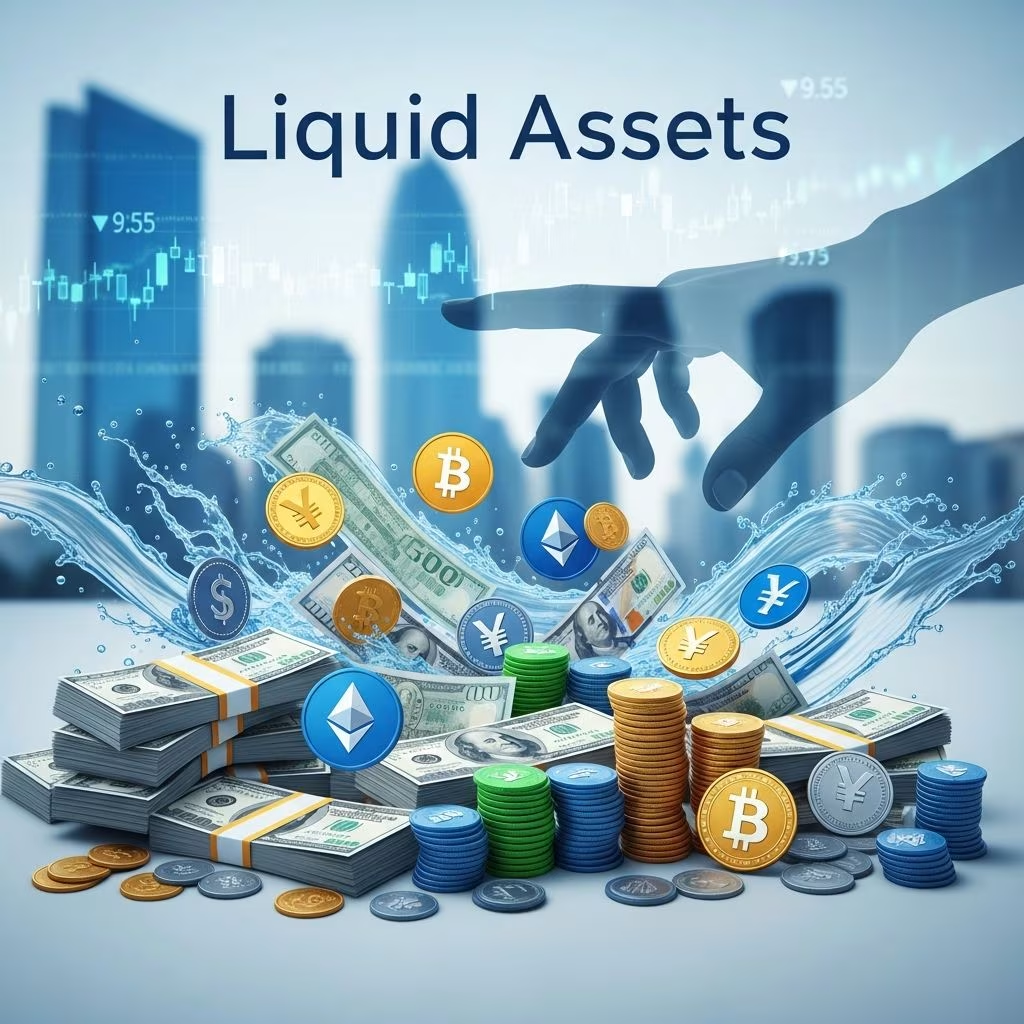
Liquid Assets: Definition, Types, and Examples
In the world of personal finance and investing, understanding the concept of liquid assets is fundamental to making informed financial decisions. A liquid asset is an investment or piece of property that can be quickly converted into cash without significant loss of value. The ability to access cash rapidly is essential for meeting unexpected expenses, seizing investment opportunities, or managing financial emergencies. This comprehensive guide explores what liquid assets are, why they matter, and how they fit into a broader financial strategy.
What Are Liquid Assets?
Liquid assets represent the portion of your wealth that can be readily converted to cash. Unlike real estate or collectibles, which may take months to sell, liquid assets can typically be accessed within days or even hours. The liquidity of an asset refers to how quickly it can be converted to cash and how close to its market value you can sell it for without incurring substantial transaction costs or taxes.
The concept of liquidity is crucial in financial planning because it directly affects your ability to handle financial emergencies and unexpected opportunities. Having adequate liquid assets provides a financial cushion and ensures that you won’t be forced to sell long-term investments prematurely or at unfavorable prices when cash is needed.
Types of Liquid Assets
Liquid assets come in various forms, each with different levels of accessibility and risk profiles. Understanding these types helps you build a balanced portfolio that meets your financial needs.
Cash and Cash Equivalents
Cash is the most liquid asset available. It includes physical currency and funds held in checking and savings accounts. Cash equivalents are investments that can be converted to cash almost immediately with minimal risk. These include money market accounts, certificates of deposit (CDs), and Treasury bills. While cash equivalents offer security and easy access, they typically provide lower returns compared to other investments.
Marketable Securities
Marketable securities are financial instruments that can be quickly bought and sold on public markets. This category includes:
- Stocks: Shares of publicly traded companies that can be sold through brokers within minutes
- Bonds: Debt securities issued by governments and corporations that trade on secondary markets
- Mutual Funds: Pooled investments that can typically be redeemed at the end of each business day
- Exchange-Traded Funds (ETFs): Investment funds that trade like stocks and can be sold during market hours
Bank Accounts
Various types of bank accounts serve as liquid assets, offering different balances between accessibility and returns. Checking accounts provide immediate access to funds but minimal interest. Savings accounts offer slightly higher returns while maintaining liquidity. Money market accounts combine features of checking and savings accounts, often with higher interest rates for larger balances.
The Importance of Liquid Assets in Financial Planning
Maintaining an adequate emergency fund composed of liquid assets is one of the cornerstones of sound financial planning. Financial experts typically recommend keeping three to six months of living expenses in liquid assets for emergencies. This safety net protects you from needing to incur debt or liquidate long-term investments during financial hardships.
Beyond emergency preparedness, liquid assets provide flexibility in your overall financial strategy. They allow you to take advantage of investment opportunities, make important purchases, or navigate unexpected life changes without disrupting your long-term investment plans.
Liquid Assets vs. Illiquid Assets
The contrast between liquid and illiquid assets is important for understanding portfolio diversification. Illiquid assets, such as real estate, private businesses, collectibles, and art, cannot be quickly converted to cash without potentially incurring significant losses or costs. While illiquid assets often provide strong long-term returns and serve important purposes in wealth building, they require careful planning and shouldn’t make up your entire investment portfolio.
A balanced approach typically involves holding a mix of both liquid and illiquid assets. The specific allocation depends on your age, risk tolerance, financial goals, and timeline. Younger investors with longer time horizons might allocate a smaller percentage to liquid assets, while those nearing retirement should maintain larger liquid reserves.
Examples of Common Liquid Assets
Understanding specific examples helps illustrate how liquid assets work in practice:
- Checking and Savings Accounts: Immediate access to funds, FDIC insured up to $250,000
- Money Market Accounts: Competitive interest rates with check-writing privileges
- Treasury Bills: Short-term government securities with minimal risk and quick maturation
- Stocks and Bonds: Can be sold through brokers within trading hours
- Mutual Funds and ETFs: Can be liquidated at net asset value (NAV)
- Certificates of Deposit: Fixed-term deposits with specific maturity dates
- Money Market Funds: Invest in short-term, low-risk securities
- High-Yield Savings Accounts: Offer better returns than traditional savings while maintaining liquidity
Measuring Liquidity: The Liquidity Ratio
Businesses and investors often use liquidity ratios to assess financial health. The current ratio, quick ratio, and cash ratio measure how well an entity can meet short-term obligations using liquid assets. For personal finance, calculating the percentage of your portfolio held in liquid assets serves a similar purpose—indicating how quickly you could access cash if needed.
Factors Affecting Asset Liquidity
Several factors determine how quickly and easily an asset can be converted to cash:
- Market Conditions: During market downturns, selling securities quickly may require accepting lower prices
- Transaction Costs: Trading commissions, spreads, and fees reduce the net proceeds from sales
- Market Size: Assets with larger trading volumes typically have better liquidity
- Asset Type: Different asset classes have inherently different liquidity levels
- Regulatory Restrictions: Some accounts, like IRAs, have penalties for early withdrawal
- Market Demand: Assets that are in high demand are easier to sell quickly
Strategic Approach to Liquid Assets
Building an effective strategy for liquid assets involves several considerations:
Assess Your Needs: Calculate your monthly expenses and multiply by the number of months you want covered (typically 3-6). This determines your target emergency fund.
Choose Appropriate Vehicles: Select liquid asset vehicles based on your timeline. If you need access within months, high-yield savings accounts may be ideal. For longer periods, CDs or short-term bonds might offer better returns.
Monitor Interest Rates: Keep track of rates offered by banks and money market funds to ensure your liquid assets are earning competitive returns.
Balance With Other Goals: While maintaining adequate liquidity, ensure you’re also investing in long-term growth through stocks, bonds, and other investments appropriate for your goals.
Advantages and Disadvantages of Liquid Assets
| Advantages | Disadvantages |
|---|---|
| Immediate access to funds during emergencies | Generally lower returns compared to long-term investments |
| Reduced financial stress and peace of mind | Inflation can erode purchasing power of cash holdings |
| Flexibility to seize investment opportunities | May tempt unnecessary spending if easily accessible |
| Lower risk and volatility | Interest income from liquid assets may be minimal |
| Protection against forced asset sales at unfavorable prices | Requires discipline to maintain adequate levels |
Frequently Asked Questions (FAQs)
Q: How much of my portfolio should be in liquid assets?
A: Financial advisors typically recommend keeping 3-6 months of living expenses in liquid assets. The exact amount depends on your income stability, expenses, dependents, and risk tolerance. Self-employed individuals might keep higher amounts.
Q: Are stocks considered liquid assets?
A: Yes, publicly traded stocks are highly liquid assets that can be sold within minutes during trading hours. However, some stocks are less liquid than others depending on trading volume.
Q: What’s the difference between liquid assets and liquid net worth?
A: Liquid assets are specific holdings that can be quickly converted to cash. Liquid net worth refers to your total assets minus liabilities, considering only the liquid portion of your assets.
Q: Is real estate a liquid asset?
A: No, real estate is typically considered an illiquid asset because it takes weeks or months to sell and involves significant transaction costs like realtor fees and closing costs.
Q: Can I lose money in a savings account?
A: FDIC-insured accounts are protected up to $250,000 per account, so you won’t lose your principal. However, inflation can reduce the purchasing power of your savings if returns don’t keep pace.
Q: What should I do with excess liquid assets?
A: After maintaining an adequate emergency fund, consider investing excess liquid assets in longer-term vehicles like stocks, bonds, or retirement accounts to generate better returns and build wealth.
Q: Are money market funds safer than stocks?
A: Money market funds are generally less volatile than stocks, but they’re not guaranteed investments. They invest in short-term securities and typically have minimal risk compared to equities.
Q: How do I calculate my liquid net worth?
A: Add up all your liquid assets (cash, savings, stocks, bonds, etc.) and subtract any short-term debts. This gives you a picture of your immediately available financial resources.
References
- What Are Liquid Assets? Definition and Examples — U.S. Securities and Exchange Commission (SEC). 2024. https://www.sec.gov/investor/pubs
- Money Market Account Rates and Information — Federal Deposit Insurance Corporation (FDIC). 2025. https://www.fdic.gov/
- Personal Financial Planning: Building Your Emergency Fund — Consumer Financial Protection Bureau (CFPB). 2024. https://www.consumerfinance.gov/
- Asset Liquidity and Investment Strategy — Financial Industry Regulatory Authority (FINRA). 2024. https://www.finra.org/
- Understanding Treasury Securities and Liquidity — U.S. Department of the Treasury. 2024. https://www.treasurydirect.gov/
- Certificates of Deposit: A Safe Investment Option — Federal Reserve Board. 2024. https://www.federalreserve.gov/
This article is general information, not personal financial advice. Consider your own situation, or speak with a licensed adviser, before acting on it.


