

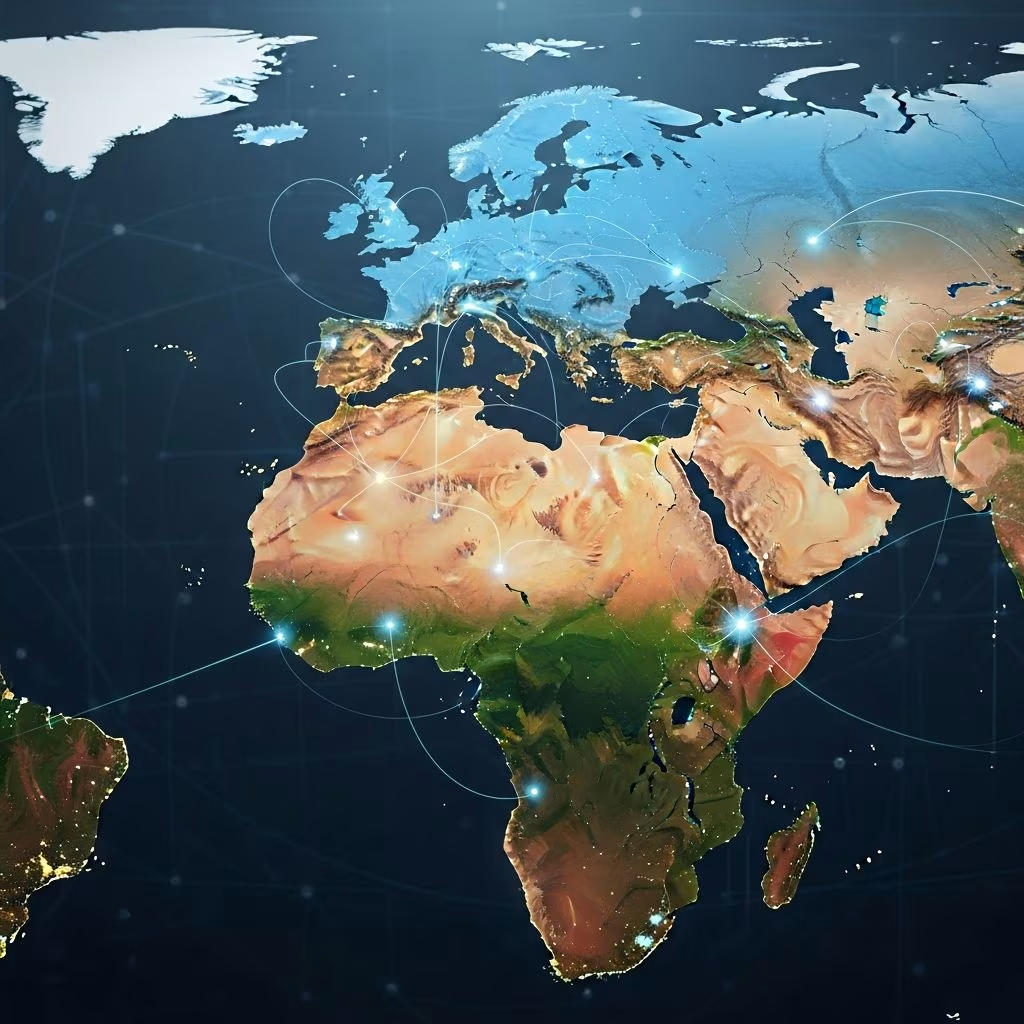
What Is EMEA?
EMEA is an acronym that stands for Europe, the Middle East, and Africa. This geographical designation has become a standard term used by global institutions, multinational corporations, governments, and international organizations when discussing business operations, marketing strategies, and regional economic development across these three interconnected areas. The term emerged as a practical way for North American and international businesses to reference this vast and diverse region encompassing multiple continents and subregions in a single, manageable abbreviation.
The EMEA region represents one of the world’s most economically significant and culturally diverse areas, spanning from the westernmost parts of Europe to the easternmost reaches toward Iran, and from the Arctic regions of Northern Europe to the southern tip of Africa. This expansive territory encompasses hundreds of millions of people, thousands of distinct cultures, and numerous different economic systems and political structures.
Understanding the EMEA Definition
While the acronym EMEA provides a convenient shorthand for businesses and institutions, the exact composition of countries and territories included can vary depending on the organization using the term. Generally, EMEA includes all countries geographically located in Europe, all countries on the African continent, and all nations that comprise the Middle East region. The eastern boundary typically extends to Iran, and a significant portion of Russia is usually included given its transcontinental geography.
It is important to note that the EMEA definition is not entirely rigid. Different companies and international organizations may slightly adjust which countries or territories they include under the EMEA umbrella based on their specific business needs, operational structures, or strategic priorities. Some multinational corporations might exclude certain overseas territories of mainland countries, such as French Guiana in South America, despite their political associations with EMEA nations. This flexibility reflects the practical nature of how businesses organize their global operations rather than any strict geographical rule.
Historical Development of the EMEA Concept
The development of the EMEA regional concept is deeply rooted in historical trade relationships and geopolitical interdependence. The establishment of the Suez Canal in 1869 represented a pivotal moment in creating the interconnectedness that would eventually define the EMEA region. This engineering marvel directly linked Europe to the Indian Ocean and East Asian trade routes, fundamentally transforming international commerce and creating lasting economic and political relationships between Europe, the Middle East, and Africa.
The canal’s completion enabled Britain to dramatically reduce shipping times to India and enabled Britain to gradually gain authority over Egypt and other strategic territories in the region. This period of British dominance was reinforced through the development and maintenance of the Pax Britannica, which gave Britain unparalleled naval power and control over the world’s maritime trade routes during the late nineteenth century. These historical relationships and trade patterns continue to influence business operations and regional classifications today.
Component Areas of EMEA
The EMEA region encompasses a diverse collection of countries and territories organized across three main geographical areas. Understanding which countries fall within each category is essential for businesses operating in this region.
Eastern Europe and Central Asia
The eastern and central portions of the EMEA region include Armenia, Azerbaijan, Belarus, Bulgaria, Czech Republic, Georgia, Hungary, Kazakhstan, Kyrgyzstan, Moldova, Poland, Romania, Russia, Slovakia, Tajikistan, Turkmenistan, Ukraine, and Uzbekistan. These nations represent a mix of developed economies, transitional markets, and emerging economies with varying levels of economic development and integration with Western Europe.
Northern Europe
Northern Europe comprises Denmark, Estonia, Finland, Iceland, Latvia, Lithuania, Norway, and Sweden. This subregion is characterized by highly developed economies, strong social systems, and significant technological advancement.
Southern Europe
The southern portion includes Albania, Bosnia and Herzegovina, Croatia, Cyprus, Greece, Italy, Kosovo, Malta, Montenegro, North Macedonia, Portugal, Serbia, Slovenia, Spain, and Turkey. Many of these nations are members of the European Union and represent diverse levels of economic development.
Africa
The African component of EMEA encompasses the entire African continent, including nations such as Algeria, Angola, Botswana, Egypt, Ethiopia, Ghana, Kenya, Morocco, Nigeria, South Africa, Tanzania, and Zimbabwe, among many others. This represents the largest geographical expanse within EMEA by land area and includes some of the world’s fastest-growing economies.
Middle East
The Middle Eastern component includes Bahrain, Iran, Iraq, Israel, Jordan, Kuwait, Lebanon, Oman, Qatar, Saudi Arabia, United Arab Emirates, and Yemen, representing one of the world’s most strategically important and resource-rich regions.
Related Regional Classifications
Businesses and international organizations have developed numerous variations of the EMEA concept to better serve their specific operational needs and strategic focus areas. These related classifications demonstrate how the basic EMEA framework has evolved to accommodate different business structures and regional priorities.
EEMEA refers to Eastern Europe, Middle East and Africa, used by companies that maintain separate business divisions for Eastern Europe versus Western and Central Europe. SEMEA denotes Southern Europe, Middle East and Africa, while SEEMEA represents Southeastern Europe, Middle East and Africa. Other variations include MENA (Middle East and North Africa), MENAT (Middle East, North Africa and Turkey), MENAP (Middle East, North Africa, Afghanistan and Pakistan), and EMEIA (Europe, Middle East, India and Africa).
Additional designations include CEMEA (Central Europe, Middle East and Africa), META (Middle East, Turkey and Africa), EMEAC (Europe, Middle East, Africa and Caribbean), and EMEAR (Europe, Middle East, Africa and Russia). These variations allow organizations to tailor regional classifications to their specific market focus and business structure.
Economic Overview of EMEA
The EMEA region represents an economically significant portion of the global economy with considerable diversity in development levels and economic performance. According to the World Bank’s April 2024 update, the growth rate for the Europe, Middle East, and African region was expected to reach 4.6% in 2024, representing a slight increase from 4.4% in 2023, demonstrating resilience amid global economic pressures.
Global trade growth, which remained minimal at just 0.2% in 2023, was projected to improve to 2.3% in 2024, which is particularly crucial for the region’s export-oriented economies. This recovery in global trade represents an important indicator for EMEA nations that rely on international commerce for economic growth.
Investment Climate and Challenges
Despite economic growth projections, the EMEA region faces significant headwinds. Private investment remains below pre-pandemic levels due to higher debt levels and rising interest rates, signaling a cautious investment climate. The region confronts challenges from both external factors such as high core inflation and modest global trade recovery, and domestic issues including increased debt and political uncertainties that could potentially hinder economic growth.
External economic shocks pose particular risks. A hypothetical 1% decline in GDP growth in the United States could reduce GDP growth in other developing Europe, Middle East, and African economies by approximately 0.5%, while similar declines in China could reduce growth by approximately 0.3%. These figures underscore the interconnectedness of the global economy and the vulnerability of EMEA nations to external economic forces.
Business Use of EMEA Classification
Multinational corporations and international organizations utilize the EMEA classification as a fundamental organizational tool. Major technology companies, financial institutions, consumer goods manufacturers, and service providers typically maintain separate EMEA divisions to manage sales, marketing, customer support, and strategic operations across this diverse region. This organizational structure allows these companies to develop region-specific strategies while maintaining global coordination.
The EMEA designation facilitates market research, competitive analysis, supply chain management, and regulatory compliance across multiple countries and legal jurisdictions. By grouping these regions together, companies can identify common market trends, share best practices across borders, and allocate resources more efficiently.
Frequently Asked Questions
Q: What does EMEA stand for?
A: EMEA stands for Europe, the Middle East, and Africa. It is a geographical region designation used primarily by businesses, international organizations, and governments when referring to this combined area for operational, marketing, and strategic purposes.
Q: Which countries are included in the EMEA region?
A: EMEA includes all European nations, all African nations, and all Middle Eastern countries. The region typically extends east to Iran and includes a significant portion of Russia. However, the exact composition can vary slightly depending on how individual organizations define their EMEA operations.
Q: Why do businesses use the EMEA classification?
A: Businesses use EMEA as an organizational framework to manage operations, sales, marketing, and customer support across multiple continents and countries more efficiently. It allows companies to group regions with similar business needs and market characteristics while maintaining separate divisions from other global regions.
Q: What is the economic significance of the EMEA region?
A: The EMEA region represents a substantial portion of global economic activity with diverse economies ranging from highly developed nations to emerging markets. The region is characterized by significant natural resources, large consumer populations, and strategic importance in international trade and commerce.
Q: How does EMEA differ from MENA?
A: EMEA (Europe, Middle East, and Africa) includes Europe alongside the Middle East and Africa, while MENA (Middle East and North Africa) focuses only on the Middle East and North African nations without including Europe or sub-Saharan Africa.
Q: Is the EMEA classification used by international organizations?
A: Yes, major international organizations including the United Nations and the World Health Organization use EMEA as a standard geographical designation to organize their operations, research, and policy initiatives across this region.
References
- Europe, the Middle East and Africa — Wikipedia. Accessed November 2025. https://en.wikipedia.org/wiki/Europe,_the_Middle_East_and_Africa
- EMEA Region & Countries | Europe, Middle East, and Africa — Got MENA. Accessed November 2025. https://gotomena.com/blog/emea-countries-europe-middle-east-and-africa/
This article is general information, not personal financial advice. Consider your own situation, or speak with a licensed adviser, before acting on it.


