

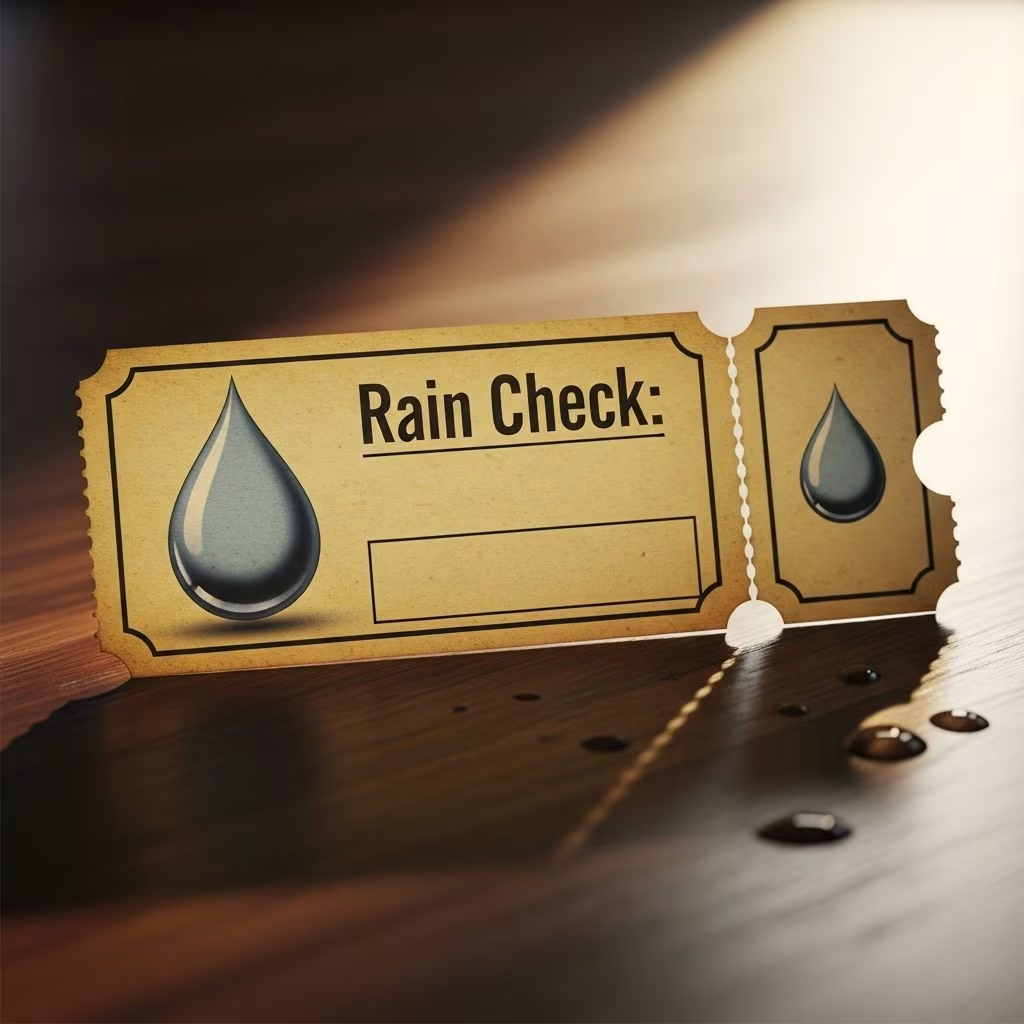
What Is a Rain Check?
A rain check is a written promise or formal agreement between a seller and a buyer that guarantees the buyer can purchase a product at a specific price at a later date. The term has evolved beyond its original context and is now used more broadly to describe postponements of any kind of activity or commitment. In retail settings, a rain check typically takes the form of a ticket, coupon, or voucher that entitles a customer to purchase a sale item that is temporarily out of stock at the original sale price when it becomes available again.
The concept represents a customer-friendly business practice that protects consumers when desired products are unavailable during promotional periods. Unlike casual promises, a rain check is a tangible, documented commitment that both parties can reference. This protection is particularly valuable during high-demand sales events when popular items quickly sell out.
The Origins and History of Rain Checks
The term “rain check” has an interesting history rooted in sports and outdoor entertainment. Originally, a rain check was a ticket given to spectators who attended sporting events—particularly baseball games—that were canceled or postponed due to rain. This ticket guaranteed entry to another game in the future at no additional cost, compensating fans for the disappointment of a rained-out event.
The practice emerged because outdoor sporting events were common entertainment venues, and weather was an unpredictable factor beyond anyone’s control. Organizers developed the rain check system as a practical solution to maintain customer goodwill and ensure fans didn’t lose their money due to circumstances beyond the event organizer’s control. Over time, the term entered common usage and was adopted by retail businesses as a solution for handling high-demand sales and product shortages.
Today, the phrase has become idiomatic and extends far beyond its original sporting context, appearing in casual social situations as well as formal retail transactions.
How Rain Checks Work in Retail
In modern retail environments, rain checks function as a structured inventory management and customer service tool. When a store runs a promotional sale on specific items and those items sell out before the promotion ends, the store typically offers customers a rain check. This document specifies several key details:
Essential Components of a Retail Rain Check
– The specific product or product description- The original sale price- The validity period (how long the rain check remains valid)- The store location and date issued- Authorization signatures or stamps
The rain check allows customers to return to the store at their convenience during the validity period and purchase the item at the advertised sale price, even if the sale has ended or prices have increased. This arrangement benefits both the retailer and the consumer: the retailer demonstrates good faith and maintains customer loyalty, while the consumer receives fair treatment and the opportunity to obtain the desired product at the promised price.
Many retailers have policies regarding rain check limitations. Some stores limit the number of rain checks that can be used per transaction, establish expiration dates ranging from 30 to 90 days, or may restrict rain checks on certain product categories or clearance items.
Rain Checks in Social and Personal Contexts
Beyond retail applications, “taking a rain check” has become a common social expression used to postpone any planned activity. When someone suggests taking a rain check on a social engagement, they’re politely indicating that they cannot participate at the currently planned time but would like to reschedule the activity for the future.
This usage is particularly common in situations such as:
– Canceling social gatherings or meet-ups due to illness or conflicting commitments- Postponing dinner plans or entertainment outings- Rescheduling work-related events or meetings- Delaying recreational activities or dates
The phrase has become a culturally accepted and tactful way to decline immediate participation while preserving the relationship and expressing genuine intent to engage at a later time. It’s generally understood as a non-committal postponement rather than a rejection, maintaining social harmony while acknowledging present constraints.
Practical Examples of Rain Check Usage
Understanding rain checks becomes clearer through real-world applications:
Retail Example
A supermarket advertises a weekend sale featuring premium steaks at 40% off. On Saturday morning, all the steaks sell out by noon. A customer arriving at 2 PM receives a rain check from the store manager, guaranteeing they can purchase the same steaks at the sale price within 30 days. Two weeks later, the customer returns and uses the rain check to buy the steaks at the discounted price, even though the sale has ended and regular prices have returned.
Social Example
Two friends plan to attend a concert together, but one friend develops the flu and cannot attend. Instead of losing the ticket or money, the friend asks for a rain check, promising to reschedule and attend the next concert. This preserves the friendship and clarifies expectations for a future outing.
Financial Context
In investment contexts, options strategies can function similarly to rain checks by providing a limited-time guarantee on stock prices. A call option, for instance, gives investors a fixed window to purchase stock at a predetermined price, providing protection against adverse price movements while allowing time to reassess their investment decision.
Consumer Protection and Benefits
Rain checks serve important consumer protection functions in the retail environment. They prevent situations where advertised prices become meaningless once products sell out, which could otherwise constitute false or misleading advertising. By guaranteeing the sale price for a defined period, retailers demonstrate transparency and build customer trust.
Key consumer benefits include:
– **Price Protection**: Customers receive the advertised sale price regardless of when they use the rain check- **Fair Treatment**: Eliminates the “first come, first served” disadvantage for customers who cannot shop during peak hours- **Documented Promise**: Creates a tangible record of the retail commitment- **Flexibility**: Allows customers to complete their purchase at their convenience- **Trust Building**: Demonstrates retailer commitment to customer satisfaction
Limitations and Restrictions on Rain Checks
While rain checks are consumer-friendly, retailers typically establish specific limitations to manage their business operations and prevent abuse:
Common Rain Check Restrictions
– **Expiration Dates**: Most rain checks expire within 30 to 90 days of issuance- **Quantity Limits**: Some stores restrict the number of rain checks per customer or transaction- **Category Exclusions**: Clearance items, seasonal merchandise, or limited-supply products may be excluded- **No Substitutions**: Rain checks typically apply only to the specific item advertised- **Product Availability Requirements**: The item must become available again; permanent discontinuations may invalidate the rain check- **Limited Inventory**: Some retailers refuse rain checks if they anticipate insufficient stock to fulfill all issued rain checks
These restrictions help retailers balance customer satisfaction with business sustainability and inventory management.
Rain Checks During Supply Shortages
During periods of supply chain disruptions or unexpected product shortages—such as those experienced during the COVID-19 pandemic—some retailers suspended rain check policies entirely. These suspensions acknowledged that products might not become available for extended periods or potentially never return to inventory. While understandable from a business perspective, such suspensions disappointed customers accustomed to rain check protections and highlighted the limitations of this consumer protection mechanism during extraordinary circumstances.
Digital Evolution of Rain Checks
Modern retailers increasingly manage rain checks through digital systems rather than physical paper vouchers. Digital rain checks may be issued via email, stored in customer loyalty programs, or managed through mobile apps. This evolution offers several advantages:
– **Tracking**: Digital systems allow customers to easily view rain check status and expiration dates- **Convenience**: Customers can access rain checks without carrying physical paper- **Integration**: Digital rain checks integrate seamlessly with loyalty programs and personalized offers- **Verification**: Retailers can quickly verify rain check validity at checkout- **Reminders**: Automated systems can notify customers before rain checks expire
Frequently Asked Questions
Q: Are retailers legally required to issue rain checks?
A: Rain check policies vary by retailer and jurisdiction. While some locations have consumer protection laws requiring rain checks on advertised sales, others permit retailers to establish their own policies. Always check individual store policies or ask customer service representatives about rain check availability.
Q: Can rain checks be transferred to another person?
A: This depends on the retailer’s specific policy. Some rain checks are non-transferable and require the original recipient to use them, while others may allow transfers. Check the rain check document for transfer restrictions.
Q: What happens if a rain check expires?
A: Expired rain checks typically cannot be honored at full value. Some retailers may offer partial compensation or store credit, but most will simply refuse to accept expired rain checks. Always check the expiration date and plan accordingly.
Q: Can rain checks be combined with other coupons or discounts?
A: Retailer policies on stacking rain checks with other promotional offers vary widely. Most retailers do not allow rain checks to be combined with additional coupons for the same item. Review the terms printed on your rain check or ask a store associate for clarification.
Q: Is there a difference between a rain check and a “price match” guarantee?
A: Yes, they serve different purposes. A rain check guarantees the sale price when product becomes available at a later date. A price match guarantee typically applies to competitor pricing and may be honored immediately. Rain checks are specifically for items sold out during promotions.
References
- Rain Check Definition & Example — InvestingAnswers. https://investinganswers.com/dictionary/r/rain-check
- Rain Check – Definition, Meaning & Synonyms — Vocabulary.com. 2025. https://www.vocabulary.com/dictionary/rain-check
- Long Call Strategy — The Options Industry Council. https://www.optionseducation.org/strategies/all-strategies/long-call
- Examples of Rain Check in a Sentence — Merriam-Webster. https://www.merriam-webster.com/sentences/rain-check
- Rain Check Definition & Meaning — Dictionary.com. https://www.dictionary.com/browse/rain-check
This article is general information, not personal financial advice. Consider your own situation, or speak with a licensed adviser, before acting on it.


