

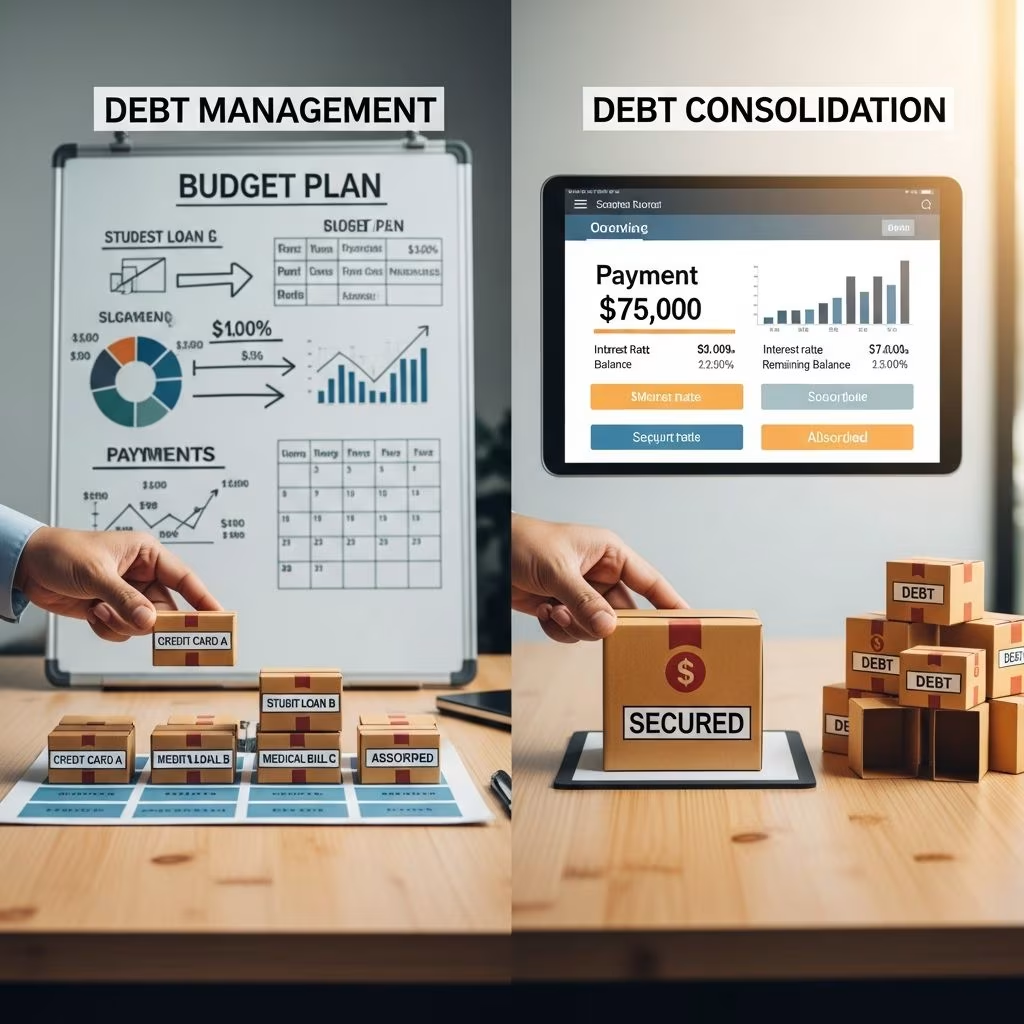
When multiple bills, rising interest rates, and collection calls start to feel unmanageable, many people look at two popular strategies: debt management plans and debt consolidation. Both options can simplify repayment and help you get out of debt, but they work differently, have different costs and risks, and are better suited to different situations.
This guide explains how each option works, how they affect your credit, the pros and cons of both, and how to choose the approach that best fits your financial goals.
What Is a Debt Management Plan?
A debt management plan (DMP) is a structured repayment program set up and administered by a nonprofit credit counseling agency. It is not a loan. Instead, the agency works with your creditors to adjust the terms of your existing unsecured debts and then coordinates your monthly payments.
How a Debt Management Plan Works
- You contact a nonprofit credit counseling organization for a free or low-cost evaluation of your budget, income, and debts.
- If appropriate, the counselor proposes a debt management plan that includes your eligible unsecured debts (typically credit cards and some personal loans).
- You make one monthly payment to the counseling agency, usually by automatic transfer.
- The agency distributes payments to each creditor according to the plan’s terms.
- Creditors may agree to reduce interest rates, waive certain fees, or re-age delinquent accounts after several on-time DMP payments.
- Most DMPs aim to help you repay debts in about three to five years.
Because a DMP is not new credit, there is no traditional underwriting—the focus is on whether you can afford the agreed monthly payment rather than on a minimum credit score.
What Kinds of Debt a DMP Can Cover
DMPs typically cover unsecured consumer debts such as:
- Credit card balances
- Store and gas cards
- Some personal loans
- Certain medical bills (depending on the program)
They generally do not cover secured debts like mortgages or auto loans, or most federal student loans, although counselors can still offer advice on handling those separately.
Pros and Cons of Debt Management Plans
| Pros of Debt Management Plans | Cons of Debt Management Plans |
|---|---|
|
|
What Is Debt Consolidation?
Debt consolidation is the process of combining multiple debts into a single new account, typically with a lower interest rate or more manageable payment. Unlike a DMP, consolidation almost always involves taking out new credit.
Common Types of Debt Consolidation
- Debt consolidation loan: A fixed-rate personal loan from a bank, credit union, or online lender used to pay off multiple existing debts. You then repay the new loan in set installments.
- Balance transfer credit card: A credit card offering a low or 0% introductory interest rate on balances transferred from other cards for a limited period. You then work to pay the balance before the promotional rate ends.
- Home equity loan or line of credit: In some cases, borrowers use home equity to pay off unsecured debt. While this can reduce interest costs, it converts unsecured debt into secured debt backed by your home, increasing foreclosure risk.
How Debt Consolidation Works
- You apply for a new loan or credit card, and the lender evaluates your credit score, income, debt-to-income ratio, and overall financial history.
- If approved, you receive funds (for a loan) or a credit line (for a balance transfer card) and use it to pay off your existing debts.
- You then have one consolidated payment toward the new account every month, instead of multiple separate payments.
- Ideally, the new interest rate is lower, so more of each payment goes toward principal and you get out of debt faster—provided you do not add new charges.
Pros and Cons of Debt Consolidation
| Pros of Debt Consolidation | Cons of Debt Consolidation |
|---|---|
|
|
Debt Management vs. Debt Consolidation: Key Differences
Both strategies aim to simplify payments and help you pay off what you owe, but they do so in different ways and have different implications for your finances.
| Feature | Debt Management Plan | Debt Consolidation |
|---|---|---|
| Type of solution | Repayment program managed by a credit counseling agency; no new loan. | New credit (loan or card) used to pay off existing debts. |
| Who manages payments | You pay the agency, which pays creditors. | You pay the new lender directly. |
| Credit requirements | Focus on budget and ability to pay; no minimum credit score needed. | Approval and rate depend heavily on credit score and income. |
| Included debts | Primarily unsecured consumer debts (e.g., credit cards). | Can include many types of debts, depending on lender and loan type. |
| Impact on accounts | Accounts in the plan are usually closed to new charges. | Old accounts may stay open, but you should avoid new charges to prevent more debt. |
| Timeline | Designed to be paid off in about 3–5 years. | Loan term typically 2–7 years; balance transfer promos often 6–21 months. |
| Support and education | Ongoing counseling, budgeting help, and education resources. | Generally no structured education requirement from the lender. |
How Each Option Affects Your Credit
Any major change to how you manage debt can influence your credit report and score. Understanding potential effects helps you avoid surprises.
Credit Impact of a Debt Management Plan
- Account closure: Creditors often close or suspend cards included in a DMP, which can temporarily lower your score by reducing available credit and average account age.
- Payment history improvement: Over time, consistent on-time payments through the DMP help build a more positive payment history, a key factor in credit scores.
- Potential re-aging of accounts: Some creditors may agree to bring delinquent accounts current after several successful payments, reducing the weight of past-due marks.
- Long-term benefit: Once balances fall and accounts are paid, many consumers see their scores improve compared to when they were struggling with missed or late payments.
Credit Impact of Debt Consolidation
- Hard inquiry and new account: Applying for a loan or card triggers a hard inquiry and opens a new account, which can cause a small, short-term dip in your score.
- Utilization ratio changes: Paying off revolving balances with an installment loan can lower your credit utilization ratio, which may help your score if you do not run up new card balances.
- Payment history: On-time payments on the consolidation account can gradually strengthen your credit; late or missed payments will hurt it.
- Risk of additional debt: If you continue to use old credit cards heavily, your total debt and utilization may rise, potentially damaging your score.
Costs, Fees, and Savings Potential
Comparing the true cost of each option requires looking beyond the monthly payment and considering interest, fees, and your risk of default.
Typical Costs in a Debt Management Plan
- Setup fee: Many nonprofit agencies charge a modest, one-time enrollment fee, often capped by state regulations.
- Monthly service fee: A small ongoing fee is common, but it is usually outweighed by interest savings from negotiated lower rates.
- Interest rate reductions: Average interest rates on DMP accounts can drop significantly, which may save hundreds or thousands of dollars over the life of the plan.
Typical Costs in Debt Consolidation
- Loan interest: The main cost is the new loan’s interest rate; borrowers with strong credit may secure lower rates, while others may receive offers not much better than current terms.
- Origination and balance transfer fees: Many personal loans and balance transfer cards charge origination or transfer fees, usually a percentage of the amount borrowed or transferred.
- Annual fees and closing costs: Some credit cards and home-equity products come with annual fees or closing costs that reduce potential savings.
- Variable vs. fixed rates: Variable-rate products can become more expensive if market rates rise, whereas fixed-rate loans maintain predictable payments.
Which Option Is Right for You?
Choosing between a debt management plan and debt consolidation depends on your goals, credit profile, and how comfortable you are managing payments on your own.
Debt Management Might Be Better If:
- You have multiple high-interest credit card balances and are struggling to keep up with minimum payments.
- Your credit score is limited or damaged, making it hard to qualify for a low-rate loan or balance transfer card.
- You want professional support, education, and accountability instead of navigating everything alone.
- You are comfortable having credit cards closed to help prevent new debt while you repay.
- You prefer a structured path designed to get you out of debt in three to five years without taking on new credit.
Debt Consolidation Might Be Better If:
- You have a good to excellent credit score and can qualify for a lower-rate loan or promotional balance transfer offer.
- Your primary goal is to reduce interest and simplify payments, and you are confident you will not add new charges.
- You prefer to manage your own budget and payments without working through a counseling agency.
- You want the predictability of a fixed-rate installment loan and can commit to making the required monthly payment on time.
Other Debt Relief Options to Consider
If neither a DMP nor traditional consolidation is appropriate, a reputable credit counselor may also discuss other options, such as:
- Hardship or forbearance programs offered directly by creditors
- Negotiating reduced payments or interest rates one-on-one with lenders
- Debt settlement (negotiating to pay less than the full amount owed), which can significantly harm credit and may have tax consequences, so it is usually a last resort before bankruptcy
- Bankruptcy, which may discharge or reorganize debts but has serious, long-lasting credit implications and should be evaluated with qualified legal and financial advice
Frequently Asked Questions (FAQs)
Q: Is a debt management plan the same as debt consolidation?
A: No. A debt management plan is a structured repayment program arranged through a nonprofit credit counseling agency and does not involve taking out a new loan. Debt consolidation typically means using a new loan or credit card to pay off existing debts.
Q: Will joining a debt management plan hurt my credit score?
A: Your score may dip at first because creditors often close or restrict accounts in the plan, which affects available credit and account age. Over time, making consistent on-time payments and reducing balances can help your credit recover and may ultimately improve it.
Q: Can I keep using my credit cards on a debt management plan?
A: Generally no. Most creditors require that cards included in the plan be closed to new charges to ensure you are not adding more debt while repaying.
Q: What if I do not qualify for a low-rate consolidation loan?
A: If your credit score or income does not support a competitive loan offer, a debt management plan or working directly with a nonprofit credit counseling agency may be more effective and affordable.
Q: Are nonprofit credit counseling agencies trustworthy?
A: Many nonprofit credit counseling agencies are accredited and must meet standards set by national associations and regulators. The Consumer Financial Protection Bureau recommends checking for nonprofit status, accreditation, and complaint history before working with any agency.
References
- What is the difference between credit counseling and debt settlement, debt consolidation, or credit repair? — Consumer Financial Protection Bureau (CFPB). 2023-05-01. https://www.consumerfinance.gov/ask-cfpb/what-is-the-difference-between-credit-counseling-and-debt-settlement-debt-consolidation-or-credit-repair-en-1449/
- Debt Management Plans vs. Consolidation Loans — Money Management International. 2023-04-10. https://www.moneymanagement.org/debt-management/debt-management-plan-vs-consolidation-loan
- Debt consolidation loans vs. debt management plans: What’s the difference? — Experian. 2024-02-15. https://www.experian.com/blogs/ask-experian/debt-consolidation-loans-vs-debt-management-programs-whats-the-difference/
- Debt Consolidation Loans vs Debt Management Plans in 2025 — Consumer Credit Counseling Service of Chattanooga. 2025-08-05. https://www.cccsofchattanooga.org/about/blog/debt-consolidation-loans-vs-debt-management-plans-in-2025
- Debt Consolidation Loans or Debt Management? — StepChange Debt Charity. 2023-09-20. https://www.stepchange.org/debt-info/debt-consolidation-debt-management.aspx
- Debt Consolidation Loans vs. Debt Consolidation Programs: What’s the Difference? — CBS News. 2023-06-12. https://www.cbsnews.com/news/debt-consolidation-loans-vs-debt-consolidation-programs-whats-the-difference/
- Debt Consolidation vs Debt Management: Which Is Right for You? — Valley Credit Union. 2025-08-01. https://www.valleycu.org/Blog/Financial-Tips/August-2025/debt-consolidation-vs-debt-management
This article is general information, not personal financial advice. Consider your own situation, or speak with a licensed adviser, before acting on it.


