

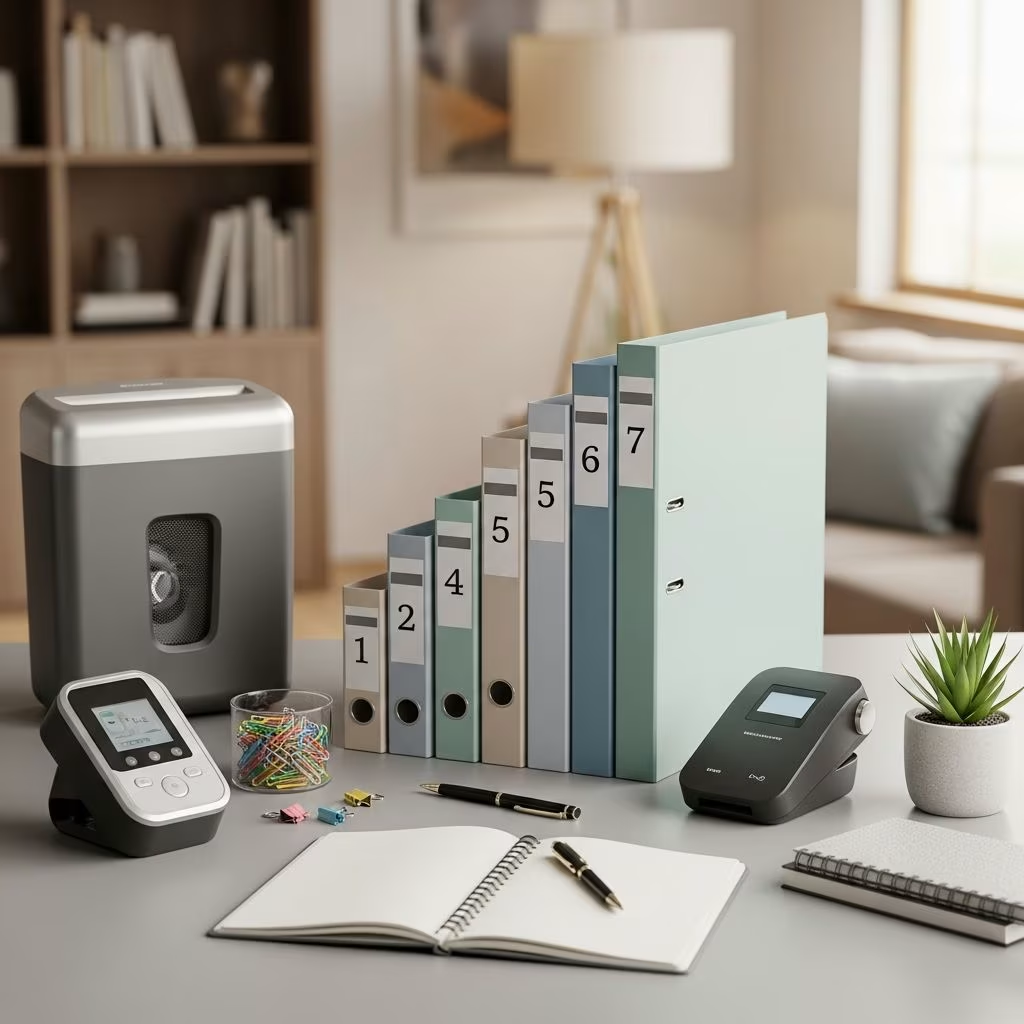
Endless piles of bills, receipts, school notices, and unopened mail can make even the tidiest home feel chaotic. Paper clutter not only takes up physical space, it also creates mental stress and makes it harder to stay on top of your money, deadlines, and important records. The good news is that with a simple, repeatable process you can declutter paperwork once and then maintain a calm, organized system going forward.
This guide walks you through exactly how to declutter paperwork, organize financial documents, and set up easy routines so those piles stop taking over your kitchen table and home office.
What causes paper clutter?
Before you start tossing papers, it helps to understand why paper clutter builds up in the first place. When you know the cause, you can design better systems and habits to prevent it from returning.
- Unopened or delayed mail: Bills, bank statements, and notices stack up when there is no specific time or place to process them.
- Unclear filing system: If you do not have a simple, obvious place to store documents, they are more likely to be dumped in random piles.
- Fear of needing something later: Many people keep almost everything “just in case,” even when records are easily available from banks, utilities, or employers.
- Mixed categories: Action items, reference papers, sentimental papers, and trash often end up in the same pile, making it harder to decide what to do next.
- Too much incoming paper: Physical subscriptions, printed receipts, and unnecessary statements add up quickly when you have not yet shifted to paperless options.
Once you see which of these apply to your home, you can design your decluttering plan to address them directly.
Why is it important to declutter paperwork?
Decluttering paperwork is not just about having a clean desk. It also supports your finances, your time, and your peace of mind.
- Lower stress and mental load: Visual clutter is linked with higher stress and difficulty focusing, especially in workspaces.
- Better financial organization: When key financial documents are easy to find, it is simpler to budget, pay bills on time, track debt, and prepare for tax season.
- Reduced risk of missed deadlines: Organized bills, insurance notices, and legal papers help you avoid late fees, lapses in coverage, and compliance issues.
- Improved security: Shredding sensitive information and storing important documents safely lowers the risk of identity theft.
- Faster decision-making: You can quickly access what you need—warranties, receipts, tax records—without wasting time hunting through piles.
In short, less paper clutter means more control over your money and your schedule.
How to declutter paperwork and stay clutter-free in 7 steps
The following seven-step process mirrors what professional organizers and financial educators recommend for managing paper and financial records at home. Work through these steps at your own pace, and adapt them to your space and lifestyle.
1. Create a plan and make time to declutter paperwork
Decluttering paperwork is much easier when you treat it as a project rather than an afterthought. A clear plan keeps you from burning out halfway through.
- Set a realistic time block: Schedule focused sessions of 30–90 minutes instead of trying to handle years of paper in one afternoon.
- Choose your workspace: Use a dining table, desk, or floor space where you can spread out papers and leave them undisturbed between sessions, if needed.
- Define your goals: For example, “Empty the filing cabinet,” “Clear the kitchen counter pile,” or “Set up a working system for bills and tax documents.”
Gather the tools you need
A few basic tools make the process smoother and safer:
- Sturdy trash and recycling bags.
- Shredder for financial and personal documents such as bank statements and anything with your Social Security number.
- Three cardboard boxes or large folders labeled: Recycle, Shred, Keep.
- Sticky notes or labels for temporary categories (e.g., “Taxes”, “Insurance”, “Kids”).
- Scanner or scanning app on your phone, if you plan to go partly paperless.
If you do not own a shredder, many office supply stores and shipping centers offer secure shredding services for a fee.
2. Gather all of your papers in one place
To declutter effectively, you need to see the full picture of what you have. Start by collecting every loose paper from around your home.
- Check kitchen counters, the dining table, and entryway surfaces.
- Empty your junk drawer, home office drawers, and file cabinets.
- Look in bags, purses, backpacks, and your car for stray receipts and notices.
- Gather school papers, letters, greeting cards, flyers, and manuals.
Place everything in your chosen workspace. Seeing the total pile can be surprising, but it also gives you momentum—you will not keep shuffling the same stacks from one spot to another.
3. Sort your papers into recycle, shred, and keep
Sorting is the most time-consuming part of decluttering paperwork, but it is also where you gain the most clarity. Work one document at a time and place it immediately into one of your three containers.
| Category | What belongs here | What to do next |
|---|---|---|
| Recycle | Non-sensitive papers you no longer need: advertisements, expired coupons, old school notices, generic flyers, envelopes without identifying info. | Recycle promptly so it does not return to your workspace. |
| Shred | Anything with personal or financial data: account numbers, Social Security numbers, medical info, or signatures. | Shred at home or use a secure shredding service. |
| Keep | Essential records, active documents, and truly meaningful sentimental items. | File or scan into a clear system (covered in later steps). |
Questions to ask yourself while sorting paperwork
When you are unsure where a paper belongs, use these guiding questions:
- Is this required by law, tax rules, or my employer?
- Will I realistically use this information again?
- Can I get this record easily online if I need it? (For example, most banks and utilities provide past statements electronically.)
- Does this document protect me financially or legally?
- Is it sentimental in a meaningful way, or just “nice to have”?
If you cannot answer “yes” to any of these, it probably belongs in recycle or shred.
4. Declutter paperwork by going digital and paperless where possible
Once you have separated what to keep, decide which of those documents truly need to remain in paper form and which can be digitized. Shifting to electronic records significantly reduces future clutter and makes it easier to back up important information.
- Scan and save receipts for major purchases, home repairs, or warranty claims.
- Store digital copies of insurance policies, bank and credit card statements, and pay stubs in a secure cloud service or encrypted drive.
- Sign up for paperless billing and statements through your bank, credit card company, and utility providers whenever it is an option.
- Use secure password management so you can log in quickly when you need to retrieve past records.
For safety, maintain at least one backup location for your most important digital documents, such as an external hard drive or a reputable cloud backup service.
5. Decide what to keep and for how long
Certain documents should be retained long term, while others only need to be kept for a limited number of years, especially for tax or legal reasons. Exact rules can vary by country and situation, so when in doubt, consult a qualified tax or legal professional.
| Type of document | Typical retention guideline* |
|---|---|
| Birth certificates, Social Security cards, citizenship papers, marriage and divorce records | Keep permanently (store originals safely; make copies or scans). |
| Tax returns and supporting documents | Common guidance is around 3–7 years, depending on local rules and circumstances. |
| Property records, mortgage documents, and home improvement receipts | Keep while you own the property and for a period afterward for tax and legal purposes. |
| Bank and credit card statements | Often safe to keep 1 year or rely on digital copies, unless needed for taxes or disputes. |
| Insurance policies | Keep current policies and a record of previous coverage while claims are possible. |
*These are general guidelines. Confirm specific requirements with a tax advisor, attorney, or relevant authority in your country.
6. Create a simple filing and storage system
With your “keep” pile clarified, design a storage system that is easy to understand and even easier to maintain. Simplicity wins—if your system is too complex, papers will not get filed.
- Group by broad category: For example, “House & Utilities,” “Banking & Credit,” “Taxes,” “Insurance,” and “Family Records.”
- Use a portable file box, file cabinet, or accordion folder with clearly labeled tabs.
- Create a dedicated “Action” folder or tray for bills to pay, forms to complete, and calls to make.
- Use a separate folder or digital album for sentimental papers like letters and cards, so they do not mix with financial documents.
Store your most critical documents (IDs, birth certificates, property deeds, wills) in a fire-resistant, waterproof safe or safety deposit box, and keep copies in your everyday filing system.
7. Build routines to keep paper clutter from returning
Decluttering once is powerful, but long-term results come from small, consistent habits. A few minutes of maintenance each week will keep paper piles away.
- Process new paper daily or weekly: Open mail in one place, immediately recycle junk, shred sensitive items, and place action items in your “Action” spot.
- Set a weekly paperwork date: Spend 15–30 minutes paying bills, updating your budget, filing documents, and clearing your action pile.
- Review once or twice a year: Quickly scan through your files to remove outdated statements, expired policies, or papers you no longer need.
- Unsubscribe where possible: Cancel catalogs, paper statements, and unused memberships that generate unnecessary mail.
These small routines make sure your new system stays functional and clutter does not creep back in.
Expert tip
When in doubt, only keep documents you need regularly, are required to keep, or that genuinely bring you joy or meaning. Use the “recycle–shred–keep” method consistently and resist the urge to create a “maybe” pile. If a paper does not clearly serve a purpose or protect you legally or financially, it is usually safe to let it go.
Common questions about decluttering paperwork
When you’re decluttering papers, what should you keep?
As a rule of thumb, keep:
- Vital records such as birth certificates, Social Security cards, passports, citizenship papers, and marriage or divorce records.
- Tax returns and supporting documents for the recommended number of years in your jurisdiction.
- Property and loan documents while accounts are open and for a period afterward.
- Current insurance policies and evidence of prior coverage while claims are possible.
- Any papers directly related to ongoing legal, financial, or medical matters.
How do you clean up years of paper clutter?
To tackle years of accumulation without burning out:
- Block out recurring sessions on your calendar (for example, every Saturday morning for one month).
- Work one box or one stack at a time using the recycle–shred–keep method.
- Quickly separate action items (bills, forms, unresolved issues) from old reference material.
- Shred outdated financial statements you no longer need and digitize anything that is still useful but not required in paper form.
Progress may feel slow at first, but every bag you recycle or shred is space and mental energy you get back.
How do I stop hoarding paperwork?
To reduce the urge to keep everything “just in case”:
- Remind yourself that many records can be reprinted or downloaded from official websites if needed.
- Use clear time limits (for example, “I only keep utility bills for 12 months unless used for taxes”).
- Limit sentimental papers to a specific container, such as one box or folder, so the collection stays intentional.
- Focus on the cost of keeping (stress, space, confusion) instead of the unlikely scenario of needing every single paper.
What is the fastest way to declutter paperwork?
The fastest approach is to make firm decisions and avoid over-sorting details at the beginning:
- Do a rapid pass to pull out obviously unneeded items like junk mail, old flyers, duplicate copies, and outdated notices, and recycle them immediately.
- Set aside only one small pile of must-keep essentials (IDs, legal records, current financial documents).
- Shred anything with personal information that you know you do not need.
- After this quick purge, do a second pass for more careful decisions and digital scanning.
How can I store sentimental papers?
Sentimental papers deserve their own thoughtful space, separate from everyday bills and records.
- Choose a special box, binder, or album for cards, letters, and meaningful notes.
- Consider photographing or scanning children’s artwork and school projects, then keeping only a small selection of originals.
- Write a short note on or with the item explaining why it matters—this can make a small curated collection more special than a large random pile.
By limiting sentimental items to a defined space, you honor the memories without letting them overwhelm your home.
Frequently Asked Questions (FAQs)
Q: How often should I review and declutter my paperwork?
A: Aim for a quick review once a month and a deeper clean-out once or twice a year. Regular maintenance takes far less time than letting papers accumulate for years.
Q: Is it safe to rely only on digital copies of financial documents?
A: Many institutions now issue official digital statements, and storing them securely with backups is generally acceptable. However, always follow any legal or tax requirements for your country and keep certain originals, such as vital records and signed legal documents.
Q: What is the best way to organize my bills?
A: Use one inbox or tray for incoming bills, one “Action” folder for unpaid items, and a digital or physical folder for paid bills by month or by vendor. Automating payments where appropriate also reduces paper and late fees.
Q: Should I keep physical receipts once I scan them?
A: For everyday purchases, a clear digital copy is often enough. For major purchases, warranties, or tax-related expenses, check the specific requirements of the retailer, manufacturer, or tax authority before discarding originals.
Q: How do I start if I feel overwhelmed by the mess?
A: Start very small: choose one drawer, one stack, or one box. Set a timer for 15–20 minutes and focus only on the recycle–shred–keep decision. Small, consistent wins quickly add up and build confidence.
References
- Reducing Wasted Paper — U.S. Environmental Protection Agency (EPA). 2023-04-10. https://www.epa.gov/smm/sustainable-management-materials-paper
- Chronic Disorganization, Clutter, and Stress — National Association of Productivity and Organizing Professionals. 2022-06-01. https://www.napo.net/page/chronically_disorganized
- Publication 552: Recordkeeping for Individuals — Internal Revenue Service (IRS). 2024-01-05. https://www.irs.gov/publications/p552
- Protecting Against Identity Theft — Federal Trade Commission (FTC). 2023-05-15. https://consumer.ftc.gov/articles/how-protect-your-identity
- Financial Records: What to Keep and How Long — Consumer Financial Protection Bureau (CFPB). 2022-11-18. https://www.consumerfinance.gov/ask-cfpb/how-long-do-i-have-to-keep-my-financial-records-en-1049/
This article is general information, not personal financial advice. Consider your own situation, or speak with a licensed adviser, before acting on it.


