

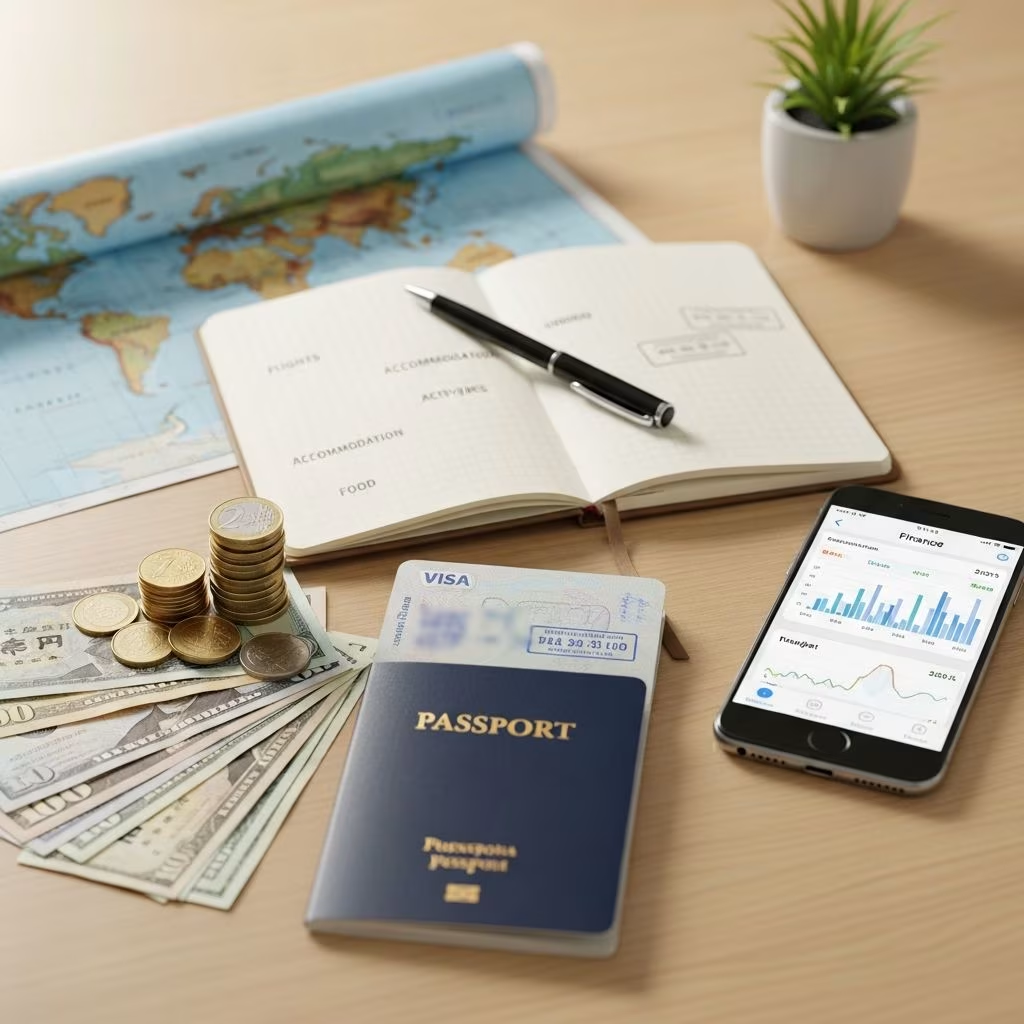
Creating a comprehensive travel budget is the foundation of any successful trip. It empowers you to explore destinations without financial worries, ensuring every dollar enhances your experience. This guide walks you through every step, from initial planning to on-the-road execution, drawing on practical strategies to keep costs controlled and adventures maximized.
Why Build a Travel Budget?
Travel often tempts us to overspend, but a solid budget transforms dreams into reality. Without one, unexpected expenses like overpriced taxis or impulse souvenirs can derail your plans. A well-crafted budget allocates funds wisely across transportation, lodging, food, and fun, allowing flexibility for spontaneity. According to financial planning principles, pre-trip budgeting reduces stress and increases satisfaction, as travelers report higher enjoyment when finances are predictable.
Start by visualizing your trip: destination, duration, and activities. This clarity reveals potential costs. For instance, a week in Europe versus Southeast Asia demands vastly different allocations due to variances in flight prices, accommodations, and daily spends.
Step 1: Determine Your Total Trip Cost
Begin with the big picture. Research average costs for your itinerary using reliable tools like Numbeo for cost-of-living data or official tourism sites. Break it down:
- Flights or Transportation: Use aggregators to find baseline fares. Budget 20-30% more for fees.
- Accommodation: Factor in nightly rates, taxes, and deposits.
- Daily Expenses: Estimate food, local transit, and attractions.
- Insurance and Misc: Add 10% buffer for emergencies.
For a sample 10-day trip to Thailand: flights ($800), hotel ($400), food/transit ($300), activities ($200), total $1,700. Adjust based on luxury level.
Step 2: Categorize Your Expenses
Organize expenses into clear categories for precision. This prevents overlooking hidden costs like visas or SIM cards.
| Category | Example Costs | Percentage of Budget |
|---|---|---|
| Transportation | Flights, trains, taxis | 30-40% |
| Lodging | Hotels, Airbnbs | 25-35% |
| Food & Drinks | Meals, groceries | 20-25% |
| Activities | Tours, entries | 10-15% |
| Misc/Emergency | Insurance, souvenirs | 10% |
This table provides a blueprint. Tailor percentages to your style—backpackers skew lower on lodging, families higher on food.
Step 3: Research and Estimate Realistic Costs
Accuracy hinges on research. Use primary sources:
- Government tourism boards for official rates (e.g., VisitBritain.com).
- Cost indices from Numbeo.com for groceries and transport.
- Recent traveler reports from credible forums, cross-verified.
Pro tip: Book peak-season flights six months ahead, saving up to 40%. For lodging, compare Airbnb weekly discounts versus hotels. In Paris, self-catering apartments cut food costs by 50% versus dining out exclusively.
Step 4: Set a Daily Budget
Convert your total into a daily allowance for control. For a $2,000 two-week trip, that’s $142/day. Allocate: $50 food, $30 activities, $20 transit, $42 flexible.
Physicalize it: Withdraw daily cash into an envelope. When empty, spending stops. Apps like Trail Wallet track in real-time, converting currencies and graphing spends via pie charts for insights.
Step 5: Prioritize and Cut Unnecessary Costs
Identify low-hanging fruit:
- Cook In: Buy groceries for breakfast/lunch; save $20-50/day in pricey cities.
- Public Transit: Skip taxis; U.S. monthly passes average $70, versus car ownership at $3,900/year.
- Slow Travel: Base in one spot longer for discounts; avoid multi-city hops inflating transport 2x.
Real example: Rome-Paris train ($136, 11hrs) vs. Ryanair flight ($40, 2hrs). Always compare.
Step 6: Use Tools and Apps for Tracking
Leverage technology:
- Trail Wallet (iOS): Daily budgets, multi-currency, pie charts.
- Expense Managers: Google Sheets templates for custom logs.
- Cards: No-fee travel rewards cards for points on essentials.
Log every expense immediately to curb overspending. Studies show tracking boosts adherence by 30%.
Step 7: Plan for Savings Before the Trip
Fund your budget proactively. Set goals: $5,000 Europe trip in 10 months = $500/month. Cut discretionary spends:
- Dine out less: Save $84/month (3x/week).
- Ditch car: Pocket $3,900/year via public transit.
- Thrift/free activities: Hiking, biking cost $0.
One saver banked $12,000 in six months on $180/month living (groceries $100, gas $50, phone $30), funding half-year travel.
Step 8: Negotiate and Shop Around
Haggle everywhere: Rentals dropped from $25 to $15/day in Croatia, saving $120. Compare tours, buses, eateries. Tourist offices provide free maps for self-guided days, swapping $40 tours for $10 motorbike rentals.
Common Pitfalls and How to Avoid Them
Overspending Triggers:
- Forgetting incidentals (ATMs fees, tips).
- Too much movement: Limit to 2-3 bases.
- No buffer: Always add 15%.
Solution: Weekly reviews. Adjust mid-trip if needed.
Sample Budget Table for a 7-Day City Break
| Day | Food | Transit | Activities | Total |
|---|---|---|---|---|
| 1 | $40 | $15 | $30 | $85 |
| 2-7 Avg | $35 | $12 | $25 | $72 |
| Grand Total | $245 | $99 | $205 | $549 |
Frequently Asked Questions (FAQs)
Q: How much should I budget per day for backpacking in Southeast Asia?
A: $30-50/day covers hostels ($10), street food ($10), transit/activities ($10-30), per Numbeo data for Thailand/Vietnam.
Q: What’s the best way to track expenses abroad?
A: Use apps like Trail Wallet for multi-currency tracking and visual reports to stay under daily limits effortlessly.
Q: How can I save on flights?
A: Book 6 months ahead, use budget airlines like Ryanair, and fly mid-week for 20-40% savings.
Q: Should I use cash or cards while traveling?
A: Cash for daily budgets (envelope method); no-fee cards for big spends to earn rewards.
Q: How do I build savings for a dream trip?
A: Cut non-essentials like dining out/car use; aim for specific monthly targets with timelines under 12 months.
References
- Consumer Price Index Data — U.S. Bureau of Labor Statistics. 2025-01-10. https://www.bls.gov/cpi/
- Cost of Living Index — Numbeo. 2026-01-01. https://www.numbeo.com/cost-of-living/
- International Travel Tips — U.S. Department of State. 2025-11-15. https://travel.state.gov/content/travel/en/international-travel/before-you-go/budgeting-your-trip.html
- 7 Fool-Proof Ways to Stay Within Your Travel Budget — Wise Bread. 2018-06-12. https://www.wisebread.com/7-fool-proof-ways-to-stay-within-your-travel-budget
- The Easy Way to Save Up a Big Travel Budget — Wise Bread. 2017-03-20. https://www.wisebread.com/the-easy-way-to-save-up-a-big-travel-budget
This article is general information, not personal financial advice. Consider your own situation, or speak with a licensed adviser, before acting on it.


