

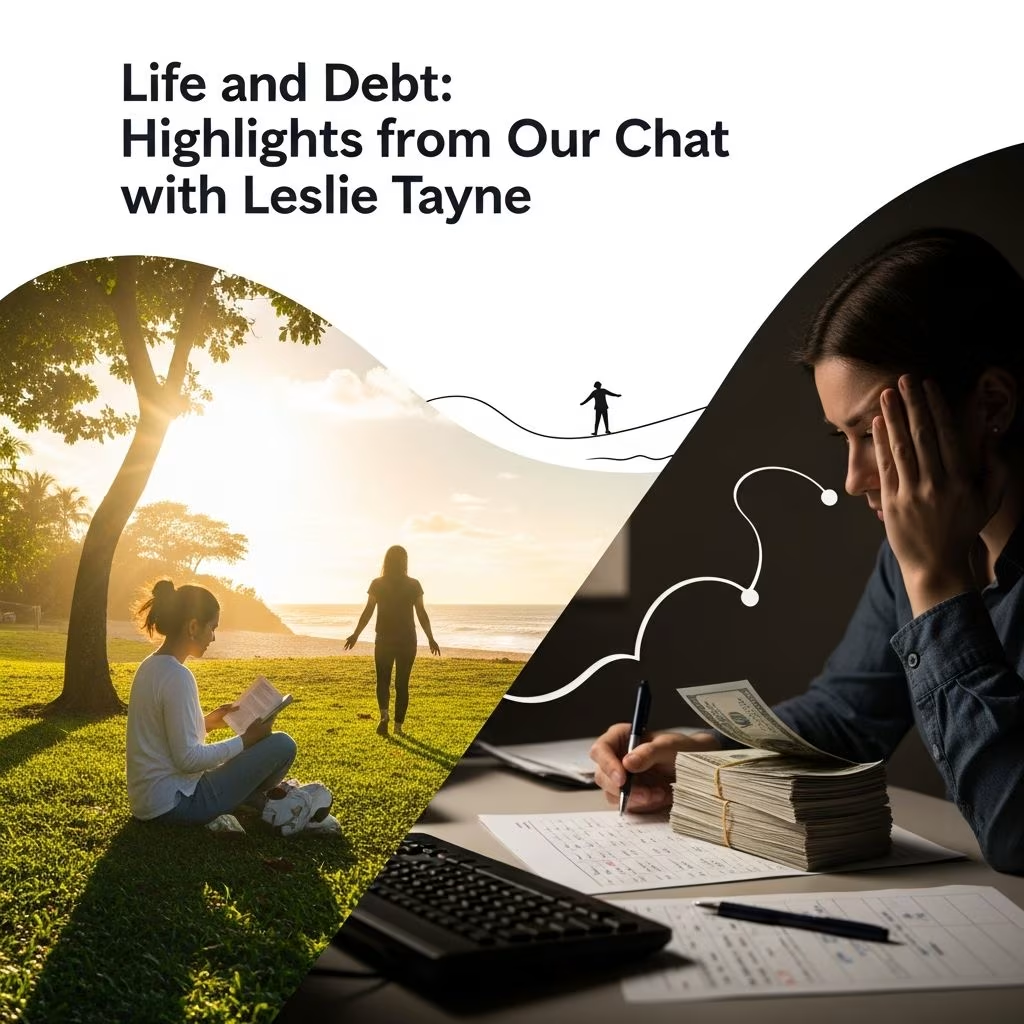
Debt is an inescapable part of modern life, but according to renowned debt resolution attorney Leslie Tayne, it doesn’t have to be a source of shame or despair. In this comprehensive chat, Tayne demystifies debt management, offering actionable advice drawn from her decades of experience helping individuals reclaim financial control. Far from advocating for a debt-free existence—which she deems unrealistic—Tayne promotes a fresh approach: embracing debt as a tool while mastering strategies to keep it in check. This article distills the key highlights, covering everything from negotiation tactics to the emotional toll of financial stress.
Who is Leslie Tayne?
Leslie Tayne, Esq., is a nationally recognized consumer debt expert and the founding partner of the Tayne Law Group, P.C., located on Long Island, New York. With a background shaped by her parents’ divorce and early financial independence, Tayne turned personal challenges into professional expertise. She authored Life & Debt: A Fresh Approach to Achieving Financial Wellness, a book that reframes debt not as a four-letter word but as a manageable aspect of life. Her philosophy? Debt is emotional, inevitable, and conquerable with the right mindset and tools. Tayne’s work has appeared in major outlets, and she frequently advises on debt settlement, bankruptcy alternatives, and credit repair.
Tayne’s journey began with her own student loans post-law school and divorce, which she paid off diligently despite high payments. This experience fueled her mission to help others avoid the pitfalls she navigated, emphasizing proactive management over panic.
The Emotional Side of Debt
Debt isn’t just numbers on a statement; it’s profoundly emotional. Many people experience shame, anxiety, isolation, and even depression when buried in bills. Tayne stresses that acknowledging these feelings is the first step. “Debt is emotional,” she says, noting how it snowballs from life events like job loss, medical emergencies, or divorce.
Common emotional pitfalls include:
- Shame spiral: Believing you’re a ‘lost cause,’ leading to reckless spending like maxing out cards because ‘it’s already bad’.
- Isolation: Avoiding discussions with family or friends, exacerbating stress.
- Denial: Ignoring calls from collectors, allowing problems to worsen.
To combat this, Tayne recommends reframing debt: Love it, don’t fear it. Her book teaches embracing debt as part of life—mortgages, car loans, student debt—while managing it sensibly. Practical steps include journaling finances daily to build familiarity and reduce fear, and seeking support from non-judgmental professionals.
Understanding Your Debt: Know Before You Negotiate
Knowledge is power. Before any action, compile a full debt inventory: balances, interest rates, creditors, due dates. Tayne advises pulling free credit reports from AnnualCreditReport.com and using budgeting tools like online calculators.
Types of debt and initial strategies:
| Debt Type | Key Characteristics | First Steps |
|---|---|---|
| Credit Card | High interest (avg. 20%+), revolving | Stop using; negotiate lower rates |
| Medical | Often non-negotiable initially, but billable errors common | Request itemized bills; apply for aid |
| Student Loans | Federal: forgiveness options; Private: rigid terms | Enroll in income-driven plans |
| Personal Loans | Fixed terms, varying rates | Refinance if credit improved |
Tayne warns against common misconceptions: Debt doesn’t vanish; ignoring it invites lawsuits. Instead, communicate early with creditors—they prefer payments over defaults.
Negotiating with Creditors and Collectors
The debt collection process starts with delinquency (30+ days late), escalating to calls, letters, and potential lawsuits. Your rights under the Fair Debt Collection Practices Act (FDCPA) protect against harassment—no calls before 8 AM, threats, or lies.
Tayne’s negotiation blueprint:
- Prepare: Gather statements, income proof, hardship letter explaining situation (e.g., job loss).
- Contact proactively: Call before they call you. Request hardship programs, lower rates, or payment plans.
- Negotiate settlements: Offer lump sums (30-50% of balance) if you have savings. Get agreements in writing.
- Record everything: Note names, dates, promises.
For collectors, validate debt in writing within 30 days. Success stories abound: Clients settle $50K credit card debt for $20K, rebuilding credit faster than bankruptcy. Avoid scams—legit firms don’t charge upfront fees.
Medical Debt: Unique Challenges and Solutions
Medical debt affects 1 in 5 Americans, often from surprise bills or uninsured costs. Challenges: High amounts, opaque billing, poor negotiation culture.
Solutions from Tayne:
- Review Explanation of Benefits (EOB) vs. bills for errors.
- Negotiate charity care or financial aid—hospitals must screen eligibility.
- Spread payments interest-free; dispute inaccuracies.
- For credit reporting, medical debt under $500 drops off reports post-2023 changes (cite CFPB).
Pro tip: Pre-pay for non-emergencies or shop providers. Prevention: Maximize insurance, health savings accounts.
Credit Card Debt: Pitfalls and Management
Credit cards tempt with convenience but ensnare with compounding interest. Pitfalls: Minimum payments barely dent principal, balance transfers with fees, cash advances at 25%+ APR.
Tayne’s strategies:
- Prioritize high-interest cards (debt avalanche method).
- Call issuers for retention offers—rate reductions up to 10%.
- Build emergency fund to avoid new charges.
- Balance transfer to 0% promo cards, but pay off before promo ends.
Post-settlement, secured cards rebuild credit safely.
Student Loans: Federal vs. Private
Student debt totals $1.7 trillion. Federal loans offer flexibility; private do not. Tayne shares her story: Paid $923/month on federal loans post-divorce, no regrets as it built her career.
| Aspect | Federal | Private |
|---|---|---|
| Repayment Options | Income-driven (IDR), forgiveness after 20-25 years | Limited; cosigner release rare |
| Forbearance | Available for hardship | Minimal |
| Bankruptcy | Hard but possible via Brunner test | Nearly impossible |
Enroll in IDR plans via StudentAid.gov. Private loans? Negotiate aggressively or refinance. Proactive management: Don’t consolidate prematurely.
Debt Settlement vs. Bankruptcy
Debt settlement reduces balances via negotiation (40-60% off), but impacts credit temporarily. Bankruptcy (Ch. 7/13) discharges debt but stays 7-10 years.
Tayne’s criteria for settlement:
- Overwhelmed by unsecured debt (>$10K).
- Can save 30-50% monthly for settlements.
- Choose accredited firms (NFCC.org).
Bankruptcy suits extreme cases—consult attorneys. Alternatives: DMPs via credit counseling.
Building Long-Term Financial Wellness
Beyond payoff, Tayne advocates holistic wellness: Budget ruthlessly (50/30/20 rule), build 3-6 months’ savings, invest post-debt. Track net worth quarterly. Mindset shift: Money buys options and independence.
For life transitions (divorce, retirement), reassess debts immediately. Teach kids early—debt isn’t evil if managed.
Frequently Asked Questions (FAQs)
Q: Is it realistic to be completely debt-free?
A: No, says Tayne. Mortgages and education debt are healthy; focus on management, not elimination.
Q: How do I know if I need professional help?
A: If minimum payments exceed 50% income, collections call daily, or anxiety overwhelms, seek experts.
Q: Can I negotiate medical bills myself?
A: Yes—request discounts, payment plans. Hospitals often forgive for low-income.
Q: What’s the fastest way to rebuild credit after settlement?
A: Secured cards, on-time payments, low utilization under 30%.
Q: Should I file bankruptcy for student loans?
A: Rarely viable; exhaust IDR and forgiveness first.
This chat with Leslie Tayne reveals debt as a navigable challenge. Implement one strategy today for momentum toward wellness.
References
- Everything You Need to Know About Debt with Leslie H. Tayne, Esq. — Her First 100K. 2023. https://herfirst100k.com/financial-feminist-show-notes/180-everything-you-need-to-know-about-debt-with-leslie-h-tayne-esq/
- Book Review: Life & Debt by Leslie Tayne — Airief Vision (WordPress). 2021-10-04. https://airiefvision.wordpress.com/2021/10/04/book-review-life-debt-a-fresh-approach-to-achieving-financial-wellness-by-leslie-tayne/
- Debt Settlement with Leslie Tayne — Martinis and Your Money. N/A. https://martinisandyourmoney.com/show-notes/debt-settlement-with-leslie-tayne
- Life & Debt Chapter Summary — Bookey.app. N/A. https://www.bookey.app/book/life-&-debt
- Life & Debt: A Fresh Approach to Achieving Financial Wellness — Goodreads. 2015. https://www.goodreads.com/en/book/show/24842605-life-debt
This article is general information, not personal financial advice. Consider your own situation, or speak with a licensed adviser, before acting on it.


