

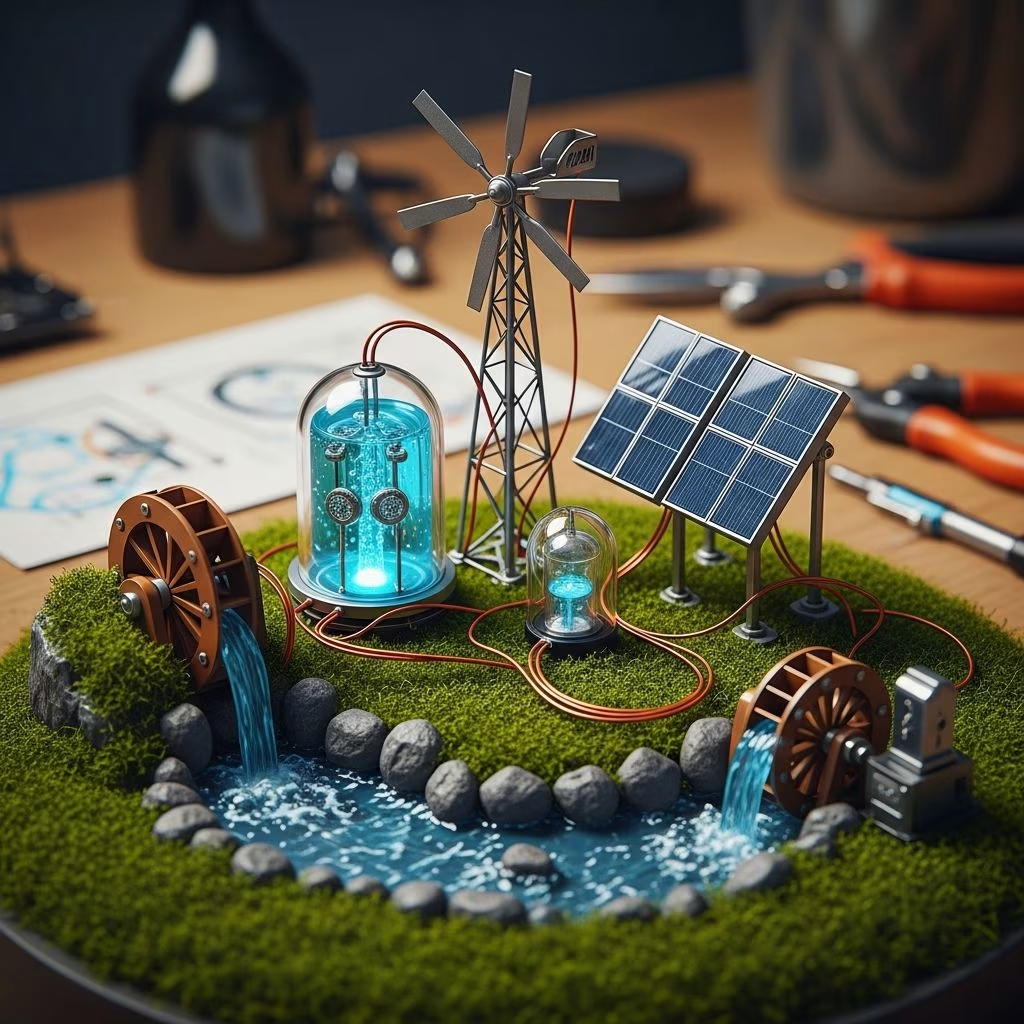
In an era of rising energy costs and unreliable grids, learning to make your own power is more valuable than ever. This comprehensive guide explores practical methods to generate electricity at home, from solar panels and wind turbines to backup generators and energy efficiency. By harnessing renewable sources and smart habits, you can slash utility bills by up to 100%, achieve off-grid independence, and protect against blackouts. Whether you’re prepping for emergencies or aiming for sustainability, these strategies empower you to take control of your energy future.
Why Make Your Own Power?
Utility bills are skyrocketing, with average U.S. households spending over $1,500 annually on electricity. Power outages from storms, grid failures, or maintenance disrupt daily life, costing businesses billions. Making your own power offers independence, cost savings, and environmental benefits. Renewables like solar reduce carbon footprints, while generators ensure reliability. Start small with efficiency tweaks or scale to full off-grid systems—tailor to your needs, budget, and location.
Solar Power: The Sunshine Solution
Solar is the most accessible DIY power source, converting sunlight into electricity via photovoltaic (PV) panels. No moving parts mean low maintenance, and systems last 25+ years.
DIY Solar Panel Setup
- Choose panels: Start with 100-400W panels ($100-300 each). Monocrystalline for efficiency, polycrystalline for affordability.
- Inverter: Converts DC to AC power. Pure sine wave models ($200-800) run sensitive appliances safely.
- Batteries: Deep-cycle lead-acid or lithium ($300-2,000) store energy for nights/cloudy days.
- Charge controller: Prevents overcharging ($50-200).
- Mounting: Roof or ground racks; angle at latitude for max output.
A 1kW system powers lights, fridge, and fans, generating 4-5kWh daily in sunny areas. Total cost: $1,000-5,000 DIY vs. $20,000 installed professionally. Payback in 3-7 years via savings and incentives like the federal solar tax credit.
Portable Solar Generators
Plug-and-play options like Jackery or Goal Zero (500-2,000Wh, $500-2,000) charge via panels or wall outlets. Ideal for camping, RVs, or emergencies—powers laptops, phones, mini-fridges for 8-48 hours.
| System Size | Daily Output | Cost Range | Best For |
|---|---|---|---|
| 100W | 0.4-0.5kWh | $150-300 | Phones, lights |
| 1kW | 4-5kWh | $1,000-3,000 | Small home/off-grid cabin |
| 5kW | 20-25kWh | $5,000-15,000 | Full house |
Wind Power: Harness the Breeze
Wind turbines generate power in breezy areas (average 10+ mph). Small DIY turbines (400W-5kW) cost $500-4,000, producing 1-10kWh daily.
Building a Simple Wind Turbine
- Blades: Carve from PVC pipe (3 blades, 8ft diameter) or buy kits ($100).
- Generator: Repurpose car alternator or buy DC motor ($50-200).
- Tower: 30-50ft PVC or wood pole ($200).
- Tail & furling: Auto-shut high winds.
- Wiring: To charge controller and batteries.
Hybrid solar-wind systems maximize output. Check zoning laws; turbines shine in rural/coastal spots.
Micro-Hydro: River-Powered Electricity
If you have a stream with 2+ ft drop, micro-hydro produces steady 24/7 power. A 1kW system ($2,000-5,000) outputs 24kWh daily—far more than solar/wind.
- Turbine: Pelton or Turgo wheel.
- Penstock: PVC pipe diverts water.
- Generator: Matches flow rate.
Permits required; ideal for remote properties.
Generators: Reliable Backup Power
Gas, propane, or diesel generators provide instant power during outages. Inverter models ($400-2,000) are quiet and fuel-efficient.
Fuel Options
- Gasoline: Cheap but short shelf life; 5-10 hours runtime.
- Propane: Clean, stores indefinitely; larger tanks for days of power.
- Diesel: Efficient, long-life; best for whole-home (10-20kW, $3,000+).
Pair with solar for hybrid reliability. Store 50-100 gallons fuel safely.
Energy Efficiency: Amplify Your Power
Before generating, cut usage 30-50%. Efficiency multiplies DIY power value.
- LED bulbs: 75% less energy.
- Insulate home: R-30 attic, seal drafts.
- Energy Star appliances.
- Phantom load killers: Power strips.
- Passive solar design: South-facing windows.
Audit with kill-a-watt meters ($20).
Off-Grid Living: Full Independence
Combine solar/wind/hydro with batteries and efficiency for zero utility dependence. Monthly costs drop to $50 (maintenance/fuel). Start with RV/cabin, scale to home. Compost toilets, wood heat complement power systems.
Safety and Legal Considerations
- Grounding: Prevent shocks.
- Fuses/Breakers: Protect circuits.
- Permits: Local codes for installs >1kW.
- CO detectors: For generators.
- Insurance: Notify provider.
Frequently Asked Questions (FAQs)
Q: How much does a basic solar setup cost?
A: $500-2,000 for 300-1,000W system powering essentials; scales up for full home.
Q: Can I sell excess power back to the grid?
A: Yes, via net metering in many states; check utility policies.
Q: What’s best for beginners?
A: Portable solar generator—easy, no install.
Q: How long do batteries last?
A: Lead-acid 3-5 years, lithium 10+ years with proper care.
Q: Is DIY legal everywhere?
A: Small systems usually yes; larger need inspections/permits.
Q: Wind or solar—which is better?
A: Solar for sun, wind for breeze; hybrid ideal.
Embrace DIY power for savings, resilience, and freedom. Start today—your wallet and planet will thank you.
References
- Renewable Energy 101: Solar Power Basics — U.S. Department of Energy. 2024-06-15. https://www.energy.gov/eere/solar/solar-photovoltaic-technology-basics
- Small Wind Electric Systems — U.S. Department of Energy. 2023-11-20. https://www.energy.gov/energysaver/small-wind-electric-systems
- Microhydropower Systems — U.S. Department of Energy. 2024-02-10. https://www.energy.gov/energysaver/microhydropower-systems
- Planning for Home Generator Use — Federal Emergency Management Agency (FEMA). 2025-01-05. https://www.fema.gov/emergency-managers/risk-management/building-science/portable-generators
- Energy Efficiency and Renewable Energy Consumer’s Guide — National Renewable Energy Laboratory (NREL). 2024-09-12. https://www.nrel.gov/docs/fy24osti/85000.pdf
- Standby and Portable Generator Safety — Centers for Disease Control and Prevention (CDC). 2024-08-30. https://www.cdc.gov/disasters/generatorsafety/index.html
This article is general information, not personal financial advice. Consider your own situation, or speak with a licensed adviser, before acting on it.


