

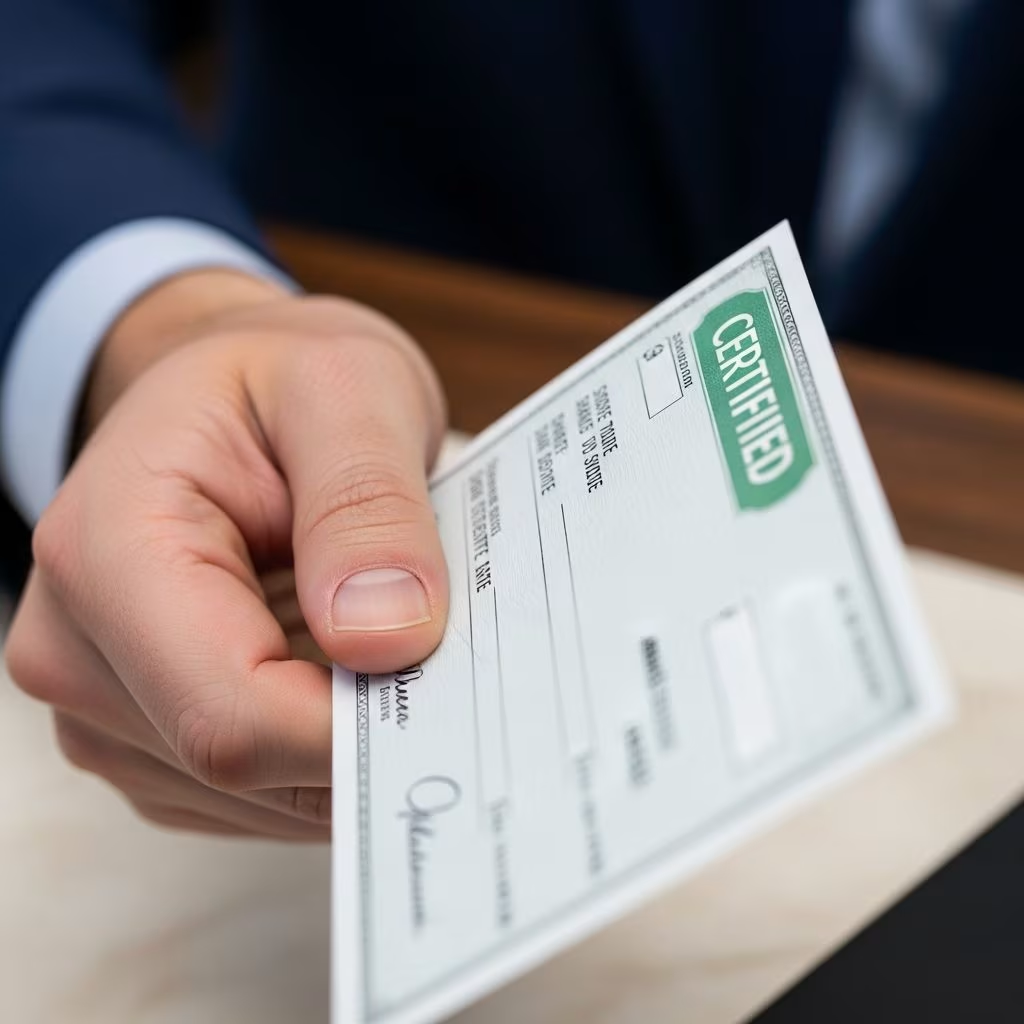
Certified checks represent a trusted method for handling substantial financial exchanges, where the issuing bank confirms the availability of funds and the authenticity of the payer’s signature before the check is handed over. This process ensures recipients receive payment without the uncertainty associated with standard personal checks.
The Fundamentals of Certified Checks
At its core, a certified check starts as a personal check drawn from the payer’s account. However, the bank intervenes by verifying two critical elements: sufficient balance to cover the amount and the genuineness of the signature. Upon approval, the bank earmarks those funds, restricting their use until the check clears, and applies an official certification mark or stamp.
This mechanism transforms a routine check into a near-cash equivalent, minimizing bounce risks. Funds remain in the payer’s account but are frozen, providing security akin to cash while allowing the bank to maintain oversight.
Why Choose Certified Checks for Transactions?
Certified checks shine in scenarios demanding high assurance, such as property acquisitions, automotive purchases, or dealings with unfamiliar parties. They signal commitment, as the certification process demonstrates pre-verified liquidity.
- Real estate closings: Essential for down payments or escrow contributions where sellers require proof of funds.
- Vehicle transactions: Dealers often prefer them over personal checks to avoid payment delays.
- Legal obligations: Ideal for court-mandated settlements or alimony payments.
- Rental agreements: Useful for substantial security deposits on high-value leases.
- Business dealings: Accepted in supplier payments or contracts rejecting ordinary checks.
Beyond these, certified checks suit any high-stakes exchange where trust is paramount, offering a balance between convenience and reliability.
Step-by-Step Guide to Obtaining a Certified Check
Securing a certified check involves a straightforward branch visit during operating hours. Preparation ensures efficiency.
- Confirm account status: Ensure your checking account holds ample funds, exceeding the check amount plus any fees.
- Prepare documentation: Bring government-issued ID, account details, payee name, and check amount.
- Write the check: Draft it payable to the recipient at the bank counter if needed.
- Submit for certification: Hand it to a teller, who will validate funds and signature.
- Pay the service charge: Fees generally range from $10 to $20, depending on the institution and account tier.
- Review and collect: Inspect the stamped check before departing; the entire process typically spans 10-15 minutes.
Note that not all banks offer this service universally, and online banking rarely supports it due to the physical verification requirement.
Financial Implications and Costs
While more expensive than printing a personal check, certified checks justify their price through enhanced security. Expect fees of $10-$20 per check, potentially waived for premium account holders.
Additional considerations include opportunity costs from frozen funds and branch visit time. For frequent needs, inquire about volume discounts or alternatives like electronic transfers.
Certified Checks Versus Other Payment Instruments
To select the optimal option, compare certified checks with common alternatives. The table below highlights distinctions:
| Feature | Certified Check | Cashier’s Check | Money Order |
|---|---|---|---|
| Source of Funds | Payer’s account (earmarked) | Bank’s own funds | Purchased with cash/check |
| Issuer | Payer, certified by bank | Bank employee | Bank/post office/retailer |
| Cost | $10-$20 | $10-$15 | $1-$5 (limits apply) |
| Amount Limit | Account balance | Typically high | Often $1,000 max |
| Security Level | High | Higher | Moderate |
| Availability | Bank customers only | Most customers/non-customers | Widely available |
Cashier’s checks edge out in security since they draw directly from bank reserves, debited upfront from the purchaser. Money orders suit smaller sums but cap amounts, lacking flexibility for major deals.
Potential Drawbacks and Precautions
Despite strengths, certified checks carry nuances. Forgery remains possible if lost or stolen pre-deposit, though rarer than with personal checks. Scammers exploit them in overpayment schemes, depositing fake certified checks and requesting refunds.
Funds availability to recipients may delay 1-2 days, subject to holds on large sums. Always verify recipient policies and retain copies for records.
Modern Contexts and Evolving Alternatives
In today’s digital landscape, wire transfers and ACH payments challenge traditional checks for speed, yet certified checks persist for their tangibility in legal or in-person deals. Blockchain-based solutions emerge but lack universal acceptance.
For international transactions, equivalents like bank drafts apply similar principles.
Frequently Asked Questions (FAQs)
Can a certified check bounce?
No, once certified, funds are reserved, preventing bounces barring bank failure or fraud.
Are certified checks available online?
Generally not; they require in-person verification at a branch.
How long is a certified check valid?
Typically six months, like standard checks, but confirm with your bank.
What’s the difference between certified and verified checks?
Terms are often interchangeable, but verification might imply lighter review without full fund reservation.
Do all banks charge for certification?
Most do, $10-$20, though some waive for elite accounts.
Best Practices for Using Certified Checks
Maximize safety by:
- Dealing only with reputable parties.
- Photocopying the check front and back.
- Tracking delivery if mailed.
- Confirming deposit promptly with the recipient.
- Consulting your bank on scam prevention.
Integrate certified checks into a broader financial strategy, pairing with digital tools for efficiency.
References
- Certified Check: Definition, Uses And Cost — Bankrate. 2023. https://www.bankrate.com/banking/checking/what-is-a-certified-check/
- Certified check — Wikipedia. Accessed 2026. https://en.wikipedia.org/wiki/Certified_check
- Certified Check vs. Cashier’s Check: Key Differences Explained — Citi. 2024. https://www.citi.com/banking/personal-banking-guide/basic-finance/certified-check-vs-cashiers-check
- What Is a Certified Check & How to Get One? — State Bank of India California. 2024. https://www.sbical.bank/education-center/what-is-a-certified-check
- certified check — Legal Information Institute, Cornell Law School. 2025-02. https://www.law.cornell.edu/wex/certified_check
This article is general information, not personal financial advice. Consider your own situation, or speak with a licensed adviser, before acting on it.


