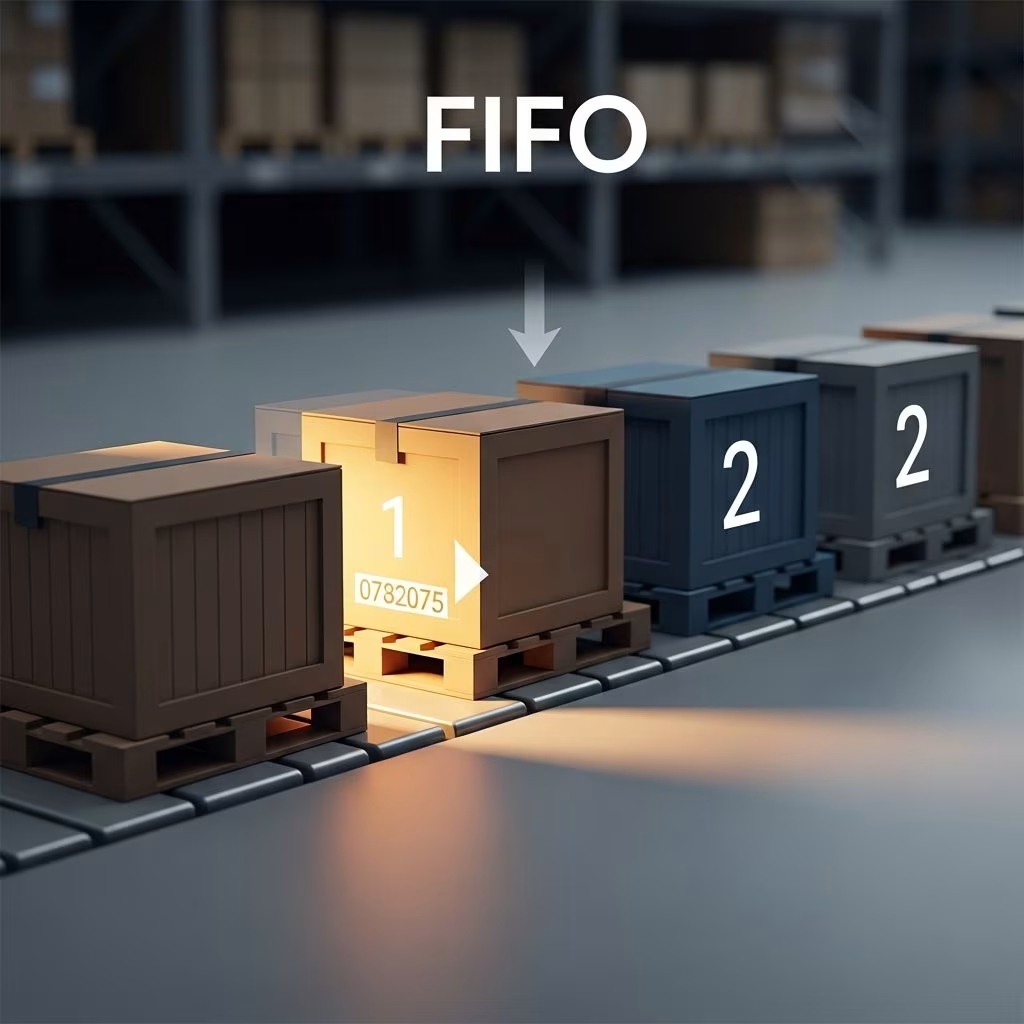
Understanding FIFO: First-In, First-Out Accounting Method
The FIFO method, which stands for “First-In, First-Out,” is one of the most widely used inventory costing methods in accounting and inventory management. FIFO is a costing approach that assumes the first goods purchased are the first goods sold or disposed of. This method is used to value inventory and calculate the Cost of Goods Sold (COGS), which directly impacts a company’s financial statements and tax obligations.
Both Generally Accepted Accounting Principles (GAAP) and International Financial Reporting Standards (IFRS) accept the FIFO method, making it a universally recognized and trusted accounting practice. Understanding how FIFO works and when to implement it is essential for businesses looking to maintain accurate financial records and optimize their inventory management processes.
How the FIFO Method Works
The FIFO method operates on a straightforward principle: the oldest items in your inventory are assumed to be sold first. When calculating the Cost of Goods Sold under FIFO, you use the cost of your oldest inventory multiplied by the total amount sold. This creates a cost flow that mirrors the natural physical movement of most goods through a business.
For example, if a retailer purchases 100 units of a product at $10 per unit in January and then purchases 100 more units at $12 per unit in March, and the company sells 120 units in April, under the FIFO method, the COGS would be calculated using 100 units at $10 and 20 units at $12, resulting in a total COGS of $1,240.
FIFO is generally the most common approach to inventory accounting because most businesses naturally offload oldest products first anyway. Older inventory might become obsolete and lose value over time, so FIFO simply follows that natural flow of inventory, meaning less chance of mistakes when it comes to bookkeeping.
Key Advantages of Using FIFO
The FIFO method offers several significant advantages that make it the preferred choice for many businesses:
- Simplicity and Ease of Use: FIFO is straightforward to implement and understand, requiring minimal accounting complexity and reducing the likelihood of bookkeeping errors.
- Acceptance and Trust: Both investors, lenders, and the Internal Revenue Service (IRS) accept and trust the FIFO method, enhancing the credibility of your financial statements.
- Alignment with Physical Flow: FIFO follows the natural physical flow of inventory in most businesses, making it a logical representation of how goods actually move through your company.
- Reduced Obsolescence Risk: By selling older inventory first, businesses minimize the risk of products becoming obsolete or losing value.
- Improved Gross Margins During Inflation: When prices rise, FIFO matching older, lower-cost inventory to current-cost dollars of revenue can positively impact gross margins.
- Accurate Inventory Valuation: The ending inventory balance reflects more current costs, providing a more accurate representation of what inventory is actually worth on the balance sheet.
Disadvantages and Limitations of FIFO
While FIFO is widely used, it does have some limitations that businesses should consider:
- Higher Tax Liability During Inflation: In inflationary periods, FIFO can result in higher taxable income because older, cheaper inventory costs are matched against current revenue, potentially leading to larger tax bills.
- Less Tax Advantage: Unlike LIFO, FIFO doesn’t provide the same tax deferral benefits that some companies might seek during periods of rising prices.
- Limited Application in Specific Industries: While suitable for most businesses, FIFO may not be the optimal choice for all industries or economic conditions.
FIFO vs. LIFO: A Comparative Analysis
Understanding how FIFO differs from LIFO (Last-In, First-Out) is crucial for making informed accounting decisions. While FIFO assumes the oldest inventory is sold first, LIFO assumes the most recent inventory is sold first. This fundamental difference creates significant implications for financial reporting and taxation.
| Feature | FIFO | LIFO |
|---|---|---|
| Inventory Flow Assumption | Oldest inventory sold first | Newest inventory sold first |
| COGS Calculation | Uses oldest costs | Uses newest costs |
| Ending Inventory Value | More current value | Understated value (older costs) |
| Tax Liability (Inflation) | Higher | Lower |
| GAAP & IFRS Acceptance | Universally accepted | GAAP (US only), not IFRS |
| International Use | Globally accepted | US only |
| Ease of Use | Simple and straightforward | Complex; requires separate calculations |
LIFO is only permitted as one of the Generally Accepted Accounting Principles (GAAP) in the United States, making it unavailable to international companies. Additionally, LIFO tends to understate the value of closing stock and overstate COGS, which is not accepted by most taxation authorities outside the US. If a company uses the LIFO method, it will need to prepare separate calculations, which calls for additional resources.
Average Cost Method: A Middle Ground
Between FIFO and LIFO lies the average cost method, which offers a compromise approach to inventory valuation. With the average cost method, you calculate the weighted average of all units available for sale during the accounting period and use that average cost to determine the value of COGS and ending inventory.
If FIFO results in the highest net income and LIFO produces the lowest, the average inventory method typically lands somewhere between these two figures. However, this method is more time-consuming to calculate. During inflationary periods, the average cost method might not accurately reflect the current replacement cost of inventory, potentially impacting the valuation of ending inventory and COGS.
FIFO for Different Types of Businesses
FIFO is particularly well-suited for specific business types and industries. The method is ideal for:
- Perishable Goods: Restaurants, grocery stores, and food distributors benefit greatly from FIFO since perishable items must be sold before they expire or spoil.
- Retail Operations: Retailers dealing with seasonal products or fashion items use FIFO to move older stock first and minimize markdowns on obsolete items.
- Manufacturing: Companies with raw materials and finished goods inventory find FIFO’s straightforward approach beneficial for tracking costs.
- Technology Companies: Hardware manufacturers use FIFO to account for rapidly changing technology costs and product cycles.
Implementing FIFO in Your Business
Implementing the FIFO method involves several steps to ensure compliance and accuracy:
Step 1: Document All Purchases — Maintain detailed records of all inventory purchases, including dates, quantities, and unit costs. This documentation forms the foundation of accurate FIFO calculations.
Step 2: Track Inventory Movement — Monitor which inventory items are sold and in what order. Implement systems that can track the age and cost of inventory items.
Step 3: Calculate COGS Regularly — At the end of each accounting period, calculate your COGS using the FIFO method based on your sales records and inventory costs.
Step 4: Reconcile Inventory — Perform physical inventory counts and reconcile them with your accounting records to identify discrepancies and adjust as needed.
Step 5: Consult with Professionals — Work with accountants and tax advisors to ensure your FIFO implementation complies with GAAP standards and tax regulations.
When to Choose FIFO Over Other Methods
Most businesses benefit from using the FIFO calculation. It’s easy to use, accepted and trusted by investors, lenders, and the IRS, and it follows the natural physical flow of inventory. FIFO is the right choice, especially for businesses that deal in perishable goods, such as restaurants, or any company where inventory obsolescence is a concern.
FIFO is also preferred when your business operates in a stable or deflationary economic environment, when you want to present the most current inventory values on your balance sheet, or when you’re seeking to attract investors by presenting conservative COGS figures and higher net income during non-inflationary periods.
Common Mistakes to Avoid with FIFO
When implementing FIFO, businesses often make several common errors:
- Inconsistent Record-Keeping: Failing to maintain detailed purchase records makes FIFO calculations unreliable and can lead to IRS scrutiny.
- Not Tracking Inventory Dates: Without proper dating of inventory items, you cannot accurately determine which items were purchased first.
- Mixing FIFO with Other Methods: Switching between FIFO and other inventory methods inconsistently violates accounting standards and creates confusion.
- Neglecting Physical Inventory Counts: Failing to perform regular physical inventory reconciliations can hide errors and shrinkage.
Frequently Asked Questions About FIFO
Q: Is FIFO required by law?
A: While not strictly required by law for most US businesses, FIFO is widely accepted and required by IFRS in some international regions. However, companies must choose a consistent inventory method and stick with it for tax compliance purposes.
Q: How does FIFO affect taxes?
A: During inflationary periods, FIFO can result in higher taxable income because older, cheaper inventory costs are matched against current revenue. This typically leads to larger tax bills compared to LIFO, but FIFO is still preferred by the IRS for its transparency.
Q: Can I switch from LIFO to FIFO?
A: Yes, but switching inventory methods requires specific IRS approval and approval through Form 3115 (Application for Change in Accounting Method). The change can have significant tax implications and should only be made after consulting with a tax professional.
Q: What industries use FIFO most commonly?
A: Retail, restaurants, grocery stores, pharmaceuticals, and any business dealing with perishable goods or fashion items use FIFO most commonly. Manufacturing and technology companies also frequently use FIFO.
Q: How is FIFO different from actual inventory flow?
A: FIFO is a cost accounting assumption, not necessarily the physical flow of goods. However, FIFO typically aligns well with how most businesses actually manage inventory, making it both a logical and practical choice.
Q: Does FIFO work during deflation?
A: Yes, FIFO works during deflationary periods, though the tax implications differ from inflation. During deflation, FIFO can result in lower net income compared to LIFO, which might be disadvantageous from a tax perspective.
Conclusion
The FIFO method remains one of the most practical and widely accepted inventory accounting methods available. Its simplicity, alignment with actual inventory practices, and universal acceptance by accounting standards bodies and tax authorities make it an excellent choice for most businesses. Whether you’re running a small retail operation, managing a restaurant’s food inventory, or overseeing manufacturing operations, understanding and implementing FIFO correctly can significantly impact your financial statements and tax position.
While FIFO may not always provide the lowest tax liability during inflationary periods, its transparency, ease of use, and credibility with investors and lenders make it worth serious consideration. Ultimately, the decision between FIFO and other inventory methods depends on your company’s specific circumstances and financial goals. It’s always best to consult with a tax adviser or accountant to determine the most suitable method for your business situation.
References
- FIFO and LIFO Accounting for Small Businesses — U.S. Chamber of Commerce. 2024. https://www.uschamber.com/co/run/finance/fifo-vs-lifo
- What is FIFO Method in Accounting, and Why is it Important? — Sage. 2024. https://www.sage.com/en-us/blog/glossary/what-is-fifo-method-in-accounting-and-why-is-it-important/
This article is general information, not personal financial advice. Consider your own situation, or speak with a licensed adviser, before acting on it.