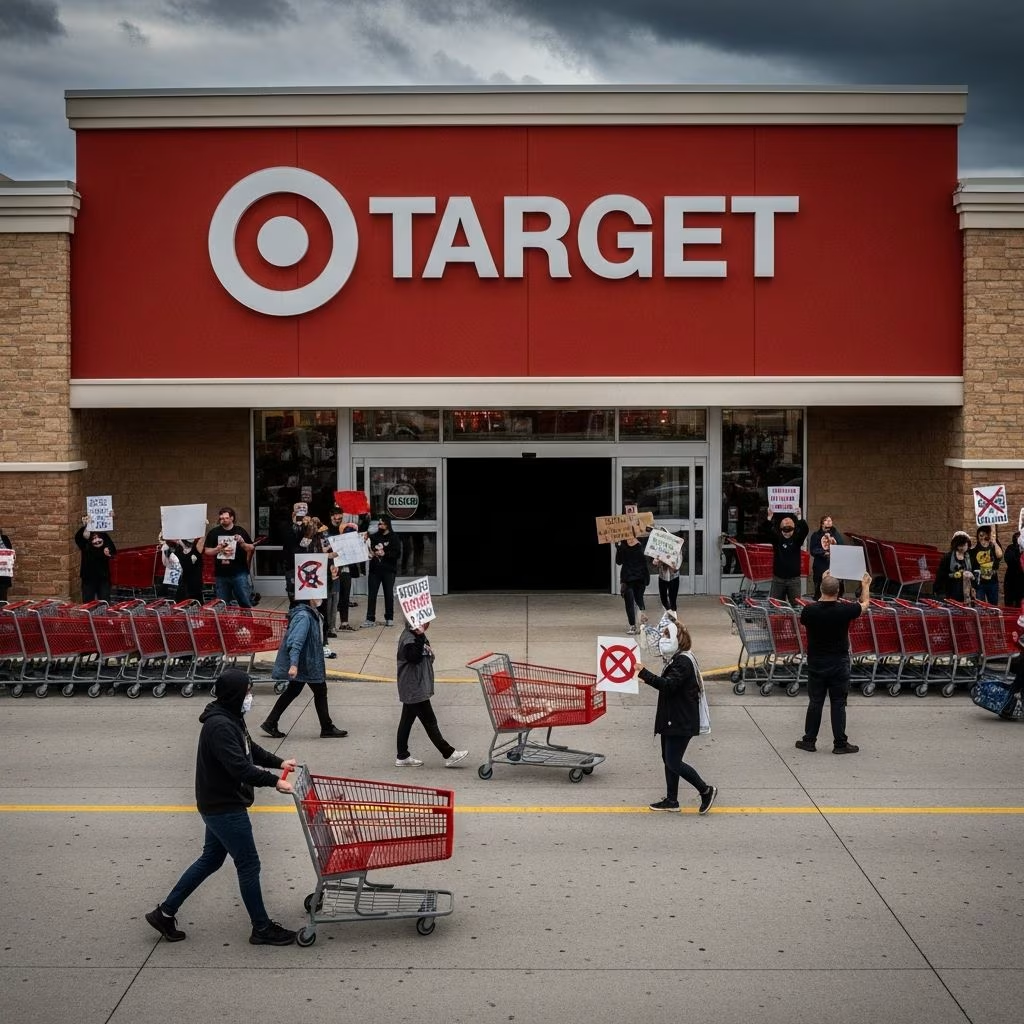
Target Faces Boycott Without DEI: Understanding the Corporate Controversy
In January 2025, Target Corporation made a significant strategic decision that would reshape its corporate identity and trigger unprecedented backlash from both consumers and investors. The retail giant announced the termination of its REACH initiative and a substantial restructuring of its Supplier Diversity program, effectively rolling back years of commitments to diversity, equity, and inclusion (DEI) initiatives. This decision marked one of the largest corporate DEI retreats in recent history and set off a chain reaction of boycotts, lawsuits, and public criticism that continues to impact the company’s reputation and financial performance.
The controversy surrounding Target’s DEI rollback illuminates a broader tension in American corporate culture, where companies find themselves caught between competing pressures from conservative groups opposing diversity initiatives and civil rights advocates demanding commitment to equity. Target’s situation represents a critical moment in the evolution of corporate social responsibility and the future of DEI programs across major American retailers.
The History of Target’s DEI Commitment
Target’s journey with diversity initiatives began earnestly following the police murder of George Floyd in May 2020. As a company headquartered in Minneapolis, where Floyd was killed, Target became one of the first major corporations to invest substantially in DEI programs. The company made ambitious commitments that reflected a genuine attempt to address systemic racism and promote equity within its operations and supply chain.
The company pledged $2 billion to support Black-owned businesses and committed an additional $100 million to support Black communities and Black representation in leadership roles. Target also promised to add products from 500 Black entrepreneurs to its shelves and to direct $100 million into Black scholarships and non-profit organizations focused on supporting Historically Black College and University (HBCU) students. These commitments represented one of the most substantial corporate responses to calls for racial justice during the George Floyd uprising and the subsequent Black Lives Matter movement.
Beyond financial commitments, Target implemented comprehensive internal DEI programs designed to transform its hiring practices, promotion pathways, and supplier relationships. The company invested in diversity training, established mentorship programs for employees of color, and created procurement pathways specifically designed to elevate minority-owned and women-owned businesses. For several years, Target positioned itself as a leader in corporate diversity efforts, frequently cited as an example of meaningful corporate action in response to calls for racial equity.
The 2023 Turning Point: Conservative Backlash and Pride Merchandise
The first significant challenge to Target’s DEI initiatives emerged in 2023 when conservative and anti-LGBTQ groups launched a boycott targeting the company for selling Pride merchandise during Pride Month. This boycott gained substantial traction, with conservative activists organizing campaigns to pressure Target executives and workers over the company’s diversity policies. The boycott resulted in a notable impact on Target’s stock price and sales figures, which would later become central to shareholder litigation.
The 2023 boycott dropped Target’s stock price by approximately 25% between mid-May and mid-June 2023, and the company experienced a 5% decline in sales during the second quarter of that year. When these sales figures were released in mid-August 2023, Target’s stock price fell an additional 15%. These financial consequences created a chilling effect within corporate boardrooms and among Target’s leadership, signaling that DEI initiatives could come at a significant financial cost.
During this period, Twin Cities Pride dropped Target as a partner and corporate sponsor of its parade in response to the boycott campaign. The 2023 controversy demonstrated that DEI commitments, while celebrated by civil rights groups and LGBTQ+ advocates, could provoke organized opposition from conservative constituencies that possessed significant purchasing power and could mobilize rapidly through social media and organized campaigns.
January 2025: The DEI Rollback Decision
Following the inauguration of President Trump in January 2025, Target became one of the first major companies to substantially scale back its DEI initiatives. The company’s leadership faced mounting pressure from a MAGA-faction of shareholders who pushed anti-DEI resolutions at several major corporations. However, Target’s decision stood in stark contrast to other major retailers and corporations, including Apple, Costco, Coca-Cola, and Levi’s, which rejected similar anti-DEI shareholder resolutions.
On January 24, 2025, Target announced the official end of its REACH initiative and rebranded its Supplier Diversity program as Supplier Engagement. An internal memo revealed that the company would end its three-year DEI goals, stop reports to diversity-focused groups, and terminate programs focused on carrying more products from Black and minority-owned businesses. The company also ceased tracking diversity hiring goals and withdrew from third-party DEI rankings, adopting what it termed a “neutrality approach” designed to reduce political backlash.
The rollback represented a dramatic reversal of the company’s public commitments made just a few years earlier. Target leadership framed the decision as a strategic pivot toward operational efficiency and political neutrality, arguing that the company needed to focus on its core business rather than external political controversies.
Founder’s Family Criticism and Public Opposition
The decision sparked immediate and intense criticism from influential voices both inside and outside the company. Most notably, Anne and Lucy Dayton, daughters of Target’s co-founder, publicly condemned the rollback in an open letter to media outlets. The Dayton sisters criticized Target’s abandonment of its long-standing DEI efforts, stating that corporate diversity represents more than public relations—it constitutes a fundamental moral commitment aligned with the company’s founding values.
The Daytons’ public opposition carried particular weight given their family’s historical role in establishing the company and their continued influence within Minneapolis business circles. Their statement suggested that Target’s leadership had departed from core principles that should have guided the company’s trajectory, regardless of short-term political or financial pressures.
Beyond the founder’s family, civil rights organizations, religious leaders, and community groups across the country expressed strong opposition to Target’s decision. Religious institutions that had previously partnered with Target to advance equity initiatives felt betrayed by the company’s reversal, viewing it as a retreat from moral leadership during a critical moment in American society.
The Boycott Campaign: Civil Rights Leadership and Grassroots Organization
In response to Target’s DEI rollback, a comprehensive boycott campaign emerged, organized by prominent civil rights leaders and community organizations. Pastor Jamal Bryant, an influential Atlanta-based pastor and civil rights leader, launched one of the most visible components of the boycott effort. On Ash Wednesday, March 5, 2025, Bryant called for a 40-day Target fast—a spiritual practice that would extend through Easter Sunday, April 17—asking supporters to abstain from shopping at Target during this period.
Simultaneously, other civil rights organizations joined the boycott effort. Nina Turner, former Ohio State Senator and co-founder of We Are Somebody, and Tamika Mallory of Until Freedom launched a national boycott call on February 1, primarily through social media. Their announcement highlighted that Target had also contributed $1 million to Trump’s inauguration, a first for the company. Turner specifically pointed out that Target’s CEO earns 719 times the median pay of Target workers, highlighting questions about corporate equity and compensation disparities.
The Latino Freeze Movement also joined calls to boycott Target over its DEI rollback, demonstrating that opposition crossed racial and ethnic lines. Consumer boycott campaigns during this period affected not only Target but also other major retailers including Amazon and Home Depot.
At the conclusion of the 40-day fast on Easter Sunday, Pastor Bryant announced that the temporary fast would transform into a full-scale, indefinite boycott. He hosted a national town hall featuring leaders from the Black Press Associates, including Rev. Ben Chavis, representatives from the Black Chamber of Commerce, Tamika Mallory, and Nina Turner. This town hall established a national organizing committee and articulated four specific demands that Target must meet to lift the boycott:
- Honor the $2 billion pledge to the Black business community
- Deposit $250 million across 23 Black-owned banks
- Establish community retail centers at 10 Historically Black Colleges and Universities
- Fully restore and recommit to DEI initiatives
The boycott organizers also coordinated a May 25 prayer vigil at Target stores nationwide, with faith leaders leading prayers lasting 9 minutes and 40 seconds—the exact duration that Derek Chauvin kneeled on George Floyd’s neck in 2020, directly connecting the boycott to ongoing struggles for racial justice.
Shareholder Lawsuits and Financial Consequences
Beyond consumer boycotts, Target faced unprecedented legal challenges from shareholders who claimed the company’s actions constituted mismanagement. During February 2025, shareholders filed class action lawsuits alleging that Target’s decision to roll back DEI policies misled investors about the company’s strategic direction and damaged stockholder confidence.
The litigation presented a paradoxical challenge for Target: the company faced simultaneous lawsuits from two opposing groups. Conservative shareholders had previously sued, claiming that DEI policies themselves created financial risks that materialized in the 2023 boycott and subsequent stock decline. Now, progressive shareholders sued, arguing that eliminating DEI policies without proper shareholder consultation constituted a breach of fiduciary duty and strategic mismanagement.
This dual litigation underscored the fundamental tension Target created by attempting to retreat from DEI commitments. The company found itself unable to satisfy either constituency, facing legal exposure from multiple directions.
Impact on Employee and Consumer Sentiment
Target’s DEI rollback created significant challenges for the company’s employee relations and consumer sentiment. Many Target employees, particularly people of color and LGBTQ+ workers, expressed concern about the company’s retreat from equity commitments. The rollback signaled potential changes to hiring practices, promotion pathways, and workplace culture that had been cultivated over several years.
Consumer sentiment shifted notably following the announcement. Companies that maintain strong DEI commitments have become attractive alternatives for consumers who view diversity as aligned with their values. Target’s decision prompted some consumers to redirect spending toward retailers perceived as more committed to equity and inclusion, particularly among younger demographics and socially conscious consumers.
Black entrepreneurs and small business owners who had benefited from Target’s supplier diversity program expressed particular concern. Some called for a “clearing of the shelves” rather than a boycott, requesting that consumers specifically purchase products from Black entrepreneurs to sustain those business relationships despite Target’s policy changes.
Broader Implications for Corporate America
Target’s situation reflects a broader inflection point for corporate DEI initiatives across American business. The company’s decision to scale back while competitors like Apple, Costco, Coca-Cola, and Levi’s maintained or defended their DEI commitments created a market differentiation moment. Companies must now evaluate whether maintaining DEI commitments aligns with their strategic vision and stakeholder expectations, or whether backing away from such commitments better serves their interests.
The controversy illuminates fundamental questions about corporate responsibility, social justice, and stakeholder capitalism. DEI initiatives emerged as corporate responses to the George Floyd uprising and calls for racial justice, representing an attempt by major corporations to address systemic discrimination. However, these programs generated political controversy, with critics arguing that DEI represents preferential treatment rather than equity.
For Target specifically, the company faces a critical strategic decision about its path forward. Possible approaches include reaffirming DEI commitments to address consumer and investor backlash while risking further scrutiny from conservative groups; maintaining its current neutral stance while hoping the controversy diminishes over time; or reversing course entirely by reinstating some DEI programs to repair public trust and stakeholder relationships.
Historical Context of Consumer Boycotts
Target’s boycott situation continues a long historical tradition of consumer activism within African American communities and the labor movement. Boycotts have functioned as powerful tools for demanding corporate accountability and social change for decades. The Montgomery Bus Boycott, farmworker boycotts, and numerous consumer campaigns targeting discriminatory practices demonstrate the political significance of consumer action.
The Target boycotts of 2023 (over Pride merchandise) and 2025 (over DEI rollback) represent contemporary expressions of this tradition, adapted for social media-enabled organizing and national coordination. The ability to organize nationwide boycotts rapidly through digital platforms has increased the potential impact of consumer activism, creating new vulnerabilities for major retailers dependent on consistent customer traffic and sales volume.
Frequently Asked Questions
Q: Why did Target decide to roll back its DEI initiatives?
A: Target cited political pressures and shareholder pressure, particularly from conservative groups pushing anti-DEI resolutions. The company also referenced the financial impact of the 2023 boycott and sought to adopt a “neutrality approach” to reduce political backlash.
Q: How much money did Target originally commit to DEI initiatives?
A: Target committed $2 billion to support Black-owned businesses, plus an additional $100 million to support Black communities and Black representation in leadership roles, along with other investments in education and entrepreneurship.
Q: Who organized the boycott against Target’s DEI rollback?
A: Civil rights leaders including Pastor Jamal Bryant, Nina Turner, and Tamika Mallory organized the boycott. Religious organizations, the Latino Freeze Movement, and community groups also participated in and supported the campaign.
Q: What are the specific demands of the boycott organizers?
A: The boycott demands include honoring the $2 billion pledge to Black businesses, depositing $250 million across Black-owned banks, establishing community retail centers at 10 HBCUs, and fully restoring DEI commitments.
Q: How did other major retailers respond to similar pressure to eliminate DEI initiatives?
A: Companies including Apple, Costco, Coca-Cola, and Levi’s rejected anti-DEI shareholder resolutions, distinguishing themselves from Target’s decision to scale back diversity initiatives.
Q: What legal challenges does Target face related to the DEI rollback?
A: Shareholders have filed class action lawsuits claiming that Target’s decision misled investors and damaged stockholder confidence. The company faces simultaneous litigation from different shareholder groups with conflicting positions on DEI policies.
Q: Did the founder’s family support the DEI rollback?
A: No. Anne and Lucy Dayton, daughters of Target’s co-founder, publicly criticized the rollback in an open letter, calling it a betrayal of the company’s founding values and moral commitments.
Q: How long did the initial boycott campaign run?
A: Pastor Jamal Bryant initiated a 40-day fast beginning on Ash Wednesday, March 5, 2025, extending through Easter Sunday, April 17. At the conclusion, he announced the temporary fast would become a permanent boycott.
References
- Boycott for Equality: Targeting Target’s Anti-DEI Turn — Communist Party USA. 2025. https://www.cpusa.org/article/boycott-for-equality-targeting-targets-anti-dei-turn/
- Target’s DEI Rollback Update (Feb 2025): Comprehensive Analysis of Backlash, Legal Challenges, and Financial Implications — Diversity.com. 2025. https://diversity.com/post/target-dei-rollback-2025-impact-update
- Target and The Future of DEI — Mployer Advisor. 2025. https://mployeradvisor.com/blog/target-and-the-future-of-dei
- Did the DEI Target Boycott Work? Here’s What Company Documents Say — Reno Gazette-Journal. 2025-04-21. https://www.rgj.com/story/news/2025/04/21/did-the-target-boycott-over-dei-work-heres-what-we-know/83194331007
- Consumers Boycott Target, Amazon, Home Depot, Here’s Why — TheStreet. 2025. https://www.thestreet.com/retail/target-amazon-and-home-depot-face-holiday-season-boycott
This article is general information, not personal financial advice. Consider your own situation, or speak with a licensed adviser, before acting on it.