

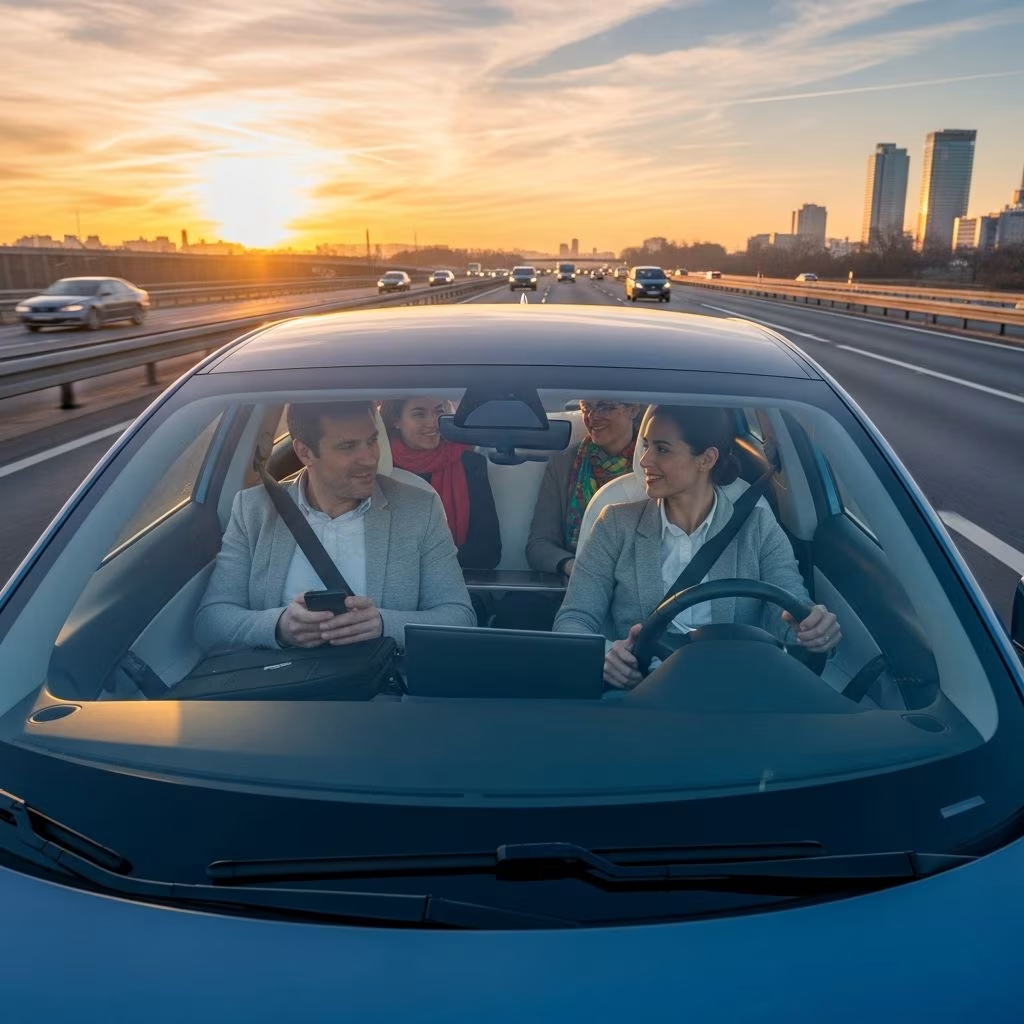
Carpooling transforms routine drives into efficient, eco-friendly, and socially enriching experiences by enabling commuters to share vehicles, divide expenses, and minimize road presence. This practice yields measurable gains across financial, environmental, and personal dimensions, making it a practical choice for modern lifestyles.
Financial Gains from Shared Rides
One primary draw of carpooling lies in its ability to substantially lower transportation-related expenditures. Participants divide costs such as gasoline, tolls, and parking, often halving or quartering individual outlays depending on group size. For instance, drivers report annual savings reaching hundreds or thousands of dollars, freeing up funds for other priorities like family needs or savings accounts.
Beyond fuel, rotating vehicle use extends car longevity by distributing mileage evenly, which translates to fewer oil changes, tire replacements, and major repairs. This reduced wear and tear preserves vehicle value and avoids unexpected repair bills, compounding long-term economic benefits.
- Gasoline and toll splitting: Up to 50% reduction per person.
- Parking fee sharing: Eliminates full solo costs in crowded areas.
- Maintenance deferral: Less frequent services due to lower annual miles.
Environmental Advantages of Fewer Vehicles
Carpooling directly combats climate challenges by decreasing the number of cars on roads, thereby curbing greenhouse gas emissions and fuel consumption. A single shared ride can remove vehicles equivalent to multiple solo trips, potentially slashing a commuter’s carbon output by thousands of pounds yearly.
This collective reduction in vehicle numbers also eases air pollution and conserves natural resources, as less fossil fuel demand pressures supplies. Studies highlight carpooling’s role in broader sustainability efforts, aligning personal choices with planetary health.
| Impact Area | Solo Driving | Carpooling (4 People) | Benefit |
|---|---|---|---|
| Emissions | High per vehicle | 75% lower | Cuts GHGs significantly |
| Fuel Use | Full tank per person | Shared tank | Reduces consumption |
| Pollution | Increased particulates | Minimized output | Cleaner air quality |
Streamlining Traffic and Commute Times
With fewer cars circulating, carpooling alleviates congestion, leading to smoother flows and shorter travel durations. Access to high-occupancy vehicle (HOV) lanes further accelerates journeys, bypassing jams and saving precious time daily.
Communities experience widespread improvements, from safer roads to enhanced efficiency in high-traffic zones. This ripple effect benefits all drivers, not just carpoolers, fostering more predictable travel patterns.
Enhancing Personal Well-Being and Connections
Shared commutes turn solitary drives into opportunities for interaction, reducing isolation and building bonds among coworkers, neighbors, or friends. Conversations during rides spark networking, deepen relationships, and create support networks that extend beyond work.
Rotating driving duties prevents fatigue, allowing passengers to rest, work, or relax, which lowers stress and boosts arrival alertness. This dynamic often results in higher productivity and improved moods throughout the day.
- Stress relief through shared responsibilities.
- Social engagement combating commute boredom.
- Productivity gains via onboard collaboration.
Boosting Workplace and Community Dynamics
Employers gain from carpooling through decreased parking demands and greener operations, while staff enjoy cost relief and stronger team ties. Programs like tax-free reimbursements incentivize participation, enhancing overall job satisfaction.
On a community level, carpooling strengthens local ties, promotes cooperation, and supports emergency ride options, creating resilient networks. It cultivates a culture of mutual aid, making neighborhoods more connected and vibrant.
Practical Steps to Launch a Carpool
Starting a carpool requires minimal effort but yields outsized rewards. Begin by identifying potential partners via workplace apps, neighbor groups, or online platforms matching commuters by route and schedule.
- Discuss routes, schedules, and cost-sharing rules upfront.
- Establish rotation for driving to ensure fairness.
- Use apps for tracking expenses and coordinating changes.
- Leverage HOV eligibility and employer perks where available.
Flexibility is key—arrangements can adapt to varying needs without daily rigidity, maintaining convenience.
Overcoming Common Hurdles
While benefits dominate, challenges like schedule mismatches or personality clashes arise. Solutions include clear communication, trial periods, and backup plans. Most find the positives outweigh minor inconveniences, especially with proper setup.
Real-World Success Stories
Participants frequently share tales of transformed commutes: one group saved $1,200 yearly while forming lifelong friendships; another cut commute times by 20 minutes via HOV access. These anecdotes underscore carpooling’s tangible uplift across metrics.
FAQs
What are the top savings from carpooling?
Expect reductions in fuel (up to 50%), maintenance, tolls, and parking, often totaling hundreds monthly.
Does carpooling really help the environment?
Yes, by lowering emissions and vehicles on roads, it significantly cuts carbon footprints and pollution.
How do I find carpool partners?
Use employer programs, apps, or community boards to match by route and timing.
Can carpools use HOV lanes?
Typically yes, with 2+ occupants, speeding up travel in eligible areas.
Is carpooling safe?
Enhanced safety comes from group travel and mutual support during issues.
Long-Term Strategies for Success
To maximize carpooling, integrate tech for seamless coordination and track savings to stay motivated. Pair with public transit hybrids for ultimate efficiency. Over time, these habits not only personalize benefits but contribute to systemic shifts toward sustainable mobility.
Embracing carpooling redefines commuting as a multifaceted win: economically savvy, environmentally responsible, socially fulfilling, and logistically superior. As urban demands grow, this shared approach offers a scalable path forward.
References
- 5 Pros And Cons Of Carpooling Every Driver Should Know — Get Drivers Ed. 2023. https://getdriversed.com/blog-details/pros-and-cons-of-carpooling
- How Carpooling Benefits Employees, Employers, & the Planet — Edenred Benefits. 2023. https://www.edenredbenefits.com/blog/how-carpooling-benefits-employees-employers-the-planet
- Carpooling vs. Solo Car Commuting — Commute PA. 2023. https://commutepa.org/carpooling-vs-solo-commute/
- The Benefits of Carpooling — Transportation Sustainability Research Center, UC Berkeley. 2019-10-01. https://tsrc.berkeley.edu/publications/benefits-carpooling
- How Carpooling can Help You and Your Community — Choose Your Way Bellevue. 2023. https://chooseyourwaybellevue.org/blog/2023/how-carpooling-can-help-you-and-your-community
- 7 Advantages of Carpooling — I Drive Safely. 2023. https://www.idrivesafely.com/defensive-driving/trending/advantages-carpooling
- Ridesharing — Commuter Connections. 2023. https://www.commuterconnections.org/commuters/ridesharing/
This article is general information, not personal financial advice. Consider your own situation, or speak with a licensed adviser, before acting on it.


