

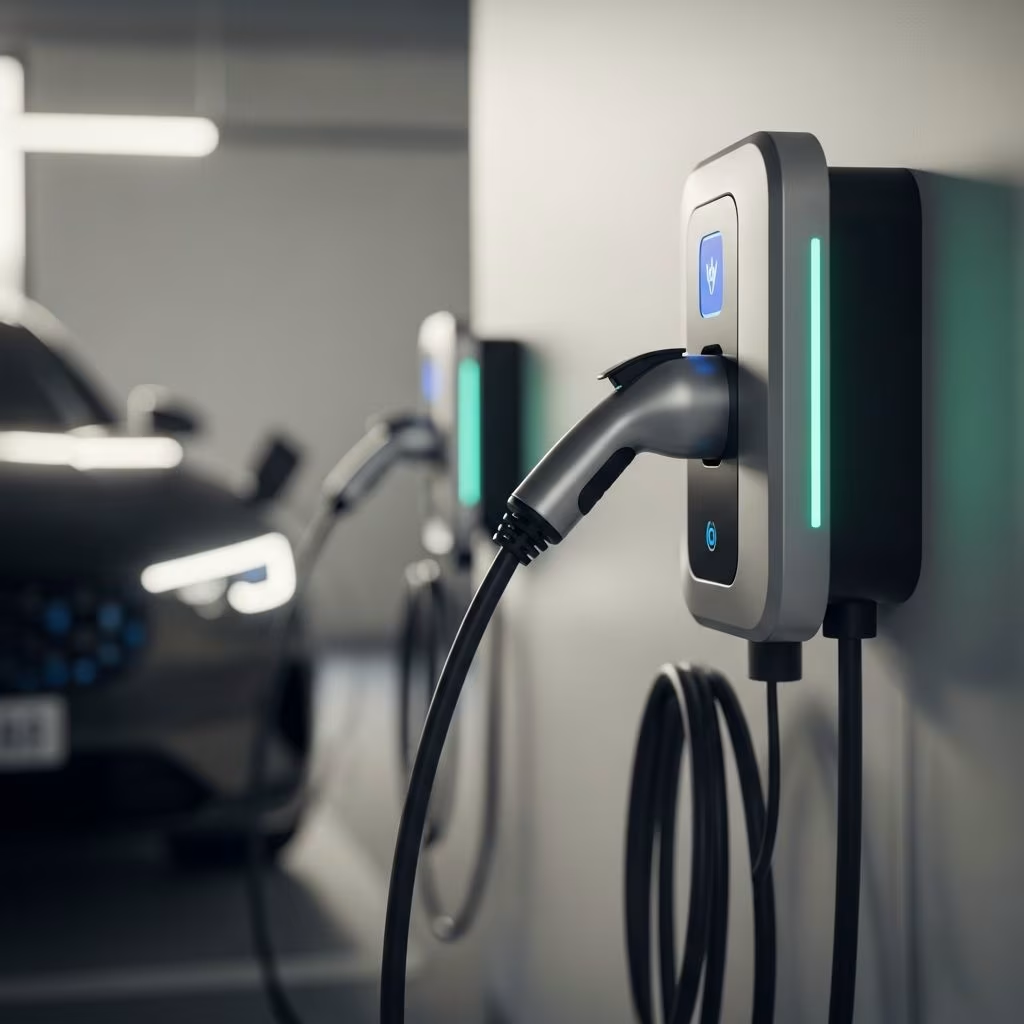
Choosing the right electric vehicle charger ensures efficient, reliable power delivery tailored to your driving habits and vehicle model. Factors like charging speed, compatibility, installation needs, and budget play key roles in this decision.
Understanding EV Charging Levels
EV chargers fall into three primary levels, each suited to different scenarios based on power output and charging duration. Level 1 uses standard household outlets for basic overnight charging, while higher levels demand dedicated setups for faster results.
- Level 1 Chargers: These plug into a common 120V AC outlet, delivering 1-2 kW of power. They add about 2-5 miles of range per hour, ideal for plug-in hybrids with smaller batteries but slow for full EVs, often taking 40-50 hours for a complete charge.
- Level 2 Chargers: Operating on 240V circuits, they provide 3.6-19.2 kW, charging most EVs in 4-8 hours and adding 12-60 miles per hour depending on the model. Perfect for daily home use.
- Level 3 (DC Fast Chargers): These high-power units (50-350 kW) use direct current for 80% charges in 20-40 minutes, best for road trips at public stations rather than homes.
| Charger Level | Voltage | Power Range | Full Charge Time (60 kWh Battery) | Best Use |
|---|---|---|---|---|
| Level 1 | 120V AC | 1-2 kW | 20-40+ hours | Emergency/hybrids |
| Level 2 | 240V AC | 3.6-19.2 kW | 4-8 hours | Home/daily |
| Level 3 | High-voltage DC | 50-350 kW | 20-40 min (80%) | Public/fast |
Key Connector Standards Explained
EV plugs vary by region and manufacturer, affecting charger-vehicle compatibility. North America favors certain types for AC and DC charging.
- SAE J1772 (Type 1): A five-pin AC connector standard for Level 1 and 2 charging on most non-Tesla EVs in North America. It supports up to 7.7 kW reliably.
- CCS Type 1: Builds on J1772 with two extra DC pins for fast charging up to 360 kW. Dominant for public DC stations in the US.
- NACS (North American Charging Standard): Tesla’s compact plug, now open to all brands, handles AC/DC up to high speeds and integrates with Supercharger networks.
- CHAdeMO: A 10-pin DC option up to 400 kW, common on older Nissan Leafs but phasing out outside Japan.
Adapters bridge incompatibilities, but native matching prevents efficiency losses.
Matching Chargers to Your Vehicle
Verify your EV’s inlet port first—consult the owner’s manual or manufacturer’s site. Non-Tesla models typically use J1772/CCS1; Teslas favor NACS. Future-proof by choosing versatile units or networks supporting multiple plugs.
For plug-in hybrids, Level 1 suffices due to smaller batteries. Full BEVs benefit from Level 2 at home for 25-75 miles per hour added.
Home Installation Essentials
Installing a Level 2 charger involves electrical upgrades: a 240V, 40-50 amp circuit from your panel. Costs range $500-$2,000 for the unit plus $750-$3,000 for labor, depending on panel distance and upgrades. Permits and licensed electricians are required for safety.
- Assess panel capacity: May need a 200-amp service upgrade ($2,000-$4,000).
- Location: Garage or driveway, 20-50 feet from panel ideal.
- Smart features: App control, scheduling, energy monitoring enhance usability.
Utility rebates and federal tax credits (up to 30% via IRA) offset expenses.
Cost Analysis and Savings
Upfront: Level 1 free (use outlet); Level 2 $400-$1,200; Level 3 $20,000+ (rarely home-viable). Operating costs: Home Level 2 at $0.10-$0.20/kWh beats public DC at $0.30-$0.60/kWh.
| Charger Type | Unit Cost | Install Cost | Monthly Savings vs. Gas |
|---|---|---|---|
| Level 1 | $0-$300 | $0-$500 | $20-50 |
| Level 2 | $400-$1,200 | $750-$3,000 | $50-150 |
| Level 3 | $10,000+ | $5,000+ | N/A (public) |
ROI in 2-5 years for high-mileage drivers.
Public Charging Networks Overview
Electrify America, EVgo use CCS/CHAdeMO; Tesla Superchargers now NACS-open. Apps like EV Connect filter by plug/speed. Combine home Level 2 with public DC for long trips.
Smart Features for Modern Chargers
Look for Wi-Fi connectivity, voice integration (Alexa/Google), load balancing to avoid peak rates, and V2G potential for energy return.
Maintenance and Longevity Tips
Annual inspections, weatherproofing (NEMA 4+ rating), and cable care extend life to 10+ years. Monitor for faults via apps.
Future Trends in EV Charging
NACS adoption unifies standards; wireless charging and megawatt units emerge. Bidirectional charging enables home backup.
Frequently Asked Questions
Can I install a Level 2 charger myself?
No, hire a certified electrician for safety and code compliance.
What’s the fastest home charger?
Level 2 at 19.2 kW; Level 3 impractical for residences.
Do all EVs use the same plug?
No, but J1772/CCS cover most non-Tesla; NACS rising.
Are there government incentives?
Yes, up to $7,500 tax credit for installs via IRA.
How do I find compatible public chargers?
Use apps filtering by vehicle plug type and speed.
References
- A Guide to Types of EV Charging Plugs & Uses — Chargie. 2023. https://www.chargie.com/resources/what-are-the-differences-between-ev-charging-plugs
- What Are The Different Types Of EV Charging Plugs Used In North America? — EV Connect. 2023. https://www.evconnect.com/blog/what-are-the-different-ev-plug-types-used-in-north-america/
- Understanding Types of Electric Car Chargers — Prairie Electric. 2024. https://www.prairielectric.com/electric-vehicles/ev-car-charger-types/
- EV Charging Types — Drive Electric VT. 2023. https://www.driveelectricvt.com/charging/types
- EV Charger Comparison: Level 1 vs. Level 2 vs. Level 3 — Mirsky Electric. 2024. https://www.mirskyelectric.com/ev-charger-comparison/
- Electric Vehicle Charger Selection Guide — Alternative Fuels Data Center (energy.gov). 2018-01-11. https://www.afdc.energy.gov/files/u/publication/EV_Charger_Selection_Guide_2018-01-112.pdf
- Charger Types and Speeds — U.S. Department of Transportation. 2024. https://www.transportation.gov/rural/ev/toolkit/ev-basics/charging-speeds
This article is general information, not personal financial advice. Consider your own situation, or speak with a licensed adviser, before acting on it.


