

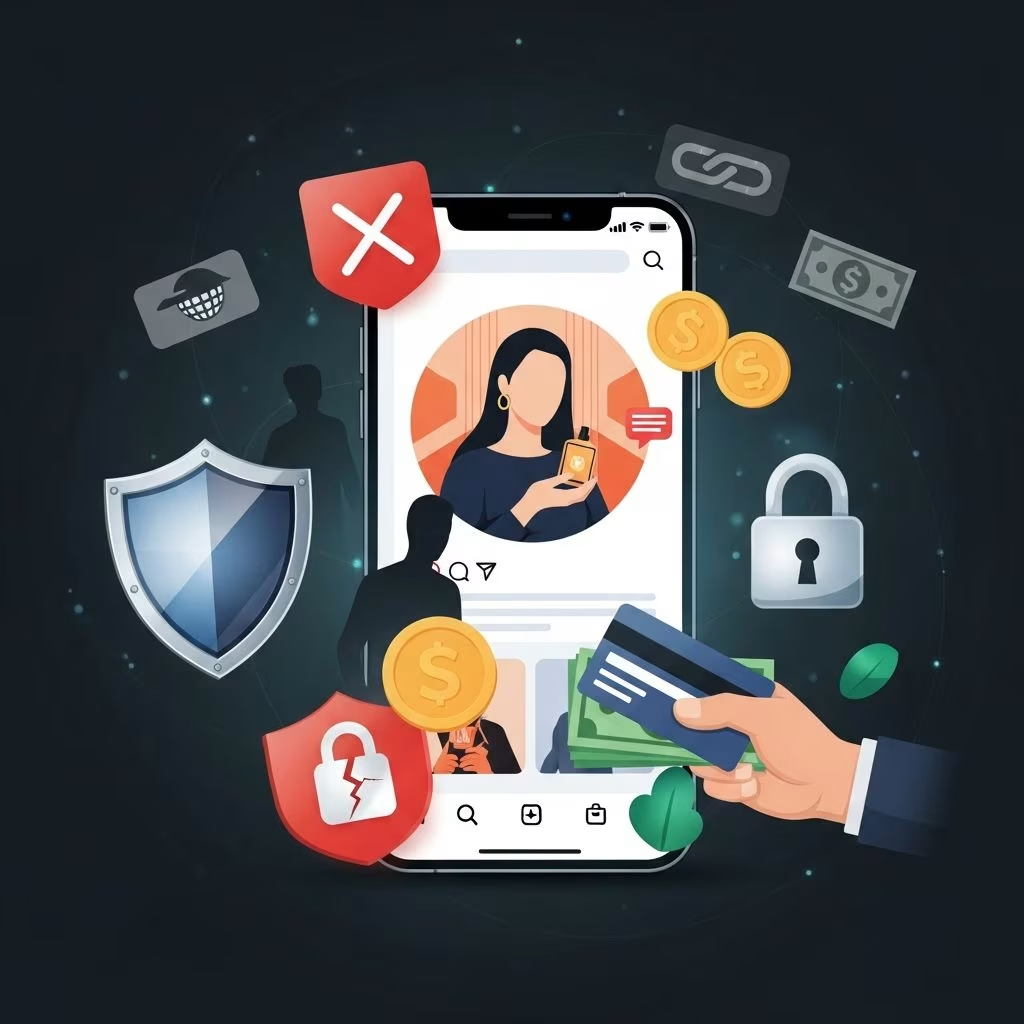
Social media has created countless opportunities to learn, earn, and connect, but it has also opened the door for a wave of influencer-driven money scams. From fake gurus to crypto flipping schemes, these tactics are designed to separate you from your hard-earned cash, often by exploiting your desire for financial freedom.
This guide breaks down 10 common influencer scams, the red flags to look out for, and simple, practical steps you can take to stay safe, keep your money, and make smarter financial decisions.
Why influencer scams are so effective
Scammers have moved aggressively into social platforms because they know people tend to trust personalities they follow and see every day. According to the U.S. Federal Trade Commission (FTC), consumers reported losing over $1.4 billion to fraud that began on social media in 2023, with investment scams making up the largest share of reported losses. Social media scams are especially effective because they combine emotional storytelling, social proof (likes, comments, testimonials), and urgency to push you to act before you think.
At the same time, online investment and income opportunities can be difficult to evaluate, especially when you are new to managing money. Research cited by the International Organization of Securities Commissions shows that many retail investors struggle to distinguish legitimate online offerings from fraudulent schemes, particularly when scammers use professional-looking websites and documents.
1. The fake guru pyramid scheme
The first major category of scam is the fake guru pyramid scheme. This is usually promoted by someone presenting themselves as an expert or mentor who claims to have cracked the code to wealth, often with vague promises like “I’ll teach you how to make money online” or “I’ll show you the secret to financial freedom.”
The scam:
- You pay for an expensive course, mentorship program, or private community.
- The main way to earn money is by recruiting new people into the program, not by selling real products or offering genuine services.
- Any success stories are usually from people at the top who joined early or receive a cut of every new person they bring in.
This mirrors illegal pyramid schemes, where returns for older participants are funded by fees from newer ones, not from legitimate business activity. The U.S. Securities and Exchange Commission (SEC) warns that in these structures, “the emphasis is on recruiting new participants rather than on selling an actual product or service”, a core hallmark of a pyramid scheme.
Red flags:
- Earnings are mainly tied to recruitment, not product sales.
- Training is vague and focuses heavily on how to sign up more people.
- There is lots of hype but no clear, independent proof of sustainable income.
2. The six-figure income lie
This scam revolves around influencers claiming they make $10,000 a month, six figures in a few months, or even millions in a year with very little work. They use screenshots, luxury lifestyles, and dramatic before-and-after stories to sell you a dream.
The scam:
- The influencer’s main income often comes from selling you the system itself: courses, masterminds, or coaching programs.
- They rarely provide verified income reports or proof of where their revenue truly comes from.
- The strategies they share may be incomplete, outdated, or completely generic.
Real businesses take time, skills, testing, and capital. Data from the U.S. Small Business Administration shows that around half of new businesses fail within five years, highlighting how difficult it is to build sustainable income, especially quickly. Any claim of guaranteed rapid six-figure success should be treated with deep skepticism.
Red flags:
- Constant income flexing with no verifiable details.
- They can’t clearly explain the actual business model beyond “coaching” or “courses.”
- They lean on emotional lines like “If I can do it, anyone can,” without specifics.
3. The passive income DM scam
You may have seen this in your inbox: a friendly direct message from a stranger or “assistant” of an influencer offering to show you a passive income opportunity, often with phrases like “no experience needed” or “I’ll do all the work, you just invest.”
The scam:
- The scammer asks for up-front payment or access to your accounts in exchange for managing investments or a business for you.
- They may promise daily or weekly profits, often tied to crypto, forex, or e-commerce.
- Once you send money or information, they disappear, block you, or pressure you to send more.
Legitimate mentors and companies do not cold-message strangers asking for money or log-in details. The FTC repeatedly warns consumers to be cautious of unsolicited messages about investments or jobs on social platforms, noting that scammers often pretend to be successful traders or business owners to build trust.
Red flags:
- Unsolicited DMs promising quick, easy, guaranteed returns.
- Requests for crypto payments, gift cards, or wire transfers.
- No website, verifiable business registration, or credible online history.
4. Dropshipping and Amazon FBA get-rich-quick courses
Legitimate businesses can be built with dropshipping or Amazon FBA, but many influencer courses turn these models into get-rich-quick fantasies. The pitch is usually, “I made thousands in 30 days; here’s my step-by-step system.”
The scam:
- The course is often overpriced and oversimplifies what it takes to succeed (product research, marketing, cash flow management, customer service, competition).
- Little attention is given to risks, such as ad costs, returns, platform policy changes, or supplier issues.
- The influencer might make more money selling the course than actually running the business they are teaching.
Red flags:
- Promises of very high monthly revenue with minimal effort.
- Limited or no discussion of real costs, failure rates, or market saturation.
- Refusal to offer a clear syllabus or realistic expectations.
5. Done-for-you automated business schemes
“Done-for-you” offers claim that an influencer or their team will build you an automated business—often a store, a content site, or a trading account—that generates income with little to no work from you.
The scam:
- You pay a large up-front fee for an “asset” that is supposed to produce passive income.
- You may be promised professional management, but receive poor support or nothing at all.
- In some cases, multiple clients are sold nearly identical businesses, making it impossible for all of them to succeed.
The U.S. Consumer Financial Protection Bureau and FTC have both pursued actions against companies selling bogus business opportunities that overstated potential earnings and understated risk. Many “done-for-you” programs fall into a similar pattern: big promises, little substance.
Red flags:
- Guaranteed or implied income with no mention of risk or effort.
- No transparent track record or independent reviews from successful clients.
- Pressure to decide quickly before “spots” or “licenses” run out.
6. Fake investment and crypto flipping scams
Fake investors and crypto “experts” are some of the most dangerous influencers to engage with. They often post screenshots of huge gains, show luxury lifestyles, and promise to “flip” your money if you send it to them.
The scam:
- You are asked to send crypto or cash to a wallet or account they control.
- They show you fake dashboards or screenshots that suggest your money has doubled or tripled.
- When you try to withdraw, they demand more money for “taxes” or stop responding entirely.
Regulators around the world, including the European Securities and Markets Authority, have warned that online crypto investment scams frequently use fake endorsements and manipulated social media content to attract victims. No legitimate investment professional guarantees returns—especially not in highly volatile assets like crypto.
Red flags:
- Guaranteed returns (for example, “15% daily” or “I’ll double your money in a week”).
- Requests to send funds directly to a personal wallet or account.
- Impersonation of real brands or educators—always check official websites and verified channels.
7. Overpriced coaching programs that teach nothing
High-ticket coaching can be valuable, but some influencers charge thousands of dollars for generic advice that could be found in free articles, books, or low-cost resources.
The scam:
- They focus heavily on mindset, motivation, or vague concepts while offering little actual strategy.
- Sales calls are filled with pressure tactics like “If you don’t invest, you’re not serious about your future.”
- Once you pay, access to the coach may be limited and support minimal.
Red flags:
- No clear curriculum or learning outcomes.
- Refusal to provide details about how sessions are structured or what’s included.
- Testimonials that are vague or unverifiable.
8. Guaranteeing easy money
Another common pattern is the influencer who promises you can earn $300, $500, or $1,000 a day doing simple tasks: liking posts, filling out surveys, watching videos, or applying for some secret job. Often these ads or posts are designed to push you to sign up for shady platforms or send money up front.
The scam:
- You sign up for a service or opportunity that requires a “membership fee” or “training cost.”
- They exaggerate how easy it is to qualify, how much you can earn, or how fast you can cash out.
- In many cases, the income is tiny, nonexistent, or impossible to withdraw.
Red flags:
- Specific daily income promises for extremely simple tasks.
- Up-front fees just to “access” work or job listings.
- No clear employer, contract, or legal company information.
9. The brand new side hustle you’ve never heard of
Scammers know that people are always looking for the next big opportunity, so they constantly promote brand new side hustles that supposedly no one else knows about. These may involve obscure platforms, confusing financial products, or unusual “hacks.”
The scam:
- The influencer positions themselves as an insider with exclusive knowledge.
- They push you to act fast before the “window closes” or the method is “saturated.”
- In reality, the opportunity is unproven, unstable, or outright fraudulent.
Red flags:
- Very little independent information about the opportunity exists online.
- The only detailed explanations come from the influencer and their affiliates.
- There is no transparent business model—just buzzwords and urgency.
10. Fake programs connected to big companies
Some scams try to appear legitimate by claiming a link to large, trusted brands. For example, they may say they are recruiting contractors for well-known companies or that they have a partnership that allows you to earn money by doing tasks for a major platform.
The scam:
- They use logos, names, or branding from real companies without authorization.
- They ask you for fees, personal data, or bank details to “activate” your role.
- Victims often discover later that the real company had no such program.
The FTC and many large employers have warned about job and gig scams that misuse company names and logos. For example, the FTC notes that scammers frequently pose as well-known employers to steal money or personal information from job seekers.
Red flags:
- Opportunities promoted only through DMs or unofficial channels.
- Email addresses or websites that do not match the official company domain.
- Demands for payment in order to secure a job, project, or interview.
Expert tip: How to do a credibility check
Before you send money, sign a contract, or share financial information with anyone online, run a quick credibility check. A few minutes of research can save you thousands of dollars and months of stress.
| Check | What to look for |
|---|---|
| Online presence | Consistent profiles, clear identity, and a track record beyond the past few months. |
| Independent reviews | Feedback on third-party sites or communities, not just testimonials they control. |
| Business model | Clear explanation of how they make money and what value they deliver. |
| Regulatory warnings | Search the company or person’s name plus words like “complaint,” “fraud,” or “scam,” and check official regulatory websites where relevant. |
Simple steps for your credibility check:
- Follow the money: Ask yourself, “Where is their income really coming from?” If it’s primarily from recruiting or selling courses, be cautious.
- Check transparency: Look for real case studies, detailed explanations, and clear terms—not just luxury photos and hype.
- Verify identities: Check LinkedIn, company registrations where possible, and whether they have appeared in reputable media or professional contexts.
- Search regulators: For investment or trading offers, look at securities regulators or consumer protection agencies to see if there are warnings or enforcement actions.
How to avoid influencer scams and protect your money
While scams are constantly evolving, a few core principles can help you avoid most of them and build a more secure financial foundation.
1. Slow down and think critically
- Scammers rely on urgency to stop you from thinking. If an offer expires “in an hour,” that’s a sign to pause, not to rush.
- Ask questions, request details in writing, and take time to review them.
- Talk to a trusted friend, mentor, or financial educator before making big decisions.
2. Never send money to strangers online
- Do not send crypto, wire transfers, or gift cards to people you have never met in person or verified through official channels.
- Be very cautious with up-front fees for jobs, business opportunities, or investments.
- If someone insists on being paid only in untraceable ways, treat it as a major red flag.
3. Protect your personal and financial information
- Never share full card numbers, bank logins, or authentication codes with anyone via social media or messaging apps.
- Use strong, unique passwords and enable two-factor authentication to make it harder for scammers to access your accounts.
- Be cautious about public Wi-Fi when accessing financial platforms.
4. Educate yourself about basic investing and business principles
- Learn the fundamentals of budgeting, saving, and long-term investing so you are less vulnerable to unrealistic promises.
- Understand that sustainable wealth is usually built over years, not days or weeks.
- Use reputable, non-promotional sources—such as government financial education sites or established financial literacy organizations—to build your knowledge.
5. Know what to do if you have been scammed
- Contact your bank or card issuer immediately to report unauthorized charges and request a block or new card.
- Change passwords on any accounts that might be compromised.
- Report the scam to consumer protection or financial regulators in your country, such as the FTC in the United States.
- Document all communication and transactions in case you need them for disputes or investigations.
Frequently Asked Questions (FAQs)
Q: Are all influencers who sell courses or coaching scams?
A: No. Many educators, coaches, and entrepreneurs provide legitimate and valuable programs. The key is to look for transparency, realistic claims, clear deliverables, and independent reviews. Be wary when income is mainly from recruiting others or selling high-priced programs with vague promises.
Q: How can I quickly check if a money-making offer is too good to be true?
A: Ask three questions: What is the actual product or service? How exactly does the business make money? What are the risks and costs? If the influencer cannot clearly answer these, or if they guarantee results with minimal effort, it is likely not legitimate.
Q: What should I do if I receive a DM about an investment or passive income?
A: Treat any unsolicited DM offering investments, mentorship, or crypto flipping as suspicious. Do not send money or personal information. Block and report the account, and if the message appears to impersonate a real brand or educator, alert the official organization through their verified channels.
Q: Can I recover money lost to an influencer scam?
A: Recovery is not guaranteed, but acting fast improves your chances. Contact your bank or payment provider immediately, file a dispute if applicable, and report the incident to relevant authorities. Some payment methods offer better protection than others, so using credit cards rather than untraceable transfers can provide more recourse.
Q: How can I support legitimate creators while staying safe?
A: Follow influencers who are honest about the work involved in building wealth, who share educational content freely, and who are transparent about their business models. When purchasing from them, review their terms, ask questions, and start with smaller commitments before investing in high-ticket offers.
References
- Consumer Protection Data Spotlight: Social media and consumer complaints — Federal Trade Commission. 2024-01-25. https://www.ftc.gov/news-events/data-visualizations/data-spotlight/2024/01/social-media-complaints
- IOSCO Retail Market Conduct Task Force: Online fraud and investor protection — International Organization of Securities Commissions. 2022-03-01. https://www.iosco.org/library/pubdocs/pdf/IOSCOPD699.pdf
- Ponzi Schemes Using Virtual Currencies — U.S. Securities and Exchange Commission. 2013-07-23. https://www.sec.gov/investor/alerts/ia_virtualcurrencies.pdf
- Frequently Asked Questions About Small Business — U.S. Small Business Administration, Office of Advocacy. 2023-08-30. https://advocacy.sba.gov/2023/08/30/frequently-asked-questions-about-small-business-2023/
- Job Scams — Federal Trade Commission. 2023-06-20. https://www.ftc.gov/job-scams
- Consumer Banking and Payments: Protecting Your Accounts — Consumer Financial Protection Bureau. 2024-02-15. https://www.consumerfinance.gov/consumer-tools/bank-accounts/protecting-your-accounts/
This article is general information, not personal financial advice. Consider your own situation, or speak with a licensed adviser, before acting on it.


