

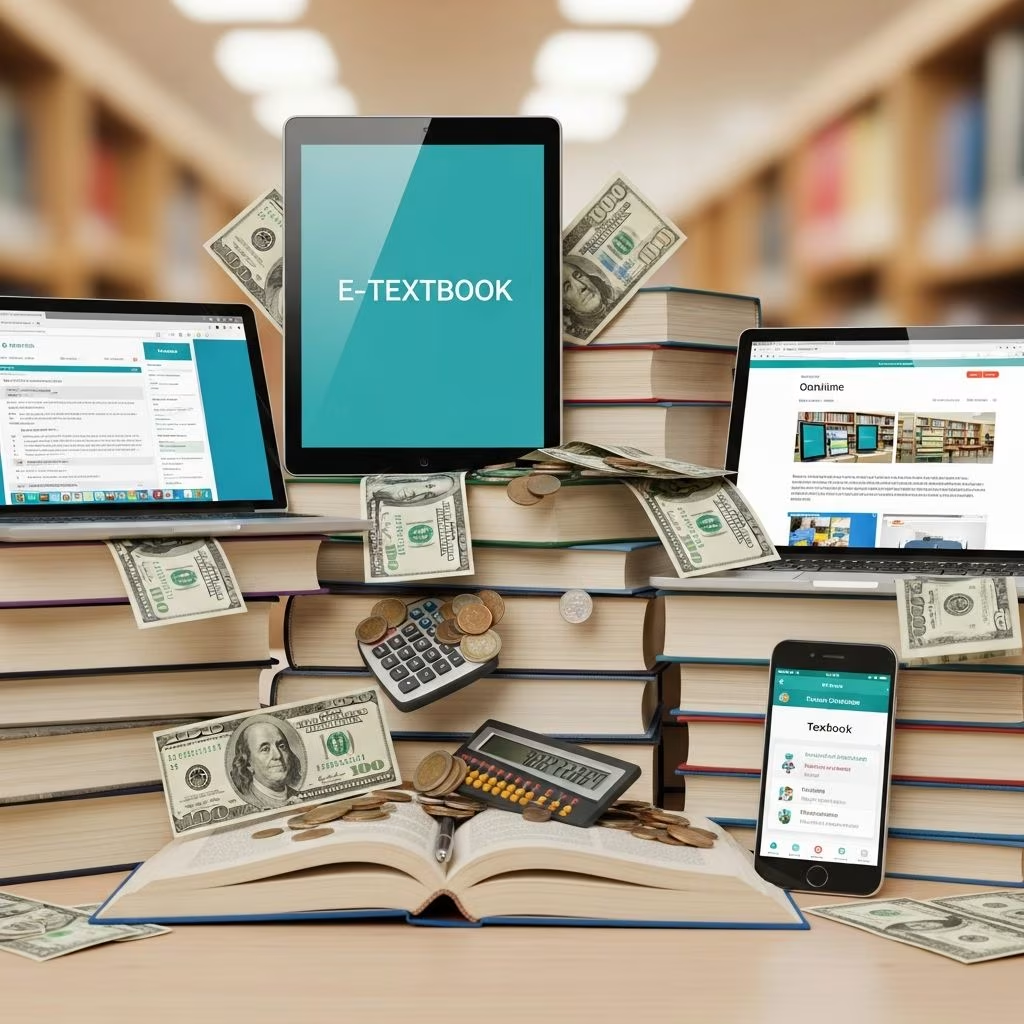
College textbooks can cost hundreds of dollars per semester, but you don’t have to pay full price. With smart strategies, students can save $20 to $100 or more per book by exploring alternatives to new retail purchases. This guide covers all the top methods, from renting and buying used to digital options and free resources, helping you keep more money in your pocket while acing your classes.
Why Textbooks Are So Expensive
New textbooks often retail for $100-$300 each due to high production costs, frequent edition updates, and publisher pricing strategies. A single semester’s books can exceed $1,000, straining student budgets. Fortunately, numerous alternatives exist that reduce costs by 20-80% without compromising access to required materials. U.S. Department of Education data shows the average student spends over $1,200 annually on books, but savvy shoppers cut this in half or more.
1. Rent Your Textbooks
Renting is one of the easiest ways to save significantly. Instead of buying, rent for the semester at 40-60% less than new prices. Platforms like Chegg, Amazon, and VitalSource offer rentals starting at $20 for books that cost $100+ new.
- Chegg: Rentals from $10, with free shipping both ways and buyout options.
- Amazon Textbook Rental: Up to 80% off, searchable by ISBN for exact matches.
- VitalSource: Digital rentals with highlighting and note-taking features.
Tip: Compare rental periods—opt for semester-long to avoid late fees. Return books promptly to maintain eligibility for future rentals. Savings example: A $150 biology text rents for $45, saving $105.
2. Buy Used Textbooks
Used books are returned from previous renters or sellers, marked down 25-75%. Check condition grades: “good” or “acceptable” often suffice for classes without heavy writing needs.
| Platform | Avg. Savings | Pros | Cons |
|---|---|---|---|
| Half.com / eBay | 50% | Wide selection, negotiable prices | Shipping varies |
| BookFinder.com | 60% | Compares 100+ sites | May take time to ship |
| Campus Bookstores | 25-40% | Immediate pickup | Limited stock |
Pro tip: Search by ISBN to ensure edition compatibility—professors often specify required editions. A $200 new psych book might cost $80 used, netting $120 savings.
3. Go Digital with eTextbooks
eBooks cost 50-70% less and are accessible on any device. No shipping waits, and features like search, zoom, and annotations enhance studying.
- Kindle / Nook: Many titles under $50.
- CourseSmart: Lowest digital prices, often $30 for $120 print.
- Publisher Sites: Direct access codes for $40-60.
Drawback: Can’t resell, but for one-semester use, savings outweigh this. Example: $250 calculus eText for $75 saves $175.
4. Share Textbooks with Classmates
Split costs by buying one book per study group. Rotate or photocopy key chapters legally under fair use. Apps like BookSwap facilitate matching.
- 3-person group: $100 book costs $33 each (67% savings).
- Use Google Docs for shared notes to minimize physical copies.
This builds community and accountability. Verify professor policies on shared use.
5. Check Your Library
University libraries stock textbooks, especially reserves. Borrow for free or low fees. Public libraries increasingly carry academic texts.
- Reserve desk: Short loans (2-4 hours) for in-library use.
- Interlibrary loan: Free from other campuses.
- Digital reserves: PDFs of chapters.
Many libraries report high demand—place holds early. Total savings: 100% if available.
6. Download Free or Open-Source Alternatives
Open Educational Resources (OER) provide free textbooks. Sites like OpenStax offer peer-reviewed alternatives identical to paid versions.
- OpenStax: Free for math, science, humanities (e.g., Biology 2e).
- Project Gutenberg: Classics and public domain.
- MIT OpenCourseWare: Lecture notes matching texts.
Confirm with professors—many accept OER. Savings: Full price avoided.
7. Buy International or Older Editions
International editions (paperback, black/white) cost 60-80% less but have identical content. Older editions differ minimally for non-technical courses.
- Amazon International: $30 vs. $150 US.
- eBay Older Editions: $20-50.
Risk: Page numbers may not match. Ask professor first.
8. Sell Back Immediately
After finals, sell books back. Campus buyback pays 25-50% of original, online sites up to 75%.
| Buyback Option | Payout % | Best For |
|---|---|---|
| Campus Store | 25-50% | Quick cash |
| Amazon Trade-In | 40-70% | Amazon gift cards |
| Decluttr | Up to 75% | Free shipping |
Net savings: Buy used $60, sell $30 = $30 effective cost.
9. Use Textbook Rental Comparison Sites
Aggregate sites scan multiple vendors for the best deal.
- BigWords.com: Compares rent/buy/new/used.
- CheapestTextbooks.com: Real-time pricing.
- ISBNdb: Price histories.
Spend 10 minutes comparing to save $50+ per book.
10. Professor Resources and Coursepacks
Many professors provide PDFs, syllabi-integrated readings, or custom coursepacks at $20-40. Email politely for digital copies or older editions.
Inquire day one: “Are there alternatives to the required text?” Often, yes.
Additional Tips for Maximum Savings
- Wait to Buy: Professors may change books or provide outlines.
- Group Buys: Campus Facebook groups for bulk deals.
- Coupon Codes: Sites like RetailMeNot for rental discounts.
- Avoid Bundles: Buy access codes separately if needed.
Combine methods: Rent used digital = deepest discounts.
Frequently Asked Questions (FAQs)
Q: Is it legal to buy international editions?
A: Yes, for personal use under first-sale doctrine, but don’t resell or distribute. Content is identical.
Q: What if the professor requires a specific edition?
A: Ask if prior editions suffice—differences are often minor. Many approve.
Q: Are eTextbooks refundable?
A: Most have 7-14 day windows; check policies before purchase.
Q: How do I avoid scams on used book sites?
A: Use PayPal buyer protection, check seller ratings, verify ISBN photos.
Q: Can I rent from multiple semesters?
A: Some platforms allow extensions; plan ahead for multi-term courses.
Implementing these strategies can save $500+ per year. Start with ISBN searches and comparisons for instant wins.
References
- College Textbook Affordability Report — U.S. Department of Education. 2023-09-15. https://www2.ed.gov/about/offices/list/ohe/pubs.html
- Open Educational Resources Guide — OpenStax (Rice University). 2025-01-10. https://openstax.org
- Student Consumer Information on Textbooks — Federal Student Aid (U.S. Dept. of Education). 2024-06-20. https://studentaid.gov/understand-aid/types/textbooks
- Textbook Rental Market Analysis — National Association of College Stores. 2024-11-05. https://www.nacs.org
- Guide to OER in Higher Education — UNESCO. 2023-03-12. https://www.unesco.org/en/open-educational-resources
This article is general information, not personal financial advice. Consider your own situation, or speak with a licensed adviser, before acting on it.


