

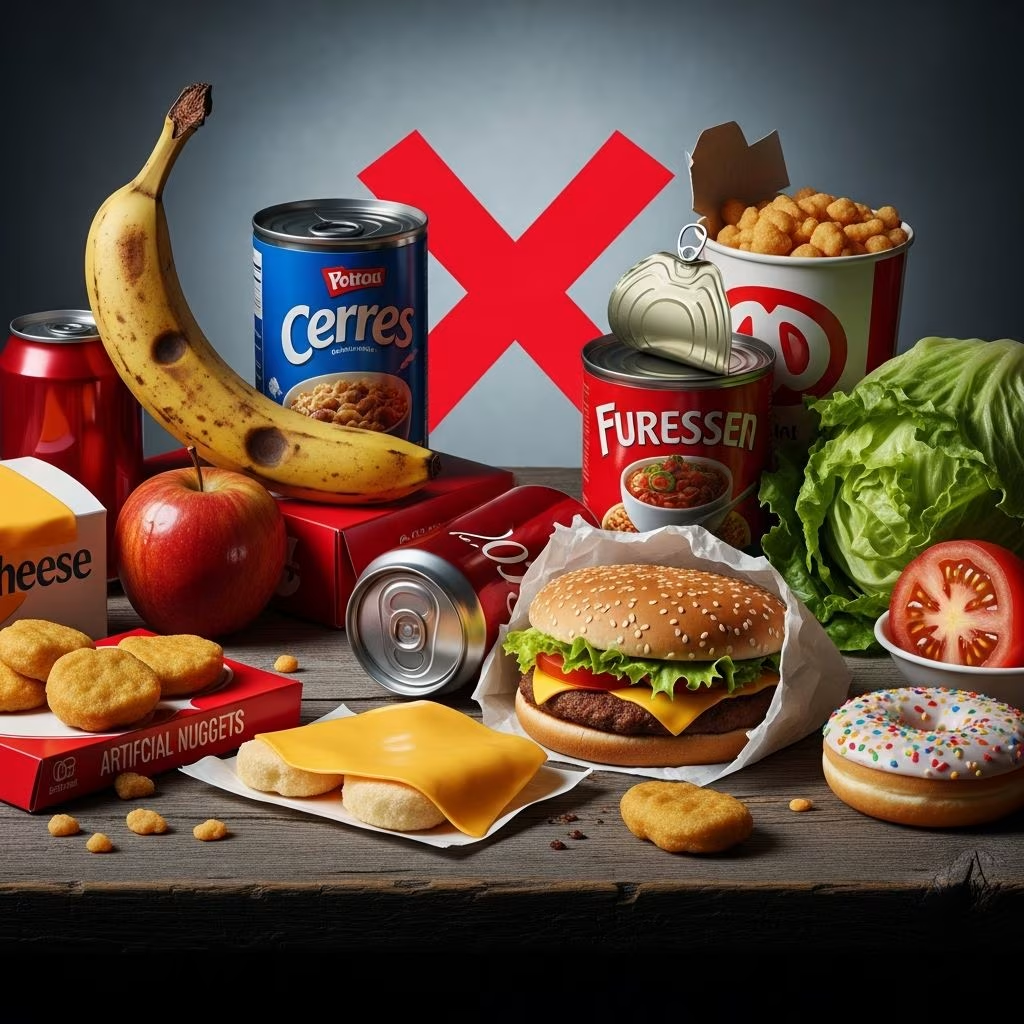
In today’s economy, every dollar counts, especially at the grocery store. Many everyday foods are ridiculously overpriced for what they offer—often loaded with preservatives, sugars, and minimal nutrition. The solution? Ditch them and make your own versions at home. This approach not only slashes your budget but also lets you control ingredients for healthier meals. Drawing from timeless frugal living principles, this guide covers 25 foods to ban from your shopping list forever, with easy recipes, cost comparisons, and tips to get started. You’ll save money, reduce waste, and eat better.
Why Stop Buying Processed Foods?
Pre-packaged convenience foods promise ease but deliver high costs and low value. According to the U.S. Department of Agriculture (USDA), Americans spend over $1,000 per person annually on processed snacks alone. Homemade alternatives use bulk staples like oats, flour, and spices, costing pennies per serving. Plus, you’ll avoid hidden sodium, sugars, and additives linked to health issues by the Centers for Disease Control and Prevention (CDC).
- Cost savings: Up to 80% less per item.
- Health boost: Fresher ingredients, no preservatives.
- Customization: Tailor flavors to your taste.
The 25 Foods to Avoid
Here’s the comprehensive list, grouped by category for easy reference. Each includes why to skip it, a simple DIY recipe, and savings estimate based on average U.S. prices.
Beverages
- Bottled Water
Tap water is free and safe in most areas, per EPA standards. Invest in a reusable filter bottle ($10 one-time). Savings: $500/year if you buy two bottles daily. - Soda
Loaded with sugar; make fizzy water with fruit slices and a soda maker. Recipe: Carbonate water, add lemon and stevia. Savings: $300/year.
Breakfast Staples
- Energy Bars
High fat/sugar bombs. DIY: Mix oats, nuts, honey, bake 20 mins. Cost: $0.30 vs. $2 each. Savings: $400/year. - Instant Oatmeal Packets
Overpriced plain oats. Add milk, fruit at home. Savings: $150/year. - Cereal
Sugary and pricy. Make granola: Oats, nuts, bake with maple. Savings: $250/year.
Baking Mixes
- Pancake Mix
Just flour, baking powder, salt. Recipe: 1 cup flour, 1 tbsp sugar, 1 tsp baking powder, mix with milk/egg. Savings: $100/year. - Brownie Mix
Cocoa, flour, sugar base. Homemade fudgy version beats box. Savings: $80/year. - Cookie Dough
Basic recipe: Butter, sugar, flour, chocolate chips. Freeze portions. Savings: $120/year.
Condiments & Sauces
- Salad Dressing
Oil, vinegar, herbs. Shake in jar. Savings: $200/year. - Ketchup
Tomatoes, vinegar, simmer. Cans for $1 yield gallons. Savings: $50/year. - Mayonnaise
Oil, egg, mustard blend. Savings: $90/year. - Bbq Sauce
Ketchup base + spices. Savings: $60/year.
Snacks
- Chips
Bake potato slices with oil/salt. Air fryer perfect. Savings: $180/year. - Crackers
Flour, water, salt dough baked crisp. Savings: $110/year. - Popcorn
Bulk kernels stovetop pop. $0.10/bag vs. $3 microwave. Savings: $150/year. - Granola Bars
Oats, nut butter, honey press. No-bake easy. Savings: $220/year.
Breads & Baked Goods
- Bread
No-knead recipe: Flour, yeast, salt, water rise overnight. Savings: $300/year. - Pita Bread
Dough rolled thin, baked hot. Pocket perfect. Savings: $100/year. - Tortillas
Flour, water, fat knead and cook. Savings: $140/year.
Sweet Treats
- Ice Cream
Blend frozen bananas, milk. Creamy soft-serve. Savings: $160/year. - Yogurt
Heat milk, add starter culture incubate. Savings: $240/year.
Other Conveniences
- Stock/Broth
Save veggie scraps, simmer. Free flavor bomb. Savings: $120/year. - Hummus
Chickpeas, tahini, garlic blend. Savings: $130/year. - Pesto
Basil, nuts, oil process. Freeze cubes. Savings: $90/year. - Applesauce
Cook apples, mash. No sugar needed. Savings: $70/year.
| Food Item | Store Cost/Serving | Homemade Cost/Serving | Annual Savings |
|---|---|---|---|
| Energy Bars | $2.00 | $0.30 | $1,400 |
| Bread | $0.50/loaf slice equiv. | $0.10 | $1,200 |
| Yogurt | $1.00 | $0.25 | $960 |
| Total Potential | – | – | $5,000+ |
How to Get Started: Practical Tips
Transitioning takes planning. Start small: Batch-cook breads and sauces weekly. Stock pantry basics: Flour ($0.50/lb), oats ($0.30/lb), spices. Use apps for bulk buys. Pro tip: Freeze portions to mimic convenience.
- Shop perimeter of store for fresh items.
- Buy in bulk from co-ops or warehouses.
- Compost scraps for garden savings.
Health and Environmental Benefits
Beyond savings, homemade means real food. Harvard studies link processed foods to obesity; fresh versions provide fiber, vitamins. Environmentally, less packaging cuts waste—EPA notes food packaging is 40% of U.S. landfill plastic.
Frequently Asked Questions (FAQs)
Q: Isn’t making everything from scratch time-consuming?
A: Many recipes take under 10 minutes active time, like no-knead bread or blender mayo. Batch prep saves hours weekly.
Q: What if I lack cooking skills?
A: Start with 5-minute recipes like popcorn or salad dressing. YouTube tutorials make it foolproof.
Q: Are homemade versions as good/tasty?
A: Better—you control flavors. Add herbs, spices for gourmet results without premium prices.
Q: How much can I really save?
A: Families report $50–100/week by swapping 10 items. Scale to your list.
Q: Safe for kids/picky eaters?
A: Yes, customize sweetness/texture. Kids love involvement in mixing.
Bonus: Meal Prep Calendar
Plan your week:
- Monday: Bake bread, make yogurt.
- Wednesday: Hummus, pesto batch.
- Weekend: Granola, cookies freeze.
Track savings in a notebook for motivation.
Embracing this list transforms shopping from expense to empowerment. Your wallet, health, and planet thank you.
References
- Household Food Waste in the United States, 2020 — United States Department of Agriculture (USDA). 2022-12-15. https://www.ers.usda.gov/amber-waves/2022/december/household-food-waste-in-the-united-states-2020
- Processed Foods and Health — Centers for Disease Control and Prevention (CDC). 2024-01-10. https://www.cdc.gov/nutrition/data-statistics/processed-foods.html
- National Spending on Food at Home and Away — Bureau of Labor Statistics (BLS). 2025-09-12. https://www.bls.gov/news.release/cesan.nr0.htm
- Advancing Sustainable Materials Management: Facts and Figures Report — U.S. Environmental Protection Agency (EPA). 2024-11-05. https://www.epa.gov/facts-and-figures-about-materials-waste-and-recycling/advancing-sustainable-materials-management-facts-and-figures-report
- Processed and ultra-processed foods: What are they, and why do they matter? — Harvard T.H. Chan School of Public Health. 2023-07-20. https://nutritionsource.hsph.harvard.edu/processed-ultra-processed-foods/
This article is general information, not personal financial advice. Consider your own situation, or speak with a licensed adviser, before acting on it.


