

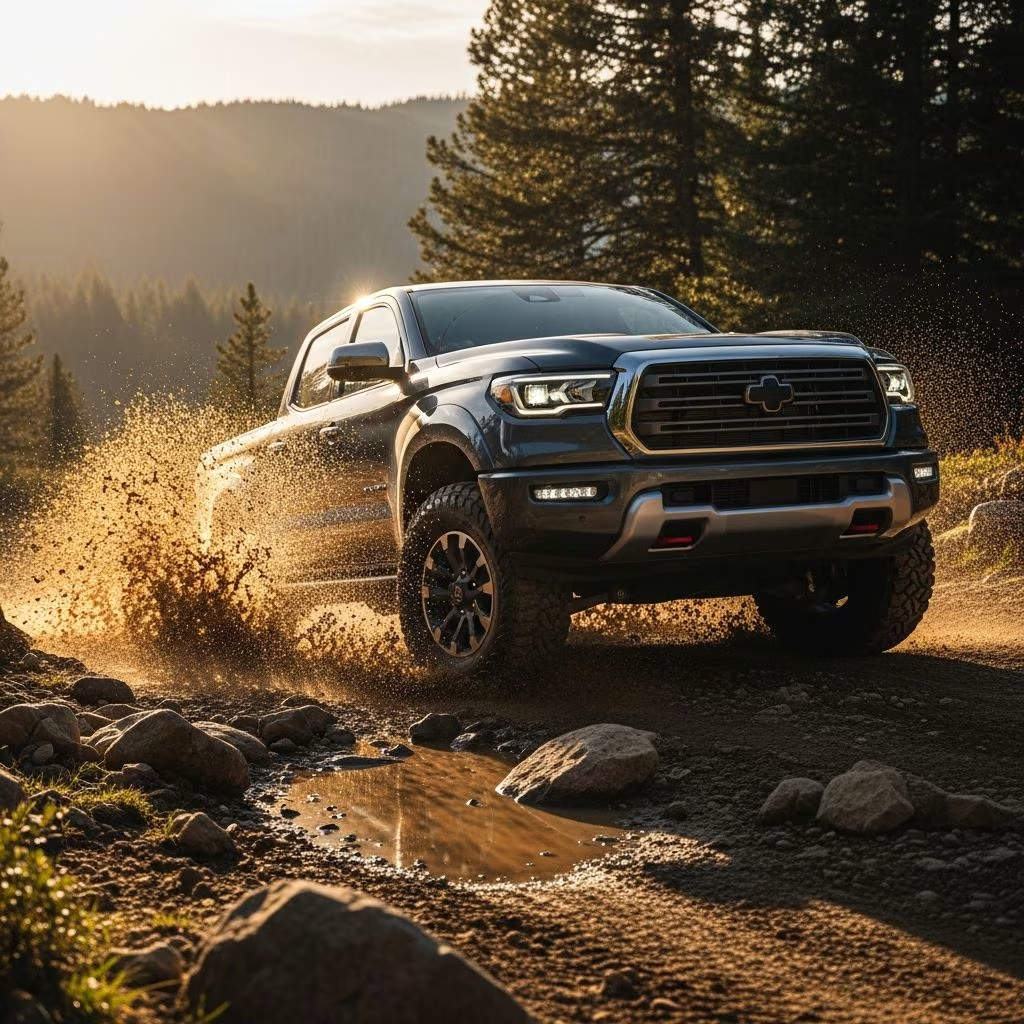
4×4 trucks represent the pinnacle of vehicular adaptability, delivering power to all four wheels for exceptional grip in demanding conditions. These robust machines excel in mud, snow, sand, and steep inclines, making them indispensable for outdoor enthusiasts, contractors, and residents in rugged regions.
The Engineering Behind Four-Wheel Drive Dominance
At the core of every 4×4 truck lies a sophisticated drivetrain that transforms engine power into all-terrain mastery. The engine sends rotational force through the transmission to a transfer case, which intelligently splits torque between front and rear axles. This ensures every wheel contributes to propulsion, preventing wheel spin on loose or uneven surfaces.
Unlike standard two-wheel-drive setups that rely solely on rear or front wheels, 4×4 systems activate on demand. Drivers can toggle between modes, balancing efficiency on highways with raw power off-road. This mechanical synergy provides stability where regular trucks falter, such as during heavy rain or rocky trails.
Unrivaled Traction: Conquering Challenging Terrains
The hallmark of 4×4 trucks is their superior traction, distributing power evenly to maintain momentum across slippery or irregular landscapes. In snowy backroads or muddy paths, all four wheels grip simultaneously, reducing the risk of getting stuck and enhancing overall control.
- Snow and Ice Mastery: Power to all wheels prevents fishtailing, ideal for winter commutes or mountain escapes.
- Mud and Sand Navigation: Even torque application pulls vehicles free from deep ruts or soft dunes.
- Rocky Inclines: Balanced distribution climbs sheer faces without slippage.
This capability shines in real-world scenarios, like towing heavy loads uphill or exploring remote trails, where precision handling builds driver confidence.
Versatile Modes for Every Driving Scenario
Modern 4×4 trucks offer selectable modes tailored to conditions, optimizing performance without constant full engagement. Understanding these—2H, 4H, 4L, and AUTO—maximizes utility and efficiency.
| Mode | Best Use | Key Benefit | Fuel Impact |
|---|---|---|---|
| 2H (2-High) | Dry pavement, highways | Fuel savings, smooth ride | Lowest consumption |
| 4H (4-High) | Slippery roads, light off-road | Enhanced traction at speed | Moderate increase |
| 4L (4-Low) | Steep terrain, deep mud/snow | Low-speed torque multiplication | Highest usage |
| AUTO | Variable conditions | Automatic engagement | Efficient on-demand |
In 2H, only rear wheels drive for everyday efficiency. Shift to 4H for rain-slicked freeways, where front axle engagement matches rear speed for stability. 4L gears down for crawling over obstacles, multiplying torque at low RPMs. AUTO mode senses slip and activates 4WD seamlessly, perfect for unpredictable weather.
Off-Road Prowess: Built for Adventure
4×4 trucks dominate off-road pursuits with high ground clearance, durable frames, and reinforced suspensions. Models like heavy-duty pickups navigate Florida’s beaches, forested trails, or desert expanses effortlessly, opening worlds of exploration.
Key off-road features include locking differentials for equal wheel speeds and skid plates protecting undercarriages. These trucks haul gear for camping or tow boats to coastal spots, blending recreation with reliability. Their design withstands abuse, from boulder hopping to river crossings, far beyond standard vehicles.
Boosted Towing and Hauling Capabilities
Beyond terrain conquest, 4×4 systems amplify towing and payload strength. All-wheel power stabilizes loads during acceleration, braking, and turns, supporting heavier trailers without sway. Heavy-duty variants boast capacities exceeding standard trucks, vital for construction sites or RV outings.
- Higher gross vehicle weight ratings for trailers up to thousands of pounds.
- Improved stability on highways with campers or equipment.
- Enhanced braking control under load in varied conditions.
Resale Strength and Long-Term Value
Investing in a 4×4 truck often yields superior resale value, especially in demand-heavy markets. Their multi-purpose appeal—workhorse by day, adventurer by weekend—retains buyer interest. Robust construction and versatile drivetrains depreciate slower than two-wheel-drive counterparts.
Navigating the Drawbacks: Fuel and Maintenance Realities
While powerful, 4×4 trucks demand trade-offs. Heavier components and constant power distribution guzzle more fuel, particularly in 4WD modes. Expect 20-30% lower MPG versus 2WD, straining budgets for high-mileage drivers.
Maintenance escalates too: transfer cases, front differentials, and axles require frequent checks. Drivetrain strain accelerates wear if misused on pavement. Braking distances extend due to added mass, demanding vigilant habits.
Pros and Cons at a Glance
| Pros | Cons |
|---|---|
| Superior traction in all conditions | Reduced fuel efficiency |
| Off-road and towing excellence | Higher maintenance costs |
| Mode versatility | Increased weight affects handling |
| Strong resale value | Potential for driver overconfidence |
Smart Strategies to Maximize 4×4 Efficiency
Counter drawbacks with informed practices. Reserve 4WD for necessity—stick to 2H on dry roads to preserve fuel and components. Invest in all-terrain tires for balanced grip without excess drag. Regular servicing of fluids and seals prevents costly failures.
- Monitor tire pressure for optimal contact patches.
- Avoid prolonged 4WD on dry pavement to prevent binding.
- Use winter tires in snow for compounded traction.
For urban dwellers, part-time systems offer flexibility; full-time setups suit constant mixed use but at efficiency cost.
4×4 vs. AWD: Choosing Your Power Profile
4×4 trucks differ from all-wheel-drive (AWD) vehicles. AWD seamlessly manages paved slips and light off-road, prioritizing comfort. 4×4 demands manual or low-speed activation, excelling in extreme ruggedness via transfer cases that lock axles equally.
Opt for 4×4 if off-roading or towing dominates; AWD fits snowy suburbs better. Trucks lean 4×4 for payload muscle.
Frequently Asked Questions
What is the main advantage of a 4×4 truck?
Exceptional traction across all wheels for off-road and adverse weather dominance.
Can I use 4WD on dry roads?
Avoid it—part-time systems bind, causing damage and wear. Use 2H instead.
Does 4×4 improve towing?
Yes, with better stability and higher capacities for heavy loads.
How does 4L differ from 4H?
4L multiplies torque at low speeds for technical terrain; 4H handles faster slippery conditions.
Are 4×4 trucks less fuel-efficient?
Typically yes, due to extra drivetrain demands—plan for higher costs.
4×4 trucks empower drivers with unmatched versatility, but wise selection and use unlock their full potential. Weigh lifestyle needs against costs for the ideal match.
References
- The Pros and Cons of Owning a 4×4 Vehicle: A Comprehensive Guide — CSA Repair. 2023. https://csarepair.com/cs-automotive-blog/what-to-consider-when-owning-a-4×4-vehicle
- What’s the Difference Between a 4×4 and Regular Trucks — Tom Gibbs Chevrolet. 2023. https://www.tomgibbschevy.com/whats-the-difference-between-a-4×4-and-regular-trucks.htm
- What Are 2H, 4H, and 4L on 4×4? — AutoZone. 2024. https://www.autozone.com/diy/transmission/what-are-2h-4h-and-4l-on-4×4
- AWD vs. 4WD: Which to Choose? — CarMax. 2024. https://www.carmax.com/articles/awd-vs-4wd-which-to-choose
- Understanding 4-Wheel Drive Systems — How To Use 4WD — Popular Mechanics. 2024-10-01. https://www.popularmechanics.com/cars/a63935736/how-to-use-4wd-awd/
This article is general information, not personal financial advice. Consider your own situation, or speak with a licensed adviser, before acting on it.


