

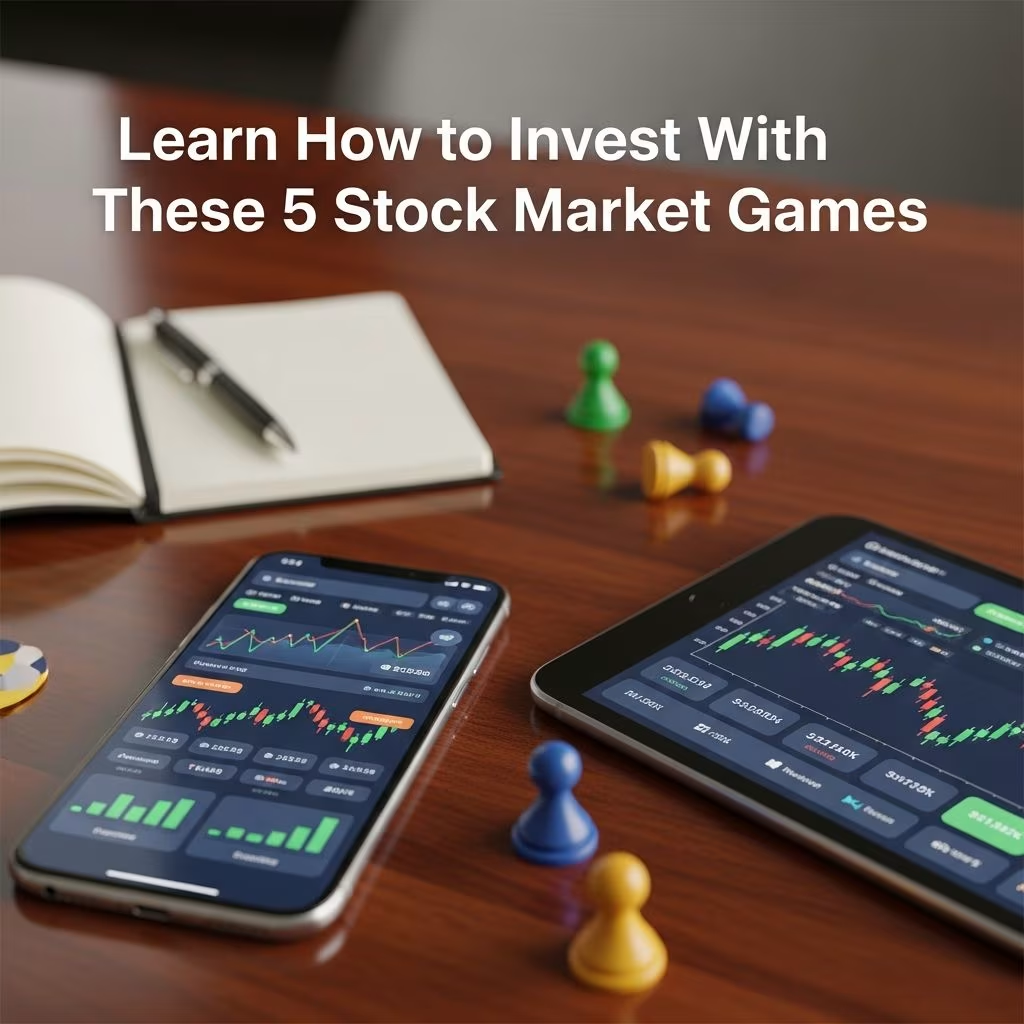
Have you ever dreamed of diving into stock market investing but hesitated due to the fear of losing real money? Stock market simulators and games offer the perfect solution, allowing you to practice trading strategies with virtual funds while experiencing real-time market fluctuations. These platforms preload your account with pretend money—typically $100,000 or more—and mirror actual market conditions, helping beginners and seasoned investors alike sharpen their skills risk-free.
Whether you’re a complete novice curious about stocks or an experienced trader testing advanced options strategies, these tools demystify investing. They teach essential concepts like portfolio management, market analysis, and trade execution without financial peril. Major brokerages and financial education sites provide these free simulators, making them accessible to anyone with an internet connection. By competing in virtual leagues or tracking personal performance, users gain confidence before committing real capital. (See also: The Best Ways to Invest $50, $500, or $5000).
Why Use Stock Market Simulators?
Stock market games serve multiple purposes beyond entertainment. They provide hands-on experience in a controlled environment, replicating the volatility and opportunities of live markets. Users learn to interpret charts, assess company fundamentals, and time trades effectively. For educators and parents, these tools are invaluable for teaching financial literacy to students and young adults.
- Real-Time Data: Trades reflect genuine stock prices, bonds, options, and futures movements.
- Educational Resources: Many include tutorials, articles, videos, and quizzes to build foundational knowledge.
- Strategy Testing: Experiment with day trading, long-term investing, or options without losses.
- Community Features: Join leagues, leaderboards, and forums to compete and learn from peers.
- No Risk: Perfect for beginners avoiding the steep learning curve of real brokerage accounts.
Research from organizations like the SIFMA Foundation shows that programs like The Stock Market Game boost student engagement, academic performance, and long-term financial behaviors, proving their efficacy across age groups.
1. TD Bank’s Fantasy Stock Market Game
Designed primarily for kids and young adults, TD Bank’s Fantasy Stock Market game is an excellent entry point for all beginner investors. Upon signing up, players receive a $100,000 virtual portfolio to trade on major U.S. stock exchanges like NYSE and NASDAQ. The intuitive interface simplifies complex concepts, making it ideal for those new to investing.
Key features include real-time quotes, customizable watchlists, and educational content on market basics. Users can buy and sell stocks, track performance against benchmarks like the S&P 500, and even participate in themed contests. It’s free, requires no software download, and emphasizes long-term investing principles over speculative trading. This simulator has helped countless young users understand diversification and the impact of economic news on portfolios.
| Feature | Details |
|---|---|
| Starting Capital | $100,000 virtual |
| Markets | U.S. stocks (NYSE, NASDAQ) |
| Best For | Kids, teens, absolute beginners |
| Access | Web-based, free signup |
2. optionsXpress by Charles Schwab
For investors with some market knowledge seeking to test sophisticated strategies, optionsXpress (now integrated into Charles Schwab’s thinkorswim platform) stands out. It offers $25,000 in virtual cash and supports trading stocks, options, and futures with advanced order types like limit, stop-loss, and spreads.
The platform boasts over 40 analytical tools, including charting software, technical indicators (e.g., moving averages, RSI), and options chains for strategy simulation like covered calls or iron condors. This is perfect for honing skills before live trading, as it mirrors professional-grade tools. Charles Schwab’s backing ensures reliability, with seamless transitions to real accounts upon readiness.
- Advanced order placement and multi-leg options strategies.
- Real-time streaming data and customizable dashboards.
- Paper trading mode fully integrated with live market feeds.
Users report significant improvements in risk management after practicing here, making it a staple for intermediate traders.
3. ScottradeELITE Virtual Trading Platform
Similar to optionsXpress, ScottradeELITE (now part of TD Ameritrade’s thinkorswim) provides a robust environment for mock trades, research tools, and strategy backtesting. It requires a simple software download but delivers powerful features like Level II quotes, time-and-sales data, and algorithmic trading simulations.
With access to extensive research libraries, earnings calendars, and economic indicators, users can analyze global events’ impacts on assets. It’s geared toward those refining techniques in equities, ETFs, and derivatives. The platform’s depth helps bridge the gap between simulation and real-world execution.
| Platform | Starting Cash | Key Tools |
|---|---|---|
| optionsXpress | $25,000 | 40+ analysis tools, options/futures |
| ScottradeELITE | Virtual portfolio | Research, Level II data, backtesting |
4. Wall Street Survivor
Endorsed by Forbes, Wall Street Survivor offers an interactive platform teaching fundamentals of stocks, bonds, mutual funds, futures, currencies, and options. New users get access to virtual leagues, online courses, videos, and article archives covering everything from value investing to technical analysis.
The gamified approach includes challenges and competitions, fostering community learning. It’s comprehensive for personal finance education, with modules on portfolio construction and behavioral finance pitfalls like panic selling. Track performance in real time and compare against pros.
5. Investopedia Stock Simulator
Investopedia’s simulator is among the most feature-rich for starters, paired with free education via Investopedia University. Begin with $100,000 virtual capital and explore stocks, ETFs, and more. Thousands of articles and guides span Investing 101 to advanced strategies like momentum trading.
Features leaderboards, custom contests, and mobile access. It’s ad-supported but packed with unbiased content from industry experts. Ideal for self-paced learning.
Frequently Asked Questions (FAQs)
Q: Are stock market simulators free?
A: Yes, all listed simulators like TD Bank, Investopedia, and Wall Street Survivor are free, with virtual money and real market data.
Q: Can I transition from simulators to real trading?
A: Absolutely. Platforms like Charles Schwab allow seamless upgrades to live accounts with real funds.
Q: Who are these games best for?
A: Beginners, students, and strategy testers. Kids via TD Bank; advanced users via optionsXpress.
Q: Do simulators use real market data?
A: Yes, trades reflect live prices for authentic experience.
Q: How do I pick the right simulator?
A: Beginners choose TD or Investopedia; advanced pick optionsXpress or ScottradeELITE.
Additional Tips for Getting Started
Start small by focusing on 5-10 stocks in familiar sectors. Track your trades in a journal, noting rationale and outcomes. Combine simulators with free resources like SEC investor.gov for regulatory insights or Khan Academy for basics. Diversify your virtual portfolio to learn risk mitigation—aim for 60% stocks, 30% bonds, 10% cash equivalents.
Join communities on platforms like Reddit’s r/investing (with caution) or official forums for tips. Regularly review performance metrics like Sharpe ratio or alpha to quantify success. Remember, simulators don’t capture emotional trading psychology fully, so paper trade long-term before going live.
For educators, integrate with programs like SIFMA’s Stock Market Game, proven to enhance financial literacy in classrooms.
References
- Learn How to Invest With These 5 Stock Market Games — Wise Bread. 2010 (approx., evergreen content). https://www.wisebread.com/learn-how-to-invest-with-these-5-stock-market-games
- The Stock Market Game — SIFMA Foundation. 2026 (ongoing program). https://www.stockmarketgame.org
- The Best Ways to Invest $50, $500, or $5000 — Wise Bread. 2010 (approx.). https://www.wisebread.com/the-best-ways-to-invest-50-500-or-5000
This article is general information, not personal financial advice. Consider your own situation, or speak with a licensed adviser, before acting on it.


