

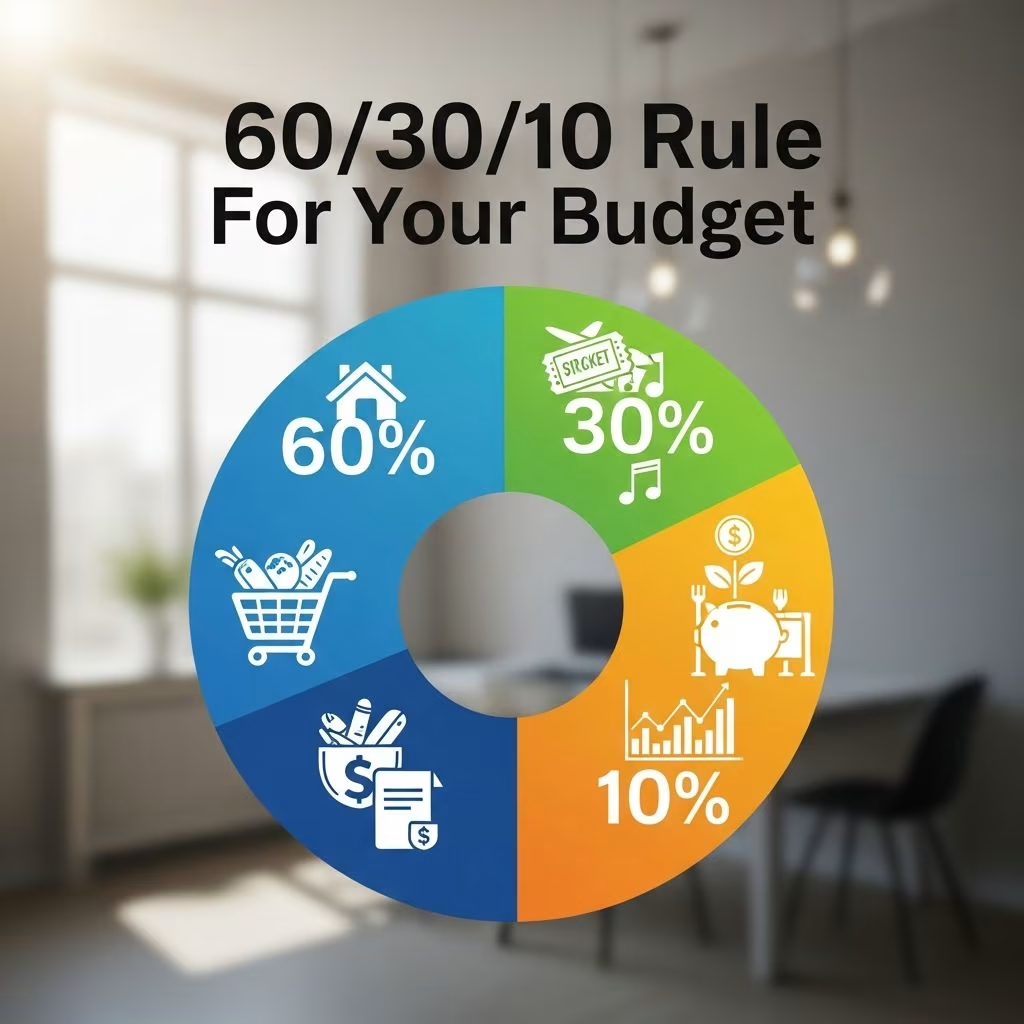
The 60/30/10 rule budget is a simple, percentage-based method for managing your money that divides your after-tax income into three core buckets: essentials, wants, and savings or debt payoff. It is designed to help you cover necessary bills while still enjoying life and building financial security.
This guide explains how the 60/30/10 rule works, how it compares to other budgeting methods, who it works best for, and how to put it into practice step-by-step, with examples and FAQs.
What Is the 60/30/10 Rule Budget?
The 60/30/10 rule is a percentage-based budgeting method that organizes your after-tax income into three categories.
- 60% for essentials (needs): Housing, utilities, groceries, basic transportation, insurance, and other must-pay bills.
- 30% for wants: Dining out, entertainment, hobbies, travel, shopping, and other non-essential spending.
- 10% for savings and extra debt payments: Emergency fund, retirement contributions beyond any automatic payroll deductions, investments, or debt repayment above the minimums.
This structure allows more room for essential expenses than the traditional 50/30/20 rule, which can be useful in higher-cost areas where housing and basic bills take up a larger share of income.
How the 60/30/10 Rule Works in Practice
To use the 60/30/10 rule, you first determine your monthly after-tax income, then multiply it by each percentage to find your target spending amounts for each category.
For example, if your monthly take-home pay is $4,000:
| Category | Percentage | Monthly Amount (on $4,000) | Typical Expenses |
|---|---|---|---|
| Essentials | 60% | $2,400 | Rent, utilities, groceries, insurance, gas or transit |
| Wants | 30% | $1,200 | Restaurants, streaming, shopping, trips, hobbies |
| Savings & Extra Debt | 10% | $400 | Emergency fund, retirement, investments, extra loan payments |
As long as your total spending in each category stays within its limit, you are following the 60/30/10 rule.
Breaking Down the 60/30/10 Categories
60% for Essentials
The largest portion of the 60/30/10 budget goes toward essential expenses—the costs you must pay to maintain a basic standard of living.
Common examples include:
- Rent or mortgage payments
- Electricity, water, heating, and other utilities
- Groceries and basic household supplies
- Transportation (gas, public transit, car insurance, required repairs)
- Health insurance premiums and essential medical costs
- Minimum debt payments on credit cards, student loans, or auto loans
One reason the 60/30/10 rule has gained popularity is that many households struggle to keep essentials within 50% of income, especially with rising housing costs. Allocating 60% recognizes this reality while still preserving room for wants and savings.
30% for Wants
The next bucket—30% of your income—is devoted to wants, or non-essential spending.
Common “wants” include:
- Dining out, coffee shops, and takeout
- Streaming services and entertainment subscriptions
- Vacations and weekend getaways
- New clothes, gadgets, and home decor
- Hobbies, sports, and classes you choose to pay for
This category gives the 60/30/10 budget flexibility and enjoyment. As long as your essentials and savings targets are met, you can use this portion guilt-free for lifestyle upgrades and fun.
10% for Savings and Extra Debt Repayment
The final 10% goes to building your financial future through savings and additional debt repayment beyond the minimums.
Typical uses include:
- Starting or growing an emergency fund
- Boosting retirement savings (401(k), IRA, or similar accounts)
- Investing for medium- or long-term goals
- Making extra payments on high-interest debt to reduce interest costs over time
Financial experts often recommend prioritizing an emergency fund of 3–6 months of essential expenses before aggressively investing, to protect against job loss or unexpected bills. Once that cushion is in place, additional contributions can be directed to retirement and other goals.
60/30/10 vs. Other Popular Budget Rules
The 60/30/10 rule is one of several widely used percentage-based budgets. The most commonly compared method is the 50/30/20 rule.
| Rule | Essentials | Wants | Savings & Extra Debt |
|---|---|---|---|
| 60/30/10 | 60% | 30% | 10% |
| 50/30/20 | 50% | 30% | 20% |
Under the 50/30/20 rule, 20% of income goes toward savings and debt payoff, which can help you build wealth faster if your essential costs are manageable. However, for people whose housing and basic expenses already exceed 50% of take-home pay, the 60/30/10 framework may feel more realistic.
Key differences:
- 60/30/10: More room for essentials; slower savings growth.
- 50/30/20: Stronger savings focus; may be harder to follow with high living costs.
Some people start with 60/30/10 to get control of their budget, then transition toward 50/30/20 as income grows or expenses shrink.
Is the 60/30/10 Rule Right for You?
The 60/30/10 budget can be a helpful framework, but it is not perfect for everyone. Its suitability depends on your income, cost of living, and financial goals.
Who Might Benefit Most
- People in high-cost-of-living areas whose essentials naturally consume more than half of their income.
- Those new to budgeting who want a simple rule of thumb without tracking every expense category in detail.
- Earners with relatively stable income who can reasonably commit 10% to savings and extra debt payments each month.
- Individuals prioritizing lifestyle balance and wanting a clear, guilt-free amount for discretionary spending.
Who May Need a Different Approach
- People with very low income who may need more than 60% for basic expenses, leaving little or nothing for savings.
- Those with large, high-interest debts who might need to devote more than 10% to aggressively paying balances down.
- High earners with ambitious goals (retiring early, buying property quickly) who may want to save 20–30% or more.
Budget rules are guidelines, not strict requirements. You can adjust the percentages to reflect your real situation while still using the same three-bucket framework.
How to Start Using the 60/30/10 Budget
Implementing the 60/30/10 rule works best when you follow a clear, step-by-step process.
Step 1: Calculate Your After-Tax Income
Use your pay stubs or bank deposits to find your net (take-home) income each month. This is the amount you actually receive after taxes and mandatory deductions.
- If you are paid a salary: Multiply your net paycheck by the number of pay periods in a month.
- If your income is variable: Use a conservative average based on the last 3–6 months.
Step 2: Set Your 60/30/10 Targets
Once you know your monthly take-home pay, multiply it by 0.60, 0.30, and 0.10 to find your target numbers.
Example for $3,500 monthly net income:
- Essentials (60%): 3,500 × 0.60 = $2,100
- Wants (30%): 3,500 × 0.30 = $1,050
- Savings & extra debt (10%): 3,500 × 0.10 = $350
Step 3: List and Categorize Your Expenses
Review your last 1–3 months of bank and card statements. For each expense, decide whether it is a need, a want, or a saving/debt payment.
- Assign rent, utilities, groceries, and minimum loan payments to essentials.
- Put dining out, entertainment, and non-essential shopping under wants.
- Label contributions to savings or investments and any extra debt payments as savings/extra debt.
Step 4: Compare Current Spending to Your Targets
Add up your spending in each category and compare it to your 60/30/10 amounts.
- If essentials exceed 60%, look for ways to lower fixed costs over time, such as negotiating bills, moving to a cheaper place, or refinancing expensive debts.
- If wants exceed 30%, identify discretionary items you can reduce—such as fewer restaurant meals or pausing some subscriptions.
- If savings are under 10%, consider gradually increasing your contributions until you reach the target.
Step 5: Automate Your Plan
Automation helps you stick to the 60/30/10 rule with less day-to-day decision-making.
- Set up automatic transfers to savings or investment accounts shortly after payday, aiming for your 10% goal.
- Consider a separate account or card for wants, transferring only the monthly 30% amount into it.
- Keep essential bills on auto-pay where possible to avoid late fees and protect your credit.
Example 60/30/10 Budget
Here is a sample monthly breakdown for someone earning $4,200 after tax.
| Category | Target (60/30/10) | Example Line Items |
|---|---|---|
| Essentials (60% = $2,520) |
| Core expenses needed to keep a basic standard of living. |
| Wants (30% = $1,260) |
| Flexible lifestyle and leisure spending. |
| Savings & Extra Debt (10% = $420) |
| Building long-term security and reducing future interest costs. |
Pros and Cons of the 60/30/10 Budget
Advantages
- Simple and easy to remember: Only three main percentages to track, which can make budgeting less overwhelming.
- Realistic for higher living costs: Allocating 60% to essentials can be more achievable in expensive housing markets.
- Built-in fun money: A clear 30% for wants helps you enjoy your income while still being intentional.
- Encourages at least some saving: Even a 10% contribution, when consistent, can meaningfully grow over time.
Drawbacks
- Slower progress toward big goals: Saving only 10% per month may delay milestones like early retirement or fast debt payoff compared with more aggressive plans.
- May still be tight for some households: If essentials already exceed 60%, you might need to customize the percentages.
- Not tailored to complex finances: People with businesses, multiple properties, or irregular income may need more detailed systems.
Tips to Make the 60/30/10 Rule Work Better
- Adjust gradually: If your current spending is far from the 60/30/10 targets, shift 1–2 percentage points at a time each month rather than all at once.
- Revisit your numbers regularly: Review your budget every few months or after big life changes like moving, changing jobs, or starting a family.
- Increase the savings share when possible: As debts are paid off or income rises, consider moving from 60/30/10 toward 55/25/20 or 50/30/20 to accelerate your goals.
- Protect essentials first: Always make sure rent, utilities, food, and minimum payments are covered before allocating money to wants.
Frequently Asked Questions (FAQs)
Q: Is the 60/30/10 rule better than the 50/30/20 rule?
A: Neither rule is universally better. The 50/30/20 rule prioritizes saving 20% of income, which can build wealth faster, but it assumes essentials can be kept to 50%. The 60/30/10 rule may be more realistic if your necessary expenses are higher, though it slows long-term savings.
Q: Should I use gross or net income for the 60/30/10 rule?
A: Most experts recommend using after-tax (net) income, because that represents the money you can actually allocate to spending and saving each month.
Q: What if my essentials are more than 60% of my income?
A: If essentials exceed 60%, first confirm they are truly needs and not wants. Then, explore ways to reduce costs over time and consider temporarily adjusting your rule—for example, 70/20/10 or 65/25/10—until your situation improves. The percentages are a guide, not strict rules.
Q: Can I use the 60/30/10 rule if my income is irregular?
A: Yes, but it helps to base your percentages on a conservative average income and build a larger cash buffer. In higher-income months, you can direct more to savings and debt; in lean months, focus on covering essentials first.
Q: How does the 60/30/10 rule help with debt?
A: Minimum debt payments fall under essentials, while the 10% savings/debt bucket can be used to make extra payments on high-interest balances. Consistently paying more than the minimum reduces total interest and speeds up payoff.
References
- What is a 60/30/10 budget? — PayPal US Money Hub. 2024-02-01. https://www.paypal.com/us/money-hub/article/what-is-60-30-10-budgeting
- The New 60/30/10 Budgeting Method — Kiplinger. 2024-06-26. https://www.kiplinger.com/personal-finance/the-new-603010-budgeting-method
- Emergency Funds: How Much Is Enough? — Consumer Financial Protection Bureau. 2022-09-15. https://www.consumerfinance.gov/consumer-tools/educator-tools/resources-for-older-adults/what-is-an-emergency-fund-and-how-much-should-i-have/
- What is the 60/30/10 Budget? A Beginner’s Guide — NerdWallet. 2024-05-10. https://www.nerdwallet.com/finance/learn/60-30-10-budget
- Why a 60/30/10 Budget Could Be the New 50/30/20 — TIME. 2024-08-07. https://time.com/6916834/how-to-budget-60-30-10/
- The 50-30-20 Budget Rule Explained — Empower. 2023-11-03. https://www.empower.com/the-currency/life/50-30-20-budget-rule-explained-news
This article is general information, not personal financial advice. Consider your own situation, or speak with a licensed adviser, before acting on it.


