

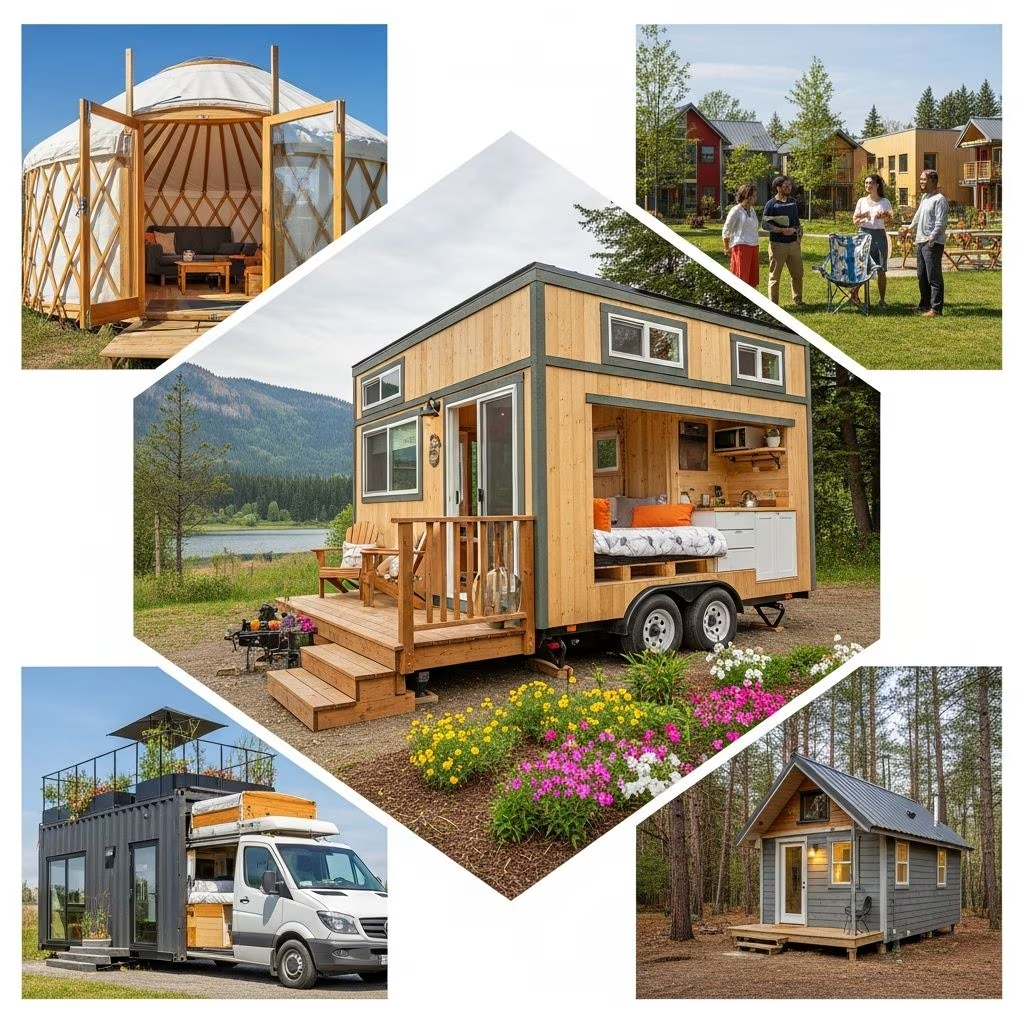
In today’s housing market, skyrocketing rents and median home prices exceeding $350,000 leave many feeling squeezed out. Traditional homes and apartments often come with hefty mortgages, high utilities, and ongoing maintenance costs that strain budgets. But alternative housing options provide viable paths to affordability without sacrificing comfort or lifestyle. These creative solutions—from mobile RVs to durable shipping container homes—can reduce upfront costs, monthly expenses, and property taxes by 50-70%. Ongoing savings stem from lower utility bills, minimal maintenance, and flexible living arrangements. Whether you’re drawn to minimalist tiny homes, nomadic RV life, or communal coliving, these options offer freedom from decades-long debt. We’ll dive into each, covering costs, pros, cons, and key considerations like zoning laws.
1. Tiny Homes: Compact and Cost-Effective Living
Tiny homes represent the ultimate in downsizing, typically ranging from 100 to 400 square feet. These compact dwellings maximize space efficiency with clever designs like lofts for sleeping, fold-out furniture, and multi-functional kitchens. Upfront costs start as low as $20,000 for DIY builds or basic models, climbing to $60,000-$100,000 for professionally built units with modern amenities. Unlike full-sized homes, tiny homes avoid massive mortgages, enabling cash purchases or short-term financing.
Placement is key: park on owned land, rent a spot in a tiny home community (fees $300-$800/month), or go mobile on wheels. Utilities plummet—think solar panels for off-grid power and composting toilets slashing water bills. Maintenance is minimal due to smaller footprints and durable materials. Ideal for singles, couples, or retirees seeking simplicity, tiny homes foster mindful living by curbing impulse buys and excess clutter.
- Pros: Low cost, energy-efficient, portable options, eco-friendly.
- Cons: Limited space, zoning restrictions in many areas, resale challenges.
Check local building codes; some municipalities classify tiny homes as RVs or accessory dwelling units (ADUs), easing permits.
2. Houseboats: Waterfront Living on a Budget
Houseboats combine adventure with affordability, floating homes docked at marinas or moored on calm waters. Costs range from $30,000 for used vessels to $150,000+ for custom builds, far below lakeside property prices. Monthly slip fees ($400-$1,000) replace rent or mortgages, with fuel costs only if cruising. Enjoy stunning views, gentle rocking motion, and community vibes at marinas.
Utilities include marine-grade systems: propane for cooking, solar for electricity, and pump-out services for waste. They’re resilient against floods and offer mobility to chase better weather or deals. Perfect for water lovers, remote workers, or those tired of landlocked routines. Drawbacks include weather dependency, maintenance like hull cleaning, and navigation rules.
- Pros: Unique lifestyle, lower property taxes, potential for income via rentals.
- Cons: Marina availability, seasonal livability, higher insurance.
Verify Coast Guard regulations and local mooring laws before investing.
3. RV Living: Mobility Meets Affordability
RVs epitomize freedom, serving as tiny houses on wheels for under $20,000 (used) to $100,000+ (luxury). Park at campgrounds ($500-$1,200/month) or on private land; no mortgage means chasing jobs or sunsets. Gas expenses rise with travel, but stationary living cuts them. Remote workers thrive here, working from Wi-Fi hotspots while exploring national parks.
Modern RVs boast full kitchens, bathrooms, and slide-outs for space. Solar upgrades enable boondocking (free public lands), minimizing fees. Savings extend to low utilities and taxes classified as vehicles in many states. Challenges: storage for ‘stuff,’ winterizing, and community integration.
- Pros: Ultimate mobility, no property taxes on vehicle-titled units, adventure-ready.
- Cons: Fuel costs, space constraints, campground competition.
Full-timers report 50%+ housing savings, proving viability long-term.
4. Shipping Container Homes: Durable and Budget-Friendly
Repurposed shipping containers form sturdy, stackable homes costing $20,000-$50,000, customizable for off-grid appeal. Requires land (owned or leased); builds finish in weeks versus months for stick-built houses. Steel construction withstands elements, with insulation, windows, and plumbing added.
Appeal lies in industrial chic aesthetics, quick assembly, and scalability—stack for multi-levels. Low maintenance and energy efficiency shine, especially with passive solar designs. Verify zoning; some areas ban or require engineering stamps.
- Pros: Fast build, hurricane-resistant, eco-recycled materials.
- Cons: Land needed, modification costs, urban zoning hurdles.
Great for rural plots or creative urban infill.
5. Van Life: The Ultimate Minimalist Adventure
Though not explicitly numbered in originals, van conversions extend RV ethos affordably. Sprinter or cargo vans convert for $10,000-$50,000, stealth camping in cities or free BLM lands. (Inferred from nomadic themes.) Solar, water tanks, and roof vents create cozy havens. Ideal for digital nomads; costs plummet sans lots.
- Pros: Cheapest mobility, parking anywhere, low overhead.
- Cons: Minimal amenities, legal parking issues, isolation risks.
6. Yurts: Minimalist Living With Low Overhead
Yurts, circular tents evolved from Central Asian nomads, offer glamping luxury for $10,000-$30,000. Durable lattice walls and fabric covers handle snow/wind; platforms elevate for insulation. Need land and permits mirroring containers.
Spacious circles foster airflow; wood stoves provide heat. Eco-friendly, quick-setup yurts suit off-gridders or seasonal use. Low utilities via passive designs.
- Pros: Aesthetic appeal, portable, weather-resilient.
- Cons: Less permanent feel, pest management, code variances.
7. Barndominiums: A Rustic and Spacious Option
Barndominiums (barn + condo) blend utility with luxury: steel-framed, open-plan homes at $130,000-$320,000. Vast spaces suit families; pole barns convert easily. Check climate suitability—reinforce for snow/hurricanes—and zoning.
Customization abounds: shops below, lofts above. Lower costs than traditional due to simple builds.
- Pros: Spacious, durable, multi-use (work/live).
- Cons: Higher upfront, aesthetic subjectivity, location regs.
8. Coliving: Share the Costs, Share the Space
Coliving echoes dorms but upscale: private bedrooms, shared kitchens/living for $800-$1,500/month. Platforms like Common or WeLive match strangers, fostering networks. All-in costs cover utils/Wi-Fi; great urban savings.
- Pros: Social, flexible leases, amenities included.
- Cons: Privacy trade-offs, compatibility issues, turnover.
Cost Comparison Table
| Option | Upfront Cost | Monthly Fees | Savings vs. Traditional |
|---|---|---|---|
| Tiny Home | $20K-$100K | $300-$800 | 50-70% |
| RV | $20K-$100K | $500-$1,200 | 60%+ |
| Shipping Container | $20K-$50K | Low utils | High |
| Yurt | $10K-$30K | Minimal | Very high |
| Barndominium | $130K-$320K | Low maint | Moderate |
| Coliving | N/A | $800-$1,500 | 40-60% |
FAQs: Alternative Housing
What are the most affordable options upfront?
Tiny homes and yurts often cost under $30,000, especially DIY. Value hinges on land ownership and needs.
Can I finance these homes?
Barndominiums may qualify for FHA; others need personal loans or cash. RV loans common.
Are they legal everywhere?
No—zoning/building codes vary. Always verify local regs.
Is full-time RV/van life realistic?
Yes, with maintenance plans, mail services, and space adaptation.
How much can I save?
50-70% on housing, plus lower utils/taxes/maintenance.
References
- Alternative Housing Options That Can Save You Money in 2025 — The Penny Hoarder. 2025. https://www.thepennyhoarder.com/save-money/alternative-housing/
- What to Do When You Can’t Find Affordable Housing — The Penny Hoarder. 2024. https://www.thepennyhoarder.com/save-money/find-affordable-housing/
- Hoarder Gets Rid of Stuff to Move Into a Tiny Home — Middletown Press (via The Wayward Home). 2019-01-22. https://www.middletownpress.com/lifestyle/article/hoarder-jennifer-fuist-tiny-home-on-wheels-clutter-13552701.php
- Atlanta Halfway to Goal of 20,000 New Affordable Housing Units — Urban Milwaukee. 2026-01-10. https://urbanmilwaukee.com/2026/01/10/urban-reads-atlanta-halfway-to-goal-of-20000-new-affordable-housing-units/
This article is general information, not personal financial advice. Consider your own situation, or speak with a licensed adviser, before acting on it.


