

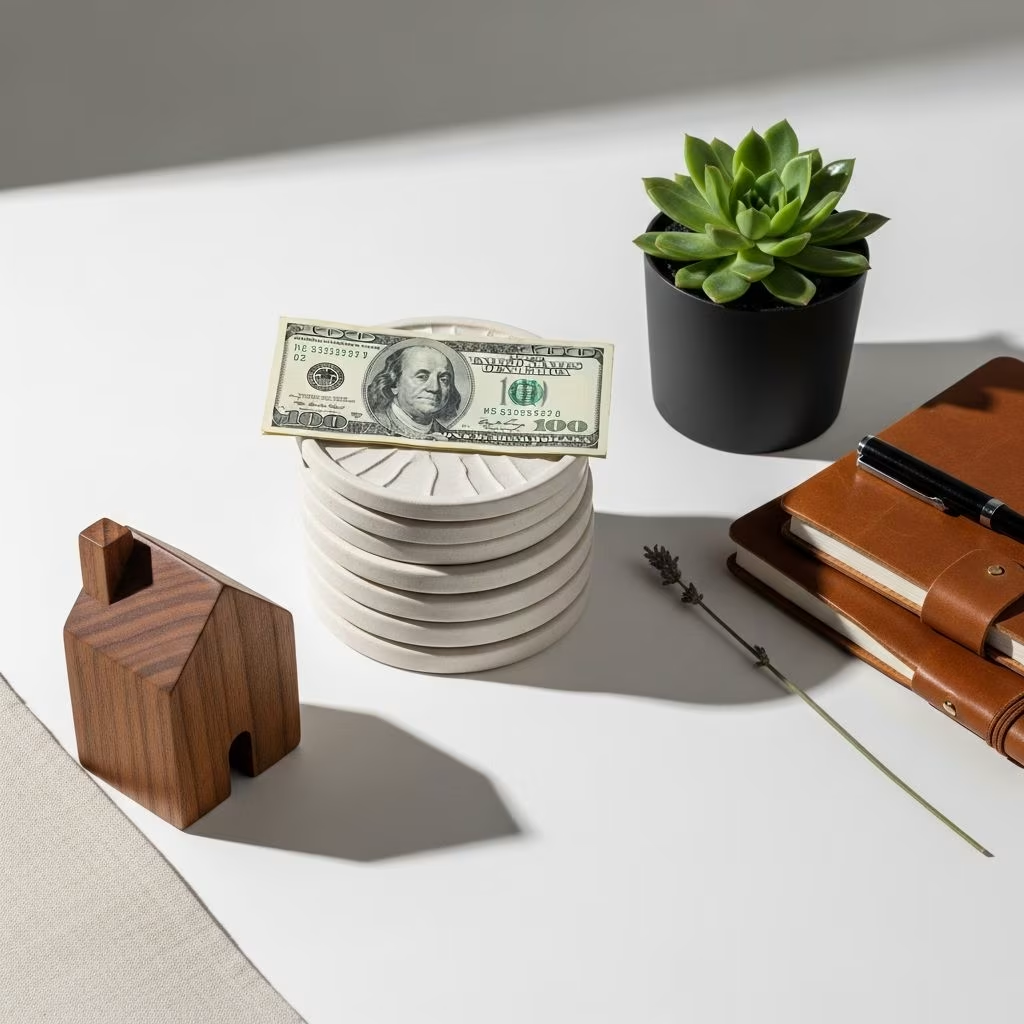
Minimalism is often portrayed through a narrow lens: white walls, designer furniture, and a specific aesthetic. But for many Black women and Black families, minimalism is less about style and more about freedom, healing, and financial liberation. It is about intentionally choosing what stays in your life—and courageously letting go of what drains you, from clutter to debt to expectations.
This article introduces 8 inspiring Black minimalists whose stories highlight how simple living can support mental health, generational wealth, creativity, and joy. You will also find practical tips, common challenges, and answers to key questions to help you start or deepen your own minimalist journey.
What Is Minimalism, Really?
At its core, minimalism is the practice of intentionally focusing on what matters most and removing the rest. It is not a competition to own the fewest items or a requirement to love neutrals and empty rooms. Instead, it is a framework for making deliberate choices about your money, time, possessions, relationships, and commitments.
Many people discover that owning less can improve well-being: research has linked excessive clutter to higher stress and lower life satisfaction, while cleaner, simpler environments can promote better focus and mental health. For Black minimalists, this often intersects with reclaiming time, energy, and resources in systems that have historically demanded more and given less.
How Minimalism Supports Financial Wellness
Minimalism and money are deeply connected. When you buy and maintain fewer things, you often free up cash for:
- Debt repayment (credit cards, student loans, personal loans)
- Emergency savings and long-term investments
- Experiences and relationships instead of impulse purchases
- Rest and self-care rather than constant hustle to pay for more stuff
Several Black minimalists pair decluttering with intentional budgeting and saving as a path to greater financial security, which is especially important against the backdrop of racial wealth gaps documented in research from institutions like the Federal Reserve and Brookings.
Why Black Minimalism Matters
Minimalism does not exist in a vacuum. For Black women—and Black communities more broadly—minimalism often holds additional layers of meaning:
- Healing from overconsumption as coping with racism, stress, and societal pressure
- Challenging stereotypes that equate worth with visible brands, trends, or appearances
- Redirecting money toward assets, education, and entrepreneurship instead of fleeting status symbols
- Creating safe, peaceful homes in a world that can feel unsafe
- Reclaiming time from constant striving, side hustling, and caretaking
For many Black minimalists, letting go of clutter is also about letting go of expectations to perform, impress, or carry everything for everyone. It becomes a tool for self-definition, boundaries, and joy.
| Minimalism Stereotype | Black Minimalist Reality |
|---|---|
| Only about white, ultra-modern aesthetics | Includes cultural decor, color, and personal heritage |
| About owning the fewest items possible | About owning the right items with intention |
| Detached from money and social context | Used as a tool for wealth-building and healing from systemic stress |
| Requires buying expensive “minimalist” products | Often starts with using what you have and buying less overall |
8 Black Minimalists to Inspire You
The following Black minimalists highlight the diversity of approaches to simple living. Their work spans decluttering, personal finance, digital content, and social justice. While each path is unique, they share a commitment to intentionality, financial clarity, and values-driven choices.
1. The Intentional Home Curator
This minimalist focuses on designing a calm, functional home using fewer, better items. Instead of chasing trends, she builds a space around:
- Multi-purpose furniture that maximizes small spaces
- Neutral foundations with personal, cultural accents
- Clutter-free surfaces to reduce stress and visual noise
Her content often covers topics like:
- How to edit your decor without stripping your home of personality
- Creating a minimalist entryway that supports daily routines
- Setting up systems so everything has a place—keys, mail, bags, and shoes
Her approach shows that minimalism is not about living in an empty box but about a home that supports your life instead of demanding constant cleaning and organizing.
2. The Financial Minimalist & Budget Strategist
Another Black minimalist channels simplicity through her finances. She uses minimalist principles to cut out:
- Unused subscriptions and memberships
- Impulse shopping fueled by apps and social media
- Overlapping financial accounts that add fees or confusion
Instead, she emphasizes a clear, streamlined money system:
- One primary checking and one high-yield savings account
- Targeted sinking funds for planned expenses
- A simple investing routine, such as automatic contributions to diversified index funds, in line with widely recommended long-term strategies.
Her perspective highlights that minimalism is a financial tool: fewer expenses, fewer temptations, and more room to save, invest, and rest.
3. The Capsule Wardrobe Visionary
Fashion is one area where pressure, especially for Black women, can be intense. The capsule wardrobe minimalist rejects the idea that you need endless outfits to be stylish or professional. She:
- Curates a wardrobe of versatile, high-quality pieces
- Embraces repeating outfits as a sign of confidence and smart money choices
- Centers comfort, fit, and authenticity over trends
Her content may include:
- How to build a starter capsule wardrobe on a budget
- Ways to style the same item for work, weekends, and events
- Letting go of clothes tied to old identities, jobs, or expectations
She reframes repeat outfits from something to be ashamed of into a quiet flex: evidence of discipline, clarity, and financial focus.
4. The Digital & Social Media Minimalist
This minimalist focuses less on physical clutter and more on digital overwhelm. She recognizes that constant notifications, comparison, and content can drain time and self-esteem. Her minimalist practice includes:
- Curating her social feeds to follow only accounts that inform, uplift, or genuinely inspire
- Setting boundaries around screen time and do-not-disturb hours
- Regularly decluttering files, photos, emails, and apps
By reducing digital noise, she creates more space for:
- Deep work and creativity
- Offline relationships
- Rest without constant distraction
Her story shows that minimalism can be a tool for mental clarity in a hyper-connected world.
5. The Family-Focused Minimalist
Minimalism with children often looks different, but it is absolutely possible. This Black minimalist centers her approach on:
- Reducing toy and clothing clutter to make clean-up manageable
- Prioritizing experiences over gifts
- Teaching kids about gratitude, sharing, and caring for their things
Her strategies may include:
- Rotating toys instead of buying more
- Creating simple routines for school prep, laundry, and meals
- Talking openly with children about money, wants, and needs at an age-appropriate level
She demonstrates that minimalism for families is not about perfection—it is about building a home where everyone can breathe and participate.
6. The Sustainability & Conscious Consumption Advocate
Another Black minimalist views minimalism through the lens of environmental justice and sustainability. She connects buying less with:
- Reducing waste and environmental impact
- Supporting ethical, often Black-owned, small businesses when she does spend
- Repairing, reusing, and repurposing instead of automatically replacing
Her content bridges personal finance, climate concerns, and racial equity, reflecting broader research that environmental burdens often fall disproportionately on communities of color.
7. The Healing & Mental Health Minimalist
For this minimalist, the journey started as a form of emotional and mental decluttering. After periods of burnout, grief, or trauma, she realized that a crowded home mirrored a crowded mind. Her approach includes:
- Letting go of items tied to painful chapters
- Creating calm spaces dedicated to rest and reflection
- Using journaling and therapy alongside decluttering to process emotions
Research suggests that cluttered living spaces are associated with increased cortisol (a stress hormone) and impaired well-being. Her story illustrates how minimalism can be a supportive companion to mental health practices—not a cure-all, but a meaningful tool.
8. The Community & Representation Champion
Finally, this Black minimalist uses her platform to center representation. She openly talks about:
- Why seeing Black faces in minimalist spaces matters
- How systemic barriers shape the ability to “opt into” minimalism
- The importance of telling diverse stories about simple living
She encourages her audience to see minimalism as:
- A flexible framework, not a rigid rulebook
- Compatible with cultural expression, family obligations, and community support
- Available to anyone, whether you rent a room or own a home
Her work reminds us that minimalism grows richer when more voices—and more lived experiences—are included.
How to Start Your Own Minimalist Journey
Inspired to begin but not sure where to start? You do not have to overhaul your whole life at once. Minimalism thrives on small, consistent steps.
1. Clarify Your “Why”
Minimalism works best when you know what you are moving toward, not just what you are moving away from. Ask yourself:
- Do I want more financial breathing room?
- Do I crave a calmer home and less cleaning?
- Do I need to protect my mental health and time?
- Do I want to build wealth instead of buying more things?
Write down your reasons and keep them where you can see them. They will guide your decisions and help you stay committed when it feels challenging.
2. Start Small and Visible
Pick one area that you see daily, such as:
- Your nightstand
- The bathroom counter
- Your entryway or shoe area
- A single drawer or kitchen cabinet
Remove everything, then put back only what you use and love. Create a clear “donate” and “trash” pile for the rest. A quick, visible win builds momentum.
3. Connect Decluttering to Your Money Goals
Minimalism becomes powerful when you pair it with financial intention. Consider:
- Selling gently used items and directing the cash toward debt or savings
- Setting a “no-spend” or “low-spend” period while you declutter
- Tracking what you used to buy impulsively—and choosing new habits instead
As you cut back on non-essential spending, you create more capacity to build emergency funds, invest for the future, or support goals like education and homeownership.
4. Redefine What Abundance Means to You
One of the most transformative parts of minimalism is rewriting what “having enough” means. Abundance might look like:
- A small wardrobe where every item fits and feels good
- A home with breathing room, not packed closets
- A bank account with savings instead of credit card balances
- Spare evenings for rest, hobbies, or time with loved ones
When you define abundance on your own terms, it is easier to ignore outside pressure to constantly upgrade, impress, or prove yourself through things.
Frequently Asked Questions (FAQs)
Q: Do I have to get rid of most of my things to be a minimalist?
No. Minimalism is not a race to own the fewest items; it is about aligning your possessions and commitments with your values. If something is truly useful or meaningful, it can belong in your minimalist life.
Q: Is minimalism affordable if I am on a tight budget?
Yes. You can start where you are by using what you already own, avoiding unnecessary purchases, and gradually replacing worn-out items with better-quality essentials as your budget allows. Many Black minimalists begin specifically to improve their finances, not because they already have extra money.
Q: How can I practice minimalism when my family or culture values visible abundance?
You can start privately with your own spaces—your room, closet, digital life, or finances. Over time, honest conversations about your reasons (less stress, more savings, better health) can help others understand. You do not have to convince everyone; you only need to live in alignment with your own values.
Q: What if I feel guilty donating or selling things I spent money on?
That guilt is common, but the money is already spent whether the item stays or goes. Keeping something you do not use does not return its cost. Many people find it helpful to think of decluttering as a way to reclaim space and prevent future impulse purchases by learning from past choices.
Q: Can I still enjoy fashion, beauty, or hobbies as a minimalist?
Absolutely. Minimalism is not about denying joy; it is about choosing it intentionally. You might have fewer items but higher-quality ones, or you may focus on a few beloved hobbies instead of spreading yourself thin across many.
References
- Psychological Home, Clutter, and Subjective Well-Being — Catherine A. Roster, Joseph innes, and Mark T. Hewlett, Journal of Environmental Psychology. 2016-06-01. https://doi.org/10.1016/j.jenvp.2016.04.003
- Clutter, Chaos, and Overconsumption: The Impact of Living Environment on Mental Health — UCLA Center on Everyday Lives of Families (CELF). 2012-01-01. https://newsroom.ucla.edu/releases/UCLA-study-finds-clutter-leads-to-stress
- Survey of Consumer Finances — Board of Governors of the Federal Reserve System. 2023-10-18. https://www.federalreserve.gov/econres/scfindex.htm
- Examining the Black–White Wealth Gap — Richard V. Reeves and others, Brookings Institution. 2017-02-27. https://www.brookings.edu/articles/examining-the-black-white-wealth-gap/
- Black Women as Minimalists? The Next Needed Trend? — Kara Stevens, The Frugal Feminista. 2014-08-18. https://www.thefrugalfeminista.com/black-women-as-minimalists-the-next-needed-trend/
- Pollution and Inequality — Mohai, Pellow, and Roberts, Annual Review of Environment and Resources. 2009-11-21. https://doi.org/10.1146/annurev-environ-082508-094348
This article is general information, not personal financial advice. Consider your own situation, or speak with a licensed adviser, before acting on it.


