

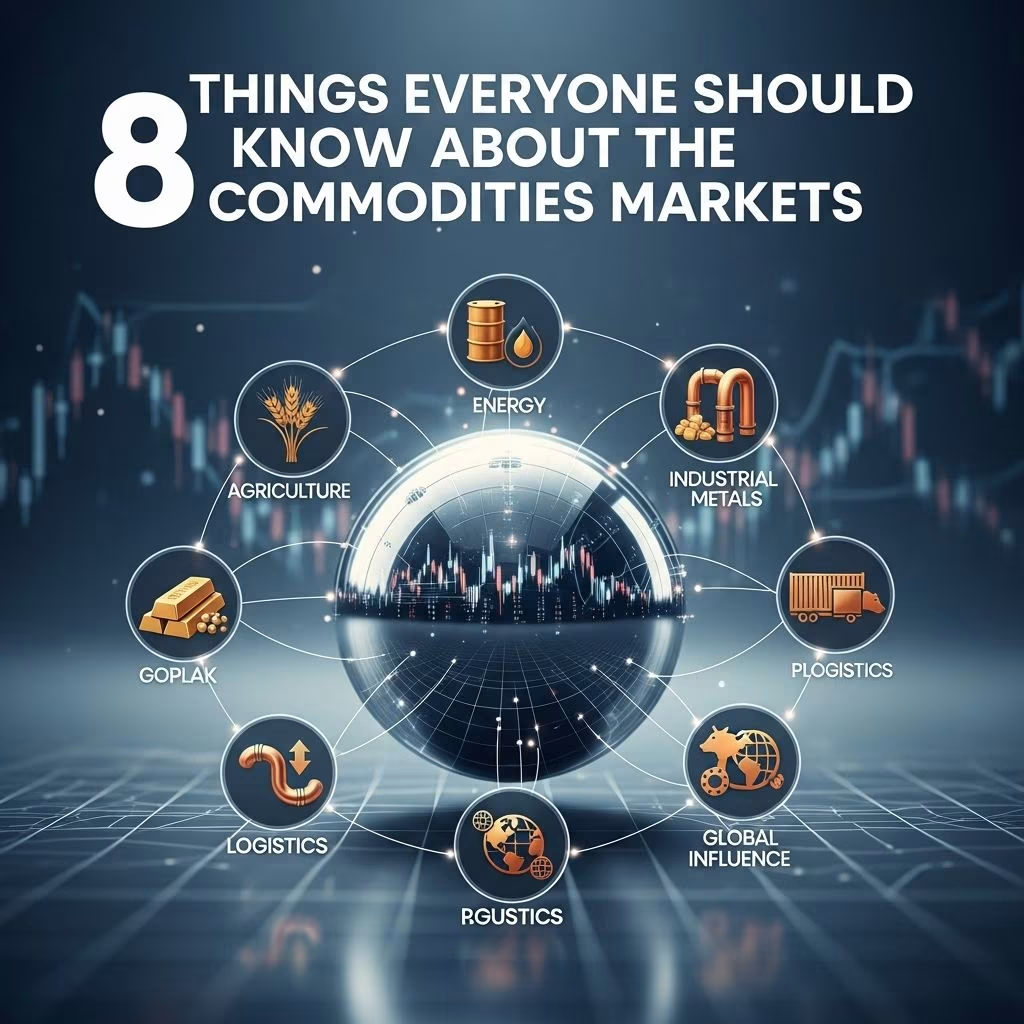
Commodities markets offer unique opportunities for investors seeking diversification beyond stocks and bonds. These markets trade physical goods like metals, energy, and agricultural products, influencing global economies and everyday prices. Understanding their fundamentals can help you navigate volatility and capitalize on trends. This article breaks down 8 key things everyone should know, drawing from established market structures and dynamics.
1. There Are Four (or Three) Basic Groups of Commodities
Commodities are categorized into distinct groups based on their nature and use, typically divided into four main types: metals, energy, agricultural products, and livestock. Some classifications merge agricultural products and livestock into a single “softs” or agriculture category, resulting in three groups.
- Metals: Include precious metals like gold and silver, used for jewelry and as safe-haven assets, and base metals like copper, aluminum, and zinc essential for industrial production.
- Energy: Dominated by crude oil, natural gas, and refined products like gasoline, these drive global transportation and heating needs.
- Agricultural Products (Grains): Encompass wheat, corn, soybeans, and rice, affected by weather, planting seasons, and global food demand.
- Livestock: Features live cattle, feeder cattle, and lean hogs, influenced by feed costs, disease outbreaks, and meat consumption patterns.
These groups allow investors to target specific economic sectors. For instance, rising industrial activity boosts base metals, while geopolitical tensions often spike energy prices.
2. The Chicago Mercantile Exchange Is the Place
The Chicago Mercantile Exchange (CME) is the world’s leading commodities trading venue, hosting futures and options contracts for nearly all major commodities. Originally focused on agricultural futures, it has expanded to energy, metals, and even weather derivatives.
Trading occurs electronically via CME Globex, operating nearly 24 hours a day, five days a week, enabling global participation. Key features include standardized contracts specifying quantity, quality, and delivery terms, reducing counterparty risk through the CME’s clearinghouse.
| Commodity Group | Key CME Contracts | Average Daily Volume (2025 est.) |
|---|---|---|
| Energy | WTI Crude Oil, Henry Hub Natural Gas | 5 million+ contracts |
| Metals | Gold, Copper | 500,000+ contracts |
| Agriculture | Corn, Soybeans | 1.5 million+ contracts |
| Livestock | Live Cattle, Lean Hogs | 300,000+ contracts |
CME’s dominance stems from its liquidity and regulatory oversight by the Commodity Futures Trading Commission (CFTC), ensuring fair trading.
3. They Are Volatile
Volatility defines commodities markets, with prices swinging wildly due to supply disruptions, geopolitical events, and speculative trading. Unlike stocks tied to company earnings, commodities react to tangible events like droughts or oil embargoes.
For example, crude oil prices surged over 100% in 2022 amid the Russia-Ukraine conflict, then corrected sharply. Annualized volatility for oil futures often exceeds 30-50%, compared to 15-20% for the S&P 500.
- Short-term factors: Weather events, inventory reports (e.g., EIA weekly petroleum status).
- Long-term drivers: Economic growth, technological shifts like EVs reducing oil demand.
Investors must use stop-loss orders and position sizing to manage leverage risks in futures trading.
4. Commodities Are Impacted by the Weather
Weather profoundly influences agricultural and energy commodities. Droughts devastate grain yields, while hurricanes disrupt oil refineries in the Gulf of Mexico.
The USDA’s World Agricultural Supply and Demand Estimates (WASDE) report, released monthly, incorporates weather data to forecast supplies. In 2024, La Niña patterns led to bumper corn harvests in the U.S., crashing prices by 20%.
- Agriculture: El Niño floods soybean fields in Brazil.
- Energy: Polar vortices spike natural gas demand for heating.
- Livestock: Heatwaves reduce cattle weight gain.
Traders monitor tools like the NOAA Climate Prediction Center for early signals.
5. Supply and Demand Fluctuations Drive Prices
At their core, commodities prices reflect supply and demand. Oversupply from bumper crops or new mines depresses prices; shortages from strikes or sanctions inflate them.
The gold-oil ratio (ounces of oil per gold ounce) illustrates this: It spikes during economic uncertainty as gold demand rises. OPEC+ production cuts in 2023 tightened oil supply, pushing Brent crude above $90/barrel.
Government policies, like U.S. ethanol mandates boosting corn demand, add layers of complexity.
6. Speculators Play a Big Role
Speculators, including hedge funds and retail traders, amplify price moves by betting on future trends without intending to take delivery. They provide liquidity but can exacerbate volatility.
CFTC’s Commitments of Traders (COT) report breaks down positions: commercials (hedgers) vs. non-commercials (speculators). In 2025, speculators hold 40% of crude oil futures long positions amid bullish forecasts.
While blamed for bubbles, speculators enable hedgers like farmers to lock in prices.
7. They’re Good for Diversification and Inflation Hedge
Commodities boast low correlation with stocks and bonds, enhancing portfolio diversification. A 5-10% allocation historically reduces overall volatility.
They excel as inflation hedges: During 2021-2022’s 8%+ U.S. inflation, the Bloomberg Commodity Index rose 30%. Gold and oil prices typically outpace CPI in inflationary periods.
- Negative stock-commodity correlation during recessions.
- ETFs like USCI offer easy exposure without futures accounts.
Studies from the Federal Reserve confirm commodities’ role in balanced portfolios.
8. You Don’t Have to Take Delivery
Few traders take physical delivery; most close positions before expiration via offsetting trades. Futures contracts specify delivery points, like Cushing, OK for WTI oil.
For retail investors, ETFs/ETNs (e.g., GLD for gold, UNG for natural gas) and commodity mutual funds provide exposure without margin hassles. Options on futures add leveraged bets with defined risk.
Understand contango (futures > spot prices), which erodes ETF returns via roll costs.
Frequently Asked Questions (FAQs)
What are the main risks in commodities trading?
High volatility, leverage, and event-driven swings pose risks. Use risk management and diversify.
How do I start investing in commodities?
Open a brokerage account for ETFs or futures. Study COT reports and economic calendars.
Are commodities suitable for beginners?
Start with broad ETFs for low-risk exposure; avoid direct futures until experienced.
Why is the CME central to commodities?
It offers unmatched liquidity, electronic trading, and CFTC regulation.
Can commodities protect against stock crashes?
Yes, their low correlation provides diversification benefits during equity downturns.
References
- Chicago Mercantile Exchange Group Annual Report — CME Group. 2024-12-31. https://www.cmegroup.com/company/files/2024-CME-Group-Annual-Report.pdf
- Commodity Futures Trading Commission: Commitments of Traders Report — CFTC. 2025-01-07. https://www.cftc.gov/MarketReports/CommitmentsofTraders/index.htm
- Understanding Commodity Markets — Federal Reserve Bank of Chicago. 2023-06-15. https://www.chicagofed.org/publications/understanding-commodity-markets
- World Agricultural Supply and Demand Estimates — USDA. 2025-01-10. https://www.usda.gov/oce/commodity/wasde
- Petroleum Status Report — U.S. Energy Information Administration. 2025-01-08. https://www.eia.gov/petroleum/supply/weekly/
This article is general information, not personal financial advice. Consider your own situation, or speak with a licensed adviser, before acting on it.


