

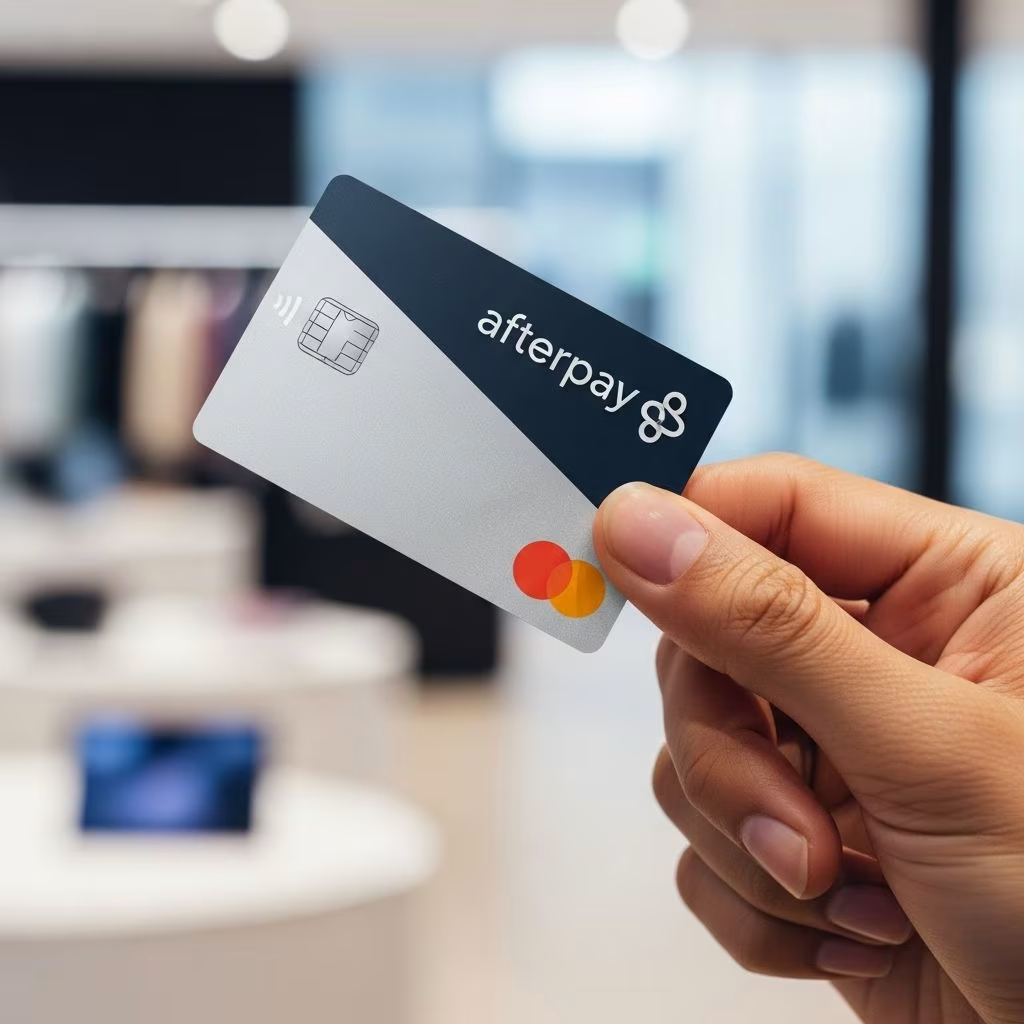
Afterpay is a leading buy now, pay later (BNPL) service that enables consumers to purchase items online or in-store and pay for them in four interest-free installments over six weeks. This payment option has gained popularity for providing flexible spending without traditional credit card interest, but it comes with specific terms and potential risks that users must understand.
How Does Afterpay Work?
Afterpay operates by splitting the cost of a purchase into four equal payments, with the first due at checkout and the remaining three automatically deducted every two weeks. Users link a debit or credit card during signup, and no credit check is typically required for standard use, making approval quick.
For example, a $200 purchase would require $50 upfront, followed by $50 bi-weekly for six weeks total. Merchants receive full payment immediately from Afterpay, while the service charges them a fee rather than the consumer—provided payments are on time. Purchases must generally fall under a spending limit, starting at around $600 for new users, which can increase with responsible use.
Afterpay also offers a Pay Monthly option for purchases over $400, extending terms to 6 or 12 months. Unlike the standard plan, this incurs interest rates from 0% to 35.99% APR based on creditworthiness. In-store use involves generating a unique barcode via the app for scanning at checkout.
- First payment: 25% at purchase.
- Subsequent payments: Every two weeks, no interest if on time.
- Late fees: Up to $10 initially, plus $7 if overdue further (varies by region).
- Spending limits: Determined by payment history, purchase size, and merchant.
Benefits of Afterpay
Afterpay provides several advantages, particularly for budget-conscious shoppers. The absence of interest on standard plans makes it cheaper than credit cards for short-term financing.
- Immediate possession: Get items now without full upfront payment, ideal for tight cash flow or gifting.
- No interest on Pay in 4: Saves money compared to loans or cards.
- Convenience: Syncs with bi-weekly pay cycles; app-based tracking simplifies management.
- Accessibility: No hard credit check for basic use, broadening access.
- Merchant incentives: Retailers often promote it, sometimes with exclusive deals.
Regulators like Australia’s ASIC note that BNPL services like Afterpay include complaint systems for issue resolution.
Drawbacks and Risks of Afterpay
While appealing, Afterpay carries risks, especially for overspenders. Late fees can accumulate quickly, and without credit checks, users may overextend.
- Late fees: $10 per missed payment, additional $7 after a week (Australia example); similar elsewhere.
- Spending limits: Starts low ($600 max initially), restricting larger buys.
- Over-indebtedness risk: Easy access encourages impulse buys beyond affordability.
- Credit reporting: Repeated issues may lead to reporting to bureaus, affecting scores (e.g., in Australia via Comprehensive Credit Reporting).
- Interest on longer terms: Pay Monthly APR up to 35.99%, comparable to high-interest cards.
| Feature | Afterpay Pay in 4 | Afterpay Pay Monthly | Credit Card Alternative |
|---|---|---|---|
| Interest | 0% | 0-35.99% APR | 15-25%+ APR |
| Term | 6 weeks | 6-12 months | Flexible |
| Fees | Late fees only | Late + interest | Multiple possible |
| Credit Check | Usually none | May require | Yes |
This table highlights why Pay in 4 suits small purchases, but longer options mirror traditional debt.
Afterpay vs. Other Buy Now, Pay Later Services
Afterpay competes with Klarna, Affirm, and Sezzle. It stands out for no-interest short terms but has lower limits than some rivals. Affirm often offers longer interest-bearing loans; Klarna provides ‘Pay in 30’ flexibility. Afterpay’s merchant network is vast, especially fashion and retail.
Does Afterpay Affect Your Credit?
Afterpay generally doesn’t impact credit for on-time payments, as no hard inquiries occur. However, missed payments can trigger reporting. In the U.S., serious delinquencies may appear on reports; Australia uses Comprehensive Credit Reporting for BNPL. Responsible use builds positive history, potentially raising limits without score harm. Monitor via free credit tools from Equifax or others.
Spending Limits on Afterpay
Limits start low ($200-$600) and grow with timely payments, up to thousands for trusted users. Factors include purchase history, linked account verification, and overall usage. Temporary holds occur post-purchase; exceeding limits blocks orders.
- New users: $200-$600.
- Increased limits: Via app requests after good history.
- Per merchant: Varies, e.g., higher at electronics stores.
Tips for Using Afterpay Responsibly
To maximize benefits and minimize risks:
- Budget first: Ensure you can afford installments alongside bills.
- Track payments: Use app notifications; set reminders.
- Limit use: Treat as debit, not credit—only buy what you’d pay cash for.
- Avoid multiples: Multiple plans compound debt risk.
- Pay early: Reduces fees; clears limits faster.
- Check alternatives: Compare with savings or 0% cards for big buys.
Integrate into broader financial planning: Review statements regularly.
Frequently Asked Questions (FAQs)
What is Afterpay?
Afterpay is a BNPL service splitting purchases into four interest-free payments over six weeks.
How does Afterpay work?
Pay 25% upfront, then three bi-weekly payments; app or in-store via barcode.
Does Afterpay charge interest?
No for Pay in 4; yes (up to 35.99% APR) for Pay Monthly on larger purchases.
What happens if I miss an Afterpay payment?
Late fees apply ($10+), potential account suspension or credit reporting.
Can Afterpay affect my credit score?
Not usually for on-time payments, but defaults may be reported.
What is the Afterpay spending limit?
Starts at $600 or less; increases with good payment history.
Is Afterpay safe to use?
Yes, if used responsibly; regulated with complaint processes.
This comprehensive guide empowers informed decisions on Afterpay, balancing convenience with financial health. Always align with your budget.
References
- What Is Afterpay, And What Are Its Benefits And Risks? — Bank of Queensland (BOQ). 2023. https://www.boq.com.au/blog/personal-finance/what-is-afterpay-and-what-are-its-benefits-and-risks
- Afterpay Review: Pros, Cons, and How It Works — Business Insider. 2025-01-10. https://www.businessinsider.com/personal-finance/personal-loans/afterpay-review
- Afterpay — Wikipedia. 2024-12-01. https://en.wikipedia.org/wiki/Afterpay
- Afterpay Buy Now, Pay Later: 2026 Review — NerdWallet. 2026-01-01. https://www.nerdwallet.com/personal-loans/reviews/afterpay-buy-now-pay-later
- 5 Key Afterpay Facts: What You Should Know Before You Click — East Texas Credit Union. 2024. https://eastexcu.org/5-key-afterpay-facts/
This article is general information, not personal financial advice. Consider your own situation, or speak with a licensed adviser, before acting on it.


