

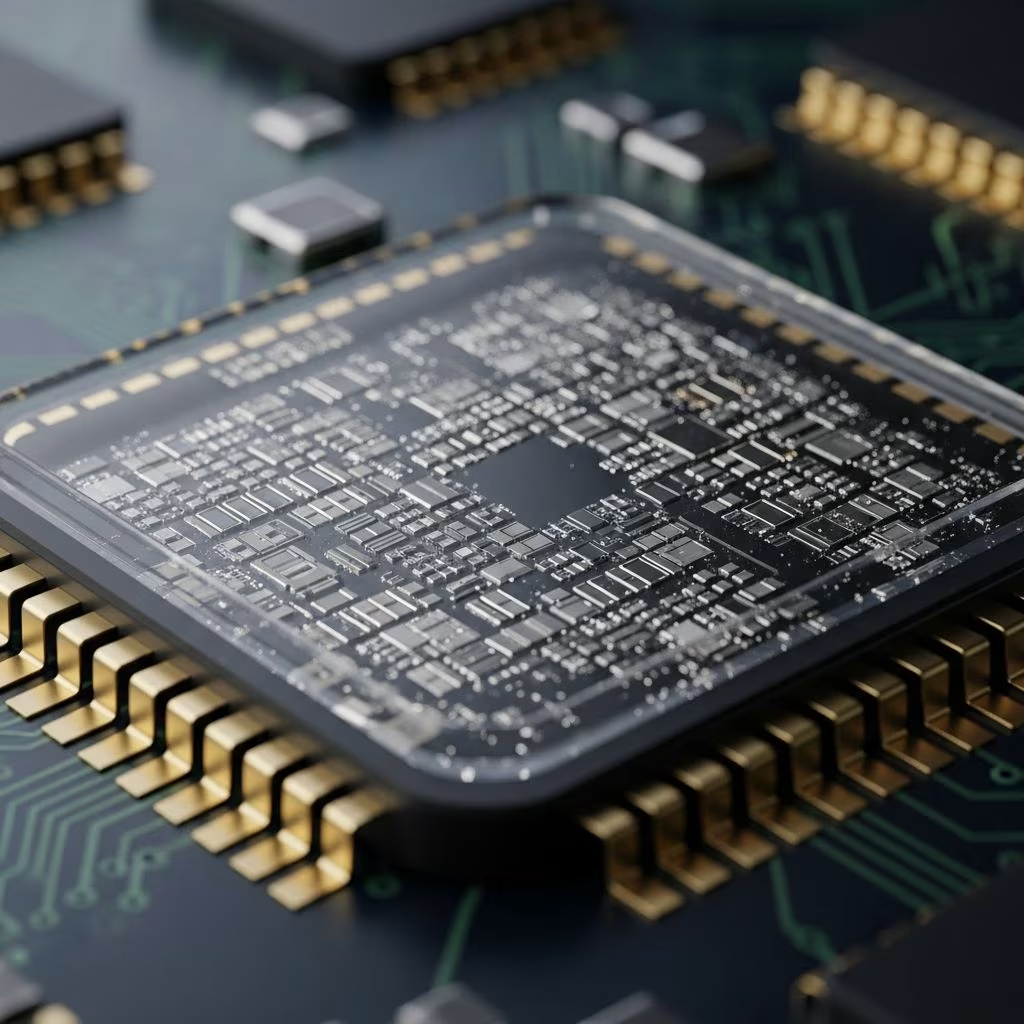
What Is an ASIC?
An ASIC stands for Application-Specific Integrated Circuit, representing a fundamental shift in hardware design philosophy. Unlike general-purpose processors such as CPUs or GPUs that can execute a wide variety of tasks, an ASIC is a custom-built processor engineered for a single, specialized application. This laser-focused approach to hardware design delivers exceptional performance within its intended domain, though at the cost of versatility.
In the context of cryptocurrency, ASICs are optimized hardware devices designed to solve cryptographic puzzles and perform hashing algorithms with unparalleled efficiency. The specialization inherent in ASIC design sacrifices versatility to achieve unprecedented performance for targeted tasks. This fundamental trade-off between specialization and adaptability has become central to understanding modern computing hardware and its applications.
Understanding ASIC Technology
Core Characteristics of ASICs
ASICs embody a design philosophy that prioritizes efficiency and performance over flexibility. The hardware is meticulously optimized to maximize hashrate—the computational speed at which cryptographic calculations are performed—while simultaneously minimizing power consumption. This dual optimization creates exceptional value propositions for specific computational tasks.
The definition of an ASIC rests on several key attributes:
- Custom-Built Architecture: Circuits are specifically engineered for particular algorithms, with every component designed to eliminate unnecessary processing overhead
- Single-Task Optimization: Unlike multipurpose processors, ASICs dedicate all resources to one specific computational challenge
- High Efficiency Ratios: ASICs achieve superior performance-per-watt metrics compared to general-purpose hardware
- Algorithm Specificity: Hardware is hardwired to execute targeted algorithms, such as SHA-256 for Bitcoin mining
How ASICs Differ from General-Purpose Hardware
The distinction between ASICs and other computing hardware categories is fundamental to understanding why specialized devices have become dominant in cryptocurrency mining. Each hardware category offers distinct advantages and limitations.
Comparison Table: ASIC vs CPU vs GPU
| Feature | CPU | GPU | ASIC |
|---|---|---|---|
| Primary Purpose | General computing tasks | Graphics and parallel processing | Single algorithm execution |
| Efficiency Level | Low | Medium | Very High |
| Typical Hashrate | <0.1 TH/s | 0.1–1 TH/s | 100+ TH/s |
| Energy Consumption | High per calculation | Moderate per calculation | Low per calculation |
| Versatility | Excellent | Good | None (single-purpose) |
CPUs: General-Purpose Computing
Central Processing Units represent the traditional computing paradigm, designed to handle diverse computational tasks. While CPUs offer exceptional versatility and can seamlessly transition between different applications, they prove inefficient for cryptocurrency mining. Their general-purpose architecture includes numerous features and processing pathways irrelevant to hashing calculations, resulting in substantial computational overhead and energy waste.
GPUs: Graphics and Parallel Processing
Graphics Processing Units occupy a middle ground between CPUs and ASICs. Originally developed for graphics rendering, GPUs excel at parallel processing and can handle multiple computational threads simultaneously. This characteristic made them popular for early cryptocurrency mining, achieving hashrates substantially higher than CPUs. However, GPUs still retain processing capabilities unnecessary for mining operations, limiting their efficiency compared to specialized alternatives.
ASICs: Purpose-Built Excellence
Application-Specific Integrated Circuits represent the apex of specialization in hardware design. By eliminating all extraneous processing functions and tailoring every circuit component for a specific cryptographic algorithm, ASICs achieve dramatically superior performance metrics. An ASIC miner can generate 100 or more terahashes per second while consuming significantly less electricity per calculation than CPUs or GPUs, translating directly into profitability advantages for mining operations.
How ASICs Work: Technical Mechanisms
Understanding ASIC functionality requires exploring both the hardware design principles and the specific computational processes these devices execute.
Algorithm-Specific Design
ASICs are engineered with circuits hardwired to execute specific cryptographic algorithms. For Bitcoin mining, this means implementing the SHA-256 hashing algorithm directly into the hardware architecture. Every transistor, logic gate, and data pathway is optimized for this singular computational purpose. This hardwired approach eliminates the interpretive overhead present in general-purpose processors, where software instructions must be decoded and translated into hardware operations.
Hashrate Performance Metrics
Hashrate represents the fundamental performance metric for mining hardware, measured in terahashes per second (TH/s). One terahash equals one trillion hash calculations. Modern ASIC miners routinely achieve hashrates exceeding 100 TH/s, with high-end models reaching 190+ TH/s. For comparison, even advanced GPUs typically max out around 1 TH/s, while CPUs produce negligible hashrates below 0.1 TH/s.
Power Optimization and Efficiency
Beyond raw hashrate, power efficiency determines mining profitability. ASICs are engineered to minimize power consumption per hash calculation, directly reducing electricity costs—typically the largest operational expense in mining operations. Consider the Bitmain Antminer S19 Pro+ Hydro as an example: this device delivers a hashrate of 191 TH/s while consuming only 5,445 watts of power. This performance profile produces an estimated daily profit of approximately $9.04, translating to a return on investment of roughly 9 months, contingent upon electricity rates and cryptocurrency market conditions.
Advantages and Disadvantages of ASICs
Advantages
- Exceptional Hashrate Performance: ASICs dramatically outperform alternative hardware, achieving hundreds of terahashes per second
- Superior Energy Efficiency: Lower electricity consumption per calculation directly translates to reduced operational costs
- Extended Equipment Lifespan: Specialized hardware maintains consistent performance over extended operational periods when targeted toward its specific function
- Network Security Contribution: The computational power provided by ASIC miners strengthens blockchain security and integrity
- Profitability Optimization: High efficiency metrics result in better profit margins for mining operations
Disadvantages
- Lack of Repurposing Capability: ASICs cannot be adapted for alternative cryptocurrency algorithms or computational tasks, limiting equipment lifespan as technology evolves
- Substantial Initial Investment: ASIC hardware commands premium prices, requiring significant capital expenditure before mining operations commence
- Algorithm Dependency: Changes to network protocols or adoption of new mining algorithms can render existing ASIC equipment obsolete
- Market Concentration Risk: Few manufacturers produce ASICs, creating supply chain vulnerabilities and monopolistic pricing dynamics
- Environmental Considerations: Aggregate power consumption across global ASIC operations raises sustainability concerns
Why ASICs Dominate Cryptocurrency Mining
The cryptocurrency mining landscape has evolved dramatically since Bitcoin’s inception, with ASICs achieving complete dominance in proof-of-work consensus mechanisms. Multiple factors explain this technological hegemony.
Profitability Imperative
In competitive mining environments, profitability margins determine survival. The exceptional efficiency of ASICs translates directly into cost advantages that make alternative hardware economically unviable. Miners operating CPUs or GPUs cannot generate returns sufficient to justify their operational expenses when competing against ASIC-powered operations. This economic reality has driven rapid consolidation toward ASIC adoption.
Network Security Contribution
Beyond individual miner profit optimization, ASICs contribute significantly to blockchain security. The concentration of computational power in specialized hardware raises the cost and complexity of executing attacks against the network. ASIC farms maintaining massive hashrates strengthen the fundamental security properties upon which cryptocurrency value depends.
Scalability Advantages
Large-scale mining operations leverage ASIC advantages to achieve massive combined hashrates. Industrial-scale farms housing thousands of ASIC miners generate computational power that would be impossible to replicate with general-purpose hardware. This scalability enables the global cryptocurrency networks to process transactions reliably and securely across distributed consensus mechanisms.
Bitcoin’s ASIC Dominance
Bitcoin exemplifies complete ASIC domination within the mining ecosystem. The network’s substantial value and security requirements make ASIC-based mining the only economically rational choice. No alternative hardware technology approaches ASIC performance metrics, making specialized miners the de facto standard for Bitcoin mining operations worldwide.
Performance Metrics and ROI Considerations
Evaluating ASIC mining investments requires comprehensive analysis of multiple interconnected variables. Hashrate and power efficiency remain the two defining metrics of ASIC miner performance, determining return on investment for mining operators.
Key Financial Metrics
Successful ASIC investments depend on optimizing several critical parameters: initial hardware acquisition cost, daily operational electricity expenses, cryptocurrency market prices, and network difficulty levels. These variables interact dynamically, creating complex profitability scenarios requiring detailed financial modeling. Investors must evaluate break-even points, considering both favorable and adverse market conditions before committing capital to mining infrastructure.
Frequently Asked Questions About ASICs
Q: What exactly is an ASIC in cryptocurrency?
A: An ASIC (Application-Specific Integrated Circuit) is specialized hardware designed exclusively for cryptocurrency mining. It performs cryptographic calculations with exceptional speed and efficiency, processing specific algorithms like Bitcoin’s SHA-256 millions of times per second. ASICs cannot be repurposed for other computational tasks, distinguishing them from general-purpose processors.
Q: How does ASIC mining hardware actually work?
A: ASICs execute their hardwired algorithm through optimized circuitry eliminating unnecessary processing steps. For Bitcoin, the hardware continuously hashes transaction data, competing to solve mathematical puzzles. When successful, miners earn cryptocurrency rewards. The specialized architecture achieves dramatically higher hashrates and lower power consumption compared to CPUs or GPUs.
Q: Why are ASICs more efficient than CPUs and GPUs?
A: ASICs eliminate processing functions unnecessary for mining, dedicating all computational resources to a single algorithm. CPUs and GPUs include general-purpose features creating overhead and power waste. This focused ASIC design produces superior performance-per-watt efficiency, directly reducing electricity costs and maximizing profitability for mining operations.
Q: Can ASICs be used for purposes other than cryptocurrency mining?
A: No, ASICs are fundamentally single-purpose devices. Their hardware is permanently configured for specific algorithms and cannot be repurposed. This specialization creates efficiency gains but sacrifices flexibility, making ASICs economically impractical for applications beyond their original intended function.
Q: What is the typical ROI timeline for ASIC mining investments?
A: Return on investment timelines vary significantly based on hardware costs, electricity prices, and cryptocurrency values. High-performance ASICs like the Antminer S19 Pro+ Hydro may achieve ROI within 9-12 months under favorable conditions. However, fluctuating cryptocurrency markets and rising network difficulty can extend timelines substantially or render investments unprofitable.
Q: How do network difficulty changes affect ASIC mining profitability?
A: As more miners join networks or existing miners deploy additional hardware, network difficulty increases, requiring greater computational effort to find valid blocks. Higher difficulty reduces per-hash rewards for all miners, directly impacting profitability. This dynamic creates competitive pressures continuously pushing miners toward more efficient hardware.
References
- What Is ASIC? A Complete Guide To ASIC Mining Hardware — EZ Blockchain. 2024. https://ezblockchain.net/article/asics-what-they-are-and-how-they-work/
- Investopedia: Financial Education and Investment Dictionary — Investopedia, part of IAC Inc. 2024. https://www.investopedia.com/
- Bitcoin Mining Hardware Comparison and Performance Analysis — Bitmain Technologies. 2024. https://www.bitmain.com/
This article is general information, not personal financial advice. Consider your own situation, or speak with a licensed adviser, before acting on it.


