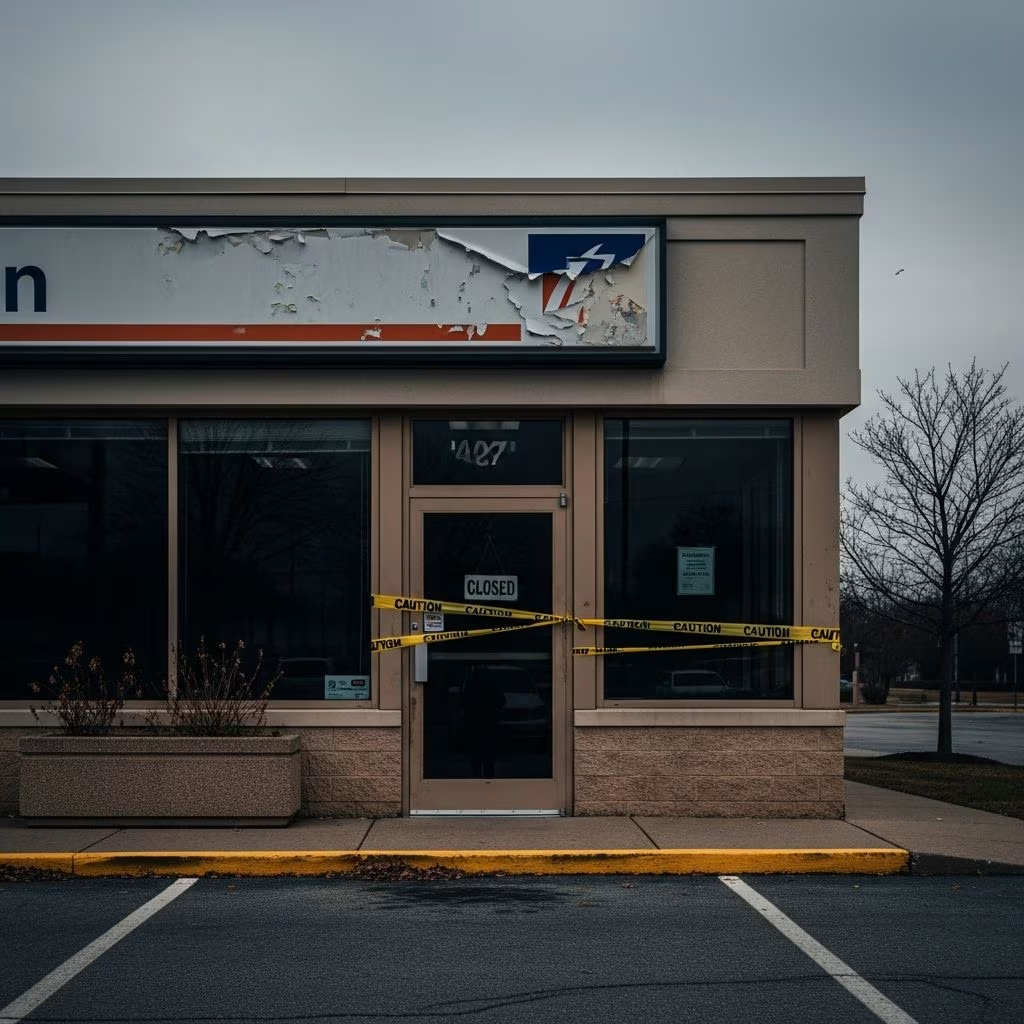
Bank branches are closing across the country as more customers use mobile apps, online banking, and ATMs instead of visiting a teller window. When a branch near you shuts down, it can feel alarming, but the closure does not mean your bank is failing or that your money is at risk. Most branch closures are part of long-term business decisions about how and where financial institutions deliver services.
This article explains what usually happens when a bank branch closes, the federal rules that govern closures, how the change might affect your accounts and community, and what you can do to stay in control of your finances.
Why Bank Branches Close
Banks rarely close branches without careful analysis. In most cases, a closing reflects a shift in how customers use banking services rather than a sign of immediate financial trouble.
Common reasons a branch may close
- Declining in-person traffic: As more people use online and mobile banking, foot traffic at many branches has fallen sharply, making some locations too expensive to operate.
- Overlapping locations: After mergers or rapid expansion, a bank may find that branches are clustered too close together and decide to consolidate activity into one or two offices.
- High operating costs: Lease expenses, staffing, utilities, and security can make low-volume branches difficult to justify.
- Strategic focus on digital: Many banks are reallocating resources toward mobile apps, call centers, and online platforms instead of physical branches.
- Shifts in local economic activity: Population changes, business closures, or redevelopment can reduce demand for in-person banking in a specific neighborhood.
Branch closing vs. bank failure
It is important to distinguish between a bank branch closing and a bank failing. When a bank fails, regulators may arrange for another institution to assume deposits and operations, sometimes on very short notice. A routine branch closure, by contrast, follows a structured notice and planning process, typically months in advance, while the bank continues operating normally.
What Banks Are Required to Do Before a Branch Closes
Federal law sets out specific steps banks must follow when closing a branch office. These requirements are largely based on Section 42 of the Federal Deposit Insurance Act, which governs notice to regulators and customers.
Advance notice to regulators
Before closing a branch, a bank must submit an advance branch closing notice to its primary federal regulator—such as the FDIC, the Office of the Comptroller of the Currency (OCC), or the Federal Reserve—generally at least 90 days before the planned closing date.
The notice to regulators usually includes:
- The exact location of the branch to be closed
- The proposed closing date
- A statement of the reasons for the closure
- Supporting information consistent with the bank’s internal branch closing policy
Advance notice to customers
In addition to notifying regulators, banks must provide at least 90 days’ advance written notice to customers who use the affected branch.
This customer notice may be sent:
- As a message included with regular account statements, or
- As a separate mailing dedicated to the branch closure
The notice must clearly state:
- The branch location that is closing
- The date the branch will close
- The location where customers can obtain services after the closing, or a phone number they can call to get information about alternative sites and services
On-site posting requirements
Regulations also require the bank to post a conspicuous notice at the branch itself at least 30 days before the closing date. This public notice gives walk-in customers time to adjust and ask questions, even if they missed the mailed announcement.
Special consideration for low- and moderate-income areas
When the closing involves a branch in a low- or moderate-income neighborhood, regulators pay closer attention to potential impacts on access to financial services. If community members submit written comments describing adverse effects, the regulator may:
- Review the branch closing plan in more depth
- Convene a meeting with community leaders, other banks, and stakeholders to explore alternatives for maintaining access to basic banking services
These steps complement broader expectations under the Community Reinvestment Act that banks respond to local credit and service needs.
How a Branch Closing Affects Your Accounts
For most customers, a branch closure changes where you bank, not whether you have a relationship with the bank. Your deposit insurance coverage, account agreements, and funds generally remain the same.
What typically stays the same
- Your bank, not just your branch: Your account is with the bank as a whole, so closing one branch does not automatically change your account number or institution.
- FDIC insurance coverage: As long as your bank remains FDIC-insured and your balances are within insurance limits, your eligible deposits remain protected even if a branch closes.
- Existing account terms: Interest rates, fee schedules, and other terms generally continue unchanged unless the bank separately modifies them under the rules in your account agreement.
- Digital access: Online banking, mobile apps, ATMs, debit cards, and direct deposit typically operate as usual.
What may change
- Your primary location: The bank may designate a nearby branch as your new “home” location for in-person services or safe deposit access.
- Safe deposit boxes: If you have a safe deposit box at the closing branch, you will likely need to move its contents to another branch or close the box by a certain deadline.
- Availability of cash services: You may need to travel farther for large cash deposits or withdrawals if there is no equivalent branch nearby.
- Relationship with local staff: Familiar tellers and advisors may transfer to other locations or leave the bank, which can affect your personal banking experience.
Summary of effects on your banking
| Area | Typically Affected? | What to Expect |
|---|---|---|
| Account ownership | No | Your accounts remain with the same bank unless the bank tells you otherwise. |
| FDIC insurance | No | Coverage continues as long as your bank is FDIC-insured and you stay within limits. |
| Account numbers | Rarely | Branch closings alone usually do not trigger account number changes. |
| Physical access | Yes | You may have to use a different branch, ATM, or online services. |
| Safe deposit boxes | Yes (if applicable) | You may need to relocate or close your box by a deadline. |
Impact on Your Community
While many customers can adjust to digital banking, branch closures can hit some communities harder than others. Researchers and regulators have documented concerns about access to services in certain neighborhoods.
Effects on access to financial services
- Limited alternatives: In communities with few branches, especially rural areas or low-income urban neighborhoods, a closure can leave residents with no nearby full-service bank.
- Reliance on costly providers: Reduced access to mainstream banks may push some consumers toward check cashers, payday lenders, or other higher-cost alternatives.
- Challenges for small businesses: Local businesses that handle frequent cash transactions or need in-person help may face higher costs and more travel time.
- Digital divide: Residents without reliable internet access, smartphones, or digital skills can be disproportionately affected when a local branch disappears.
Regulatory and community responses
When a branch closure raises concerns, several types of responses are possible:
- Regulatory review: Federal regulators review branch closing notices and may consider comments about the effect on the availability of services in the affected area.
- Community meetings: In some cases, agencies may convene meetings with neighborhood groups, other banks, and community organizations to explore options, such as opening new branches or offering targeted services.
- Alternative delivery channels: Banks may expand ATM networks, mobile branches, or partnerships with local organizations to maintain some level of access.
How to Prepare When Your Branch Is Closing
If you receive a notice that your branch is closing, you can take several steps to make the transition smoother and avoid disruptions.
1. Read the notice carefully
- Confirm the exact date the branch will close.
- Identify the nearest alternative branches and ATMs listed in the letter.
- Note any special instructions for safe deposit boxes, night deposit services, or business accounts.
2. Evaluate whether the bank still meets your needs
Consider how the closure affects your day-to-day banking:
- How far is the next closest branch, and is it convenient for your schedule?
- Are you comfortable using online banking or the bank’s mobile app?
- Do you rely on in-person services like cashier’s checks, large cash deposits, or coin counting?
If the closure creates major barriers, it may be time to compare other banks or credit unions in your area.
3. Update your routines and tools
- Enroll in online and mobile banking if you have not already, so you can monitor balances, transfer funds, and deposit checks remotely.
- Locate fee-free ATMs on the bank’s website or app to minimize out-of-network withdrawal costs.
- Adjust direct deposit and bill payments only if you change banks; otherwise, these usually continue automatically.
4. Handle safe deposit boxes and in-branch services
- If you have a safe deposit box, contact the bank early to arrange access, retrieve contents, or move the box to another branch.
- Ask about alternatives for services you do in person, such as notarization, coin services, or cash-intensive business transactions.
5. Consider switching institutions if necessary
If no convenient branch remains and digital tools are not sufficient, you may decide to move your accounts. When doing so:
- Compare fees, interest rates, and access to branches and ATMs at other banks and credit unions.
- Open the new account first, then gradually move direct deposits and automatic payments.
- Keep some funds in the old account until all recurring transactions have cleared.
Branch Closings and Your Rights
Consumers often wonder whether they have any formal rights when a branch closes. While laws do not require a bank to keep a particular office open, they do provide transparency and an opportunity for input, particularly where access to services might suffer.
Key protections and expectations
- Advance notice: Banks must give you and regulators notice before closing a branch, typically at least 90 days.
- Clear communication: The bank must identify the closing location, the closing date, and where you can go for services afterward.
- Attention to community impact: For branches in low- or moderate-income areas, regulators may scrutinize closures more closely and consider community comments.
- Ongoing safety of deposits: As long as your bank remains insured, eligible deposits stay protected up to legal limits.
What you can do as a customer
- Submit comments to regulators: If you believe a closure will seriously harm local access to banking, you can send written comments to the appropriate federal agency, referencing the branch and bank involved.
- Engage with community organizations: Local groups may coordinate responses, collect data, or advocate for alternative services, such as mobile branches or new locations.
- Exercise your market choice: If a bank’s network no longer meets your needs, you can move your business to one that does.
Frequently Asked Questions (FAQs)
Q: Does a branch closing mean my bank is failing?
A: Not necessarily. Many branch closures reflect strategic decisions about where customers are served, especially as more people use online and mobile banking. A failing bank is subject to a separate resolution process by regulators and is different from the routine shutting of a single office.
Q: Will I lose my money if my branch closes?
A: No, your money does not disappear because a branch closes. Your deposits remain with the bank and, if the bank is FDIC-insured, remain protected up to applicable limits, regardless of which branch you use.
Q: How much notice should I receive before a branch closes?
A: Federal law generally requires banks to provide at least 90 days’ advance notice to both their primary federal regulator and affected customers before closing a branch, along with a posted notice in the branch at least 30 days in advance.
Q: What happens to my safe deposit box at a closing branch?
A: The bank will typically notify box holders with instructions and deadlines for removing or relocating contents, often offering another branch as an alternative. You should contact the bank promptly to avoid last-minute issues.
Q: Can I object to a branch closing?
A: You cannot usually force a bank to keep a specific branch open, but you may submit written comments to regulators, especially if the closure will adversely affect access to services in your community. Regulators may review these comments and, in some cases, facilitate discussions about alternatives.
Q: Do all banking locations count as branches for these rules?
A: No. Facilities such as ATMs, certain remote service units, and some temporary offices are not treated as branches for closure-notice purposes, so the same notice rules may not apply.
References
- Applications Procedures Manual – Section 9: Branch Closings — Federal Deposit Insurance Corporation (FDIC). 2019-11-01. https://www.fdic.gov/regulations/applications/resources/apps-proc-manual/section-09-closebranch.pdf
- Branch Office Closings and Access to Financial Services in Low- and Moderate-Income Neighborhoods — Federal Reserve Bank of Chicago. 2017-06-01. https://www.chicagofed.org/publications/blogs/cdps/2017/branch-office-closings-and-access
- Branches and Relocations – Comptroller’s Licensing Manual — Office of the Comptroller of the Currency (OCC). 2019-01-01. https://www.occ.gov/publications-and-resources/publications/comptrollers-licensing-manual/files/pub-lm-branches-relocations.pdf
- Branch Closings — Federal Reserve Bank of Philadelphia. 2011-03-01. https://www.philadelphiafed.org/-/media/frbp/assets/institutional/banking/branch_closures.pdf
- Branch Closings – Information Collection — Office of Management and Budget / Reginfo.gov. 2019-05-01. https://www.reginfo.gov/public/do/DownloadDocument?objectID=95403701
This article is general information, not personal financial advice. Consider your own situation, or speak with a licensed adviser, before acting on it.