

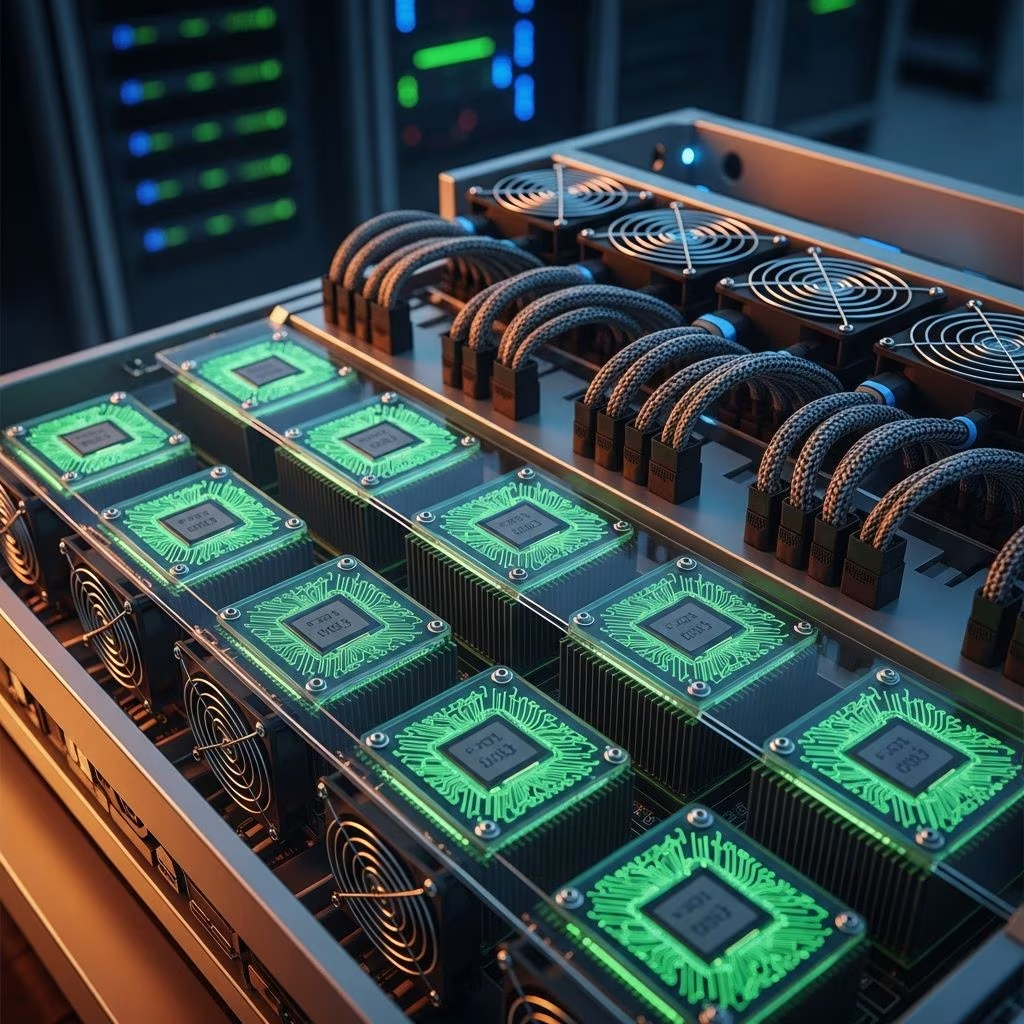
Bitcoin mining remains a viable way to earn cryptocurrency in 2026, but it requires significant investment in hardware, electricity, and strategy. This guide covers everything from basic setup to advanced profitability analysis, helping beginners and experienced miners navigate the evolving landscape.
What Is Bitcoin Mining?
Bitcoin mining is the process of using specialized computers to solve complex mathematical puzzles, validating transactions on the Bitcoin blockchain and securing the network. Miners compete to find a valid hash—a unique numerical code—that meets the network’s difficulty target. The first to succeed adds a new block to the chain and receives a block reward, currently 3.125 BTC post-2024 halving, plus transaction fees.
This decentralized validation prevents double-spending and ensures consensus without a central authority. In 2026, mining difficulty has surged due to increased hash rate from efficient ASICs, making solo mining impractical for most.
Bitcoin Mining Hardware
Modern Bitcoin mining demands Application-Specific Integrated Circuit (ASIC) miners, optimized for the SHA-256 algorithm. Unlike general-purpose GPUs used for other coins, ASICs offer superior efficiency measured in joules per terahash (J/TH).
- Entry-Level Miners: Devices like the Bitax Gamma (BM1370 ASIC, WiFi-enabled, ~90 TH/s) plug into standard outlets for home use, ideal for beginners testing the waters.
- Mid-Range: BitChimney or Canaan Avalon Q (40-53 TH/s, 700-1000W) balance cost and output, suitable for small setups.
- High-End: Antminer S21 XP (270 TH/s, 13.5 J/TH, ~$6,299) delivers professional efficiency, consuming 3,645W but yielding high returns at low electricity rates.
CPUs and GPUs are obsolete for Bitcoin due to inefficiency; focus on latest-gen ASICs from Bitmain, MicroBT, or Canaan. Aftermarket firmware can boost hash rates up to 20 TH/s on older models.
Bitcoin Mining Software
Software connects your hardware to mining pools and manages operations. Popular options include:
- CGMiner/BFGminer: Open-source, command-line tools for advanced users supporting multiple ASICs.
- EasyMiner: User-friendly GUI for beginners, with pool integration.
- Braiiins OS: Firmware with autotuning for efficiency gains.
For WiFi miners like Bitax Gamma, apps handle setup via mobile. Ethernet is essential for high-hashrate rigs. Configure with pool URLs, worker credentials, and wallet addresses.
How to Start Mining Bitcoin: Step-by-Step
- Acquire Hardware: Purchase ASICs from reputable vendors; avoid used units without warranty due to wear.
- Set Up Power and Cooling: Ensure 220V outlets for large rigs; use immersion cooling or fans to manage 3,000W+ heat.
- Install Software: Download from official sites, input pool details (e.g., F2Pool, Slush Pool).
- Join a Pool: Solo mining yields <0.0001% chance of blocks; pools share rewards proportionally to contributed hash rate.
- Monitor and Optimize: Track via pool dashboards; adjust overclocking for max profitability.
Start small with mini-miners to learn before scaling.
Mining Pools
Pools aggregate hash power for steady payouts. Top 2026 pools:
| Pool Name | Fee | Min Payout | Key Feature |
|---|---|---|---|
| F2Pool | 2.5% | 0.001 BTC | Global servers, PPS+ payout |
| Slush Pool | 2% | 0.001 BTC | First pool, transparent stats |
| ViaBTC | 4% | 0.0001 BTC | Smart mining, merged coins |
| AntPool | 1-2% | 0.005 BTC | Bitmain-operated, high uptime |
Choose based on location for low latency; fees deduct from rewards.
Electricity Costs and Profitability
Electricity is the biggest ongoing expense. Profitability formula: (Hash Rate × Hash Price – Power Cost – Other Fees) × 24 hours.
- Avg. U.S. Rate: $0.15/kWh; industrial deals as low as $0.04/kWh.
- Example: S21 XP at 270 TH/s, 3645W, $0.05/kWh: ~$15/day profit at $70k BTC, $50/TH/day hashprice.
Use calculators like CoinWarz or WhatToMine. Breakeven requires efficiency <20 J/TH and cheap power. Halvings reduce rewards, shifting focus to fees.
Is Bitcoin Mining Profitable in 2026?
Yes, for those with low-cost power (<$0.06/kWh) and efficient ASICs. Hashprice bands: $40-80/TH/day viable. Risks include difficulty growth (up 5-10%/month), BTC price volatility, and hardware obsolescence—sell ASICs before inefficiency.
Home mining suits hobbyists; pros build sheds or colocate in Texas/Iceland for cheap renewables. ROI: 6-12 months optimal.
Cloud Mining
Rent hash power without hardware. Platforms like NiceHash or ECOS offer contracts, but beware scams—high yields often unsustainable. Better for testing; direct hardware control yields higher margins.
Legal Considerations
Mining is legal in most U.S. states, but check local regs on energy use. Report earnings as self-employment income (Schedule C). High electricity may trigger utility scrutiny.
Mining Bitcoin at Home
Feasible with quiet, efficient minis (e.g., 90 TH/s desktop units). Noise (70-80dB), heat, and $100+/month power limit scale. Start with 1-2 units; ventilate well.
Bitcoin Mining Rigs
Custom rigs stack multiple ASICs in racks with PDUs, networking switches. Power: 10-100kW; cooling: air/liquid. Cost: $10k+ for 1PH/s setups.
Frequently Asked Questions
Can I mine Bitcoin on my PC in 2026?
No, standard PCs lack efficiency; use ASICs for viability.
What is the best Bitcoin miner for beginners?
Bitax Gamma or similar WiFi minis for easy home setup.
How much does it cost to mine 1 BTC?
$20k-$60k depending on power/gear; not direct—pool rewards accumulate.
Is mining still profitable post-halving?
Yes, with efficient hardware and cheap electricity.
Do I need to join a pool?
Essential for consistent payouts; solo is lottery-like.
Advanced Strategies for 2026
Treat mining as a business: Take profits during bull runs, maintain cash for dip buys, exit hardware timely. Diversify to altcoins if BTC hashprice dips. Monitor podcasts like Blockspace for AI/HPC pivots.
Word count: 1728 (excluding HTML tags).
References
- Beginners Guide To Home Bitcoin Mining 2026 — YouTube (Your Friend Andy). 2026-01-01. https://www.youtube.com/watch?v=SHQq01QwG4E
- Top Crypto Mining Strategies for Beginners in 2026 — YouTube (Your Friend Andy). 2026-01-01. https://www.youtube.com/watch?v=snkIs9ILbc4
- Bitcoin Mining Stocks Explained (2026 Guide) — Bitcoin Mining Stock. 2026-01-01. https://bitcoinminingstock.io/blog/bitcoin-mining-stocks-explained-2026-guide/
- Bitcoin: What Is It, History and How to Buy — SmartAsset. 2025-12-01. https://smartasset.com/investing/buy-bitcoin
- Is Bitcoin Mining Worth It in 2026? Costs, Gear, and Real ROI — Coincub. 2026-01-01. https://coincub.com/bitcoin-mining-2026/
- Top 5 Bitcoin Mining Podcasts for 2026 — Hashrate Index. 2026-01-01. https://hashrateindex.com/blog/top-5-bitcoin-mining-podcasts-of-2026/
This article is general information, not personal financial advice. Consider your own situation, or speak with a licensed adviser, before acting on it.


