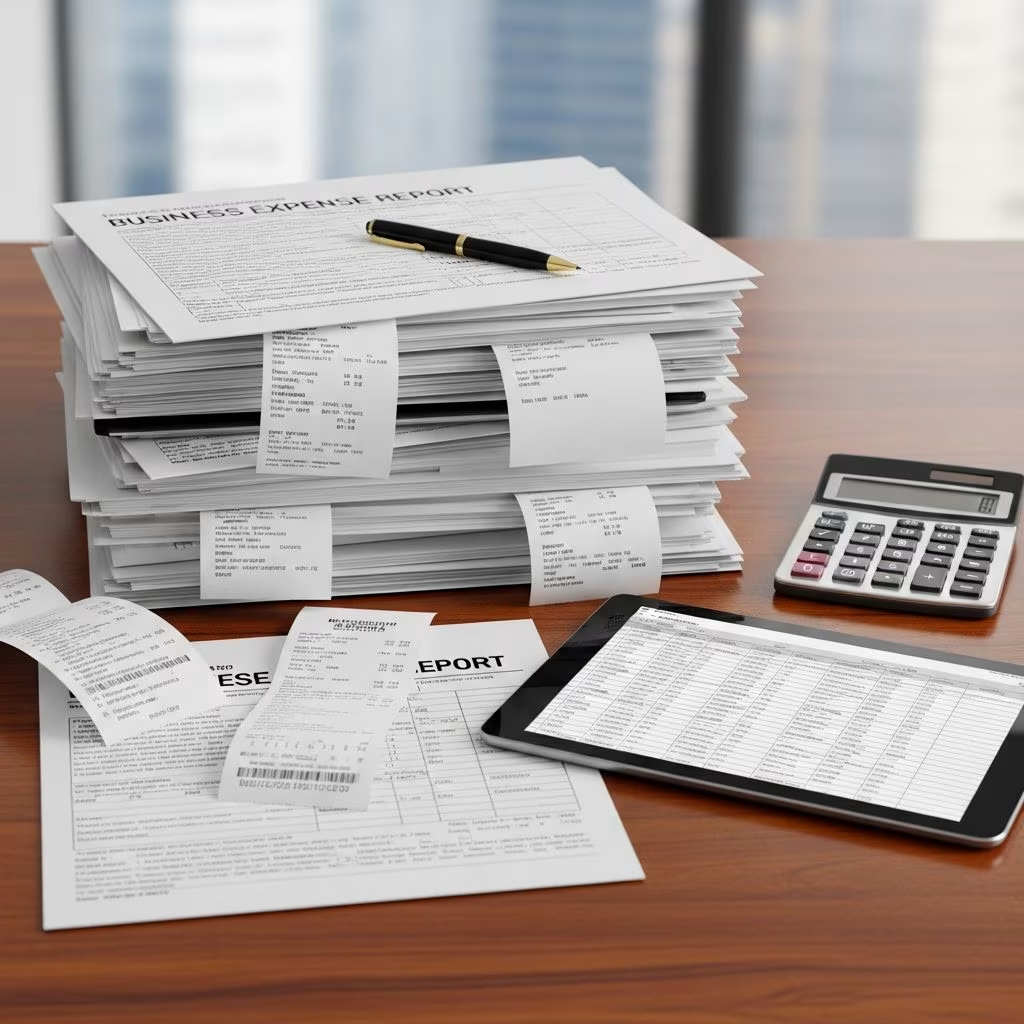
Business expense reports serve as vital tools for documenting and managing all costs incurred during company operations. These records enable organizations to reimburse employees fairly, maintain accurate financial ledgers, and prepare for tax obligations effectively.
Defining Business Expense Reports
A business expense report is a structured document that catalogs all professional expenditures made on behalf of a company. It captures details such as dates, amounts, vendors, and purposes for each transaction, often accompanied by receipts for verification. This process ensures transparency in spending and supports budgeting decisions.
Organizations rely on these reports to track outflows comprehensively, whether from employee personal funds, corporate cards, or other payment methods. By itemizing expenses, companies gain insights into spending patterns, prevent fraud, and comply with regulatory requirements.
Core Elements of an Effective Expense Report
Every expense report must include specific information to facilitate review and processing. Key components typically encompass:
- Employee details: Name, department, and contact information of the person submitting the report.
- Transaction date: Exact date when the expense occurred, matching receipt timestamps.
- Vendor or seller: Name of the supplier, retailer, or service provider.
- Description and purpose: Clear explanation of what was purchased and its business relevance.
- Amount: Total cost, including taxes, fees, and currency.
- Category: Classification such as travel, meals, supplies, or lodging.
- Receipts: Scanned or attached proofs of payment.
- Totals: Subtotals by category and grand total for the period.
These elements allow finance teams to allocate costs to appropriate accounts, like specific projects or departments, enhancing accounting precision.
Categories of Business Expenses
Expenses in reports fall into distinct categories to aid organization and analysis. Common classifications include:
| Category | Description | Examples |
|---|---|---|
| Travel | Costs associated with business trips | Flights, hotels, mileage |
| Meals & Entertainment | Food and events for client meetings | Lunches, dinners, tickets |
| Office Supplies | Items for daily operations | Paper, pens, software |
| One-time Purchases | Infrequent but necessary buys | Equipment, event fees |
| Recurring Costs | Ongoing operational expenses | Subscriptions, utilities |
Proper categorization simplifies integration with accounting software and tax filings.
Types of Expense Reports
Businesses use various report types based on frequency and scope:
- One-time reports: For sporadic expenses like annual conferences or emergency supplies. Ideal for infrequent spenders.
- Weekly/Monthly reports: Regular submissions aggregating all expenses over a set period, grouped by category or project.
- Project-specific reports: Tied to particular initiatives, tracking costs against budgets.
- Departmental reports: Filtered by team to monitor divisional spending.
Choosing the right type aligns with company policy and operational needs.
Step-by-Step Guide to Creating an Expense Report
Producing a report involves a systematic approach:
- Capture expenses promptly: Note details and retain receipts immediately after transactions.
- Select a template: Use digital tools or forms with predefined fields for consistency.
- Enter data accurately: Fill in all required fields, categorizing each item.
- Attach documentation: Scan and link receipts to corresponding entries.
- Calculate totals: Sum subtotals and verify the grand total.
- Review for compliance: Check against company policies on limits and approvals.
- Submit for approval: Send to managers or finance via email or software portal.
This process minimizes errors and speeds up reimbursements.
Approval and Reimbursement Procedures
Once submitted, reports undergo review. Managers verify legitimacy, policy adherence, and receipt validity. Approved reports trigger reimbursements via payroll, direct deposit, or checks. Timely processing, often within 10-30 days, boosts employee satisfaction. Automated systems can flag anomalies like duplicates or excesses.
Why Expense Reports Matter for Businesses
These documents provide multifaceted benefits:
- Budget control: Identify overspending and optimize resource allocation.
- Tax compliance: Substantiate deductions for IRS or equivalent authorities, reducing audit risks.
- Fraud prevention: Detailed audits deter false claims.
- Financial insights: Analyze trends for strategic planning.
- Employee trust: Fair reimbursements maintain morale.
Without them, companies face disorganized finances and potential penalties.
Common Mistakes to Avoid
Pitfalls can delay processing or lead to denials:
- Missing or illegible receipts.
- Inaccurate dates or amounts.
- Vague purposes lacking business justification.
- Exceeding per diem limits without approval.
- Personal expenses mixed with business ones.
- Late submissions beyond policy deadlines.
Training and clear policies mitigate these issues.
Leveraging Technology for Expense Management
Modern tools revolutionize reporting:
- Mobile apps: Scan receipts and auto-populate fields using OCR.
- Cloud platforms: Real-time submission and tracking.
- AI integration: Categorize expenses and detect duplicates automatically.
- Integration with accounting: Seamless data flow to QuickBooks or ERP systems.
Adopting such solutions cuts processing time by up to 80% and enhances accuracy.
Legal and Tax Implications
Reports must adhere to standards like IRS Publication 463 for deductible expenses. Only ordinary and necessary costs qualify. Retain records for at least three years. Non-compliance risks disallowed deductions or fines. Consult tax professionals for specifics.
Best Practices for Implementation
To optimize:
- Develop a detailed expense policy.
- Provide training sessions.
- Set clear approval workflows.
- Encourage digital submissions.
- Conduct regular audits.
These steps foster efficiency and accountability.
Frequently Asked Questions (FAQs)
What should be included in every expense report?
Essential details: date, amount, vendor, purpose, category, and receipts.
How often should employees submit reports?
Weekly or monthly, per company policy, to ensure timely reimbursements.
Can personal expenses be listed?
No, only verifiable business-related costs qualify.
What if a receipt is lost?
Provide a detailed explanation and alternative proof, but approval may be denied.
Are digital signatures acceptable?
Yes, they are legally binding in most jurisdictions.
Conclusion
Mastering business expense reports empowers organizations with financial clarity, compliance assurance, and operational efficiency. By standardizing processes and embracing technology, businesses can transform expense management into a strategic advantage.
References
- Expense Report: Definition, Examples, and Templates — Moss. 2024. https://www.getmoss.com/en-gb/finance-guide/expense-report
- What Is an Expense Report? — Ramp. 2024. https://ramp.com/blog/what-is-an-expense-report
- What Is an Expense Report? (Description and Types) — Indeed.com. 2024. https://www.indeed.com/career-advice/career-development/expense-report
- Expense Report: What It Is & Free Template to Create One — Rippling. 2024. https://www.rippling.com/blog/what-is-an-expense-report
- Expense Reporting: Definition and Process Explained — BILL. 2024. https://www.bill.com/learning/expense-reporting
- Understanding Expense Reports — DataSnipper. 2024. https://www.datasnipper.com/resources/understanding-expense-reports
This article is general information, not personal financial advice. Consider your own situation, or speak with a licensed adviser, before acting on it.