

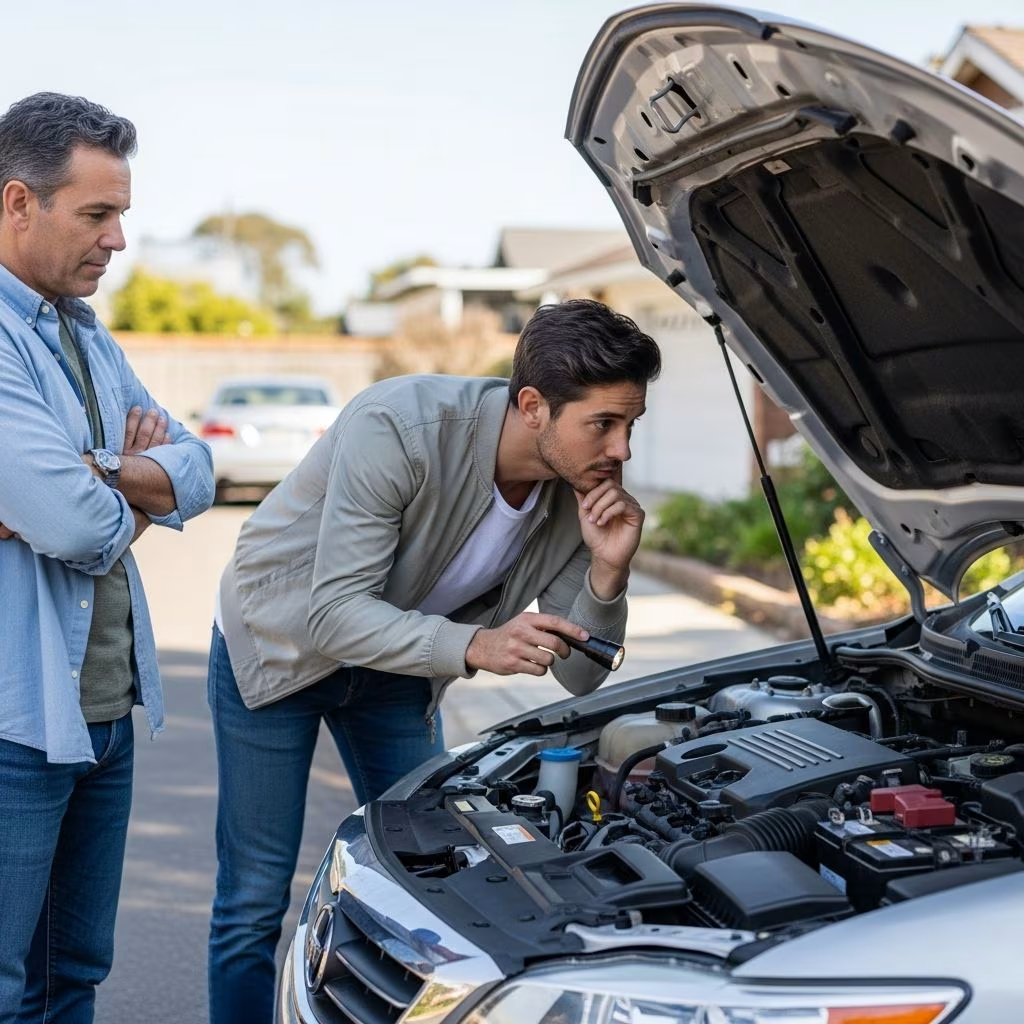
Purchasing a vehicle directly from an individual owner offers opportunities for better pricing and access to unique options not found at dealerships. This approach requires careful preparation to mitigate risks like hidden issues or fraudulent transactions.
Advantages of Private Party Purchases
Opting for a private sale bypasses dealership overheads, potentially reducing costs by thousands. Sellers often provide detailed usage history, and buyers access a broader range of models, including rare trims or well-maintained older vehicles.
- Cost Savings: No intermediary markups mean competitive pricing based on market value.
- Personal Insights: Direct conversations reveal maintenance habits and reasons for selling.
- Diverse Inventory: Explore listings beyond dealer stock via online classifieds and local ads.
Setting Your Financial Foundation
Begin by establishing a realistic budget that accounts for the purchase price, taxes, registration fees, and immediate maintenance. Secure pre-approval for financing from banks or credit unions, as private sellers rarely offer in-house loans.
| Expense Category | Estimated Cost Range |
|---|---|
| Purchase Price | $5,000 – $25,000 |
| Sales Tax (avg. 6-8%) | $300 – $2,000 |
| Registration & Title | $100 – $500 |
| Inspection/Repairs | $100 – $1,000 |
Researching Potential Vehicles
Identify models matching your needs for reliability, fuel efficiency, and features. Use valuation sites to gauge fair pricing, focusing on private party values rather than retail. Scrutinize online ads for complete details like mileage, ownership history, and disclosed issues—detailed listings often indicate honest sellers.
Evaluating Listings Effectively
Look for ads specifying accident history, service records, and odometer accuracy. Contact sellers to verify details and inquire about liens or outstanding loans.
- Ask: Has the vehicle been in collisions? What repairs were done recently?
- Confirm: Is the title clean and in the seller’s name?
- Probe: Why are you selling, and can you share service logs?
Verifying Vehicle Background
Obtain the VIN early and pull a comprehensive history report to uncover accidents, title problems, odometer discrepancies, or theft records. Check for open recalls via official databases like the NHTSA website.
Ensure no liens exist by matching the seller’s name to the title. This step prevents inheriting debts tied to the car.
Conducting Thorough Inspections
Meet in public spaces for safety. Perform a detailed walk-around before any test drive, checking for rust, tire wear, fluid leaks, and body panel alignment.
Pre-Test Drive Checklist
- Exterior: Dents, scratches, mismatched paint.
- Tires & Brakes: Even tread, no bulges.
- Lights & Signals: All functional.
- Underhood: Oil condition, belt cracks, battery corrosion.
- Interior: Seat tears, electronics operation, odors indicating water damage.
Test drive on varied roads to assess handling, braking, engine noise, and acceleration. Push down on corners to evaluate suspension bounce. Ideally, hire an independent mechanic for a professional evaluation, making any offer conditional on passing this inspection.
Mastering Price Negotiations
Leverage your research: If the asking price exceeds market value or issues are found, propose a lower figure backed by evidence. Private sellers often have flexibility, especially with documented repairs needed.
Sample Negotiation Script:
- State: “Based on the KBB private value and the worn brakes, I offer $X.”
- Listen to counteroffers and highlight comparable sales.
- Be prepared to leave if terms don’t align with your budget.
Secure Payment and Paperwork
Finalize at a bank or DMV for safety. Use cashier’s checks or bank transfers; avoid cash or wire services vulnerable to scams.
Required Documents:
- Signed title with odometer disclosure.
- Bill of sale noting price, date, VIN, and signatures.
- Emissions/safety certificates if mandated locally.
- Proof of insurance before driving off.
State DMV rules vary—verify requirements online or by phone. Block out seller’s personal info on copies for privacy.
Post-Purchase Essentials
Immediately transfer title and register at the DMV. Update insurance, providing the VIN for accurate quoting. Schedule servicing to address any deferred maintenance.
Red Flags and Avoidance Strategies
Steer clear of urgency pressure, VIN mismatches, or reluctance to allow inspections. Unrealistic prices often hide salvage titles or odometer fraud.
- Fraud Alert: Sellers evading mechanic checks or lacking title.
- Safety Tip: Test drives with a friend; verify plates match VIN.
- Scam Watch: No curbstoning—dealers posing as private owners.
Frequently Asked Questions
Is financing available for private sales?
Yes, many banks and credit unions offer loans; get pre-approved to strengthen negotiations.
Do I need a bill of sale?
Essential for proof of transaction; include all key details to protect both parties.
What if the seller has a loan on the car?
They must pay it off first or accompany you to the lender for payoff verification.
Can warranties transfer?
Factory warranties may, but confirm via VIN and remaining coverage.
How soon must I register the vehicle?
Typically 10-30 days; check state DMV for deadlines and fees.
State-Specific Considerations Table
| State Example | Title Transfer Req. | Bill of Sale | Emissions Test |
|---|---|---|---|
| California | Within 10 days | Required | Yes, major areas |
| Texas | 30 days | Recommended | Some counties |
| Florida | 30 days | Required | No |
Always consult your local DMV for precise rules, as they evolve.
References
- Buying a Car From a Private Seller: What’s Involved, Steps to Take, and Cautions — GEICO. 2024. https://www.geico.com/information/aboutinsurance/auto/buying-car-from-private-seller-guide/
- How to Buy a Car From a Private Seller & What You’ll Need — Nationwide. 2024. https://www.nationwide.com/lc/resources/auto-insurance/articles/buy-car-from-private-seller
- How To Buy a Used Car From a Private Seller — NerdWallet. 2024. https://www.nerdwallet.com/auto-loans/learn/tips-for-buying-a-used-car-from-a-private-seller
- How to Buy a Car From a Private Seller — CARFAX. 2024. https://www.carfax.com/buying/how-to-buy-a-car-from-a-private-seller
- Vehicle History and Recalls — National Highway Traffic Safety Administration (NHTSA). 2026-02-06. https://www.nhtsa.gov/recalls
This article is general information, not personal financial advice. Consider your own situation, or speak with a licensed adviser, before acting on it.


