

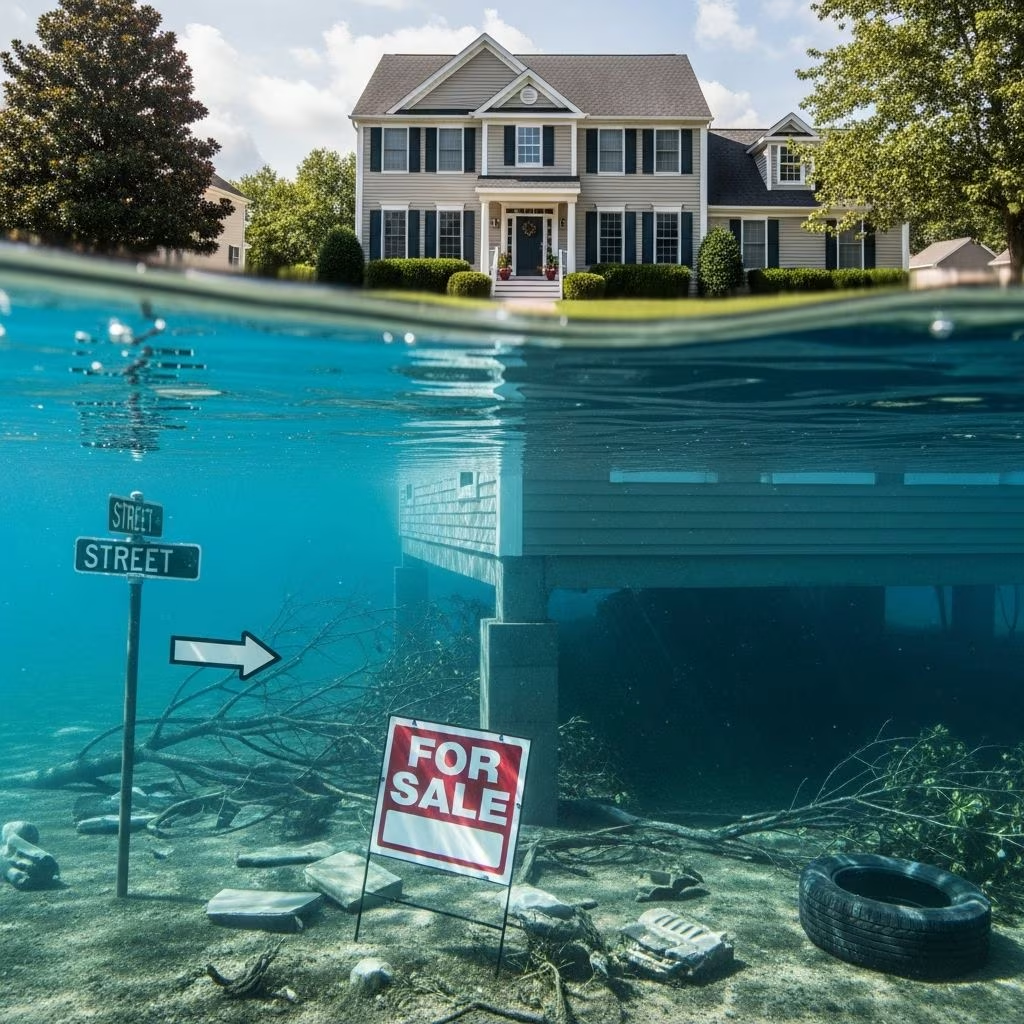
Acquiring a property in a flood-prone region demands careful evaluation of environmental hazards, financial commitments, and protective measures. These areas, often near captivating water bodies, offer scenic beauty but introduce elevated risks of water damage that can escalate costs dramatically.
Understanding Flood Risk Designations
Federal agencies like FEMA classify territories based on flooding probabilities to inform property owners and buyers. High-risk designations, known as Special Flood Hazard Areas (SFHAs), indicate at least a 1% annual flood chance, translating to a 26% likelihood over a typical 30-year mortgage term. These zones, labeled with A or V prefixes, encompass riverine and coastal vulnerabilities, where V zones face additional threats from storm surges and high-velocity waves.
Moderate and low-risk areas, prefixed B, C, or X, carry lesser probabilities but are not immune; they account for about one-third of federal flood aid despite lower premiums. Climate shifts amplify uncertainties, potentially reclassifying zones over time. Buyers should consult FEMA’s Flood Insurance Rate Maps (FIRMs) early, available via local authorities or online tools, to pinpoint a property’s status.
Financial Implications of Flood Zone Properties
Properties in these zones often command lower purchase prices due to perceived risks, providing affordability for risk-tolerant buyers. Waterfront allure can justify premiums in desirable locales, yet insurance mandates offset savings. A single inch of water inflicts up to $25,000 in damages, underscoring the peril.
| Flood Zone Type | Annual Flood Chance | 30-Year Mortgage Risk | Insurance Requirement |
|---|---|---|---|
| SFHA (A/V) | 1%+ | 26%+ | Mandatory for most mortgages |
| Non-SFHA (B/C/X) | <1% | Lower | Recommended |
This table summarizes core distinctions, highlighting why SFHAs trigger lender requirements for coverage. Premiums average $800 yearly via the National Flood Insurance Program (NFIP), varying by elevation, construction, and history. Private insurers may offer alternatives with broader protection.
Insurance Essentials for Flood-Exposed Homes
Standard homeowners policies exclude flood damage, necessitating separate flood insurance through NFIP or private carriers. Lenders enforce this for federally backed loans (FHA, VA, USDA) in SFHAs, with grace periods post-escrow to secure policies. Coverage splits into building (structure, systems) and contents, with NFIP capping at $250,000 and $100,000 respectively.
- Mandatory scenarios: Government mortgages in high-risk zones.
- Voluntary yet wise: All waterfront or low-elevation sites, as 20% of NFIP claims arise outside SFHAs.
- Cost factors: Zone, base flood elevation compliance, prior claims.
Shop via agents; NFIP’s Risk Rating 2.0 adjusts premiums for precise risk, potentially lowering costs for mitigated properties. Even minimal-risk homes warrant contents coverage for belongings.
Securing Financing Amid Flood Risks
Mortgage availability persists for flood zone homes if insured appropriately. Conventional lenders may waive requirements outside SFHAs, but all advise coverage. Appraisals reflect risks, possibly reducing loan-to-value ratios. Elevated closing costs arise from insurance escrows.
Government loans impose strict compliance; failure invites force-placed insurance at higher rates. Pre-approval processes should incorporate flood checks to avoid surprises. Budget for premiums equaling 0.5-1% of home value annually, plus reserves for deductibles ($1,000-$5,000 typical).
Pros and Cons of Flood Zone Investments
Compelling Benefits
- Affordable entry to premium locations, with discounts offsetting insurance.
- Proximity to recreational waters enhances lifestyle—boating, views, serenity.
- Mitigation investments boost resilience and resale value.
Significant Drawbacks
- Recurring insurance hikes strain budgets, especially post-claims.
- Building codes restrict renovations; elevations cost tens of thousands.
- Market stigma hampers appreciation; disclosure laws vary by state.
Weigh personal risk tolerance; families with assets may prefer inland safety.
Due Diligence Steps for Informed Buyers
- Map verification: Confirm zone via FEMA tools or county offices.
- History review: Check claims databases, past events.
- Site inspection: Assess elevation certificates, drainage, barriers.
- Insurance quotes: Obtain multiple before offers.
- Professional input: Engage flood specialists, surveyors.
Sellers aren’t uniformly required to disclose, so buyer vigilance is paramount. Negotiate credits for mitigations like sump pumps or fillers.
Mitigation Strategies to Safeguard Your Investment
Proactive upgrades minimize losses and premiums. FEMA endorses:
- Elevation: Raise structure above base flood level on pilings or fill.
- Wet floodproofing: Use water-resistant materials in crawlspaces.
- Barriers: Levees, flood vents in foundations.
- Landscaping: Grade for runoff, plant deep roots.
Grants via NFIP’s Flood Mitigation Assistance cover costs; compliant homes qualify for Community Rating System discounts up to 45%. Document improvements for insurers.
Market Trends and Future Considerations
Rising seas and storms intensify scrutiny; some insurers retreat from high-risk coasts. Resilient features gain favor, with green infrastructure like permeable pavements emerging. Buyers should project 30-year exposures, factoring climate models.
Frequently Asked Questions
Is flood insurance required for all flood zone homes?
Only in SFHAs with federally backed mortgages; otherwise recommended universally.
How much more expensive are flood zone homes to insure?
Average $800/year NFIP, higher in V zones or unsubsidized policies.
Can I buy a flood zone home with a conventional loan?
Yes, if insured where mandated; lenders assess overall viability.
What if the property floods before closing?
Contingencies allow exit; verify history via seller disclosures.
Do flood maps update, affecting my property?
Yes, periodically; Letters of Map Amendment can reclassify.
Final Thoughts on Flood Zone Homeownership
Thriving in flood-prone areas hinges on preparation: thorough research, robust insurance, and resilient design. Waterfront dreams are attainable with eyes wide open to probabilities and protections, ensuring long-term security and enjoyment.
References
- A guide to buying a house in a flood zone — Rocket Mortgage. 2023. https://www.rocketmortgage.com/learn/buying-a-house-in-a-flood-zone
- Buying a house in a flood zone? Know the risks first — Bankrate. 2023. https://www.bankrate.com/real-estate/buying-a-house-in-a-flood-zone/
- What is My Flood Risk — FEMA Floodsmart.gov. 2025. https://www.floodsmart.gov/flood-zones-and-maps/what-is-my-flood-risk
- Learn about the benefits of having flood insurance — First Street Foundation. 2023. https://help.firststreet.org/hc/en-us/articles/360048256113-Learn-about-the-benefits-of-having-flood-insurance
- Buying a house in a flood zone: 5 things to know — Chase. 2025. https://www.chase.com/personal/mortgage/education/buying-a-home/buying-house-in-flood-zone
This article is general information, not personal financial advice. Consider your own situation, or speak with a licensed adviser, before acting on it.


