

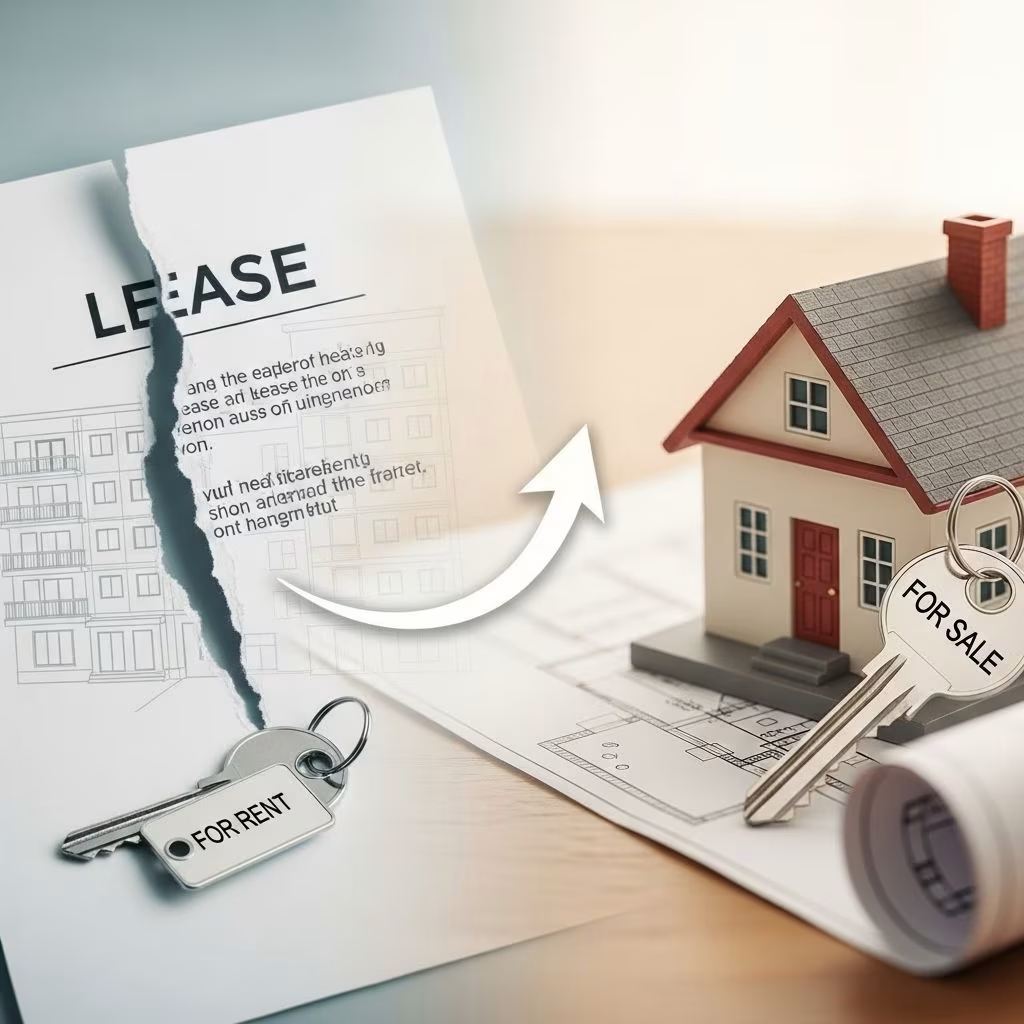
The decision to purchase your first home represents one of life’s most significant milestones. For many prospective buyers, however, this timing may coincide with an active rental lease that doesn’t expire when you’re ready to move. This timing mismatch creates a challenging situation: do you wait out the remainder of your lease, or do you terminate it early to transition into homeownership? The consequences of early lease termination extend beyond simple financial penalties, potentially affecting your creditworthiness and mortgage eligibility for years to come.
How Lease Termination Appears on Your Financial Record
One of the most common misconceptions about breaking a lease involves its direct impact on credit reporting. The act of terminating a lease agreement itself does not automatically appear on your credit report as a negative item. This distinction is important because it separates the contractual breach from the financial consequences that may follow.
However, this protective mechanism only applies if you fulfill your financial obligations to your landlord. Once you fail to pay outstanding charges owed for early termination, the situation changes dramatically. Your landlord may refer your unpaid debt to a collection agency, which will then report this delinquent account to credit bureaus. At this point, your credit profile carries a significant negative mark that can persist for seven years from the date of first delinquency.
The presence of a collections account creates multiple obstacles for homebuyers. Beyond the direct credit score damage, this mark signals to lenders that you have previously failed to meet contractual financial obligations. Mortgage lenders evaluate this history carefully when assessing your reliability as a borrower who will consistently make monthly payments.
The Collection Account Dilemma
When discussing collection accounts, it’s crucial to understand how different credit scoring models treat these items. Modern credit scoring systems, specifically FICO 3.0 and 4.0, employ algorithms that ignore collection accounts with zero balances. This means that if you eventually pay off the full amount owed to the collection agency, newer credit models may disregard this item entirely.
Unfortunately, most mortgage lenders continue using older credit scoring models that do not ignore zero-balance collections accounts. These traditional models treat paid collections similarly to unpaid ones, maintaining the negative impact on your credit score. Additionally, these older scoring models tend to weight recent negative items more heavily than aged ones, though collection accounts do gradually lose some of their impact over time.
The implications are substantial. A single collections account from a broken lease dispute can reduce your credit score by as much as 100 points, particularly if you have limited credit history or few accounts in good standing. This reduction can mean the difference between mortgage approval and denial, or between qualifying for a favorable interest rate versus one significantly higher.
Beyond Your Credit Report: Tenant Screening Revelations
Even if you manage to avoid collections and protect your credit score, another reporting mechanism threatens to expose your lease termination to mortgage lenders. Broken leases frequently appear on tenant screening reports, which maintain detailed rental history information separate from traditional credit reporting agencies.
Many mortgage lenders now incorporate tenant screening reports into their underwriting process. When reviewing your application, they examine your complete rental payment history, including any early terminations. This review provides context that pure credit scores cannot capture—specifically, whether you have honored or violated previous housing-related contracts.
Even if a particular lender doesn’t formally review tenant screening data, they typically contact your previous landlords as part of the verification process. During these conversations, your rental history comes to light. A landlord who experienced an early lease termination may provide an unfavorable reference when questioned about your reliability and payment history. This subjective evaluation can influence a lender’s decision-making, particularly if other aspects of your application are borderline.
Financial Consequences of Early Termination
The immediate financial impact of breaking a lease often exceeds what renters anticipate. Understanding these costs helps determine whether early termination makes financial sense relative to your homebuying timeline and budget.
Direct Penalties and Lost Deposits
- Security Deposit Forfeiture: Most landlords retain your full security deposit when you break a lease, using it to cover unpaid rent or lease termination fees
- Remaining Lease Payments: In many jurisdictions, you remain financially responsible for all remaining rent payments through the lease end date, regardless of when you move out
- Early Termination Fees: These contractually specified fees compensate the landlord for the inconvenience and expense of finding a replacement tenant
- Court Judgments: If landlords pursue legal action, they typically obtain judgments for at least one full month’s rent, plus court costs and attorney fees
- Lease Buyout Costs: Some landlords negotiate settlement amounts representing a percentage of remaining lease payments
The cumulative effect can be substantial. For a renter with nine months remaining on a $1,200 monthly lease who also loses a $1,500 security deposit, the potential financial obligation exceeds $12,000. When combined with down payment savings and closing costs for home purchase, this expense can significantly strain your finances.
Legal Ramifications and Court Involvement
Breaking a lease represents a breach of contract, giving landlords legal standing to pursue remedies through the court system. The outcome depends on local tenant laws, your lease terms, and your landlord’s willingness to litigate.
When landlords sue for early termination, courts typically rule in their favor, ordering payment of the remaining lease amount minus any reasonable efforts to re-lease the property. However, some states enforce tenant-friendly laws that require landlords to actively mitigate damages by finding replacement tenants. In these jurisdictions, you may owe only a portion of remaining rent plus any legitimate costs the landlord incurs.
Court involvement creates additional credit concerns beyond the financial judgment itself. Lawsuits appear on public records that mortgage lenders may review. Even if you eventually pay the judgment, this legal action remains visible on background reports, potentially affecting not only mortgage qualification but also future rental applications and other credit decisions.
Circumstances Permitting Guilt-Free Lease Exit
Certain situations provide legitimate pathways to terminate leases without the typical financial and credit consequences. Recognizing these exceptions can protect your interests while ensuring legal compliance.
Lease Provisions Supporting Early Exit
Some leases contain specific clauses allowing early termination under particular circumstances. These may include:
- Home purchase provisions permitting lease termination upon documentation of home purchase, typically requiring 30–60 days’ notice
- Employment relocation clauses allowing termination if you receive job transfer documentation
- Termination penalties that represent a fixed, reasonable cost (such as two months’ rent) rather than full remaining lease liability
- Month-to-month conversion options allowing transition from fixed-term to month-to-month tenancy with standard notice periods
Protected Circumstances
State and federal laws recognize certain situations where residents may break leases without financial penalty. These include:
- Domestic violence situations, with proper documentation
- Sexual assault or stalking circumstances involving safety concerns
- Unlawful harassment or violation of habitability standards by the landlord
- Active military deployment or military orders requiring relocation
If any of these circumstances apply, consult local tenant advocacy organizations or legal counsel to understand your specific protections and documentation requirements.
Strategic Approaches to Minimize Damage
If you must terminate your lease before it expires, several negotiation and planning strategies can reduce both financial and credit impacts.
Negotiation with Your Landlord
Direct communication with your landlord often yields better outcomes than unilateral lease termination. Present the situation professionally and offer solutions that address your landlord’s concerns. Potential compromises include:
- Offering to find and screen replacement tenants, reducing your landlord’s effort
- Proposing a reduced financial settlement in exchange for immediate lease release
- Agreeing to maintain the property in move-out condition to preserve your security deposit
- Offering to pay a reasonable buyout fee (perhaps 1–2 months’ rent) instead of full remaining lease liability
Timing Your Mortgage Application
If you anticipate needing to break your lease, time your mortgage application strategically. Consider applying before notifying your landlord of early termination, as lenders typically verify rental history during underwriting. Once your mortgage is approved and you’ve locked your interest rate, the pending lease termination becomes less critical to your loan status.
Documentation and Written Agreements
Any settlement with your landlord must be documented in writing. Obtain written confirmation of:
- The agreed-upon payment amount and payment schedule
- The effective lease termination date
- Confirmation that the landlord will not report the early termination to credit bureaus or collection agencies
- Agreement regarding security deposit handling
This documentation protects you if disputes arise later and proves valuable if you need to explain the situation to mortgage lenders.
Decision Framework: Should You Break Your Lease?
The decision to terminate your lease early involves weighing multiple factors against your homeownership timeline and financial capacity.
| Factor | Consider Breaking Lease | Consider Waiting |
|---|---|---|
| Remaining Lease Duration | Less than 3 months remaining | More than 6 months remaining |
| Lease Termination Costs | Less than 1–2 months’ rent | More than 3 months’ rent or full remaining balance |
| Current Credit Status | Excellent credit; can absorb minor damage | Borderline credit; need to protect score |
| Mortgage Readiness | Pre-approved; locked rate; ready to close | Still saving; exploring options; not yet pre-approved |
| Home Market Conditions | Competitive market; ideal home available now | Slow market; options will remain available |
| Landlord Cooperation | Willing to negotiate; responsive to offers | Difficult relationship; likely to pursue legal action |
Frequently Asked Questions
Does a broken lease automatically prevent me from getting a mortgage?
A broken lease alone does not automatically disqualify you from mortgage approval. However, if it results in collections accounts or significantly damages your credit score, it makes approval more difficult. Many lenders will work with borrowers who have late lease issues if they can explain the circumstances and demonstrate current financial stability.
How long does a broken lease affect my credit?
Collection accounts from lease termination disputes remain on your credit report for seven years. However, their impact diminishes over time. After three to four years, they typically influence your credit score less severely than when first reported. By the time five to seven years have passed, many lenders view them as historical rather than indicative of current financial responsibility.
Can my landlord report a paid collections account to credit bureaus?
Once you pay a collections account, the collection agency typically reports it as paid status. However, older credit scoring models used by many mortgage lenders do not disregard paid collections, meaning it continues affecting your score. The account will eventually age off your credit report after seven years from the original delinquency date.
What if my landlord and I agree to a settlement?
Written settlement agreements protect you, provided the landlord honors them. Ensure the agreement specifies that the landlord will not report the termination to credit bureaus or collection agencies. Keep copies of all communications and payment receipts as evidence of your good-faith resolution.
Will mortgage lenders ask about my rental history?
Most mortgage lenders contact previous landlords as part of their verification process. Be prepared to explain any lease terminations honestly. Many lenders understand that life circumstances change and are more concerned with your recent payment history and current financial status than isolated past incidents.
Moving Forward: Your Action Plan
If you’re considering homeownership while under a rental lease, develop a comprehensive action plan that addresses both opportunities and risks. Begin by reviewing your lease document carefully, looking specifically for any home purchase clauses or early termination provisions that might permit guilt-free exit.
Next, research your state’s tenant laws regarding lease termination rights and landlord mitigation obligations. These laws vary significantly and may provide protections you’re unaware of. Consult with a local tenant rights organization or attorney if your situation involves any protected circumstances like domestic violence or unsafe conditions.
Finally, have a frank conversation with your mortgage lender about your lease situation before formal application. Understanding exactly how your specific circumstances might affect your loan approval, interest rate, and terms allows you to make an informed decision about timing and strategy. In many cases, the path forward becomes clearer once you understand all available options and their consequences.
References
- Can a Broken Lease Affect Buying a House? — Experian. 2024. https://www.experian.com/blogs/ask-experian/can-a-broken-lease-affect-buying-a-house/
- Breaking a Lease to Buy a House: Can (and Should) You Do It? — Rocket Companies, Inc. 2024. https://www.rocketmortgage.com/learn/breaking-lease-to-buy-a-house
- Does Breaking a Lease Early Affect Your Credit Score? — Homebuyer.com. 2024. https://homebuyer.com/learn/breaking-lease-to-buy-house
- Can You Break a Lease if You Buy a House? — Zillow, Inc. 2024. https://www.zillow.com/learn/can-you-break-a-lease-if-you-buy-a-house/
- Breaking a Lease Early to Buy a Home — NewHomeSource. 2024. https://www.newhomesource.com/learn/breaking-a-lease-early-to-buy-a-home/
This article is general information, not personal financial advice. Consider your own situation, or speak with a licensed adviser, before acting on it.


