

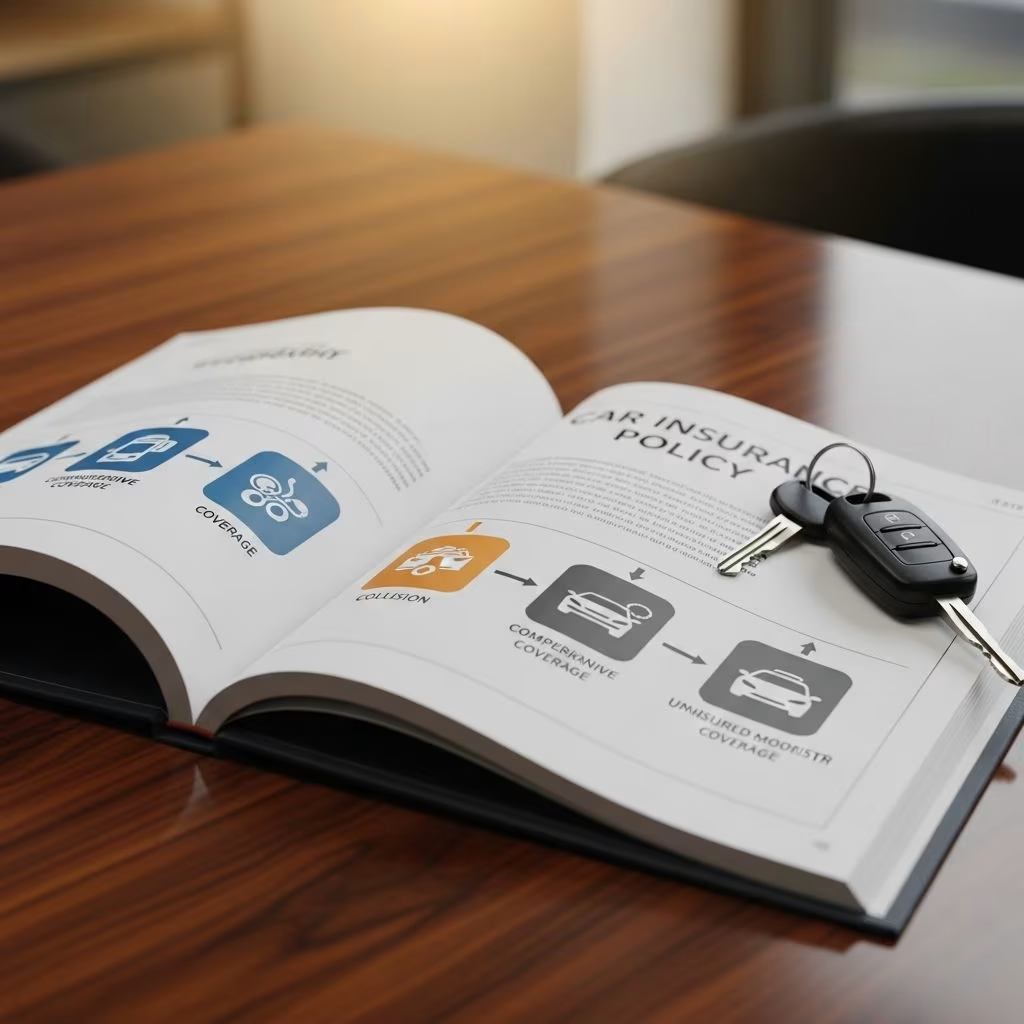
Navigating the world of car insurance can feel overwhelming with so many coverage options available. Each type serves a specific purpose, protecting you from financial loss due to accidents, theft, or other incidents. Understanding these helps you build a policy that meets legal requirements and personal needs.
Why Car Insurance Coverage Matters
Car insurance acts as a financial safety net, covering costs from vehicle damage, medical bills, and legal fees. Most states mandate minimum coverage to ensure drivers can compensate others for harm caused. Beyond basics, optional coverages provide broader protection for your car and health.
Selecting the right mix depends on factors like your driving habits, vehicle value, and budget. Lenders often require **collision** and **comprehensive** for financed cars, while high-risk areas may need more liability limits.
Mandatory Coverages: Building the Foundation
Every state except New Hampshire requires some liability insurance. This core coverage forms the base of any policy.
Liability Insurance: Protecting Others
**Liability coverage** pays for injuries or property damage you cause to others in an at-fault accident. It splits into two parts:
- Bodily injury liability: Covers medical treatment, lost wages, and legal defense for injured parties.
- Property damage liability: Handles repairs to vehicles, fences, or structures damaged by your car.
State minimums vary, like 25/50/25 ($25K per person/$50K per accident for injury, $25K property). Experts recommend higher limits to avoid personal asset risks.
Protection for Your Vehicle: Collision and Comprehensive
These cover your car’s repairs, regardless of fault (collision) or from non-collision events (comprehensive).
Collision Coverage Details
Collision pays to fix or replace your vehicle after hitting another car or object, like a pole. A deductible applies—you pay this out-of-pocket first.
Ideal for newer or financed vehicles, as it covers at-fault crashes where liability doesn’t help your car.
Comprehensive Coverage Essentials
Comprehensive handles non-collision damage from theft, vandalism, fire, hail, floods, or animal strikes. Like collision, it uses actual cash value minus deductible.
In hail-prone or high-theft areas, this prevents total loss from events beyond your control.
| Coverage Type | What It Covers | Typical Deductible |
|---|---|---|
| Collision | Car crashes with vehicles/objects | $500–$1,000 |
| Comprehensive | Theft, weather, vandalism, animals | $100–$500 |
Coverage for Medical and Injury Costs
Beyond vehicle fixes, injuries rack up bills fast. These options cover health-related expenses.
Personal Injury Protection (PIP)
PIP, or no-fault coverage, pays medical bills, lost wages, and funeral costs for you and passengers, regardless of fault. Required in no-fault states like Florida and Michigan.
It also covers household services if injured, providing quick payouts without lawsuits.
Medical Payments (MedPay)
MedPay covers minor medical and funeral expenses for you, passengers, or family, no-fault based. Limits are low ($1K–$5K), making it a budget-friendly add-on where PIP isn’t mandated.
Defending Against Uninsured Drivers
About 13% of drivers lack insurance. **Uninsured/underinsured motorist (UM/UIM)** coverage protects you if hit by them.
- UM bodily injury: Medical costs for you/passengers.
- UM property damage: Vehicle repairs.
- UIM: Extends to drivers with insufficient limits.
Many states require UM; match it to your liability for balance.
Optional Add-Ons for Extra Security
Tailor your policy with these for specific risks.[10]
- Rental reimbursement: Pays for a rental car during repairs from covered claims.
- Roadside assistance: Towing, jump-starts, lockouts.
- Gap insurance: Covers loan balance exceeding car value post-total loss.
- New car replacement: Replaces totaled new vehicles with brand-new models.
- Rideshare coverage: Extends protection for Uber/Lyft drivers.
How State Laws Shape Your Policy
Coverage mandates differ:
- No-fault states (12 + Puerto Rico) require PIP.
- Others mandate UM/UIM.
- All but NH need liability.
Check your DMV for minimums; full coverage (liability + collision + comprehensive) suits financed cars.
Factors Influencing Coverage Choices
Vehicle Value and Age
Drop collision/comprehensive on old cars where premiums exceed value.
Driving Environment
Urban or weather-vulnerable areas warrant comprehensive; highways need higher liability.
Budget and Deductibles
Higher deductibles lower premiums but raise out-of-pocket costs. Balance wisely.
Cost-Saving Strategies
- Bundle policies: Auto + home for discounts.
- Good driver discounts: Clean records save 10–25%.
- Safety features: Airbags, anti-theft devices reduce rates.
- Pay annually: Avoid monthly fees.
Shop quotes yearly; rates fluctuate.[10]
Common Myths Debunked
- Myth: Minimum coverage suffices. Fact: It leaves you exposed to lawsuits.
- Myth: Full coverage means unlimited protection. Fact: Limits apply; umbrellas extend further.
- Myth: Rental cars are covered. Fact: Add endorsements needed.
Frequently Asked Questions
What are the three main types of car insurance?
Liability (required), collision, and comprehensive form the core trio. Liability covers others; the rest protect your vehicle.
Is full coverage worth it?
Yes for new/financed cars; weigh premiums vs. replacement costs for older ones.
What’s the difference between PIP and MedPay?
PIP is broader (wages, services), required in no-fault states; MedPay is simpler, medical-only.
Do I need UM/UIM if others states require it?
It’s vital everywhere—uninsured drivers exist nationwide.
How much liability should I carry?
At least 100/300/100; more if assets to protect.
Steps to Review Your Policy
- Assess state minimums via DMV.
- Evaluate vehicle value and risks.
- Compare quotes from multiple insurers.
- Adjust deductibles and limits.
- Add riders for gaps.
Annual reviews ensure optimal protection.[10]
References
- 6 Types of Car Insurance Coverage – Allstate — Allstate. 2026-01. https://www.allstate.com/resources/car-insurance/types-of-car-insurance-coverage
- 7 Types of Car Insurance Coverage to Know | Mercury Insurance — Mercury Insurance. https://www.mercuryinsurance.com/resources/basics-101/types-of-car-insurance-coverage.html
- Auto Insurance Coverage: 6 Types Explained | The Hartford — The Hartford. https://www.thehartford.com/aarp/car-insurance/coverage
- Types of Car Insurance Coverages | Progressive — Progressive. https://www.progressive.com/answers/types-of-car-insurance/
- Car Insurance Coverage Types – GEICO — GEICO. https://www.geico.com/information/aboutinsurance/auto/
- Auto insurance basics—understanding your coverage | III — Insurance Information Institute. https://www.iii.org/article/auto-insurance-basics-understanding-your-coverage
This article is general information, not personal financial advice. Consider your own situation, or speak with a licensed adviser, before acting on it.


