

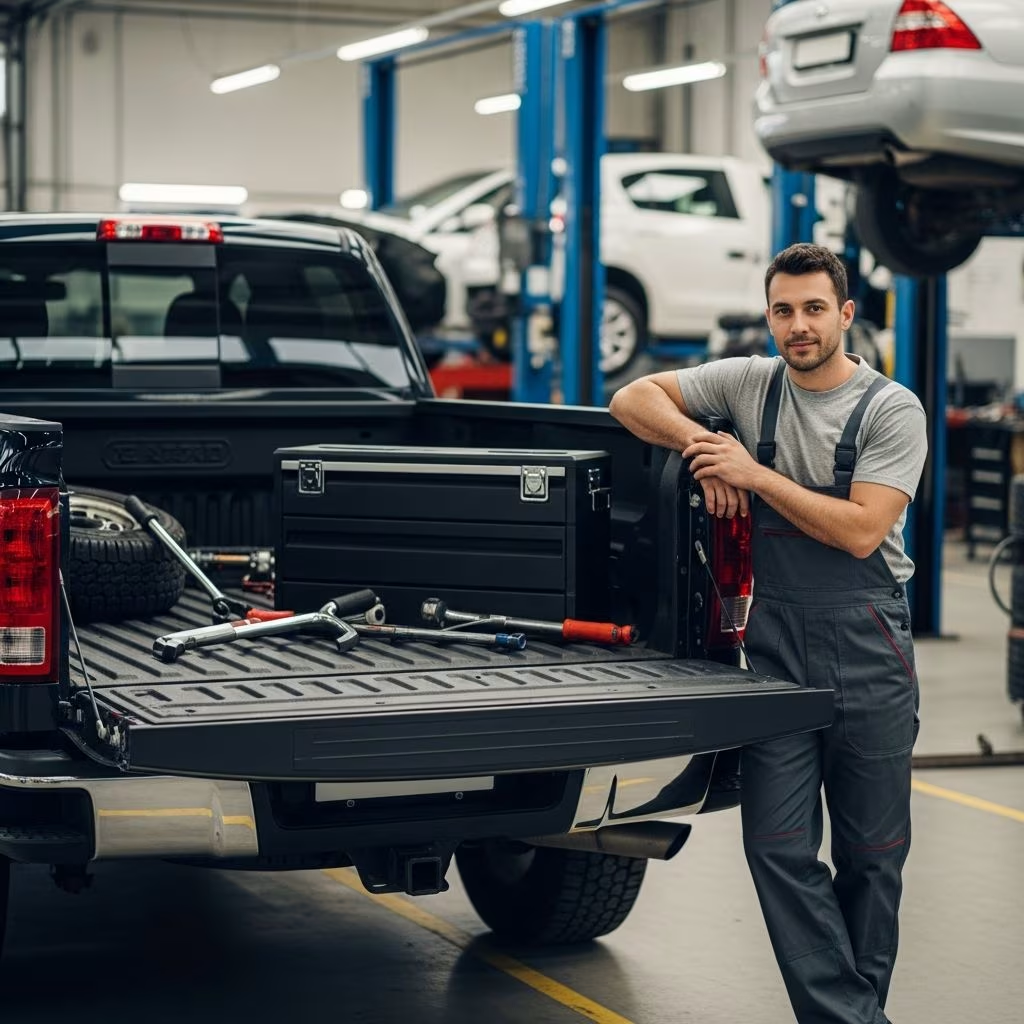
Car repairs can be one of the biggest unexpected expenses for drivers, often hitting the wallet hard when you least expect it. Shady mechanics push unnecessary services, inflate prices, or perform subpar work, turning routine maintenance into a financial nightmare. This comprehensive guide reveals common rip-offs, red flags to watch for, and actionable strategies to protect yourself, drawing from investigative reports and consumer protection advice. By staying informed, you can save hundreds or even thousands of dollars annually.
Understanding the Scope of Car Repair Scams
Car repair rip-offs are among the most reported consumer scams, affecting millions of drivers each year. Investigative journalism, such as CBS’s undercover operation across multiple states, exposed how 10 out of 13 shops recommended unneeded repairs on identical vehicles with minor issues like brake pads. Similarly, recent reports highlight mechanics adding fluids beyond manufacturer recommendations or swapping premium parts with cheap knockoffs that fail safety standards. These tactics exploit drivers’ lack of technical knowledge, leading to overcharges averaging 30-65% above fair market rates.
The problem spans dealerships, independent shops, and chains. In one study, 65% of shops reduced quotes when customers negotiated, proving prices are often padded for profit. Women and elderly drivers report higher victimization rates, as some shops assume less mechanical savvy. Awareness is your first defense—know that routine diagnostics should rarely exceed $100-150, and always demand itemized estimates.
Common Car Repair Rip-Offs to Watch Out For
Mechanics use predictable tricks to upsell. Here’s a breakdown of the most frequent scams:
- Brake Job Overkill: Shops claim rotors need replacement when only pads are worn. Truth: Pads last 30,000-70,000 miles; rotors can be resurfaced for $20-50 each if not cracked. Undercover tests showed quotes jumping from $160 (pads only) to $320+ with fake rotor issues.
- Transmission Flush Fraud: Pushed every 30,000 miles despite manufacturer intervals of 100,000+. Costs $150-300 unnecessarily, risking fluid contamination.
- Alignment and Balance Bait: Tires wear unevenly? Shops blame alignment ($100+) instead of free rotation neglect. Balance is $15-20 per tire—insist on proof via printouts.
- PCV Valve and Fuel Injector ‘Cleaning’: Rarely needed; often a $100-200 ruse. Modern engines self-clean.
- Knockoff Parts Swap: Charge for OEM ($200+) but install aftermarket ($50) that fails prematurely.
- Diagnostic Fee Gouging: $119 just to ‘look,’ without fixes—walk away.
| Rip-Off | Fair Cost | Scam Quote Average | Red Flag |
|---|---|---|---|
| Brake Pads Only | $150-250 | $400-600 | Recommends rotors without measuring thickness |
| Transmission Flush | $80-120 (if needed) | $200-350 | Pushed routinely, not per manual |
| Wheel Alignment | $75-100 | $150+ | No before/after printout |
| Diagnostic Scan | $50-100 | $120-200 | Fee without repair discount |
Red Flags That Scream ‘Rip-Off’
Spot these warning signs before handing over keys:
- Pressure to approve repairs immediately: “We need to do this now or your car won’t make it home.” Legit shops explain and allow time.
- Vague estimates: “Around $500-800” instead of itemized parts/labor.
- No warranty offered: Honest work comes with 12-month/12,000-mile guarantees.
- Upsells without proof: Claims of ‘leaks’ sans dye tests or pressure checks.
- Shop won’t let you watch or provide old parts: They may reuse or discard to hide fakes.
- Poor online reviews or no BBB accreditation.
If the mechanic avoids your questions or rushes you, grab your keys and leave. As experts advise, test small jobs first to gauge trustworthiness.
Proven Strategies to Avoid Getting Ripped Off
Empower yourself with these steps:
1. Prep Before You Go
Consult your owner’s manual for service intervals. Use free tools like AutoMD for average costs by ZIP code. Track maintenance history to challenge dubious claims.
2. Get Multiple Quotes
Visit 2-3 shops for big jobs (> $300). Discrepancies reveal padding—average them for a fair price benchmark.
3. Negotiate Aggressively
AutoMD’s tests showed 65% success negotiating lower prices. Say, “That’s above average; can you match $X?” Offer cash discounts.
4. Demand Transparency
Insist on written, detailed estimates breaking out parts, labor, tax. Request old parts returned. Video the inspection if allowed.
5. Choose Wisely
Opt for independents over chains for savings (20-40% less). Check reviews on Google, Yelp, BBB. Women: Bring a male friend if uneasy.
6. DIY Basics
Learn oil changes ($30 vs. $80), air filters, wipers. YouTube tutorials abound for safe tasks.
7. Aftermarket Smarts
Quality generics match OEM at half price. Avoid for safety-critical like airbags.
Implementing these cut rip-off risk by 80%, per consumer reports.
Choosing a Trustworthy Mechanic
Look for ASE-certified techs (gold standard). Family-owned shops often prioritize loyalty over quick bucks. Test with oil changes: Fair price under $50 including filter.
Ask friends for referrals. Drive by—clean bays signal professionalism. Verify state licenses; report scams to AG or BBB.
Frequently Asked Questions (FAQs)
Q: How do I know if I really need new brakes?
A: Measure pad thickness (> 3mm safe). Listen for squealing; feel for vibration. Shops must show wear, not guess.
Q: What’s a fair diagnostic fee?
A: $50-120, often waived with repairs. Refuse standalone charges without fixes.
Q: Can I negotiate at dealerships?
A: Yes, but expect 20% premium. Use independents for routine work.
Q: Are chain shops like Midas safer?
A: Mixed; some honest, but incentives push upsells. Check reviews.
Q: What if they damage my car?
A: Document pre-condition photos. Demand warranty; escalate to small claims if needed.
Q: How often should I flush transmission?
A: Per manual (60k-100k miles), not routinely. Drains suffice vs. full flushes.
Legal Protections and Reporting Scams
Federal Magnuson-Moss Warranty Act mandates disclosure of parts used. State laws require written estimates over $100. File complaints with FTC, state AG, or BBB—public shaming works.
For major fraud, consult attorneys; class actions have won millions against chains.
Long-Term Savings: Maintenance Best Practices
Prevent rip-offs with proactive care:
- Rotate tires every 5k miles.
- Change oil per manual (synthetic 10k miles).
- Flush coolant every 5 years.
- Inspect belts/hoses yearly.
- Use quality fuel/filter to avoid injectors.
Budget $0.10/mile for maintenance on average cars. Join AAA for towing/roadside perks.
By mastering these tactics, you’ll drive confidently, wallet intact.
References
- Car Repair Rip-Offs — CBS News (via YouTube). 2010-04-14. https://www.youtube.com/watch?v=nvcuM8sRhB4
- Scam Alert: Car Repair Ripoffs — FOX5 Las Vegas (via YouTube). 2025-08-19. https://www.youtube.com/watch?v=F2rgoctX_R8
- Auto Care Fact Sheet — Automotive Service Association (official industry body). 2024-06-01. https://www.asashop.org/consumer-information/
- Vehicle Maintenance and Repair: Advice for Consumers — Federal Trade Commission (FTC.gov). 2023-11-15. https://consumer.ftc.gov/articles/vehicle-maintenance-and-repair-advice-consumers
- Brake Repair Costs and Standards — National Highway Traffic Safety Administration (NHTSA.gov). 2025-02-10. https://www.nhtsa.gov/equipment/tires-and-brakes
This article is general information, not personal financial advice. Consider your own situation, or speak with a licensed adviser, before acting on it.


