

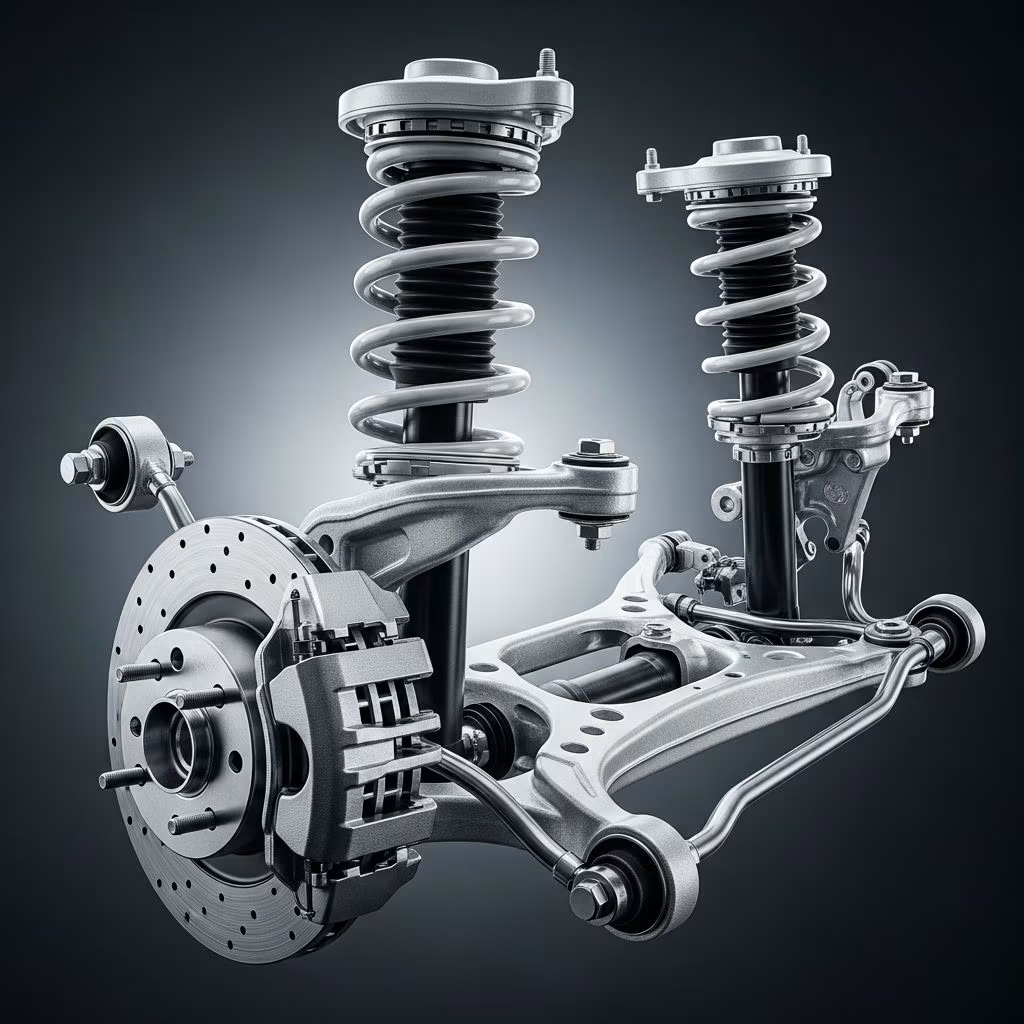
Your vehicle’s suspension system is the unsung hero of every drive, bridging the gap between rough roads and a comfortable cabin. It absorbs shocks, maintains tire contact with the pavement, and ensures precise handling. Understanding its components, designs, and care routines empowers you to drive safer and extend your car’s lifespan.
Why Suspension Matters for Driving Performance
The suspension influences ride comfort, safety, and efficiency. It keeps wheels planted during turns, braking, and acceleration, preventing skids and improving fuel economy by optimizing tire wear. Poor suspension leads to uneven tire tread, pulling, and hydroplaning risks on wet roads.
Springs store energy from bumps, while dampers dissipate it to avoid bouncing. Together with steering and frame elements, they form a cohesive unit for stability.
Core Components of Modern Suspension Systems
A typical setup includes several interconnected parts working in harmony. Here’s a breakdown:
- Springs: These elastic elements—coil, leaf, torsion bar, or air—compress to absorb impacts from potholes or curbs, protecting passengers and cargo.
- Shock Absorbers (Dampers): Hydraulic or gas-charged units that control spring rebound, preventing excessive oscillation for a stable ride.
- Struts: All-in-one assemblies combining shocks, springs, and structural support, common in front suspensions for space efficiency.
- Control Arms: Pivoting links connecting the wheel hub to the chassis, allowing vertical movement while restricting lateral shift.
- Ball Joints: Spherical bearings enabling smooth wheel articulation for steering and suspension travel; upper and lower types handle different loads.
- Steering Knuckle: The hub where wheel, brake, and suspension meet, pivoting for turns.
- Anti-Sway (Stabilizer) Bars: U-shaped rods linking left and right wheels to reduce body roll during cornering.
- Bushings and Rods: Rubber or polyurethane cushions absorbing vibrations and linking components flexibly.
The frame or chassis anchors everything, bearing the vehicle’s weight.
Popular Suspension Designs Explained
Suspensions vary by vehicle type, balancing cost, performance, and comfort. Independent systems allow wheels to move separately for better handling; dependent ones link wheels via a solid axle for durability.
| Type | Description | Best For | Pros | Cons |
|---|---|---|---|---|
| MacPherson Strut | Compact front setup with strut, coil spring, and lower control arm. | Compact cars, sedans | Space-saving, affordable | Limited adjustability |
| Double Wishbone | Two A-shaped arms per wheel for precise control. | Sports cars | Superior handling, camber control | Complex, costly |
| Multi-Link | 3-5 links per wheel for nuanced motion. | Luxury vehicles | Excellent ride, stability | Expensive repairs |
| Torsion Beam | Twisting beam connecting rear wheels. | Economy cars | Simple, lightweight | Reduced independence |
| Solid Axle (Leaf/Coil) | Rigid axle with springs; leaf for trucks. | Trucks, off-road | Durable, load-bearing | Poor on-road comfort |
| Air Suspension | Adjustable air bags replacing coils. | Luxury SUVs | Adaptive height, smooth | High maintenance |
Wheel Alignment: The Hidden Suspension Ally
Alignment settings—camber (wheel tilt), caster (steering axis angle), and toe (in/out angle)—ensure even tire contact. Misalignment strains suspension, causing pull, vibration, or uneven wear. Professional checks every 12,000 miles or after impacts are recommended.
- Camber: Negative for cornering grip, positive for straight-line stability.
- Caster: Positive enhances steering return.
- Toe: Slight in/out for tire longevity.
Spotting Suspension Problems Early
Neglect invites costly fixes. Watch for:
- Noisy clunks or rattles over bumps (worn bushings/ball joints).
- Bouncy ride or nose-diving on brakes (failing shocks).
- Uneven tire wear or vehicle pulling (alignment/misaligned arms).
- Leaking fluid from shocks or struts.
- Excessive body roll or harsh impacts.
DIY test: Push down each corner; excessive bounce (2+ rebounds) signals damper failure.
Maintenance Routines for Longevity
Regular care prevents breakdowns:
- Visual Inspections: Monthly checks for leaks, cracks, or looseness.
- Tire Rotation/Balance: Every 5,000-8,000 miles to even wear.
- Alignment Service: Annually or post-pothole.
- Component Replacement: Shocks/struts every 50,000-100,000 miles.
Table of typical lifespans:
| Component | Average Life (miles) |
|---|---|
| Shocks/Struts | 50,000-80,000 |
| Ball Joints | 100,000+ |
| Bushings | 50,000-70,000 |
| Control Arms | 100,000+ |
Repair Costs and DIY vs. Pro
Expect $500-$1,500 for strut replacement per axle; full systems run $2,000+. DIY suits basic inspections, but alignments and joint presses need shops.
Upgrades for Enhanced Performance
Performance enthusiasts swap stock parts:
- Adjustable coilovers for tunable damping.
- Polyurethane bushings for sharper response.
- Heavy-duty sway bars for less roll.
- Air systems for load leveling.
Off-roaders opt for lifted leaf springs and long-travel shocks.
Frequently Asked Questions (FAQs)
What happens if suspension fails?
Loss of control, tire blowouts, and crashes; address issues promptly.
Shocks vs. Struts: What’s the difference?
Shocks dampen only; struts add structural support and often include springs.
How often should I replace suspension parts?
Every 50,000-100,000 miles, based on driving conditions.
Can bad suspension affect fuel economy?
Yes, via increased rolling resistance and drag.
Is suspension maintenance DIY-friendly?
Inspections yes; major repairs need tools and expertise.
References
- Car Suspension Components, Animation and Different Types of … — YouTube (Vehicle Engineering channel). 2023. https://www.youtube.com/watch?v=aNxSigpIhxA
- Suspension System Components – YouTube — YouTube (Vehicle Engineering). 2019-09-27. https://www.youtube.com/watch?v=AVsBgoU88MU
- The Suspension System & Its 7 Parts — Auto Specialty of Lafayette, Inc. N/A. https://www.autospecialtyoflafayette.com/blog/the-suspension-system-its-7-parts/
- What Is Suspension in a Car? — Universal Technical Institute (UTI). N/A. https://www.uti.edu/blog/automotive/car-suspension
- Car Suspension Systems Explained — Hollenshade’s. N/A. https://www.hollenshades.com/car-suspension-systems-explained/
- 9 Car Suspension Components and Their Functions — Wuling. N/A. https://wuling.id/en/blog/autotips/9-car-suspension-components-and-their-functions
This article is general information, not personal financial advice. Consider your own situation, or speak with a licensed adviser, before acting on it.


