

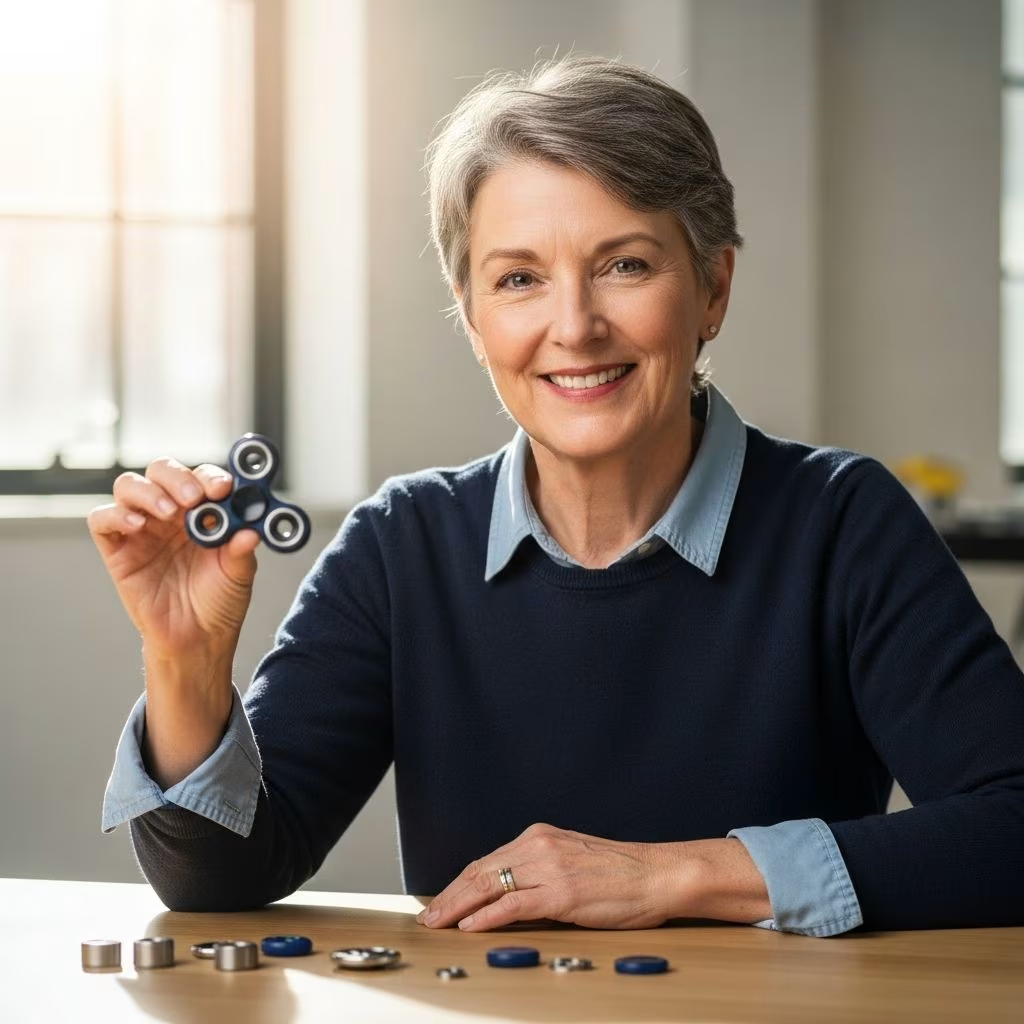
Meet the Woman Who Invented Fidget Spinners, the Newest Toy Craze Sweeping America
Catherine Hettinger possesses the mind of a true inventor. When she encounters a problem in the world around her, she immediately begins brainstorming toys and devices that could address it. This innovative thinking led to one of the most iconic toys of the 2010s — the fidget spinner — though her path to recognition was far from straightforward.
The genesis of the fidget spinner came from an unexpected source of inspiration. While visiting her sister in Israel, Hettinger learned about young boys throwing rocks at police officers and people passing by. Rather than dismissing this troubling behavior, she saw an opportunity to create something positive. Her initial thoughts turned to a soft rock that children could throw harmlessly, but she quickly abandoned that concept. It wasn’t until she returned to her home in Orlando, Florida, that the idea truly crystallized into what would become the original fidget spinner — more than two decades before it became the must-have toy for both children and adults.
The Birth of an Invention: From Concept to Patent
Hettinger, now in her 60s, recalls the inspiration behind her creation with clarity. “It started as a way of promoting peace, and then I went on to find something that was very calming,” she explained to Money, referring to the fidget spinners she first began imagining back in the 1980s. The toy was designed to provide a soothing, meditative experience for users, offering both distraction and calm in a small, portable package.
The first fidget spinner debuted in 1993, marking the beginning of Hettinger’s entrepreneurial journey with the product. Four years later, in 1997, her patent was officially approved by the U.S. Patent and Trademark Office. However, despite securing intellectual property protection, the spinners failed to gain traction in the mainstream market. Instead of seeing rapid success, Hettinger spent years making the rounds at county fairs, selling a couple of thousand devices and persistently approaching toy companies in hopes of securing a distribution deal.
The Hasbro Pitch: Missed Opportunity and Ironic Timing
With her patent secured, Hettinger set her sights on one of the world’s largest toy manufacturers. She booked a meeting with Hasbro, the third-largest toy maker globally, hoping to strike a deal that would bring her fidget spinner to mass market. Interestingly, she used the very product she was pitching to calm her nerves before meeting with Hasbro’s vice president. “That was one good thing about this product: If I walked into their headquarters spinning it, it totally calmed me down,” she recalled. “It’s not an easy thing for most people to walk in and close big deals.”
Despite Hettinger’s preparation and the product’s inherent appeal, Hasbro ultimately rejected the fidget spinner. The company tested the toy with consumers but determined it lacked sufficient market potential. The rejection letter was a significant setback, but the story doesn’t end there. Nearly two decades later, Hasbro began selling fidget spinners, capitalizing on the very craze that Hettinger had envisioned years earlier.
The Patent Expiration and Loss of Control
A critical turning point came in 2005 when Hettinger’s patent expired. The toys eventually entered the mass market after the patent lapsed, meaning companies could manufacture and sell the product independently from her without providing any compensation or recognition. According to reports, Hettinger faced financial constraints that prevented her from renewing the patent, as she lacked the $400 required by the U.S. Patent and Trademark Office at that time.
The expiration of her patent marked the moment when Hettinger lost exclusive rights to her invention. From that point forward, any manufacturer could produce and sell fidget spinners without owing her royalties or acknowledgment. This development, while potentially devastating for someone seeking financial gain, did not embitter Hettinger toward her creation.
Hettinger’s Perspective on the Boom: Excitement Over Exploitation
Remarkably, Hettinger isn’t upset about the sudden popularity and capitalization of her invention by others. In fact, she expressed genuine excitement about the phenomenon. “Maybe if it was some kind of exploitative product — like a new style of cigarettes — and my only motivation was to make money, I’d have a different attitude,” Hettinger said. “But I am just thrilled.” Her enthusiasm stems from the product’s original purpose: promoting peace and providing a calming influence.
When asked about the explosive popularity of fidget spinners appearing on store shelves everywhere, Hettinger joked: “When you start seeing these things flying off the shelf at your local 7-11, you know things are heating up.” Her lighthearted observation reflected her genuine pleasure at seeing her creation reach the masses, even if she wasn’t the primary beneficiary of its commercial success.
Understanding the Sudden Boom: Speculation on Timing
While the exact reasons for the fidget spinner craze remain unclear, Hettinger has developed a compelling theory. She speculates that following the 2008 recession, people began seeking ways to calm their nerves and find affordable sources of entertainment. The fidget spinner perfectly fit this need — an inexpensive toy that provided genuine stress relief and sensory satisfaction. “That was always the concept — to help people,” she emphasized. “I experienced it for myself.” She firmly believes there is genuine, lasting demand for products that serve this calming function. “There’s a real need for this,” she added confidently.
Background: The Mind of an Innovator
Understanding Hettinger’s accomplishments requires looking at her background and training. She grew up in Oklahoma and attended Rensselaer Polytechnic Institute in Troy, New York — an institution renowned for its engineering and technology programs. This educational foundation equipped her with the technical knowledge and innovative thinking required to conceptualize and develop the fidget spinner.
After graduating, Hettinger relocated to Florida, where she would spend decades developing and promoting her invention. Her formal training in engineering and technology, combined with her natural problem-solving abilities, made her well-suited to invent products designed to address real-world challenges.
The Kickstarter Initiative: Reclaiming the Market
Recognizing the opportunity presented by the fidget spinner boom, Hettinger took action to introduce her original design to the market. She planned to launch a Kickstarter campaign called the “Classic Spinner” to sell her version of the device online. The campaign represented an attempt to reclaim her place in the market and share her original vision with consumers who had never encountered her initial design.
The Classic Spinner Kickstarter sought to differentiate Hettinger’s version from the countless mass-produced spinners flooding the market. Rather than competing on price or trying to replicate the modern bearing-based designs, Hettinger’s campaign emphasized authenticity and the original vision behind the product.
Continuing Innovation: New Projects on the Horizon
Despite the fidget spinner’s massive success and the demands of promoting her Classic Spinner, Hettinger hasn’t stopped innovating. Her inventor’s mind continues to observe the world and identify problems worth solving. She is currently working on a diet and fitness application for iPhones, developing this new product in collaboration with the Inventors Council of Central Florida, a Florida-based organization dedicated to nurturing new ideas and bringing them to market.
This ongoing innovation demonstrates that Hettinger views the fidget spinner not as the pinnacle of her career but as one chapter in a longer story of creative problem-solving. She remains committed to developing products that improve people’s lives and address genuine needs in society.
The Broader Message: Finding Joy and Peace in Modern Times
When reflecting on the fidget spinner phenomenon and her continued work as an inventor, Hettinger emphasizes the importance of joy and entertainment in contemporary life. “The culture we live in now — the times now — everyone has a need for fun. People are realizing it — and it’s true,” she stated. Her observation speaks to a fundamental human need that transcends economic conditions or market trends.
The fidget spinner’s success, from Hettinger’s perspective, represents validation of her core belief: people genuinely need and desire tools that help them find calm, reduce anxiety, and enjoy simple pleasures. Whether through her original invention or her continued work in product development, Hettinger remains dedicated to meeting these needs.
Frequently Asked Questions About Catherine Hettinger and the Fidget Spinner
Q: When did Catherine Hettinger first invent the fidget spinner?
A: Hettinger first began imagining the fidget spinner in the 1980s, with the first prototype debuting in 1993. She received her patent approval in 1997.
Q: Why did Hettinger’s original patent expire?
A: Hettinger’s patent expired in 2005 because she could not afford the $400 renewal fee required by the U.S. Patent and Trademark Office at that time.
Q: Did Hasbro ever manufacture fidget spinners based on Hettinger’s original design?
A: No, Hasbro rejected Hettinger’s pitch in 1997 after testing the toy with consumers. However, Hasbro did begin selling fidget spinners nearly 20 years later during the 2017 craze, producing a different design.
Q: Does Catherine Hettinger receive royalties from fidget spinner sales?
A: No, because her patent expired in 2005, Hettinger does not receive any royalties from commercial fidget spinner sales by other manufacturers.
Q: What was the original inspiration for the fidget spinner?
A: Hettinger was inspired after hearing about young boys throwing rocks at police officers and people in Israel. She wanted to create a device that could provide a calming, distracting influence to prevent such behavior.
Q: What is Hettinger working on now?
A: In addition to promoting her Classic Spinner through Kickstarter, Hettinger is developing a diet and fitness application for iPhones in collaboration with the Inventors Council of Central Florida.
Q: Where did Catherine Hettinger attend college?
A: Hettinger attended Rensselaer Polytechnic Institute in Troy, New York, an institution known for its engineering and technology programs.
Q: Is Hettinger upset that she doesn’t profit from fidget spinner sales?
A: No, Hettinger has expressed that she is thrilled about the fidget spinner’s popularity. She views it as fulfilling her original goal of creating a calming, peaceful product rather than primarily as a financial opportunity.
References
- Meet the Woman Who Invented Fidget Spinners, the Newest Toy Craze Sweeping America — Money Magazine. 2017-04-28. https://money.com/fidget-spinner-inventor-catherine-hettinger/
- Intellectual Property Insights: The Fidget Spinner’s Untold Story — TQD Law. 2017. https://tqdlaw.com/intellectual-property-insights-the-fidget-spinners-untold-story/
- Fidget Spinner — U.S. Patent and Trademark Office. 1997. https://uspto.gov/
- Was the Inventor of the Fidget Spinner Robbed? — IP Service. 2017. https://www.ipservice.com.au/knowledge/was-the-inventor-of-the-fidget-spinner-robbed
- Was Media Spun in Fidget Toy’s Invention Tale? — The Times of Israel. 2017-05-11. https://www.timesofisrael.com/was-media-spun-in-fidget-toys-invention-tale/
This article is general information, not personal financial advice. Consider your own situation, or speak with a licensed adviser, before acting on it.


