

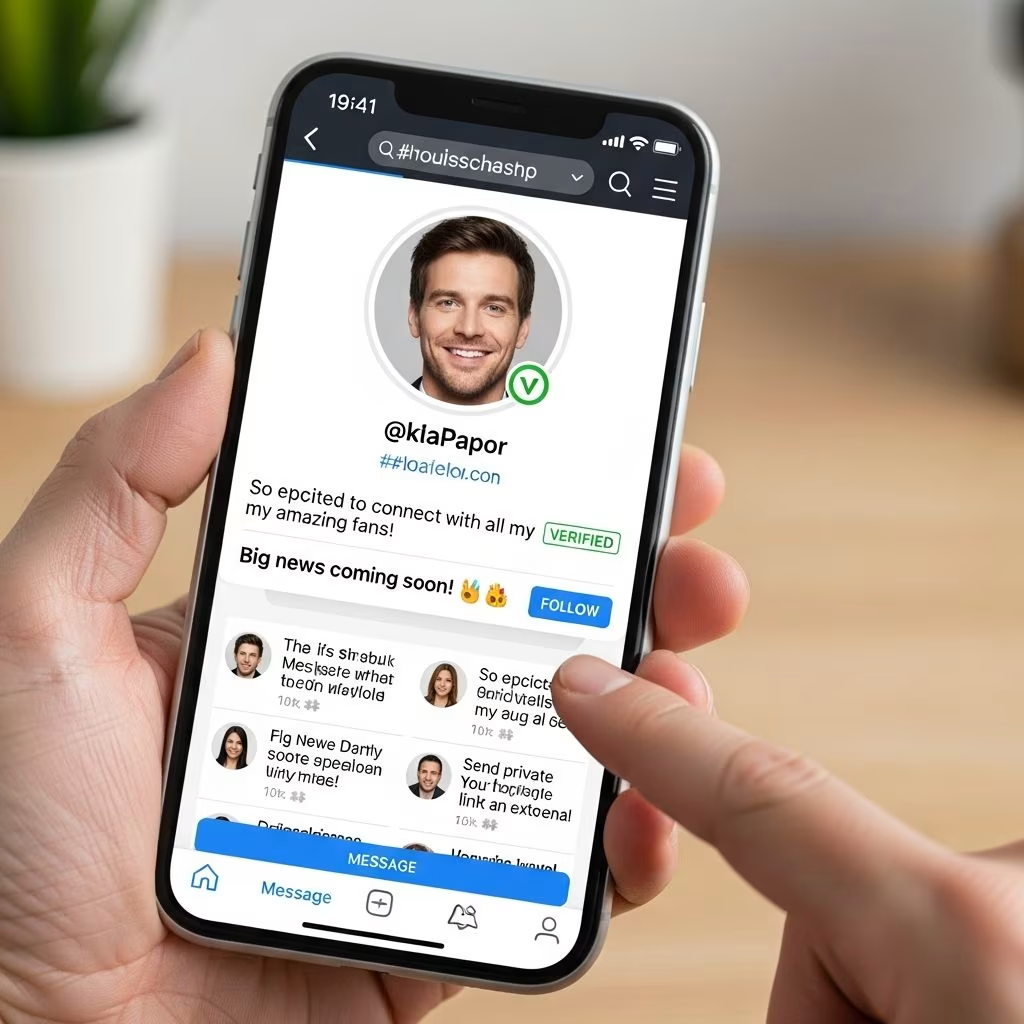
If you’ve ever seen a video of a major celebrity asking for money in a suspiciously robotic voice, you were likely witnessing a celebrity impersonation scam. These frauds are exploding in popularity thanks to advanced AI tools that create convincing deepfakes of stars like Scarlett Johansson, Taylor Swift, and Johnny Depp. Scammers exploit fans’ excitement and trust to steal thousands—or even hundreds of thousands—of dollars.
According to security firm McAfee, celebrity impersonations topped their list of most-hacked famous names, with victims losing anywhere from hundreds to over $500,000. By 2027, generative AI fraud losses could hit $40 billion, up from $12.3 billion in 2023, warns Deloitte. Music fans are especially vulnerable, with Taylor Swift “Swifties,” Sabrina Carpenter followers, and Billie Eilish enthusiasts targeted in scams stealing $5.3 billion annually.
These Celebrities Have Been Impersonated Online to Scam People
Scammers don’t discriminate—they target A-listers across Hollywood, music, and tech. Here’s a breakdown of high-profile cases:
- Scarlett Johansson: Topped McAfee’s most-impersonated list. Scammers used her likeness for fake giveaways and endorsements. Johansson even threatened legal action against OpenAI for voice imitation.
- Taylor Swift: Frequent target for counterfeit tickets, fake merch, and political endorsements. Swifties have lost millions to clone accounts promising exclusive access.
- Johnny Depp: In January, Depp warned fans on Instagram about AI fakes mimicking his face and voice for money requests. He clarified he’s not on X, Snapchat, or Discord.
- Brad Pitt: A French woman lost $850,000 to an AI scam posing as Pitt needing funds for a “kidney operation.” She received fake photos, videos, and messages from his “mother.” Pitt called it “awful” and urged ignoring unsolicited outreach.
- Kylie Jenner: Used in crypto giveaways, tricking fans into sending money for fake investments.
- Tom Hanks: Impersonated hawking “miracle cures.”
- Elon Musk: Fake AI videos offered investment opportunities, conning a 62-year-old out of savings.
- Helen Mirren: Scammers posed as her offering charity winnings, demanding “processing fees.” Mirren denounced it on Instagram.
- Sabrina Carpenter & Billie Eilish: Fake meet-and-greets, pre-sale tickets, livestreams, and giveaways stole from music fans.
Even local celebrities like news anchors have been cloned, with victims sending gift cards after days of fake chats.
What Does a Celebrity Impersonator Scam Look Like?
These scams mimic the real deal: polished videos, stolen photos, and messages tailored to fans. Scammers build trust over time, referencing real events or using AI deepfakes for voices and faces. Common hooks include:
- Personal relationships or “exclusive” friendships.
- Urgent pleas for medical bills, legal fees, or travel.
- Fake giveaways, concert tickets, merch, or crypto investments.
- Charity donations or “processing fees” for winnings.
- Political endorsements or miracle cures.
The FTC warns that scammers on social media pose as celebrities to request money or info. Excitement lowers guards, but red flags abound.
How to Spot a Celebrity Impersonation Scam: 7 Key Tips
Stay one step ahead with these proven strategies from experts like McAfee, FTC, and the celebrities themselves.
- Verify the account: Celebrities rarely DM fans for money. Check for official verification badges. Depp links only his verified Instagram, Facebook, and TikTok.
- Check the webpage: If directed to a site for “claims” or investments, ensure it’s legitimate. Fake URLs or broken sites scream scam.
- Listen for robotic voices: AI deepfakes often sound off—glitchy, unnatural cadence, or mismatched lip sync.
- Cross-check social platforms: If a star suddenly appears on a new platform (e.g., Depp on X), it’s fake. Search their official profiles.
- Search for known scams: Google “[Celebrity] scam”—many like Pitt and Depp have public warnings.
- Never send money or info: Real celebs won’t ask for gift cards, wire transfers, or crypto from strangers. FTC: Block and report.
- Use reverse image search: Upload photos/videos to Google or TinEye to trace stolen images.
| Red Flag | Why It’s a Scam | What to Do |
|---|---|---|
| Unsolicited DM or video | Celebs don’t cold-contact fans for cash | Ignore and block |
| Urgent money request | Builds pressure to bypass logic | Verify independently |
| Too-good-to-be-true offers | Giveaways/investments prey on greed | Research the celeb’s real activity |
| New/unverified account | Impersonators create fakes quickly | Stick to official channels |
Frequently Asked Questions (FAQs)
Q: Do celebrities ever contact fans directly for money?
A: No. Legitimate stars or their teams never solicit funds via DMs, especially not gift cards, wires, or crypto. Always verify through official channels.
Q: How do scammers make fakes so realistic?
A: AI tools generate deepfake videos, voices, and photos using public images. They reference real news for credibility, but glitches like odd speech patterns give them away.
Q: What should I do if I’ve been scammed?
A: Contact your bank immediately to dispute charges. Report to FTC at ReportFraud.ftc.gov, FBI’s IC3.gov, and the platform. Freeze credit if personal info was shared.
Q: Are music fans more at risk?
A: Yes—Swifties and fans of Carpenter/Eilish lost billions to ticket and merch scams. Always buy from official sites.
Q: Can I sue if impersonated?
A: Victims like Johansson have pursued legal action against AI firms. Consult a lawyer, but prevention is key.
Protect Yourself and Report Scams
Beyond spotting fakes, enable two-factor authentication, use antivirus with scam detection, and educate family. Platforms like Instagram are improving AI detection, but vigilance is essential. If it feels off, it probably is—walk away.
References
- Celebrity Imposter Scams: How Fake Fame Tricks Real Fans — 1st Source Bank. 2024. https://www.1stsource.com/advice/celebrity-imposter-scams/
- How to Spot a Celebrity Impersonation Scam — The Penny Hoarder. 2024. https://www.thepennyhoarder.com/save-money/celebrity-impersonation-scam/
- Hollywood Minute: Study shows scammers impersonating celebrities are targeting music fans online — 41NBC. 2024. https://www.41nbc.com/hollywood-minute-study-shows-scammers-impersonating-celebrities-are-targeting-music-fans-online/
- 5 Celebrity Impersonation Scams and 7 Tips for Spotting Fake Content — Money Talks News (The Penny Hoarder). 2024-03. https://www.moneytalksnews.com/slideshows/celebrity-impersonation-scams-and-tips-for-spotting-fake-content/
- Scammers impersonate local celebrities, raking in billions of dollars — YouTube (Local News). 2024. https://www.youtube.com/watch?v=QL693of-YVg
- Scammers impersonate celebrities on social media — Federal Trade Commission (FTC.gov). 2018-08-21. https://consumer.ftc.gov/consumer-alerts/2018/08/scammers-impersonate-celebrities-social-media
This article is general information, not personal financial advice. Consider your own situation, or speak with a licensed adviser, before acting on it.


